
Each biographical memoir of deceased Fellows of the Academy is carefully researched, resulting in a unique biographical collection of celebrated lives and important achievements.

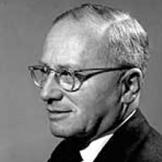
Walter Boas was born in Berlin on 10 February 1904 and was the only child of Adele (née Reiche) and Arthur Boas. His death on 12 May 1982, after a short illness, came as a shock to a very large number of friends and colleagues in the scientific, university, metallurgical and engineering communities. To all these communities, Walter Boas had made outstanding contributions since his arrival in Australia in 1938.
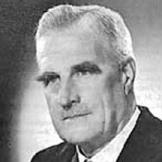
Walter Lawry Waterhouse 1887–1969
Professor Walter Waterhouse CMG MC FAA was an an agricultural scientist who revolutionised Australian wheat farming by breeding rust-resistant, high-yield varieties.
Walter Victor Macfarlane 1913–1982
Professor Walter Macfarlane FAA was a physiologist whose work spanned an extraordinary range of fields – from parasitology to clinical medicine to desert adaptation.
Wesley Kingston Whitten 1918–2010
Wes Whitten was a veterinary scientist whose groundbreaking work on reproductive cycles, fertilisation and embryo development led to infertility treatment in humans.
Wilbur Norman Christiansen 1913–2007
Chris Christiansen was a physicist and engineer whose innovations shaped radio astronomy in Australia.
Wilfred John Simmonds 1918–1990
Professor Wilfred Simmonds was a leading physiologist known for his research investigating fat absorption from the gastrointestinal tract, producing findings with clinical significance.
William (Bill) Francis Budd 1938–2022
Professor William (Bill) Budd was a founding figure in Australian glaciology, and the first glaciology program leader of the Australian Antarctic Division.
William Christopher Swinbank 1913–1973
William Swinbank was a meteorological physicist who served as Chief Research Scientist at CSIRO for 10 years, where he advanced the field of micrometeorology and helped establish ozone monitoring in Australia.
William Hayes 1913-1994
William Hayes, physician, microbiologist and geneticist, made his own special contribution to modern genetics and molecular biology in a manner quite different from that of any of his contemporaries. Bill, as he was universally known, was an unlikely candidate for such distinction. It is interesting to speculate on the events that transformed someone likely to have had a distinguished but still traditional medical career into a world renowned scientist who influenced a whole generation of microbiologists and geneticists.
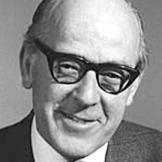
William Henry Wittrick 1922–1986
Professor Bill Wittrick FAA FRS was an engineer known for advancing theory in elasticity, shell structures, and stability, who taught aeronautical engineering in Australia for 20 years.