


Leaders unite around case for backing Australian science
A candid conversation at the Science at the Shine Dome Gala Dinner reinforced the Restore Science campaign.
- 5 mins read

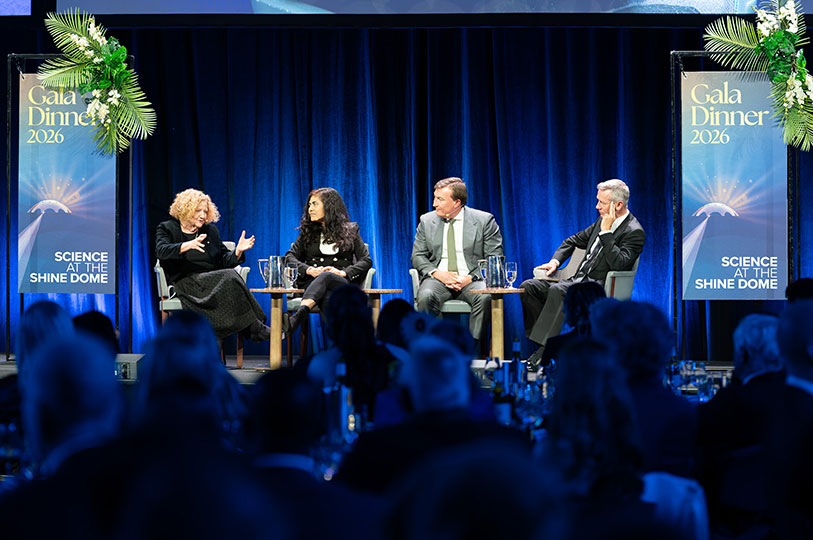
Left to right: Professor Margaret Sheil AO FAA FTSE, Secretary Science Policy; Professor Veena Sahajwalla AO FAA FTSE, Academy Fellow; Bran Black, Chief Executive, Business Council of Australia; Peter Hartcher, International and Political Editor of The Age and The Sydney Morning Herald.
Business and research voices came together at Science at the Shine Dome Gala Dinner on Wednesday 16 September for a conversation focused on the importance of R&D for Australia's future prosperity, security and quality of life.
“It’s not a case of being able to say there’s an opportunity for Australia to progress as a consequence of better investment in research and development,” said Bran Black, Chief Executive of the Business Council of Australia.
“I would say it is absolutely necessary. It is critical that we do that.”
The sentiments were echoed by Minister for Science, the Hon Tim Ayres, who was in attendance and acknowledged “a sense of urgency” not just for economic growth, but also “achieving important objectives in the national interest.”
The panel, moderated by journalist Peter Hartcher, also included Professor Margaret Sheil, the Academy’s Secretary Science Policy, and Professor Veena Sahajwalla, Academy Fellow.
The discussion opened by sketching a vision for a restored R&D sector, 20 years from now: sovereign capability built from fundamental discovery through to local manufacturing, and opportunities reaching every community, regional and urban alike.
But Australia’s current investment in R&D sits well below the OECD average, as the Academy’s recent Restore Science campaign has brought to national attention.
The panel agreed that this shortfall carries a real social and economic cost.
Black noted that a substantial proportion of Australia’s backslide in R&D investment compared to peers could be chalked up to lagging business R&D investment, which is a full percentage point behind the OECD average.
“What we need to be doing in order to facilitate more [business] investment is making sure that we’ve got more competitive settings across the board,” he said, pointing to the R&D tax incentive and company tax rate as potential levers and prompting a lively discussion about the settings in other innovation-driven nations, such as Germany.
Professor Sahajwalla highlighted the importance closer, faster collaboration between researchers, industry and communities, with people at the centre. “If we want to be able to retain talented people in Australia and bring more talent into the country, we have to ask the question: are we creating an ecosystem that allows people to move seamlessly between research and business?” she said.
Professor Sheil noted that translation doesn’t just happen. It needs stable, long-term funding. “We won’t be able to translate anything if we don’t have fundamental discoveries to translate,” she said, pointing to quantum technology as being built “on the back of investments through the ARC and other funding agencies 20 years ago”.
“Counterintuitively, you get more innovation with longer term funding … when there's more certainty, people take more risks,” she added.
Professor Sheil recalled the energy and excitement generated by the ‘Backing Australia’s ability’ innovation action plan from 2001, which brought together business and research.
“We attracted great people to this country. We attracted great students into science. And so I think we need some enthusiasm and hope, and to spend a little less time worrying about the mechanics,” she said.
Watch the full conversation here.
Highlights elsewhere at Science at Shine Dome 2026
New Fellows welcomed
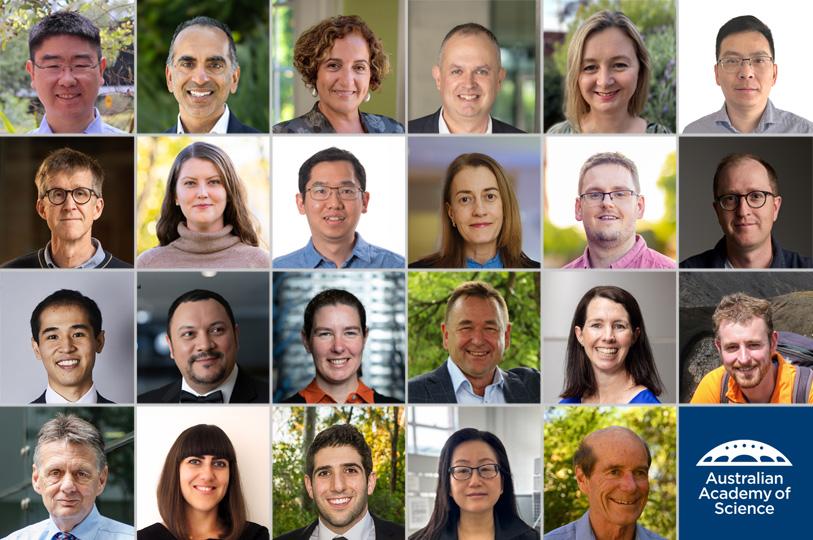
Twenty-four outstanding scientists were admitted into the Fellowship during an official ceremony, where they signed the historic Charter Book.
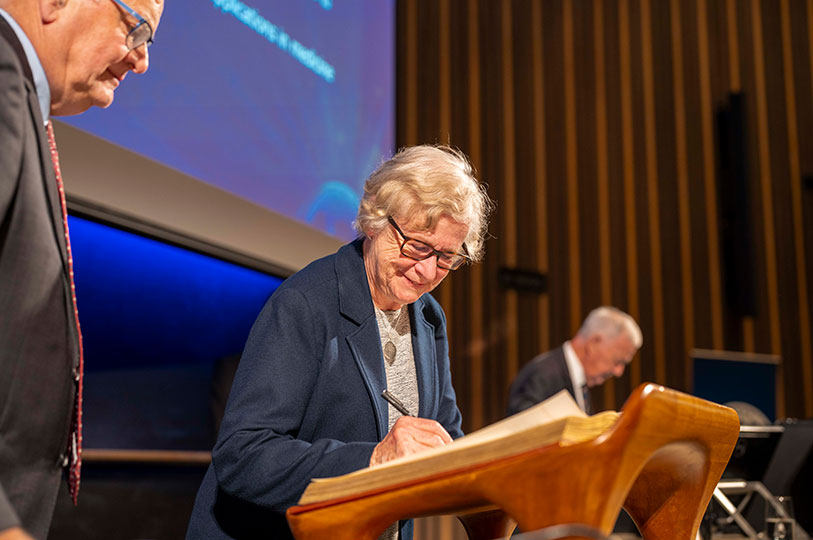
Professor Nicki Packer FAA, a world leader in glycomics, signs the Charter Book.
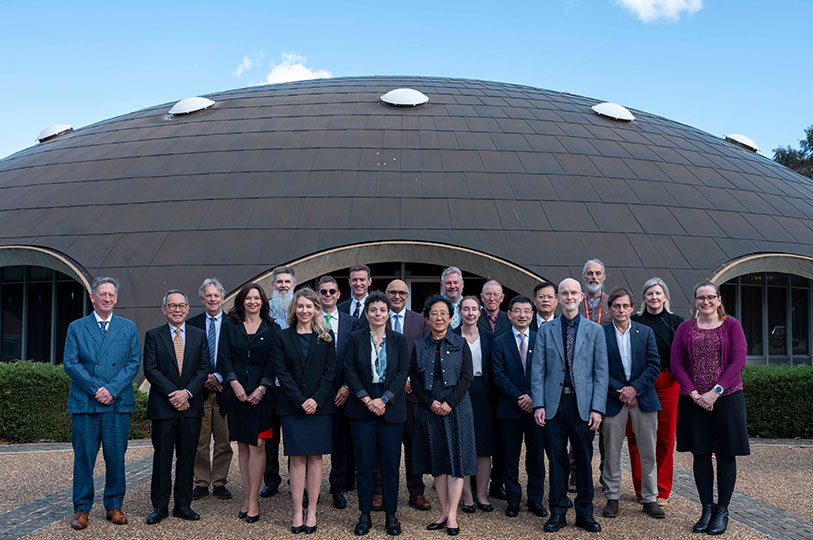
The outstanding scientists admitted into the Fellowship during Science at the Shine Dome 2026.
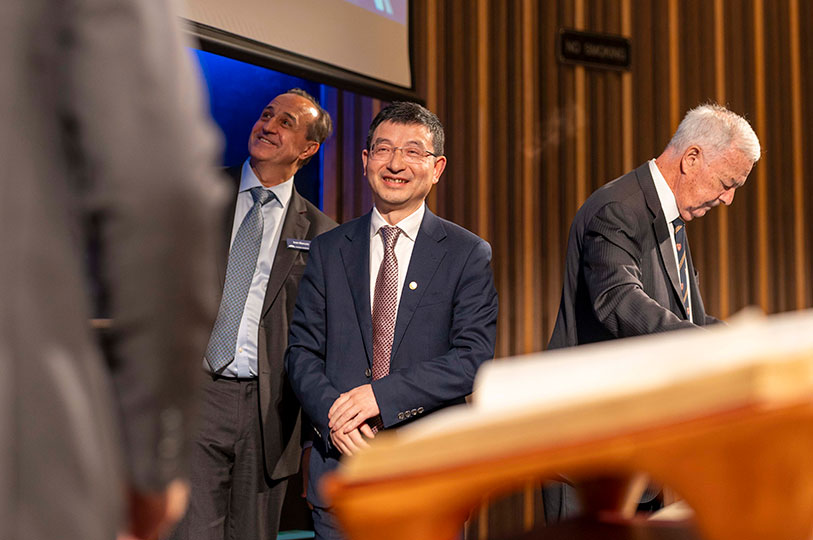
Professor Huanting Wang FAA FTSE, a renowned membrane scientist, joins the Fellowship.
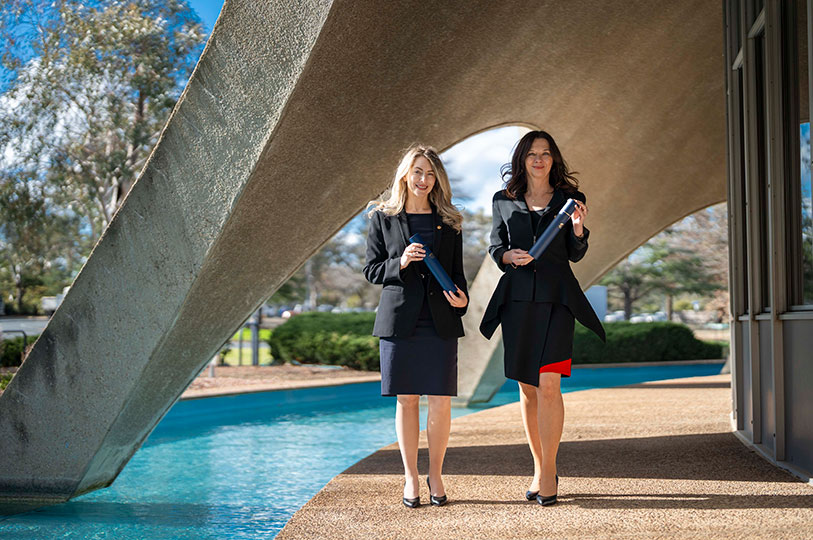
New Fellows Professor Laura Mackay FAA FAHMS and Professor Katherine Kedzierska FAA FAHMS have both made outstanding contributions to immunology.
Dark matter, dinosaurs and malaria: New Fellows showcase their discoveries
The diversity and deep impact of Australian science was on full display in the Shine Dome’s Ian Wark Lecture Theatre, with New Fellows offering fascinating insights into their work through short presentations.
Professors Nicole Bell FAA and Céline Bœhm FAA discussed efforts to illuminate the nature of the dark matter that makes up most of the Universe. Professors Jochen Brocks FAA and John Long FAA took us back in deep time to unearth ancient animals, while Sally Williams FAA FTSE took us on a tour of Australia’s deep tech ecosystem.
Mathematician Professor Enrico Valdinoci FAA took things back to basics with a joyful talk about how and why he does mathematics (with other people, over hot chocolate), coupled with a rousing list of urgent issues he cares about: “Once we lose our curiosity, our integrity, our courage and our genuine thirst for knowledge, we lose our humanity.”
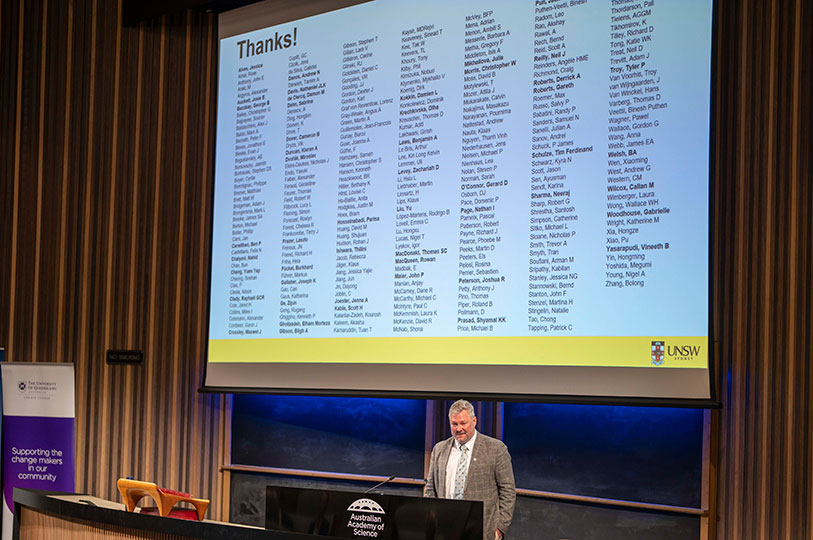
Professor Tim Schmidt FAA lists out all his collaborators and students, highlighting how scientific discovery is built on teamwork.
Excellence recognised with presentation of Academy awards
Science at the Shine Dome also featured the presentation of the Academy’s prestigious honorific awards.
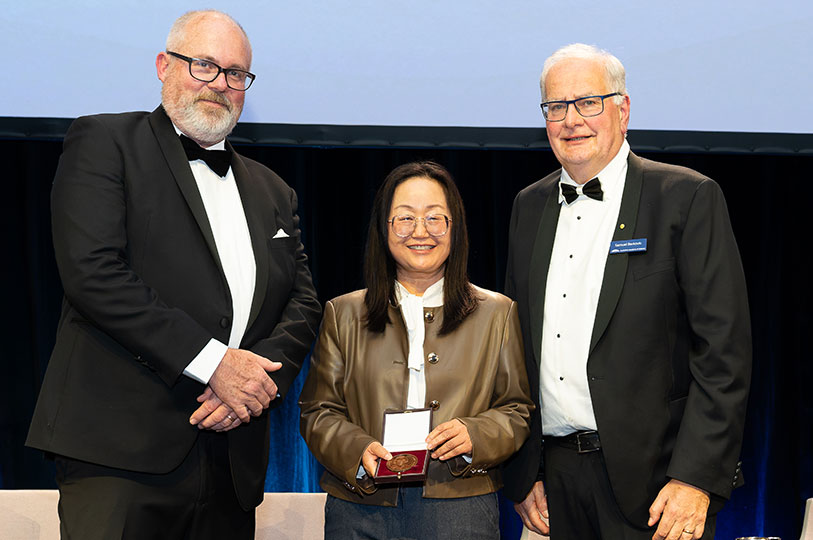
Professor Zaiping Guo FAA FTSE receives the Ruby Payne Scott Medal, one of the Academy’s premier awards, presented by Minister for Science, the Hon Senator Tim Ayres and Academy President, Professor Sam Berkovic AC PresAA FAHMS FRS.
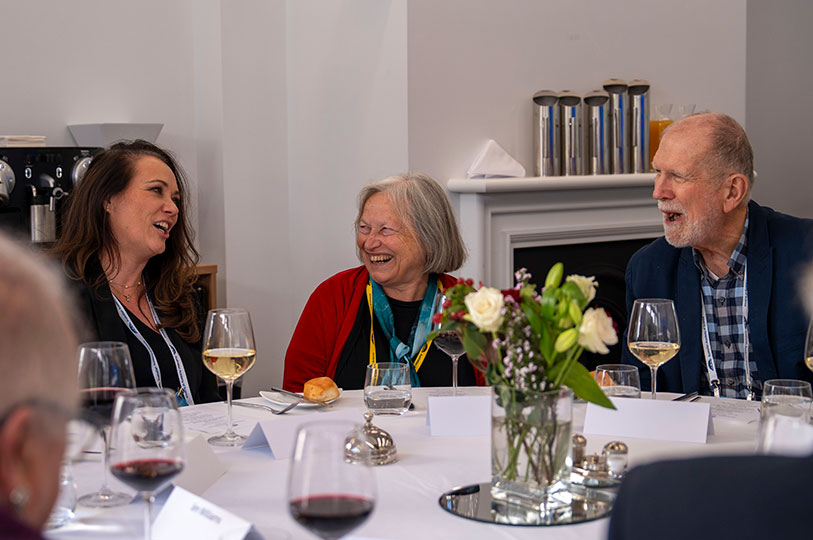
The occasion offered an opportunity for awardees, donors and supporters to meet and celebrate. Left to right: Luci Makrakis, Professor Barbara Nowak FAA (Academy Treasurer), and John Graves.
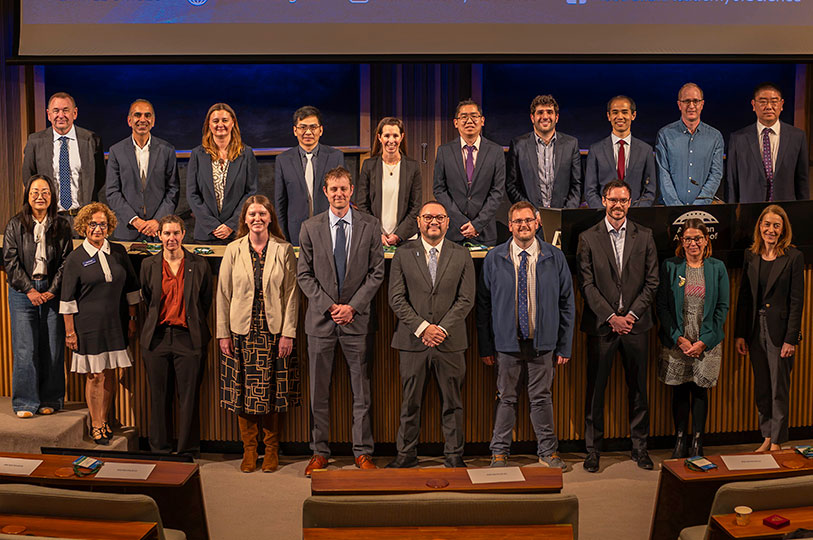
The winners of the Academy honorific awards for 2026.
An unparalleled networking opportunity for EMCRs
Early- and mid-career researchers (EMCRs) in attendance benefitted from cross-disciplinary conversations and building connections – with each other, and with scientists at the pinnacle of their careers. Workshops on media engagement and grant writing were also offered.
EMCRs came from across Australia and from seven Asia-Pacific nations, with the third annual Asia-Pacific Academic Mentoring Programme getting underway.
Read more about the launch of the Asia-Pacific Academic Mentoring Programme.
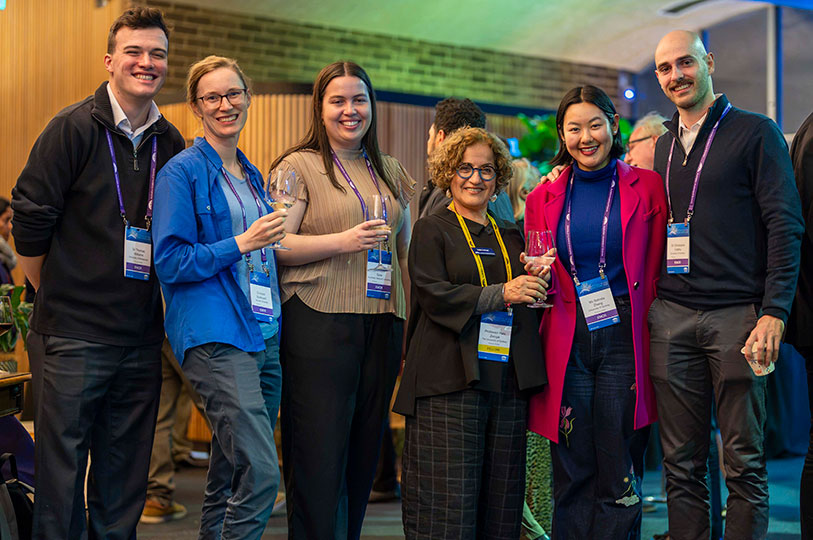
EMCR attendees with Professor Hala Zreiqat AM FAA FTSE FAHMS, the Academy’s Secretary Education.
With thanks to our Event Partners
Science at the Shine Dome wouldn’t be possible without the generous support of our Event Partners. We are grateful for their commitment to Australian science excellence:
- Platinum Partners: Department of Defence and Department of Industry, Science and Resources
- Gala Dinner: The University of Sydney
- Diversity and Inclusion: The University of Queensland
- Gold: Australian National University, Deakin University and The University of Melbourne
- Bronze: Swinburne University of Technology
- Gelato Cart: QUT
- EMCR Supporters: Macquarie University, NCI, QUT, The University of Melbourne, The University of Western Australia, UNSW Sydney and UTS
- EMCR Workshop Supporters: Australian Science Media Centre and The GrantEd Group