




Report of the Review of National Committees for Science—Executive summary

After an extensive survey of the National Committees, Fellows of the Academy and Australian scientific societies the Review Committee found that, while many National Committees were working well, many Fellows and scientific societies, particularly in life sciences and applied sciences, felt that they had no links to the National Committee system. In many cases where links did exist in principle, they were not effectively utilised.
In response to these findings, the Review Committee believes that ways must be found to bring more of Australian science under the National Committee system, and that the Academy and the National Committees themselves must use the system to communicate more effectively with Australian scientists. Accordingly the Review Committee has made the following recommendations, which are justified in detail in the text.
Recommendation 1
The Review Committee recommends that the following National Committees be established or continued as appropriate.
- Mathematical Sciences
- Astronomy
- Chemistry
- Physics
- Space and Radio Science
- Materials Science
- Mechanical and Engineering Sciences
- Earth Sciences
- Earth System Science
- Geography
- Biomedical Sciences
- Medicine and Public Health
- Nutrition
- Cellular and Developmental Biology
- Agriculture, Fisheries and Food
- Ecology, Evolution and Conservation
- Data in Science
- History and Philosophy of Science
- Information and Communication Sciences
- Brain and Mind
- Antarctic Research
- Crystallography.
Recommendation 2
The Review Committee recommends that priority be given to memberships of international scientific organisations in the following order
- The subscription to ICSU at the new level
- Subscriptions which are wholly or partially supported by Australian Government Departments or Organisations
- Subscriptions which are supported to at least 50% by Australian scientific societies
- Subscriptions to international organisations in which Australians hold, have recently held, or are likely to hold positions in the structure, in part because of the desirability of supporting this role, in part because this may give Australia influence in possible development of the organisation, and in part because this is a useful proxy for effective interactions with Australian science
- Subscriptions to other international organisations.
Recommendation 3
The Review Committee recommends that the Academy encourage and facilitate the involvement of the National Committees and Australian scientists in international scientific organisations, in part by providing a fixed sum in partial support of representation of Australia at general assemblies (or equivalent governance meetings) of the international scientific organisations linked to the National Committees.
Where an international scientific organisation is linked to more than one National Committee only one financial contribution will be made to support attendance at governance meetings of that international scientific organisation, in consultation with the National Committees linked to it.
Recommendation 4
The Review Committee recommends the following as a general statement of the purpose of the National Committees.
- To connect the Academy to science and scientists in Australia
- To link the Academy to Australian scientific societies in order to work together to promote the development of the discipline
- To link Australian science in the disciplines to world science, in particular through the membership of appropriate international organisations
- To ensure that Australia has a voice and a role in the global development of the disciplines
- To provide strategic science policy advice, to the Academy, as input to Academy science policy statements, and (with the approval of the Executive Committee of Council) to the Australian Government and Australian organisations.
Recommendation 5
To ensure clarity about the tasks of each National Committee, the Review Committee recommends that each existing and newly appointed Chair, in consultation with the Committee, and with the Executive Committee of Council, should set out formal terms of reference for the period in which they occupy the Chair. These terms of reference should be published on the website of the National Committee.
Recommendation 6
The Review Committee recommends that
- Normally a National Committee will have at most eight members, but the size of each National Committee be determined by the Chair of the Committee in consultation with the Secretaries
- Council determine on an annual basis a fixed sum to be provided to each of the National Committees for their national activities.
Recommendation 7
The Review Committee recommends that
- A plenary meeting of Chairs of National Committees be held annually, with the first meeting in 2013, and
- Meetings (in person or electronically) of Chairs of National Committees with common interests be held at least as frequently.
Recommendation 8
The Review Committee recommends the distribution of the newsletter of the Academy to societies as a basic first step in improving the communications of the Academy with Australian scientific societies.
Recommendation 9
The Review Committee recommends that, in all cases,
- Some societies relevant to National Committees have seats on the National Committee
- Where the number of such societies is so large that seating them all on the National Committee would not be practical, all societies have seats in a defined, cyclical way
- National Committees are to fill these seats by proposing candidates to the Council of the Academy in consultation with the relevant societies.
Recommendation 10
The Review Committee recommends that National Committees
- Distribute their agenda to the relevant societies before the meeting, with an invitation to provide input on any item, and
- Distribute the minutes soon after the meeting to the same societies.
- In both cases confidential items may be omitted from the publicly distributed meeting papers, although the existence of such items should be acknowledged.
Recommendation 11
The Review Committee recommends that relevant societies are asked
- To provide space for news from the National Committee in their regular electronic and paper news communications to members, and
- To provide a link from their website to that of the National Committee, and to accept a link from the website of the National Committee to theirs.
- When appropriate, to allow a short presentation about the work of the National Committee at a scientific meeting of the society.
- Where appropriate to allow the National Committee to use their email resources to communicate with Australian scientists.
When space or time is provided to a National Committee, it should use those opportunities on every occasion.
Recommendation 12
The Review Committee recommends that National Committees continue to be encouraged to consider the production of a decadal plan and discipline review, but that before the Academy Council approves their proceeding with this, the Council is convinced that the resources are available to produce the plan and to oversee its implementation.
Where appropriate the production of a decadal plan and discipline review should be included in the terms of reference agreed for a National Committee as in recommendation 5.
Recommendation 13
The Review Committee recommends that the Council of the Australian Academy of Science designate “the National Committee Physics in consultation with the National Committee Chemistry” as the “relevant National Committee” from which it should receive recommendations in respect to the Geoffery Frew Fellowship, under §2 of Standing Order XV.
Recommendation 14
The Review Committee recommends that
- When the Secretary (Science Policy) of the Academy establishes an ad hoc committee or working group to develop a policy position for the Academy a representative of the appropriate National Committees be included as a member of that Committee, and
- When a National Committee develops a science policy paper on its own initiative, the National Committee
- Advises the Secretary (Science Policy) that it is working on this paper, at an early stage of the process and invites the Secretary to send an observer to the National Committee for the discussion of the paper, and
- Transmits the paper to its destination in consultation with the Secretary (Science Policy).
Recommendation 15
The Review Committee recommends that the National Committees be reviewed as follows:
| National Committee | First review | Second review |
|---|---|---|
| Geography | 2016 | 2020 |
| Data in Science | 2016 | 2020 |
| History and Philosophy of Science | 2016 | 2020 |
| Information and Communication Sciences | 2016 | 2020 |
| Brain and Mind | 2016 | 2020 |
| Crystallography | 2016 | 2020 |
| Biomedical Sciences | 2017 | 2021 |
| Cellular and Developmental Biology | 2017 | 2021 |
| Earth Sciences | 2017 | 2021 |
| Earth System Science | 2017 | 2021 |
| Antarctic Research | 2017 | 2021 |
| Nutrition | 2018 | 2022 |
| Agriculture Fisheries and Food | 2018 | 2022 |
| Ecology Evolution and Conservation | 2018 | 2022 |
| Materials Science | 2018 | 2022 |
| Mechanical and Engineering Sciences | 2018 | 2022 |
| Space and Radio Science | 2018 | 2022 |
| Astronomy | 2018 | 2022 |
| Mathematical Sciences | 2019 | 2023 |
| Chemistry | 2019 | 2023 |
| Physics | 2019 | 2023 |
| Medicine and Public Health | 2019 | 2023 |
A review of the National Committee system as a whole should be undertaken in 2023, in conjunction with the reviews of the National Committees for Mathematical Sciences, Chemistry, Physics, and Medicine and Public Health.
Recommendation 16
The Review Committee recommends that a decision about the the creation of a National Committee or Working Group on Population be deferred until after the completion of the ARC funded Academy project Australia 2050: Towards and environmentally sustainable and socially equitable way of living. At that time the Council will be in a better position to define the task of the new body, if it decides to create one.
Recommendation 17
The Review Committee recommends that an ad hoc Committee to Advise the Academy on International Affairs be established, to provide advice regarding the International Council of Science (ICSU), IAP the global network of science academies, the InterAcademy Council (IAC) and the Association of Academies and Societies of Sciences in Asia (AASSA), and any other international relations of the Academy referred to it. It should also facilitate interactions between National Committees and international scientific organisations.
The Review Committee believes that the implementation of these recommendations will greatly improve the connections between the Australian Academy of Science and Australian scientists.
Review of National Committees for Science 2023—Executive summary
The purpose of the review, set out in its terms of reference, is to examine the overall National Committee system to establish a structure that supports the Academy’s objectives in science leadership and strategic engagement, encompassing the National Committees’ complementary international and domestic roles.
Broadly, the review was tasked to examine the committees’ discipline coverage, scope, structure and governance, and to consider issues regarding engagement, evolving disciplines and international linkages.
The outcome of the implementation of the review was articulated as a modern structure and operating context for the National Committees that will enable them to contribute effectively to the Academy's activities and maximise benefit for the broader scientific community in Australia.
A review panel comprising Professor Steven L Chown FAA (Chair and Biological Sciences Fellow), Professor Halina Rubinsztein-Dunlop AO FAA (Physical Sciences Fellow) and Emeritus Professor Frederick Menk was established and undertook the review between May 2023 and February 2024.
The panel consulted through formal surveys of National Committee chairs and members, and both surveys of and discussions with Academy Executive members, and members of the Academy secretariat. The panel chair provided a presentation on the review process and foundational approach to the National Committee chairs at their meeting in November 2023.
The review considered the National Committees in an Academy setting within the broader context of science’s role in civil society, and notably in the framework of Australian needs in a changing and increasingly contested world, and one where Asia-Pacific connections are playing a growing role in many aspects of Australian endeavour.
An exposure draft of the review was provided to the Academy Executive and select members of the secretariat in January 2024, and to the National Committee chairs shortly thereafter for consideration and comment. The report was finalised in February 2024.
Fourteen recommendations encapsulate the review findings.
In brief, the National Committees have delivered substantial value to the Academy and have considerable potential to continue to do so.
The committees are custodians of their disciplines, with deep insight into developments both in the field globally and in the field’s status and future in an Australian context, and partly in an Asia-Pacific context.
Discipline depth that the National Committees bring is an essential foundation for transdisciplinary inquiry, which regularly, and increasingly, forms the foundation for national policy advice and international contributions to policy-relevant evidence.
At the same time, much scope exists for enhancing their structure, governance structure and operational implementation to contribute effectively to the Academy's activities and maximise benefit for the broader scientific community in Australia.
Such enhancement includes explicit emphasis on enhanced interdisciplinary and transdisciplinary capability to deliver scientific evidence to help meet the societal challenges of the day. It also includes further development of a culture that enhances the value of the National Committees in the context of the Academy’s objectives, including an enhanced focus on science policy and international relations.
Overall, the National Committees are a unique and incredible asset of the Academy and should be developed as such. They should be drawn deeper into the operations of the Academy because of the exceptional opportunities they bring to delivering the Academy’s objectives, and the value for diversifying and developing the science workforce of the future.
Recommendations
Recommendation 1
The National Committees of Council should be retained to serve the Academy’s vision and objectives, but with their governance, structure and implementation altered as recommended in this review.
Recommendation 2
The National Committee terms of reference should be revised to include their major purposes alongside clear statements about disciplinary contributions, with specific emphasis on National Committees contributing to the overall objectives of the Academy. These terms of reference should note the importance of capability development which should be listed as major benefits in expressions of interest calling for early- to mid-career National Committee members.
Recommendation 3
Decadal plans need not be a default requirement for National Committees. Rather, they should form one of a series of output options for the National Committees, with the relevance of those output options considered in the context of the particular circumstances of the committee. Other options should include the outputs and outcomes of roundtable discussions, which should include interdisciplinary discussions among National Committees, contributions to the Academy’s national symposia and a focus on general decadal plans that support the sector overall, such as the Women in STEM Decadal Plan.
Recommendation 4
The way in which new National Committees might be brought forward or a National Committee disestablished relative to the changing obligations and objectives of the Academy should be considered explicitly by the Secretary for Science Policy and Foreign Secretary and their findings incorporated into the operations of the National Committees. That work should be complemented by the following changes to the National Committee structure, which would result in a re-arrangement of the committees and a reduction in number to 19 National Committees:
- disestablish the National Committee for Mechanical and Engineering Sciences
- merge the National Committees for Biomedical Sciences, Cellular and Developmental Biology, and Medicine and Public Health, with re-definition of scope and re-recruitment of a chair and members
- outline a plan for alignment of Future Earth Australia with the National Committee for Geographical Sciences
- transfer the radio science component of the National Committee for Space and Radio Science to the National Committee for Information and Communication Sciences, leaving a National Committee for Space Science
- transfer the fisheries component of the National Committee for Agriculture, Fisheries and Food to the National Committee for Ecology, Evolution and Conservation and rename the former committee
- the National Committee for Ecology, Evolution and Conservation to develop a stronger remit and functional links with the Integrated Marine Observing System, the Australian Institute of Marine Science and the Terrestrial Ecosystem Research Network, in addition to its existing society relationships.
Recommendation 5
The annual committee chairs’ day should be restructured to alternate between two major purposes from year to year:
- to provide a formal horizon scan across the full sweep of the disciplines, including outside contributors from industry, business, and government, either on the science environment as a whole or a given area of concern (e.g., AI, gene editing, extreme event challenges to society), with a major report emerging to complement current efforts in this area (e.g., CSIRO megatrends). Where transdisciplinary approaches are required, the secretariat should work with the National Committee chairs to give effect to such requirements
- to provide information sharing on best practices among National Committees, on the trends and challenges facing the disciplines, and on the activities and goals of the Academy.
Recommendation 6
Individual National Committees to undertake a biennial, two-page self-review identifying successes and challenges in categories appropriate to the National Committee. The responsible secretaries to consider the outcomes with Academy secretariat staff in the context of the purpose of the National Committees to help deliver the Academy’s objectives. Actions arising to be considered by the secretaries for onward recommendation if required and for discussion with the chair for the development of a succinct adaptive action plan. Decadal reviews of all National Committees should include a mid-term efficacy assessment implemented by the secretariat.
Recommendation 7
National Committee members to be selected following an expression of interest that lays out the expectations of members (in position description/expectations form, including the time required per week) alongside the substantial benefits to the Academy’s membership and how the relevant skills can be developed in the setting. Expressions of interest should seek to diversify the committees to represent Australian science and society to the fullest extent possible given the limited committee membership. Chairs should preferably be or have been a member of the National Committee concerned, or any National Committee, and identified a year in advance of taking the position. They should be provided with a statement of expectations and be expected to confirm their availability and time given the expectations. All committee members should undergo induction into the role, including an overview of the Academy purpose, objectives and operations.
Recommendation 8
The secretaries responsible for the National Committees to participate in National Committee meetings on an annual basis and liaise with the committee chairs at least as regularly, establishing the foundations for multi-way understanding of the place National Committees occupy in addressing the objectives of the Academy. The secretaries to convey to Executive and to Council progress in the business of the committees and to liaise with secretariat staff to do likewise across the operational areas of the Academy.
Recommendation 9
The Academy Communications team to develop and implement a communications strategy, differentiated by stakeholder target groups, in consultation with the Secretary for Science Policy and Foreign Secretary, the committee chairs and the secretariat staff responsible for the National Committees, to broaden visibility of the work of the National Committees, their benefits to the Academy and to the Australian science community and society, and the opportunities they offer early- to mid-career researchers for capability development.
Recommendation 10
The International Programs department and the National Committees section, in consultation with the National Committee chairs, should review on a biennial basis the value of international union memberships, confirming ongoing value thereof, and making recommendations to the secretaries for the ongoing situation. Irrespective, the following changes should be effected:
- Consider discontinuing memberships of:
- International Union of Biological Sciences
- International Union for Theoretical and Applied Mechanics
- International Federation for the Promotion of Mechanism and Machine Science.
- The secretariat to negotiate membership and governance of the biological unions with the relevant professional society to explicate the risks/benefits to the Academy, and determine an annual contribution to be paid to each society for upkeep of the due:
- International Union of Basic and Clinical Pharmacology (IUPHAR)
- International Union of Biochemistry and Molecular Biology (IUBMB)
- International Union of Immunological Societies (IUIS)
- International Union of Microbiological Societies (IUMS)
- International Union of Physiological Sciences (IUPS)
- International Union for Pure and Applied Biophysics (IUPAB)
- International Union of Toxicology (IUTOX).
Recommendation 11
Consider the development of formal links through the National Committees, to the appropriate disciplines and academy bodies in the Asia-Pacific, to offer opportunities for collaboration, exchange and co-learning.
Recommendation 12
On acceptance of their position, chairs should be provided with governance training to ensure that they can meet expectations of the position, including realisation of the importance of interdisciplinary interactions, and understand the importance of good governance and culture, along with the values embraced by the Academy. To derive full value of the training and to ensure continuity of culture, good governance and implementation of the Academy’s values, chair terms should extend for a minimum of four years and include an annual review held with the relevant secretary. Chair terms could be extended to a second term of up to four years in exceptional circumstances, but this should be a significant exception, negotiated with the secretaries.
Recommendation 13
National Committees should aim to be no larger than nine members including the chair, at least one Academy Fellow, an identified deputy chair, and at least one early- to mid-career member. Where necessary, observers or ex officio members may be included, bearing in mind the decline in committee efficacy with growing member numbers. Chairs may also invite observers based on the business at hand, noting such invitations are expected to last no longer than for the period of the specific business to be discussed. Where these limits are to be exceeded, the additional membership is to be negotiated by the chair with the secretariat staff and reviewed by the chair and secretariat staff on an annual basis, with terms for these members extending no more than two years per appointment, renewable for a single further term only. The terms of all other members to extend for no more than three years, with the option of a single renewal after review by the chair and the secretariat.
Recommendation 14
The National Committees section should remain within the International Programs department of the Academy as an appropriate line management entity, and consideration given to increasing the support available to the section both in terms of personnel number and annual resourcing. The National Committees section should work with the secretaries to develop a business case to this effect, pending the response of Council to this review.



Australian scientist in running for APEC ASPIRE Prize
An expert in optoelectronic engineering has been announced as the Australian nominee for the 2017 international ASPIRE Prize.
Professor Dayong Jin from the University of Technology Sydney, is one of 16 international nominees in the running for the prestigious US$25,000 Asia–Pacific region science prize, which will be announced in May in Vietnam.
The annual award recognises young scientists from APEC economies who have demonstrated a commitment to both excellence in scientific research and working closely with scientists from other APEC member economies. The 2017 ASPIRE theme is new material technologies, reflecting the importance of research into developing new and advanced materials in driving scientific innovation.
Each member economy is invited to nominate one scientist under the age of 40 to be considered for each year's prize.
Professor Jin, a world-leader in his field, was nominated for his work in producing the world’s brightest nanocrystals, called Super Dots. The low-cost, high-contrast, super-resolution microscopy technology is being utilised for personalised precision nanomedicine and super-capacity data storage. The Super Dots can also be made into an ‘invisible ink’ to protect pharmaceuticals, medical courier supplies, passports, banknotes and more.
Professor Jin will also receive the Academy’s 2017 John Booker Medal, for his Super Dots research, at the Science at the Shine Dome event in May.
Dr Mohsen Rahmani from the Australian National University and Associate Professor Sharath Sriram from RMIT University were also recognised by the Academy as Australian finalists for this year’s prize.
Dr Rahmani’s recent work has led to the development of novel semiconductor nano-crystals that can be fabricated on any glass surface to allow human eyes to see in the dark.
Associate Professor Sriram’s breakthrough work in nanoscale electronic memory technology mimics the way the human brain handles information. This allows the storage of multiple information states in a single memory cell, promising exceptional memory density and speeds on the scale of petabytes on a pinhead.
The APEC economies are: Australia, Brunei Darussalam, Canada, Chile, China, Hong Kong-China, Indonesia, Japan, Republic of Korea, Malaysia, Mexico, New Zealand, Papua New Guinea, Peru, Philippines, Russia, Singapore, Chinese Taipei, Thailand, United States, and Vietnam.
'Hope on the horizon' for antimicrobial resistance, says ANU Professor
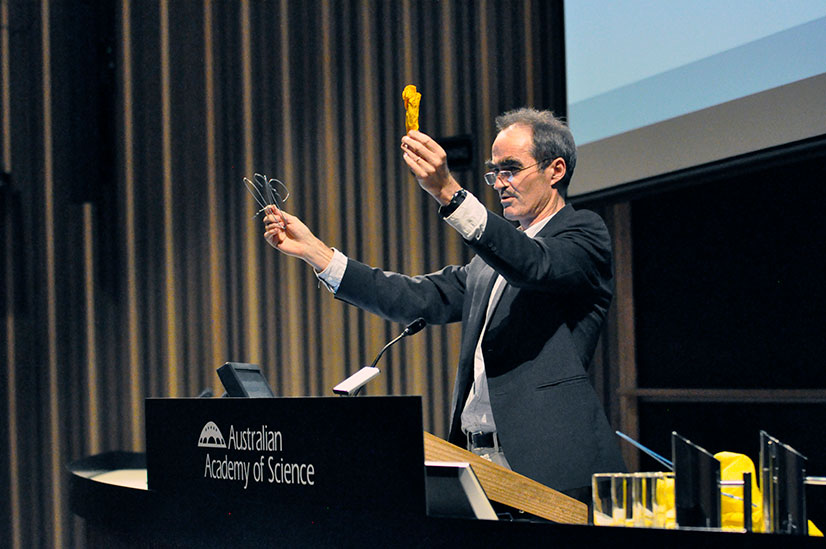
Malaria researcher, Professor Kiaran Kirk spoke about the threat of antimicrobial resistance and the drugs currently in development at the final talk of the Academy’s 2016 Canberra Public Speaker Series.
Professor Kirk’s talk: ‘Waging chemical warfare on microorganisms’ looked into the rapid evolution of bacteria, fungi and parasites that cause infectious diseases.
Bacterial infections used to be a significant cause of death in humans until penicillin and other antibiotic drugs discovered in the 20th Century helped drastically reduce the incidence and impact of bacterial diseases. However, widespread inappropriate and incorrect use of these drugs in humans and in animals has allowed strains of bacteria to evolve partial or full resistance to our existing drugs, and the pipeline of new antimicrobials in development is critically small.
Professor Kirk is Dean of the College of Medicine, Biology and Environment at the ANU. As well as discussing rising levels of antibiotic resistance, he told the audience that the malaria parasite is becoming resistant to our last lines of medicinal defence in parts of South East Asia, surviving longer in the blood when treated with the current frontline antimalarial medication.
He explained that the malaria parasite, by hiding inside the liver cells and red blood cells of its victim, makes it very hard for our immune system to detect and destroy the parasite. We are therefore very reliant on antimalarial drugs to combat the disease. The emergence and spread of drug resistant parasites is therefore a grave concern.
However, there is hope on the horizon. There are new drugs being identified and developed. Professor Kirk discussed recent work from his lab at the Australian National University, in which a former student, Dr Natalie Spillman, showed that one of these new drug candidates kills parasites by targeting a molecular salt pump, causing a critical build-up in sodium inside the parasite. The drug is now in human clinical trials and shows promise of becoming a much-needed new treatment for malaria.
If and when this new drug is released, it will be combined with at least one other antimalarial, to try to minimise the likelihood of resistance arising.
During the event the Academy’s 2017 Canberra Public Speaker Series, Dawn of the new space age, was announced, with series passes now available.
The livestream is available on the Academy's YouTube channel, and event tweets via @science_academy and the #everydaysci trail on Twitter.
Academy provides access to science history journal in support of global research
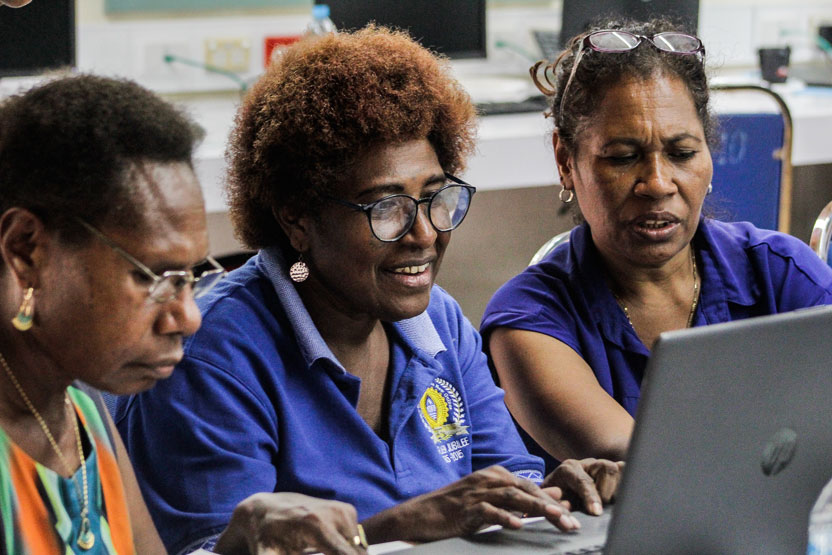
Attendees at a Papua New Guinea Research4Life workshop in 2019. Image: Stephen Jnr Taera
The Australian Academy of Science is providing access to its history of science journal free of charge to researchers in lower income countries.
Historical Records of Australian Science has joined CSIRO Publishing’s partnership with Research4Life, which provides institutions in more than 80 countries with online access to academic and professional peer-reviewed content. An additional 44 countries will receive low-cost access, and refugee camps are eligible for free Research4Life access regardless of their location.
As part of the Research4Life partnership with CSIRO Publishing, the Academy is exploring a further expansion of the Historical Records of Australian Science collaboration to cover article publication charges to support open access publication for new submissions from scientists belonging to eligible groups. This new initiative will allow authors from low- and middle-income countries to publish open access as the default option, without financial barriers.
The partnership underscores the continued commitment of the Academy and CSIRO Publishing to removing barriers in scientific publishing and broadening global access to research, ensuring equity and inclusivity for those with limited resources.
Reducing global inequalities in access to knowledge
The aim of Research4Life is to improve teaching, research and policy-making in health, agriculture, the environment and other life, physical and social sciences by reducing global inequalities in access to knowledge.
According to Research4Life, it cultivates an inclusive and equitable scholarly communications environment which enables researchers from low- and middle-income countries to address societal challenges.
The organisation is working to transform research support from one-way donation to reciprocal engagement to enable diverse and rich scholarly exchange, to significantly increase participation of researchers from low and middle income countries in the global research community, and to support local networks in capacity development.
Historical Records of Australian Science
The Academy’s journal publishes historical articles and documents relating to the history of science, pure and applied, in Australia, New Zealand and the southwest Pacific. It also publishes biographical memoirs of Academy Fellows, essays, book reviews and an annual bibliography of the history of science in Australia and the Southwest Pacific.
Countries that now have free access to the journal include Timor-Leste, Papua New Guinea and many Pacific Island nations.
Academies join forces to launch COVID-19 expert database
[Note: The link to the expert database on this page became inactive when the Academy closed the database in August 2022.]

Today, the learned academies of Australia—representing over 3,000 of the nation’s best and most eminent scientists, researchers and other experts—come together to launch a searchable database of experts to help Australia tackle COVID-19.
Australian Academy of Science Chief Executive, Ms Anna-Maria Arabia, said the academies have created the COVID-19 Expert Database to provide a mechanism for governments, the business sector, the research sector and other decision-makers to easily access the expertise they need across many fields. The database is championed by Australia’s Chief Scientist, Dr Alan Finkel AO.
“If you have expertise that can contribute to the national and global effort to tackle and recover from COVID-19, we call on you to register on this database,” Ms Arabia said.
“All fields of expertise including science, technology, engineering, mathematics, health, humanities, arts, and social science are needed.
“Australia and the world will benefit from quick access to expertise that provides insights into the COVID-19 pandemic and its scientific, health, social, cultural and economic implications.
“The COVID-19 Expert Database is a public resource to inform decision-making in a fast-changing environment. By gathering the extraordinary expertise across our nation in one place, Australian academies offer governments and others an opportunity to consult experts and take actions that are evidence-informed and targeted.
“Cross-disciplinary research has been the key to solving many of the world’s greatest challenges and tackling COVID-19 will be no different,” Ms Arabia said.
The COVID-19 Expert Database, championed by Australia’s Chief Scientist, is a collaborative effort between Australia’s learned academies, the:
- Australian Academy of Science
- Australian Academy of Health and Medical Sciences
- Australian Academy of the Humanities
- Australian Council of Learned Academies
- Academy of the Social Sciences in Australia
- Australian Academy of Technology and Engineering.
Academy Fellows honoured on Australia Day
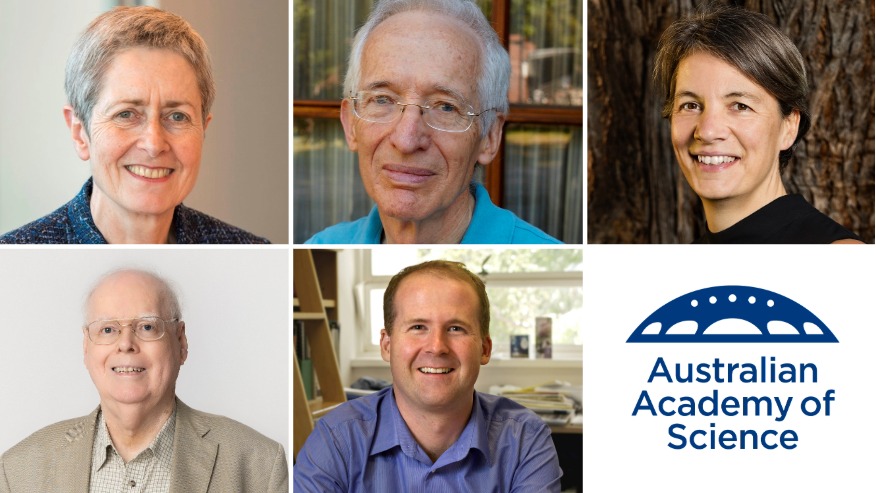
Top, left to right: Professor Anne Kelso AC FAA FAHMS, Emeritus Professor Bruce Armstrong AC FAA, Scientia Professor Michelle Simmons AC FAA FTSE FRS. Bottom, left to right: Professor John Cannon AO FAA, Professor Mark Cassidy AM FAA FTSE.
Five Fellows of the Australian Academy of Science have been recognised for distinguished and outstanding service in the 2026 Australia Day Honours List.
Companion of the Order of Australia (AC)
- Emeritus Professor Bruce Armstrong AC FAA – For eminent service to medical research, to environmental and genetic cancer epidemiology, to screening service development, to academia, and to public health administration.
- Professor Anne Kelso AC FAA FAHMS – For eminent service to health and medical research sciences and administration, to Australian influenza preparedness, and to gender equity.
- Scientia Professor Michelle Simmons AC FAA FTSE FRS – For eminent service to quantum physics and nanotechnology research, to atomic-scale engineering, to technology innovation and commercialisation, and to STEM education.
Officer of the Order of Australia (AO)
- Professor John Cannon AO FAA – For distinguished service to tertiary education, to mathematical computation, to cryptography, and to the development of algebraic software systems.
Member of the Order of Australia (AM)
- Professor Mark Cassidy AM FAA FTSE – For service to geotechnical science, to engineering, and to academia.
The Academy offers its warmest congratulations to all the 2026 Australia Day Honours recipients.
Global epilepsy pioneer elected 21st President of the Australian Academy of Science
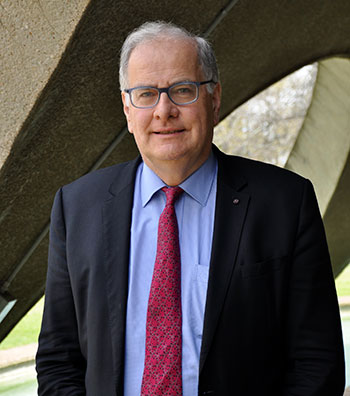
One of the world’s most respected neurologists whose pioneering work changed the way we think about epilepsy will become the next President of the Australian Academy of Science – Australia’s leading independent voice for science.
Laureate Professor Sam Berkovic AC FAA FAHMS FRS, from the University of Melbourne and Foundation Director of the Epilepsy Research Centre at Austin Health, has been elected by his peers as the 21st President of the Academy.
Professor Berkovic says he feels honoured to have the opportunity to lead the Academy and thanks the Academy Fellowship for the trust they have placed in him.
“Bringing science to the service of the nation so that everyone can benefit from it will be paramount during my presidency,” says Professor Berkovic.
“Australians are experiencing mass disruption in the form of rapid technological change, climate impacts and shifts in the way we engage with the world due to geopolitical tensions. Science is central to each of these, and it will be important that the Academy rises to these challenges.
“I’m driven to ensure politicians and other decision-makers – locally and abroad – can draw on the science sector to guide their decisions.
“I am conscious that I take the reins of this esteemed institution at a time when investment in research and development is at a historic low.
“I look forward to building on the advocacy of President Jagadish on this issue and to propose solutions so Australia can build an R&D system able to support our national interests.”
About Professor Berkovic’s research
Epilepsy is a chronic noncommunicable disease of the brain that affects around 50 million people worldwide and is characterised by recurrent seizures.
Thirty years ago, doctors regarded most forms of epilepsy as acquired rather than inherited. That was until Professor Berkovic, together with molecular genetic collaborators in Adelaide and Germany, discovered the first gene for epilepsy in 1995.
Professor Berkovic’s own discoveries revolutionised basic scientific research into epilepsy. His research established the connection between genetics and epilepsy, with major global efforts now focused on gene discovery and understanding how genetic abnormalities cause seizures.
Life growing up
Professor Berkovic's parents were Holocaust survivors who emigrated from Europe to Melbourne after the war. Like most migrants, says Professor Berkovic, his parents arrived with nothing, worked extremely hard and instilled in him the importance of a good education.
There was no scientific influence from Professor Berkovic’s parents, with his father importing jewellery and his mother managing the household. However, Berkovic showed an interest in medicine at a young age which was fostered and encouraged by his parents.
“There's an old joke that’s half true, certainly from my generation, which was that if you couldn't stand the sight of blood, you went into law,” Professor Berkovic told The Lancet Neurology.
Professor Berkovic studied medicine at the University of Melbourne and then landed his first job as an intern at Austin Hospital in 1975. A fascination with the brain led him to join the neurology department where he was inspired to pursue a research career in neurology by the late Professor Peter Bladin AO.
Professor Berkovic was introduced to genetics while studying epilepsy at McGill University in Montreal, Canada in the 1980s.
Awards and accolades from colleagues
Outgoing Academy President Professor Chennupati Jagadish AC PresAA FRS FREng FTSE says he is delighted Professor Berkovic has been elected as the next Academy President.
“Professor Berkovic’s journey from the child of Holocaust survivors to a world-leading researcher and clinician is powerful,” says Professor Jagadish.
“Sam is well known for his mentorship of young researchers and has put Australia at the forefront of global research into epilepsy while improving the lives of people around the globe.”
In 2014, Professor Berkovic won the Prime Minister’s Prize for Science alongside Professor Ingrid Scheffer AO PresAAHMS FAA FRS, for their groundbreaking work in epilepsy and its genetic links.
The following year he was recognised as the Victorian Senior Australian of the Year.
Professor Berkovic was elected a Fellow of the Academy in 2005, a Fellow of the Royal Society in 2007, and a Member of the National Academy of Medicine (USA) in 2017 for his outstanding contributions to science.
He formerly served on the Academy’s Council as a Member for Biological Sciences and on various committees.
Academy Council
Professor Berkovic will officially become the 21st President of the Academy in May 2026.
The Academy congratulates other Fellows elected to the Academy’s Council who will also commence their roles in May 2026:
- Professor Steven Chown FAA – Foreign Secretary
- Professor Hala Zreiqat AM FTSE FAHMS – Secretary Education
- Professor Naomi McClure-Griffiths FAA – Spokesperson for Integrity
- Professor Christine Beveridge FAA – Member, Biological Sciences
- Professor Rob Baxter AM FAA – Member, Biological Sciences
The science of immunisation: questions and answers
Do you have questions about immunisation?
The Australian Academy of Science provides information that explains the science of immunisation in clear and easy-to-understand language, with the aim of supporting you to make good health decisions based on science.
The science of immunisation: questions and answers booklet
‘The science of immunisation: questions and answers’ is freely available for download. It was prepared by an expert working group of 12 members chaired by Professor Carola Vinuesa FAA FAHMS, and was reviewed by an expert panel.