Bright Minds, Bold Voices: Series
2026 series details
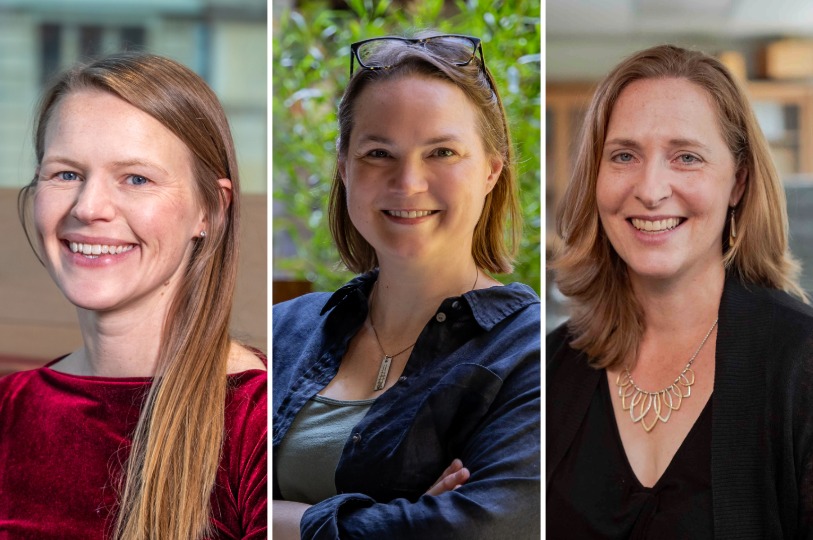
Each event in the series will pair a notable public figure with a top scientist or innovator. Together with ABC Canberra's Lish Fejer, they will explore the big issues shaping our future from health and wellbeing in the sky, to the food that fuels us every day, to the research and innovation that drives Australia's future.
Expect boundary-pushing ideas, sharp insights into challenges, and fresh perspectives on what matters.
Announcement of speakers coming soon!
Event dates
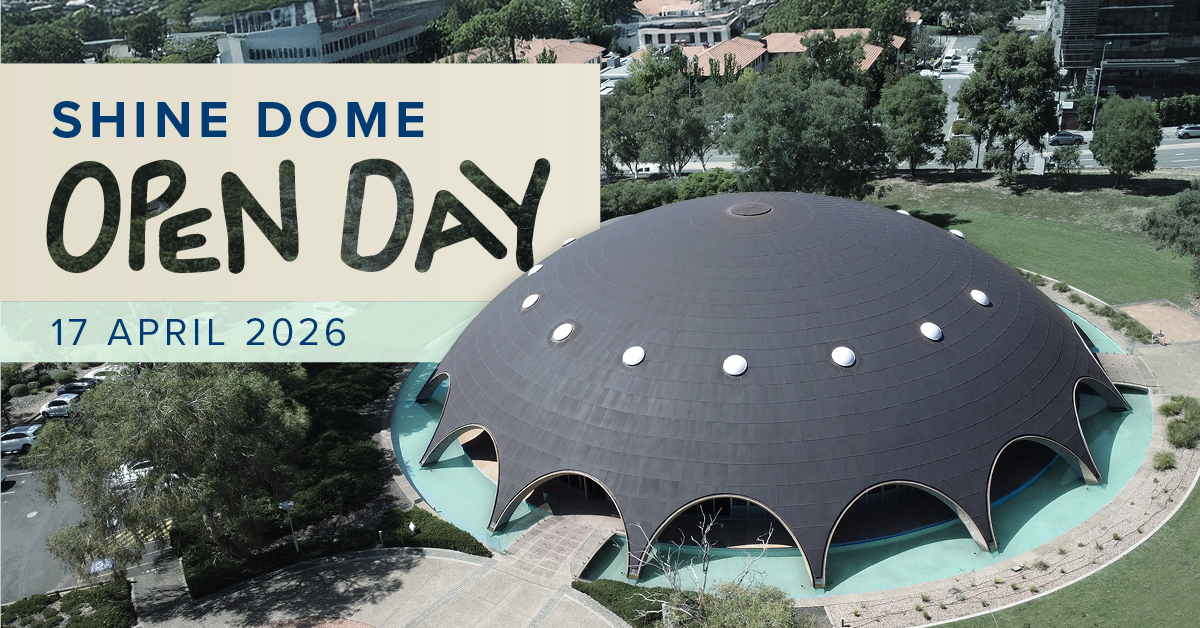
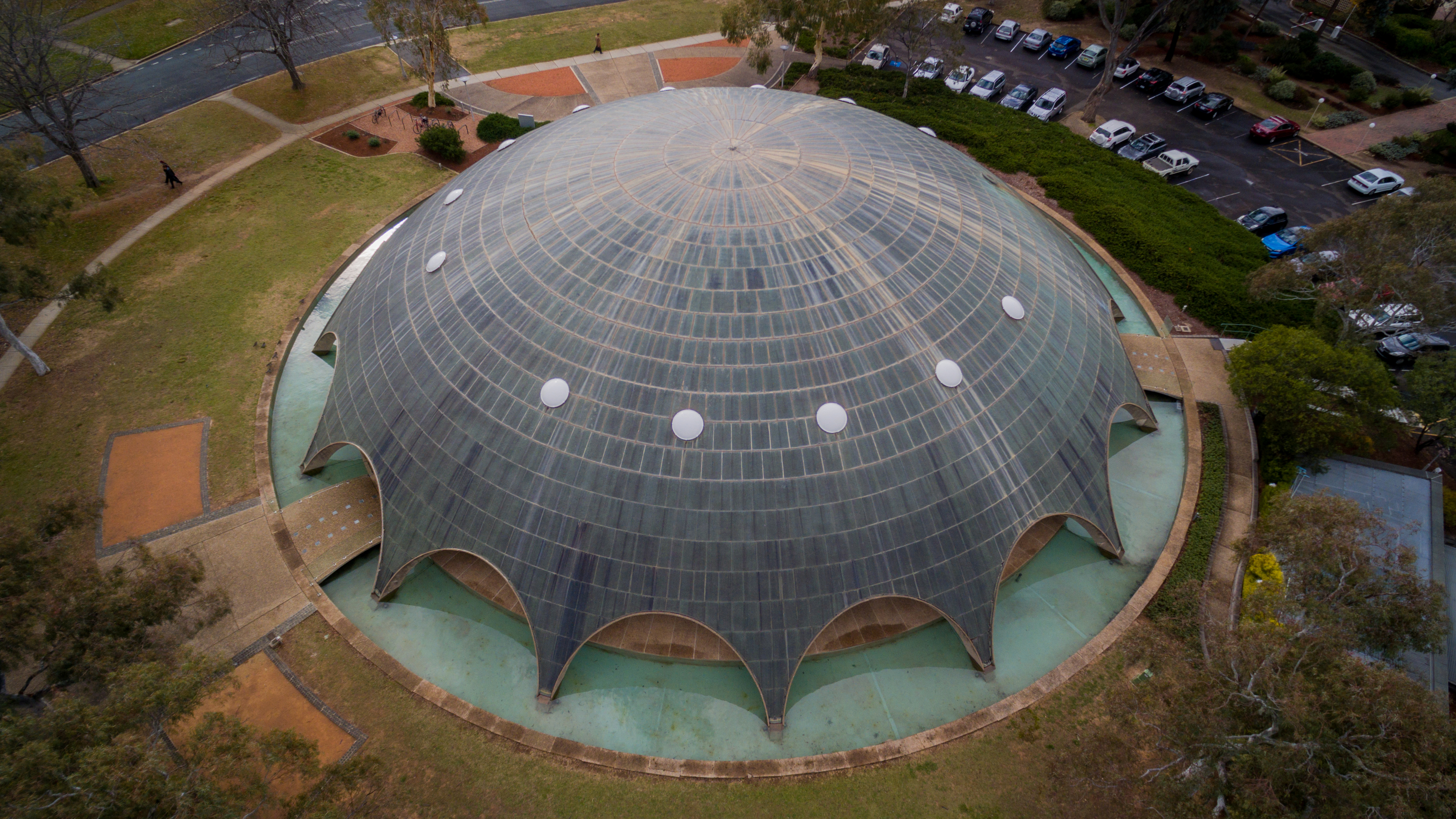
All events are held at the Shine Dome in Canberra as follows.
Tuesday 14 April – Reimagining how we fly
Tuesday 25 August – Food, science and the stories we swallow
Tuesday 8 December – From research to reality: Australia's opportunity
Event tickets
Series passes to attend three events are available until Tuesday 14 April 2026.
Series pass: $60.00 / $45.00 (students)
- Includes:
- attendance at all three events at the Shine Dome
- canapés and drinks before each event
- priority opportunity to engage with speakers during audience Q&A sessions
- access to event recordings.
Online series pass: Free (optional contribution to help the Academy cover costs and ensure livestream can remain free and accessible for all)
- Includes:
- access to livestream of all three events
- opportunity to engage with speakers during audience Q&A sessions via the online form
- access to all event recordings.
Single event ticket: $22.00 / $17.00 (students)
- Includes:
- attendance at one event at the Shine Dome
- canapés and drinks before the event
- priority opportunity to engage with speakers during audience Q&A
- access to event recording.
Online single event ticket: Free (optional contribution to help the Academy cover costs and ensure livestream can remain free and accessible for all)
- Includes:
- access to livestream of one event
- opportunity to engage with speakers during audience Q&A via the online form
- access to event recording.
Series host
The Academy is pleased to welcome back ABC's Lish Fejer as the host for this series. As a seasoned radio broadcaster and passionate science communicator, Lish will deliver illuminating sessions with her engaging style and thought-provoking questions.
Series convenor
Thank you to our series convenor for 2026:
Series supporter
Partnership opportunities
Opportunities are available to partner with the Academy to help deliver this exciting event series. Event partners enjoy a range of benefits, including complimentary tickets, speaking and branding opportunities, extensive promotion on social media platforms, and more.
Contact Lisa Crocker on 0488 044 186 or at lisa.crocker@science.org.au to discuss these opportunities.
Academy events
The Australian Academy of Science’s public speaker series is a long-standing initiative that informs, educates and inspires. To view recordings of past events, visit the series page on the Academy website.
To hear more about Academy events and activities, subscribe to the range of newsletters delivered to inboxes around the world.
Support the Academy
The Australian Academy of Science is an independent organisation of distinguished Australian scientists, championing science for the benefit of all. Our mission is to advance Australia as a nation that embraces scientific knowledge and whose people enjoy the benefits of science.
Donations to the Academy play an important role in bringing science to the service of our nation, and for all Australians. Your support helps us to contribute to the overall progress of science in our country and across the globe.
Bequests
A bequest is a special gift that ensures the Academy remains a part of the lives of future generations and as a leader in scientific excellence in Australia.
Thanks to the generosity of our supporters, bequests from Fellows and friends have helped the Academy to maintain our independence and respond to emerging scientific issues in Australia.
A gift in your Will can leave a lasting mark on Ausralian science, allowing the Academy to continue championing Australian scientific excellence, promote and share scientific knowledge, and provide independent scientific advice for the benefit of Australia and the world.
As a supporter of the Academy, you will help to create a legacy that will continue to foster, celebrate, and promote scientific excellence in this nation for generations to come.
Download our Bequest Charter
Remembering the Academy in your Will
A bequest to the Australian Academy of Science is a meaningful way to contribute to Australia’s scientific future. Your gift can be made for specific or general purposes, ensuring long-term impact. Please contact us to establish a letter of wishes to reflect your intentions.
The Academy greatly appreciates all gifts. You may choose to leave a specific amount, the residue of your estate, or a percentage of the residue after other gifts are made. Please contact us if there are other types of gifts in your Will that you would like to consider.
Wording for gifts to the Australian Academy of Science
Please consider the below suggested wording in consultation with your legal representative. Your legal representative can ensure that the contents of your Will accurately reflect your intentions.
Specific amount
“I give the sum of $_______ to the Australian Academy of Science (ABN 90 700 613 342) of Ian Potter House, 9 Gordon Street, Acton, ACT 2601. I direct that the receipt of the proper officer of the Academy will be sufficient discharge to my executors.”
Residue or percentage of residue
“I give the residue of my estate (or _____% of the residue of my estate) to the Australian Academy of Science (ABN 90 700 613 342) of Ian Potter House, 9 Gordon Street, Acton, ACT 2601. I direct that the receipt of the proper officer of the Academy will be sufficient discharge to my executors.”
Writing your Will online
The Australian Academy of Science has partnered with Safewill, an Australian online Will writing platform, to provide a simple, accessible way to write your Will. The online form takes around 20 minutes and includes an option to nominate the Australian Academy of Science as a beneficiary, should you wish to do so. Every Will is reviewed by Safewill Legal, their affiliate law firm, to ensure it meets legal requirements.
Right now until 30 March 2026, you have the opportunity to write your Will online for free with Safewill. The usual cost of $160 is waived when you use the link below.
For a confidential discussion about remembering the Academy in your will, please contact:
Kate Groves
Australian Academy of Science
GPO Box 783, Canberra, ACT 2601
(02) 6201 9460 or bequests@science.org.au
Download our Bequest brochure
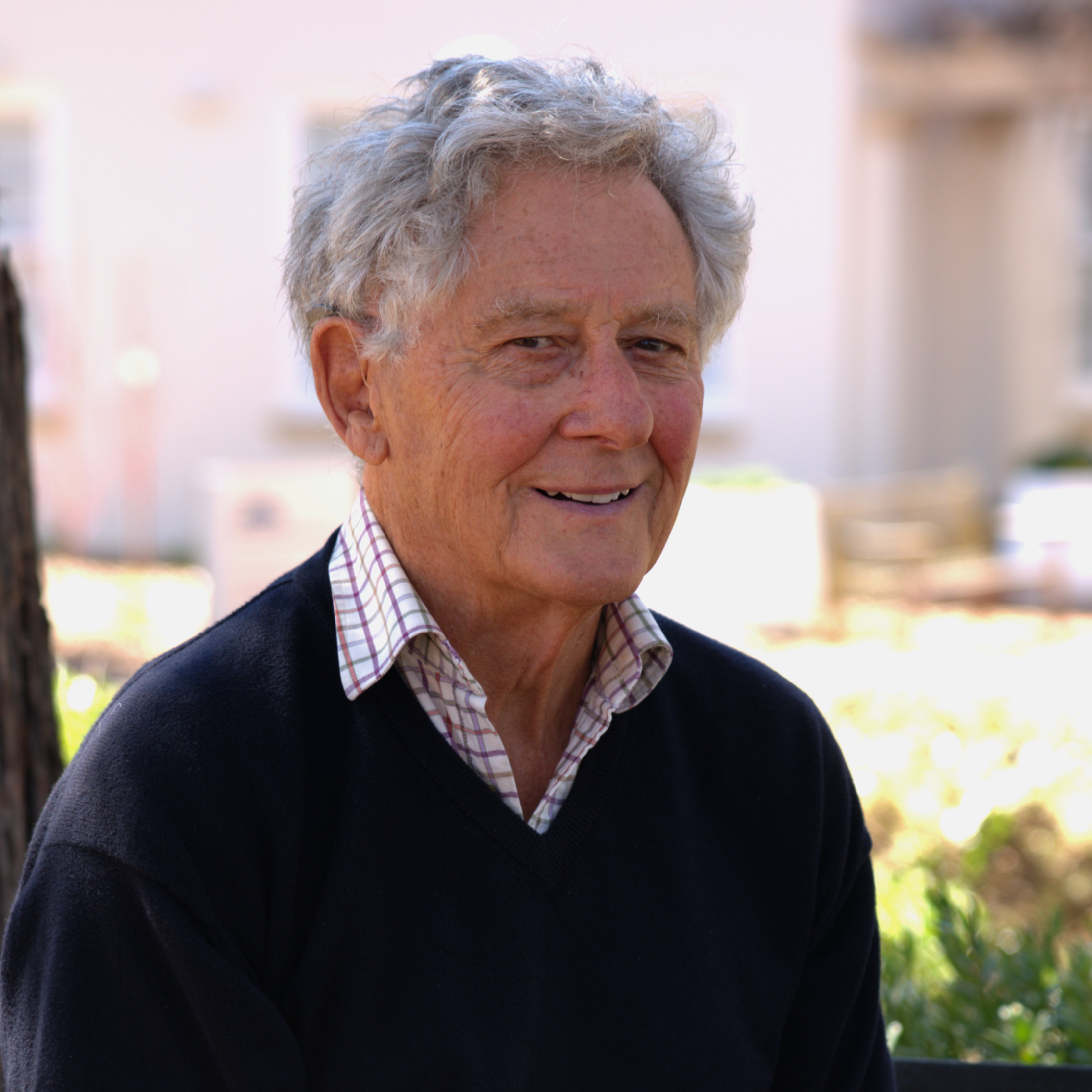
Professor Mike Dopita FAA pledges bequest to the Academy
Professor Michael (Mike) Dopita AM FAA pledged his bequest for the future of science in Australia.
Recently the Academy received two bequests - one was directed to a specific activity where the donor had intimate knowledge and commitment to the Academy’s education programs. The other was directed to the Australian Futures Science Fund which supports the future work at the Academy as prioritised by council.
We were notified about one of them, the other was a complete surprise. At opposite ends of the spectrum in magnitude and purpose, they’ve helped the Academy to consolidate support for existing projects, and start others from scratch.
We are grateful to receive them and honoured by their trust in the Academy’s commitment to supporting science in Australia.
Recently, Professor Michael (Mike) Dopita AM FAA met with Academy staff to advise of his pledged bequest to the Academy.
As a former treasurer, Mike has an appreciation of the Academy’s needs. The pure delight with which Mike spoke of his pledged bequest and his deep understanding of the Academy’s needs were obvious. Mike’s bequest represents a significant donation, one that is not tied to a specific activity of the Academy. By giving to the Australian Futures Science Fund Mike’s gift will allow us to advance our work.
Mike Dopita writes:
In my over 6 years as Treasurer of the Academy, I was constantly amazed by the enthusiasm, professionalism and dedication of the staff. They work to educate the general public on key issues such as climate change and the need for vaccination, labour tirelessly to instil a knowledge and understanding of science at both primary and secondary levels as an investment in Australia's future science literacy, build Australia's connections and standing with our international peers, and lobby and cajole Australia’s politicians to help develop more rationalpolicies with respect to science, STEM education and renewable energy.
At the same time, in my function as Treasurer, I was acutely aware of the limitations on our ability to act placed upon us by our budgetary limitations, and on more than one occasion a promising initiative could not be developed due to a lack of funding.
This is where bequests could help. Too often, the temptation of a giver is to memorialise one's own field of science, through striking a medal or creating a special purpose fund. This is eminently understandable, but does not greatly assist the functioning of the Academy in the long run. What is desperately needed now are untied donations which can be used for whatever purpose Council or EXCOM requires to develop the core mission of the Academy. For this reason, I have now made a binding bequest to the Academy of Science designed to add to the Australia Futures Science Fund, in the sure knowledge that the money will be well-spent in securing a more healthy, literate, rational and science-driven future for all Australians.
As a supporter of the Academy of Science’s Australian Futures Science Fund, you will help to create a legacy that will not only guarantee the Academy’s financial independence, but will continue to promote scientific excellence in this nation for generations to come.
Meet others who have joined the Australian Futures Science Fund by pledging a gift in their will
Professor Neville Fletcher AM FAA FTSE
Secretary for Physical Sciences 1980-84, Chair of the committee overseeing the development of the Academy project for primary-school science, Primary Investigations.
The late Professor Neville Fletcher spoke at the launch of the Academy’s First Steps in Science and Technology booklet in November 1991. In that speech he said: “The only way that you are going to get young people to take science seriously is if there are people teaching it effectively in primary schools from the age of four, five or six. By the time they get to 12 or 13, forget it. It’s just another part of the curriculum and it’s a difficult one.”
Twenty-four years later, the Academy has made great strides in educating our young children in primary schools and Professor Fletcher made a valued gift to the academy in his will to ensure those efforts continue into the future.
Professor Ken Cavill FAA
A Primary Connections’ donor says his interest in science, and in organic chemistry in particular, was fostered by outstanding teachers at school and university. ‘As a pioneer in the field of insect chemistry I was able to build up a substantial team of higher degree students and research workers from the early 1950s.
‘At the Academy, I have strongly supported projects focusing on science education and recently, the extensive teacher training to the Primary Connections Program. Not only good text, but good teaching is essential at all levels.’
Support like that of the late Professor Cavill FAA will ensure that the Academy continues to provide the opportunities for our primary school teachers and their pupils to receive the very best science education possible.
Preserving Australia's scientific legacy
The research of Australian scientists forms the foundation on which we build our future. It’s vitally important that we capture their stories and preserve and digitise their research — but we need your help.
Listening to the past to understand the future
From 1995 to 2012, the Australian Academy of Science documented the remarkable stories of Australian scientists through our Conversations with Australian Scientists program.
We recorded interviews with nearly 150 researchers, but there are still so many fascinating and essential stories yet to be told, and who better to tell them than the scientists themselves?
We are committed to reinvigorating Conversations with Australian Scientists in audio (podcast) format. Join us to support this project recording stories that will enrich and inspire the next generation of exceptional scientists and provide a unique and personal insight into the challenges and progress of science.
“It’s investing in our future,” says Academy Fellow Professor Robyn Williams AM, ABC science journalist and broadcaster. “When you hear these stories about how things can be transformed, you are both inspired and excited.”
The importance of taking the time to document our scientists’ amazing lives cannot be overestimated, says Williams. “The number of science media publications and broadcasts is getting smaller and smaller, so if we don't do it, no one else will.”
Breathing life into our valuable archives
Alongside our Conversations with Australian Scientists sits the Academy’s unique and valuable archives. These archives include the collections of some of Australia’s most famous scientists, including Academy Fellow Professor Frank Fenner. The Frank Fenner manuscript collection was added to the UNESCO Australian Memory of the World Register in 2019.
“The Academy is the only place in the world that holds these scientific collections, and we continue to receive strong global interest to access the archives, with historians and researchers visiting Canberra to access them,” says Academy Chief Executive Anna-Maria Arabia.
Even with the best of care, the archives are at risk of damage and degradation over time. Digitisation of the collections will protect and preserve them for many generations and open them up to the world for scientific and historical research.
“The Academy has been fundraising to have the archives digitised and made available online, but we have not yet met our target to achieve this. There is a wonderful opportunity to make history with us,” she says.
Donations from organisations and individuals are welcome and will contribute toward the costs of preparing for and conducting the interviews of Fellows of the Academy, and the very significant cost of digitising the archives.
Make History with Us - #SaveScienceArchives
If you would like more information about these projects, please contact our Philanthropy Manager today by calling 02 6201 9400 or email philanthropy@science.org.au
Volunteer opportunity
The Archives of the Australian Academy of Science work with DigiVol, an initiative of the Australian Museum and Atlas of Living Australia, to harness the power of online volunteers. Opportunities exist to transcribe and extract vital information locked within the nationally significant history of science collection. Interested volunteers should contact the archivist at library@science.org.au
Awards
Supporting the Australian Academy of Science Awards Program
The Australian Academy of Science champions, celebrates and supports excellence in Australian science throughout the scientific community and wider public.
Your donations allow the Academy to continue to recognise and support outstanding scientists and their research that can lead to scientific discovery and help to create a future for scientific excellence. The Academy also funds specialist conferences, lectures and travelling fellowships to enable the exchange of scientific ideas, to promote Australian scientific capabilities nationally and internationally, and facilitate access to international research programs.
There are many more excellent projects and researchers seeking support than resources available.
Guidelines on acceptance of funding
These guidelines set out the framework within which members of Council, the Development Advisory Committee (DAC), and any individuals to whom Council delegates its authority consider matters related to acceptance of funding by the Academy. The guidelines cover all funding from external sources, including gifts, donations, legacies, bequests, sponsorships and partnerships. Project grants are considered separately by the Executive Committee of Council (EXCOM).
Online use policy
The Australian Academy of Science provides opportunities through its website and various social media channels to facilitate communication among individual members of the Academy’s community defined as ‘users’ (including Fellows, staff and friends), and between such users and the Australian Academy of Science.
Certain uses of these channels are inconsistent with this purpose, including, but not limited to:
- posts that are unrelated to the current topic
- activities that are illegal or fraudulent under Australian law
- use that inaccurately implies endorsement, approval, or sponsorship by the Australian Academy of Science
- use that can be confused with official communications of the Australian Academy of Science
- activities that violate other users’ privacy, including the release of private personal information about others, such as name, address, or phone number
- activities that further commercial or other personal financial gain
- posting content that is offensive, hateful, threatening, libellous, or pornographic; incites violence; or contains nudity or graphic or gratuitous violence
- harassment of any individual or entity.
The Australian Academy of Science reserves the right to deny access to its communication channels. The Australian Academy of Science will deny access to those who violate the above standards or other applicable policies in these or similar practices. Participants on the Australian Academy of Science site and in the various social media channels who misuse information and communication services may be removed from all online communities permanently. The Australian Academy of Science reserves the right to move or delete any postings.
Please contact our media officer to give feedback or to report violations of this online use policy.
Code of Conduct
Fellows Code of Conduct (2024)
This Code of Conduct has been developed to inform Fellows about responsibilities and expectations in support of the Academy's mission.
The Academy does not tolerate bullying and harassment and has a commitment to investigating and where warranted acting on reported or alleged instances of bullying and harassment in a prompt and decisive manner.
Participants Conduct Policy
The Participants Conduct Policy is a summary of the Code of Conduct and is applied to all Academy activities.
Please contact the Academy if you have any questions about the Code of Conduct or the Participants Conduct Policy.
UNCOVER Summit – Presentations
The UNCOVER Summit was a major national geoscience meeting focused on improving mineral exploration under deep cover in Australia. It was part of the broader UNCOVER initiative, which aimed to coordinate science, industry and government to boost Australia’s exploration success in covered areas.
Monday
Session 1
UNCOVER Summit 2014
UNCOVER Summit 2014
UNCOVER Summit 2014
UNCOVER Summit 2014
UNCOVER Summit 2014
Session 2
UNCOVER Summit 2014
UNCOVER Summit 2014
UNCOVER Summit 2014
UNCOVER Summit 2014
Session 3
UNCOVER Summit 2014
UNCOVER Summit 2014
UNCOVER Summit 2014
Tuesday
Session 4
UNCOVER Summit 2014
UNCOVER Summit 2014
UNCOVER Summit 2014
Session 5
UNCOVER Summit 2014
UNCOVER Summit 2014
UNCOVER Summit 2014
Session 6
UNCOVER Summit 2014
UNCOVER Summit 2014
UNCOVER Summit 2014
UNCOVER Summit 2014
Wednesday
Session 7
UNCOVER Summit 2014
UNCOVER Summit 2014
Session 8
UNCOVER Summit 2014
UNCOVER Summit 2014
Quickfire sessions
UNCOVER Summit 2014
UNCOVER Summit 2014
UNCOVER Summit 2014
UNCOVER Summit 2014
UNCOVER Summit 2014
UNCOVER Summit 2014
UNCOVER Summit 2014
UNCOVER Summit 2014
UNCOVER Summit 2014
UNCOVER Summit 2014
UNCOVER Summit 2014
UNCOVER Summit 2014
UNCOVER Summit 2014
UNCOVER Summit 2014
UNCOVER Summit 2014
UNCOVER Summit 2014
UNCOVER Summit 2014
Geophysics – Characterising the cover
UNCOVER Summit 2014
UNCOVER Summit 2014
UNCOVER Summit 2014
UNCOVER Summit 2014
UNCOVER Summit 2014
UNCOVER Summit 2014
UNCOVER Summit 2014
UNCOVER Summit 2014
UNCOVER Summit 2014
UNCOVER Summit 2014
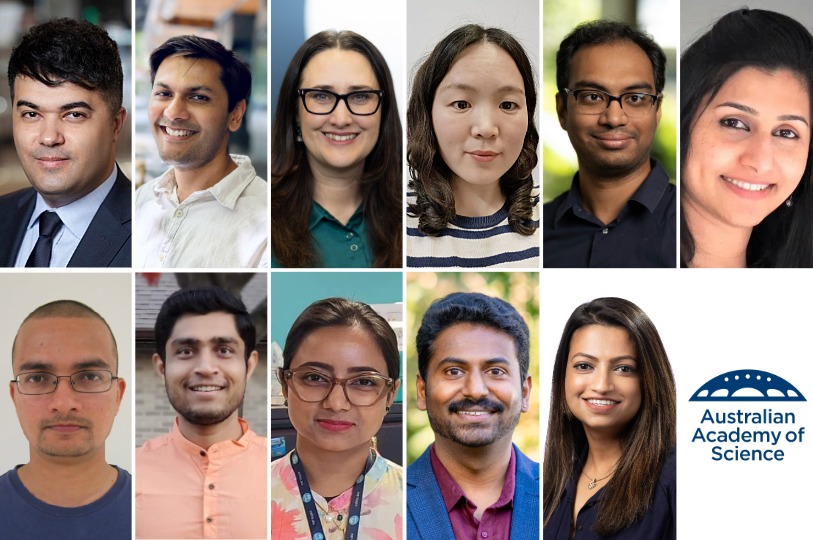
2024 awardees
Outstanding contributions to science have been recognised by the Australian Academy of Science with 22 of Australia’s leading scientists receiving a prestigious honorific award in 2024.
On this page
Premier honorific awards
- Macfarlane Burnet Medal and Lecture – David Lindenmayer
- Ruby Payne-Scott Medal and Lecture – Kerrie Mengersen
Career honorific awards
- David Craig Medal and Lecture – Justin Gooding
- Haddon Forrester King Medal – Stephen Cox
- Ian Wark Medal and Lecture – Anthony Weiss
- Mawson Medal and Lecture – Adriana Dutkiewicz
- Suzanne Cory Medal – Peter Koopman
Mid-career honorific awards
- Gustav Nossal Medal – Andrew Steer
- Nancy Millis Medal for Women in Science – Anita Ho-Baillie
Early-career honorific awards
- Anton Hales Medal – Andrew King
- Christopher Heyde Medal – Serena Dipierro
- Christopher Heyde Medal – Christopher Lustri
- Dorothy Hill Medal – Ailie Gallant
- Fenner Medal – Ana Martins Sequeira
- Frederick White Medal – Hamish Clarke
- Gottschalk Medal – Eric Chow
- Gottschalk Medal – Kirsty Short
- John Booker Medal – Lining Arnold Ju
- Le Fèvre Medal – Yao Zheng
- Pawsey Medal – Jiajia Zhou
- Ruth Stephens Gani Medal – Sonia Shah
- Ruth Stephens Gani Medal – Stephin Vervoort
Premier honorific awards
2024 Macfarlane Burnet Medal and Lecture
Professor David Lindenmayer AO FAA, Australian National University
Professor David Lindenmayer is an international authority on conservation and landscape ecology. He has discovered novel ways in which key drivers of landscape change interact to affect biodiversity, ecological processes and ecosystem condition. Through a pioneering series of large-scale, long-term studies in forests, plantations and agricultural environments, he has uniquely demonstrated how pre-existing landscape conditions combine with new kinds of landscape transformation to shape temporal and spatial patterns of species decline and recovery at multiple scales (from individual trees to sites, landscapes and regions). Professor Lindenmayer has also discovered mechanisms through which species respond to multiple natural and human disturbances. With his unique perspectives across an array of ecosystems, he established innovative strategies for the management of biota and ecosystems in Australia and globally. He has also developed new conceptual models and approaches for designing experiments and other kinds of studies to quantify the effects of multiple, interacting factors on biodiversity.
2024 Ruby Payne-Scott Medal and Lecture
Professor Kerrie Mengersen FAA, Queensland University of Technology
Distinguished Professor Kerrie Mengersen’s 35 year post-PhD research career has focused on the development of new statistical methodology motivated by challenging real-world applications. As a pioneer and leader of Bayesian statistics in Australia, her first 25 years focused substantively on research and translation of Bayesian methods and computational algorithms. In the last decade, her research has expanded further to embrace new types of data and data science, with the former including digital and citizen science data, and the latter focused on the intersection between statistics, machine learning and artificial intelligence. Professor Mengersen’s work is explicitly multidisciplinary and all of her contributions have been jointly developed with collaborators. She has maintained a career-long focus on engaging with and mentoring women in mathematical and applied sciences, and has more recently had the pleasure and honour of working with Indigenous Australian researchers.
Career honorific awards
2024 David Craig Medal and Lecture
Professor Justin Gooding FAA FTSE, University of New South Wales
Professor Justin Gooding is an international leader in the field of surface chemistry; in particular, he is renowned as a leading authority in the modification of surfaces for the development of better sensing devices. Characterised by using molecular to nanoscale control, his science systematically addresses fundamental questions in electrochemistry and biology, as well as general challenges facing many sensors and analytical devices. He has made outstanding contributions to fundamental and applied research using self-assembled monolayers to fabricate molecular scale constructs on surfaces that provided new measurement tools. Professor Gooding’s work has shown not only how to design and fabricate sophisticated surface architecture for sensing, but he has also changed thinking on both the level of control that is possible and the types of information that can be acquired using that control.
2024 Haddon Forrester King Medal
Professor Stephen Cox, Australian National University
Professor Stephen Cox has conducted research spanning the fields of experimental rock deformation, field-based structural geology, microstructural analysis, isotope geochemistry, seismology and numerical simulation to explore how fluid migration deep in Earth’s crust triggers earthquakes and generates the high permeabilities necessary to sustain the development of many types of ore deposits whose formation involves large fluxes of metal-bearing fluids. His research is providing new understanding of the dynamic coupling between fluid flow, deformation processes, and reaction involved in the formation of ore deposits. It is also providing insight into how the structure of seismically-active fault networks localises fluid migration pathways and ore deposit location at depth in the Earth’s crust. These new perspectives are critical to developing more effective strategies during exploration for Earth resources. Professor Cox has demonstrated a consistent commitment to sharing his knowledge via undergraduate teaching, training research students, and providing training courses for minerals industry geoscientists, both nationally and internationally.
2024 Ian Wark Medal and Lecture
Professor Anthony Weiss AM FTSE, University of Sydney
Professor Anthony Weiss is the international leader on studies and applications of the key human elastic protein needed for resilience and recoil in skin and blood vessels. His scientific innovations have facilitated its commercial translation in one of Australia’s largest healthcare transactions. Professor Weiss’s scientific leadership has defined tropoelastin’s shape, elucidated how cells respond to tropoelastin through specific molecules called integrins and their binding mechanisms, defined how to modulate self-assembly, and articulated the rules governing this assembly process. He has created intricate elastic architectures tailored to specific biomedical applications that orchestrate cell growth and enhance tissue repair.
2024 Mawson Medal and Lecture
Dr Adriana Dutkiewicz, University of Sydney
Dr Adriana Dutkiewicz is an innovative geologist who has pioneered the use of vast amounts of deep-sea drilling data collected over the last 50 years to advance our understanding of deep-sea sedimentation and the long-term carbon cycle. Her digital global map of deep-sea sediments is the first of its kind. The detailed tapestry of sediments it portrays represents a quantum leap from hand-drawn maps, enabling new and quantitative research directions. In other advances, she and her team linked deep-sea sediments and plate tectonics to compute fluctuations in marine carbon storage, provided insights into the formation of manganese nodules, and linked discontinuities in the geological record to bottom current intensity. Dr Dutkiewicz’s research connects traditional sedimentology with big data analysis and emerging machine learning methods, playing a transformative role in this field. In addition, she was the first to discover Archaean and early Proterozoic oil preserved within fluid inclusions, challenging long-held ideas about the temperature limits of hydrocarbon survival and the composition of the early biosphere.
2024 Suzanne Cory Medal
Professor Peter Koopman FAA, University of Queensland
Professor Peter Koopman’s research focuses on how genes function as the blueprint for embryonic development. He is best known for his role in discovering the Y-chromosomal sex-determining gene Sry, widely acknowledged as a milestone in 20th century genetics. His subsequent work has exposed the molecular, genetic and cellular pathways by which the gonads form in the embryo, addressing the essential question of how males and females come to be. In parallel, Professor Koopman discovered several Sry-related (Sox) genes including those that act as master regulators of skeletal and vascular development. These achievements have had broad and enduring impact in developmental biology, medical genetics and reproductive biology.
Mid-career honorific awards
2024 Gustav Nossal Medal
Professor Andrew Steer, Murdoch Children’s Research Institute
Professor Andrew Steer is a paediatric infectious diseases physician and Director of the Infection and Immunity Theme at the Murdoch Children’s Research Institute. He is an international authority on tropical infectious diseases. His research has established global community-based treatment programs for tropical skin infections, influenced vaccine development for Strep A disease, and introduced diagnostic technologies and control programs for rheumatic heart disease. Professor Steer is a global and national leader in these fields, evidenced by scientific leadership roles, including as Co-Chair of the Strep A Global Vaccine Consortium, Co-Director of the Australian Strep A Vaccine Initiative and Director of the World Health Organization’s Collaborating Centre for Scabies Control.
2024 Nancy Millis Medal for Women in Science
Professor Anita Ho-Baillie, University of Sydney
Professor Anita Ho-Baillie is a pioneer in developing next-generation solar cells which will play a key role in the transition to a carbon-free-economy. Traditional silicon-based solar cells are inefficient at converting high-energy light into electricity. Professor Ho-Baillie’s research centres on multi-junction solar cells, utilising a range of semiconductor materials to absorb different sections of the solar spectrum within a single cell, significantly enhancing energy conversion efficiency. She has achieved record efficiencies for multi-junction solar cells utilising metal halide perovskites. Her recent breakthrough addresses the issue of perovskite cell degradation in heat and humidity. This marks a pivotal step toward durable, commercially viable perovskite cells and solidifies her role in advancing this technology. Beyond research, Professor Ho-Baillie is deeply committed to inspiring young minds in STEM fields and science communication. She is a regular speaker at the Harry Messel International Science School, engaging high-calibre high-school students worldwide. She is also a popular public speaker for science outreach, contributing to numerous National Science Week events.
Early-career honorific awards
2024 Anton Hales Medal
Dr Andrew King, University of Melbourne
Dr Andrew King is an outstanding early-career researcher with an extensive body of high-impact work focused on climate extremes and climate risk. He has a prolific record of significant first-authored publications, including landmark studies on climate change projections in high-impact journals. He has been very active in the public discourse on climate change through frequent opinion pieces based on his research and interviews in newspapers, TV and radio. The significance and impact of his research and engagement have been recognised in a number of ways. He received an ARC Discovery Early Career Researcher Award in 2018. He was the only early-career climate scientist on the author team for the Academy of Science’s report ‘The risks to Australia of a 3°C warmer world’ in 2021. He was the inaugural winner of the Science Outreach Award of the Australian Meteorological and Oceanographic Society in 2018. Dr King was promoted to Senior Lecturer in 2021.
2024 Christopher Heyde Medal
Professor Serena Dipierro, University of Western Australia
After moving to Australia, first to the University of Melbourne and then to the University of Western Australia, Professor Serena Dipierro has significantly contributed to several fields in mathematical analysis, partial differential equations, nonlocal equations and free boundary problems. A characteristic treat in Professor Dipierro’s research consists in the fine analysis of the special patterns created by the interplay between nonlinear and nonlocal structures, also in light of motivations coming from biology and physics. Her works established the regularity properties and the geometric features of the interfaces arising from phase transitions, with special attention to the brand-new, and often very surprising, phenomena produced by far-away particle interactions and by the energy contributions ‘coming from infinity’. Her findings comprise the solution to challenging problems and the opening of brand-new lines of research, which will remain as a solid source of inspiration for future investigations on a number of emerging topics.
2024 Christopher Heyde Medal
Dr Christopher Lustri, University of Sydney
It is often impossible to write down exact mathematical expressions to perfectly describe extremely complex natural systems such as the collective behaviour of a colony of ants, gravitational waves generated by orbiting black holes, or the flow of air over an aircraft’s wing. Asymptotic approximation theory can accurately predict how these complicated systems will change and evolve, even when they are far too complicated to solve exactly. Dr Christopher Lustri is an expert in developing new asymptotic approximation methods that capture important behaviour which is hidden from widely-used classical approximation techniques. Using these new methods, he has resolved open mathematical problems arising in practical scientific settings, such as explaining the shape of waves that form behind submerged obstacles, or the energy loss experienced by pulses in laboratory particle chains. He discovered that complex discrete systems contain important ‘tipping points’ that were previously unknown. If subtle changes are made to how the system is set up when the system is near one of these points, its behaviour can change dramatically. Dr Lustri’s methods make it possible to accurately capture how systems behave when they are near these tipping points.
2024 Dorothy Hill Medal
Associate Professor Ailie Gallant, Monash University
Swings between seasons and years of high and low precipitation are ubiquitous in Australia, leading to our reputation as a land of ‘droughts and flooding rains’. But characterising these precipitation see-saws, and understanding the underlying causes of this variability, remains somewhat elusive. To this end, Associate Professor Ailie Gallant’s work has focused on trying to understand how bad Australian droughts can get using multiple lines of evidence, and by working to understand the underlying causes of precipitation variability and drought. Her work has examined observations to understand how the characteristics of drought vary and have changed, and how these characteristics covary with other climate extremes such as extreme heat and rainfall. She has worked on methodologies to define droughts; from rapidly-onsetting ‘flash droughts’ through to multi-year droughts. She has worked on extending hydroclimatic records using proxies like tree rings and corals to find where modern droughts fit relative to longer-term estimates of climate variability. More recently, Associate Professor Gallant’s team has focused attention on understanding how precipitation is regulated by both large-scale drivers, like El Niño, right down to the weather-scale. Specifically, her team has identified a strong role for heavy rainfall, which may consist of only around a week or so’s worth of rainfall, in ‘making’ or ‘breaking’ droughts; with an absence of significant rainfall during drought conditions, and a return or enhancement following drought conditions. In an era of global warming, understanding the causes and nature of drought is essential to determine any effect of climate change.
2024 Fenner Medal
Associate Professor Ana Martins Sequeira, Australian National University
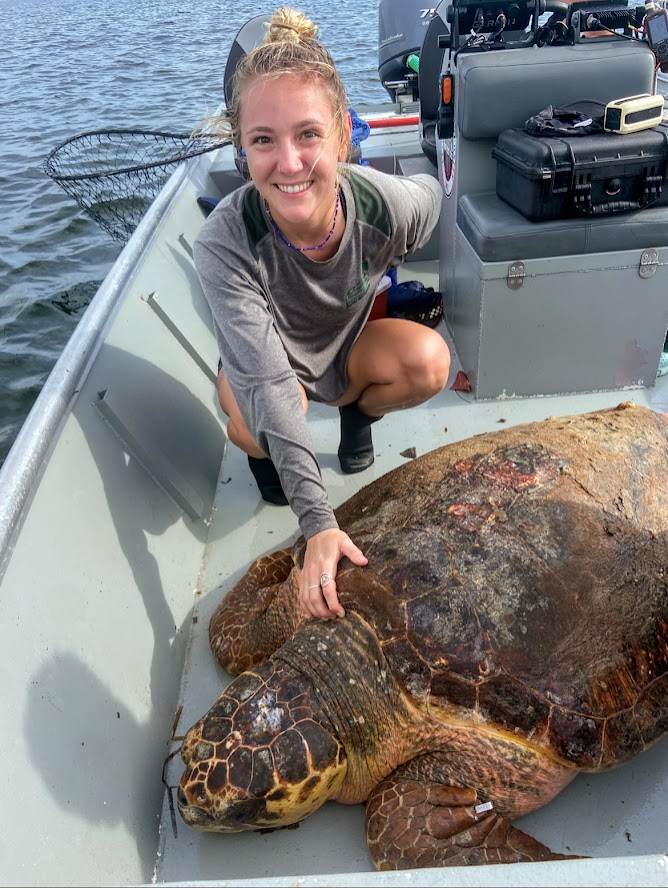
Associate Professor Ana Martins Sequeira is a world-class researcher in marine ecology, focused on the development and application of innovative analytical methods to assist conservation of marine megafauna species such as whales, sharks and turtles. She is interested in understanding patterns of marine biodiversity across the entire planet, particularly those with relevance to assist conservation management. She pioneered the development of statistical models to predict the global occurrence of highly migratory species, and provided the first global assessment of potential human impacts on marine megafauna. She also built large international teams to promote data collection on the global movement of marine megafauna, which has ensured better evidence-based policy to conserve these threatened, charismatic species. Associate Professor Martins Sequeira’s research has helped to change the conservation status of vulnerable species, driven international efforts that shaped the discipline of marine biologging, and championed data sharing of marine megafauna tracks. Her ability to translate academic science to practical outcomes has deep implications for how we sustain biodiversity in our oceans.
2024 Frederick White Medal
Dr Hamish Clarke, University of Melbourne
Wildfires are part of life. Not just in Australia, but all over the world. If we’re going to live with fire, we’d better get to know it. This is according to Dr Hamish Clarke, who studies climate change effects on bushfire risk: how a warming world changes the chances of fire-related threats being realised. His research ranges from the drivers of fire (think fuel, dryness, weather and ignitions), to impacts on people, property and the environment, to prescribed burning. For Dr Clarke, science is half the puzzle – the other half is working closely with fire managers and the community, to understand their values and work to get everyone on the same page. His research shows that the increasing fire weather conditions we currently see could be a prelude to something much worse without strong climate change action. It is also paving a path to quantitative, risk-based approaches to fire management.
2024 Gottschalk Medal
Professor Eric Chow, Monash University
Approximately 570,000 cancer cases in women and 60,000 in men are caused by human papillomavirus (HPV), a virus transmitted through sexual contact causing cervical, throat, genital and anal cancers. The HPV vaccine can protect women from cervical cancers, but Professor Eric Chow’s work has shown that the same vaccine can also protect men from HPV-related throat and ano-genital cancers, paving the way for new vaccination strategies, particularly in men. In the area of gonorrhoea transmission (more than 82 million cases world-wide annually), his research has identified kissing as the major means of transmission – rewriting 100-year-old paradigms. This finding will drive changes in future sexual health education programs relating to safer sex. Professor Chow has also contributed greatly to understanding changes in transmission of sexually transmissible infections (STIs) in the COVID-19 pandemic, and emerging outbreaks of non-classical STIs such as hepatitis A and mpox. Cumulatively, he has made an exceptional contribution to the field of sexual health.
2024 Gottschalk Medal
Associate Professor Kirsty Short, University of Queensland
Associate Professor Kirsty Short’s work focuses on pandemic preparedness, with a specific goal to use basic research to improve clinical care and public health policy in the case of a viral outbreak. She has provided some of the first clinical and experimental evidence that overweight, obesity and diabetes affect the severity of both influenza and COVID-19. Associate Professor Short has also played an important role in defining the role of children in spreading SARSCoV-2 (the virus that causes COVID-19). Her work has resulted in high impact publications, improved public health and clinical care.
2024 John Booker Medal
Associate Professor Lining Arnold Ju, University of Sydney
Associate Professor Lining (Arnold) Ju’s revolutionary research in biomechanics and mechanobiology has led to crucial discoveries, including how cells use single receptors to ‘sense’, ‘read’ and ‘respond’ to mechanical cues by converting them into biological messages. This process helps us understand the mechanical way cells interact with their environment and communicate with each other. As the first engineer and first University of Sydney recipient of the prestigious Snow Fellowship, he has demonstrated his unwavering commitment to advancing biomechanical engineering. His vision involves creating a tiny device that predicts blood clotting tendency and warns people at risk of heart attacks or strokes, potentially saving numerous lives in Australia and around the world. Associate Professor Ju’s innovative contributions to biomechanical engineering have the potential to revolutionise diagnostics and surgical tools, ultimately improving countless lives by applying state-of-the-art engineering principles to critical healthcare challenges.
2024 Le Fèvre Medal
Professor Yao Zheng, University of Adelaide
Professor Yao Zheng is an internationally recognised chemical engineer focused on the principles of catalysis and energy materials chemistry for green hydrogen production – a vital component for both environmental and economic sustainability and key to achieving net-zero emissions by 2050. By harnessing renewable energy sources, green hydrogen can be utilised in fuel cells for electricity generation and electrochemical processes to synthesise various commodity chemicals, such as ammonia, methanol and oxygenates, as alternatives to fossil fuels. Professor Zheng and his team discovered they could directly produce ultrapure hydrogen from raw and untreated seawater by electrolysis, instead of requiring rare highly purified deionised water. This groundbreaking technology can be scaled up to industry-level applications and pilot plants. These processes hold significant potential to drive towards greener industries and reduce pressure on freshwater availability in Australia, and in turn, revolutionise Australia’s green hydrogen industry. His cutting-edge work is part of the essential wave of disruptive and transformative innovation and research aimed at building more sustainable societies.
2024 Pawsey Medal
Associate Professor Jiajia Zhou, University of Technology Sydney
Associate Professor Jiajia Zhou creates and applies nanoparticles that become luminescent in precise ways in response to light and heat. These nanoparticles are the basis for nanosized sensors, the world’s smallest and most sensitive thermometer and ways to test for minute quantities of single-molecule proteins and oligos.
She works with Australian companies to apply her discoveries in diverse areas. One is a device that can accurately profile milk proteins in an hour, so farmers and producers can control for milk without unwanted proteins. Another is a single molecule antigen rapid test (SMART) to monitor mutations of the spike proteins on new strains of COVID virus. Innovative tests that Associate Professor Zhou recently developed have also been proposed for rapid diagnostics of foodborne pathogens. She now leads UTS’s team in a new ARC Centre of Excellence for quantum biotechnology that aims to develop quantum technologies that can observe biological processes.
2024 Ruth Stephens Gani Medal
Dr Sonia Shah, University of Queensland
Dr Sonia Shah’s research uses innovative statistical genomics approaches applied to human genomic and health data to advance understanding, improve prevention and identify new avenues for treatment for cardiovascular disease. Her research has led to new insights into heart failure biology and shifted our understanding of the genetic risk factors for familial hypercholesterolemia, impacting patient management in the UK. Dr Shah’s current research focuses on understanding cardiovascular risk in understudied groups, such as women and genetically diverse groups, in whom current tools for identifying high-risk individuals are less accurate, with the goal of developing more effective tools for disease prevention in these groups and ensuring more equitable translation of genomics research.
2024 Ruth Stephens Gani Medal
Dr Stephin Vervoort, Walter and Eliza Hall Institute of Medical Research
Accurate control of gene expression is essential for health and deregulation of these processes can result in disease. A key regulator of gene expression is RNA Polymerase II (RNAPII), an enzyme that reads our DNA’s genetic information. Mutations that affect RNAPII’s function can give rise to cancers, and RNAPII dysregulation is recognised as a hallmark of cancers. As such, the RNAPII pathway is a prime candidate for the development of novel anti-cancer treatments. Despite the importance of tightly regulated gene expression in biology, the mechanistic control of this process remains incompletely understood. Dr Stephin Vervoort’s innovative approach to understand RNAPII regulation uses genome-wide analyses paired with computational methods. His work has resulted in ground-breaking discoveries of fundamental regulatory mechanisms of RNAPII-driven gene expression, uncovering how these are dysregulated in cancer, and which component can be targeted therapeutically in cancer. Ultimately, he aims to develop drugs that prevent these cellular processes from malfunctioning.
About the honorific awards
Central to the purpose of the Academy is the recognition and support of outstanding contributions to the advancement of science.
Nominations for the 2025 honorific awards are open until 1 May.
Read the Academy’s media release announcing the 2024 honorific awardees.