



Australian researchers among inaugural Tupu Pacific Research Grant recipients

Six cross-national research teams have been named as the inaugural recipients of the Tupu Pacific Research Grant, with Australian universities among the collaborating partners across all six projects.
Administered by the International Science Council (ISC) Regional Focal Point for Asia and the Pacific and funded by the Australian Government Department of Industry, Science and Resources, the grants support Pacific-led, multidisciplinary research addressing the region's most pressing climate challenges. Each team brings together at least two Pacific Island universities and one Australian university partner.
The funded projects span coral reef monitoring, women's entrepreneurship in the blue economy, children's heat health, clean energy, circular economies, and water security. Australian institutions involved include the University of the Sunshine Coast, the University of Sydney, the University of New South Wales, Western Sydney University, Charles Sturt University, and the Australian National University.
"The Pacific is on the frontline of climate change, and this program ensures the science responding to that crisis is led by Pacific researchers and their deep understanding of the challenges we face," said Ronit Prawer, Director of the ISC Regional Focal Point for Asia and the Pacific.
The program is delivered in collaboration with the Pacific Islands Universities Regional Network (PIURN).
Fellows update: April 2026
Honours and awards to Fellows
Professor Arthur Christopoulos FAA FAHMS – NHMRC Peter Doherty Investigator Grant Award (Leadership)
Professor Glenda Halliday AC FAA FAHMS – 2026 Jay Van Andel Award for Outstanding Achievement in Parkinson’s Disease Research
Professor Sarah Robertson AO FAA FAHMS – NHMRC Elizabeth Blackburn Investigator Grant Awards – Basic Science (Leadership)
Academy Fellows elected as members of the National Academy of Sciences
Elected members:
- Professor Peter Bartlett FAA
- Professor Craig Moritz FAA
- Professor Gareth McKinley FAA FRS (Corresponding Member)
International elected members:
- Professor Chennupati Jagadish AC PresAA FRS FREng FTSE
- Professor David Lindenmayer AO FAA
- Professor Ary Hoffmann AC FAA
- Professor Rana Munns FAA
Recently published biographical memoirs
Alongside the many fascinating history of science articles published in our journal, Historical Records of Australian Science, we publish biographical memoirs – biographies of deceased Fellows commissioned by the Academy. We are very grateful to all the authors who go to great lengths to make these articles as complete as possible.
Recent biographical memoir:
Message from the President: April 2026
This newsletter marks my last as Academy President. As my term draws to a close, I find myself reflecting on what makes this Academy matter – not just as an institution, but as a voice for science at a time when that voice has never been more necessary.
This month offered plenty of reminders of why that voice must be clear and persistent.
I joined an industry roundtable hosted by Senator the Hon Tim Ayres, focused on how to implement the Ambitious Australia report's recommendations as a cohesive package – a welcome sign that Government is thinking seriously about the structural challenges ahead.
The May Budget offers an early test of that intent. Rebuilding Australia’s research system will take sustained investment over multiple budgets, but it must start sooner rather than later.
Keep an eye out for the Academy’s analysis of how science fares in the upcoming federal Budget.
Not all news this month was encouraging. The Government’s decision earlier this month to withdraw from the European Southern Observatory (ESO), to put it plainly, is short-sighted and damaging.
The Academy has made its position clear: this move cuts our researchers off from world-leading facilities and international collaboration at precisely the moment our R&D system can least afford it.
On a different front, the Academy contributed to something I consider vital for a healthy democracy. We collaborated with the Australian Academy of Health and Medical Sciences on a report published this month by the Office of the Chief Scientist, examining how the human brain processes misinformation and disinformation.
In an age of information overload, science has a crucial role in helping society build resilience. I encourage you to read the report.
Within the Academy itself, with the departure of our Chief Executive Anna-Maria Arabia OAM, Council took the opportunity to assess the Academy’s future leadership needs.
Rather than simply replacing the role, we considered what structure would best serve the Academy at this time.
After careful consideration, we’ve transitioned from a Chief Executive model to an Executive Director model, reflecting Council’s intention to play a more visible and active role in strategic leadership.
With that direction set, I am pleased to announce that Council has appointed Ms Melissa Abberton as the Academy’s Executive Director, effective immediately. Mel has served the Academy with distinction for the past five years as Chief Operating Officer, bringing financial rigour, commercial acumen and extensive experience in leading organisational and cultural change.
It has been an honour to lead the Academy over the past four years. I am deeply grateful to my fellow Council members, Academy Fellows and secretariat staff for your support throughout my Presidency.
Of course, the work to advance Australia as a nation that embraces scientific knowledge is never done. At the Academy’s Annual General Meeting on 21 May, I will hand over to incoming President Professor Sam Berkovic AC. I wish him every success in the role.
I also acknowledge the Fellows who will commence new Council roles in May:
- Professor Steven Chown – Foreign Secretary
- Professor Hala Zreiqat AM – Secretary, Education
- Professor Naomi McClure-Griffiths – Spokesperson for Integrity
- Professor Christine Beveridge – Member, Biological Sciences
- Professor Rob Baxter AM – Member, Biological Sciences
My deepest gratitude goes to outgoing Council members: Professors Lyn Beazley AO, Jim Williams AO, Frances Separovic AO and Alan Andersen.
My thanks also go to Anna-Maria Arabia. Over a tenure of almost 10 years, Anna-Maria's leadership strengthened the Academy's reach and impact across public policy, STEM education and global scientific engagement.
And finally, some genuinely wonderful news hot off the press – I’d like to congratulate the Academy Fellows who were recently elected members of the National Academy of Sciences (NAS): Professors David Lindenmayer AO, Ary Hoffmann AC, Rana Munns, Peter Bartlett, Craig Moritz and Gareth McKinley (Corresponding Member).
I was also honoured to be elected an international member myself for which I am humbled and grateful.
NAS membership is a widely regarded as one of the highest honours in science. I believe this is a record number of Academy Fellows elected in a single year. A remarkable achievement!
We will announce the election of our 2026 Fellows on 21 May.
I hope you enjoy this edition of the newsletter.
Professor Chennupati Jagadish AC PresAA FRS FREng FTSE
Submission – Inquiry into data centres
Data centres are needed to support vital functions such as accessing government services. Data centres also support scientific research, by providing the digital infrastructure for data-intensive research projects and AI development. This infrastructure must be coupled with high-performance computing systems to enable climate modelling, drug design, discovery of new materials and defence and industry applications.
There is an opportunity for Australia in establishing data centres. Australia has comparative advantages such as abundant renewable energy resources, stable governance and a skilled workforce which evidently are making Australia an attractive market for building data centres.
The NSW Government has an opportunity to create policy settings to ensure that private investment in establishing data centres is not extractive and creates a thriving digital ecosystem that supports research and research-industry partnerships that benefit Australia and Australians.
If data centres are to continue to be built on Australian shores, using Australian power, water and land, they must be delivering value back into the communities they are joining. The establishment of future data centres must also be done sustainably and should consider using innovative water conservation techniques developed in Australia.
The Academy:
- supports the Australian Government’s expectations of data centres. The NSW Government should consider how to facilitate and enforce these expectations
- recommends that companies looking to establish data centres in Australia should contribute to local research and development (R&D), either by investing in their own R&D, or alternatively paying a levy to the government which would go back into funding fundamental research
- is calling on the Australian Government to develop a 10-year strategy for critical high-performance computing and data (HPCD) infrastructure.

Submission – National Environmental Standards for Matters of National Environmental Significance (MNES) and Environmental Offsets
The Academy recommends the draft NES be amended to:
- refine or remove unnecessary discretionary language to strengthen the National Environmental Standards
- include clear definitions, key terms and test criteria, supported by quantifiable thresholds and independent scientific assessment, in the Standards
- amend the language in the draft Standards to ensure the Mitigation Hierarchy steps cannot be bypassed
- add spatial impacts on hydrological systems to the impacts to protected matters that must be considered
- ensure that the Standards for World Heritage and Wetlands of International Importance (Ramsar Wetlands) accord with Australia’s international obligations as a signatory to the relevant international conventions
- underpin delegation of approvals through bilateral agreements through robust Standards.
Submission – Queensland's Science and Innovation Strategy
The Academy recommends that the Strategy:
- set clear priority missions to incentivise cross-sector collaboration and coordinate efforts to align with comparative advantage and state objectives
- sustain foundational research and infrastructure capability through long-term investment aligned with state and national priorities
- increase business R&D and industry engagement in research by aligning with Commonwealth incentives, and strengthening industry and research partnerships
- adopt workforce and education as essential pillars of the Strategy to build science capability and secure a strong pipeline of STEM-skilled people
- present a plan to deepen science capability in areas of existing strength and emerging state and national objectives.


Submission – Productivity in Australia
The Academy recommends that the Australian Government:
- recognises the value of R&D as an important driver of productivity growth and considers making new interventions to stimulate R&D activity, as part of the productivity agenda
- develops a 10-year R&D investment plan to restore national research investment. The Academy’s budget-positive proposal to establish a Research Fund using revenue from an R&D levy should form part of the plan
- implements the findings of the Strategic Examination of R&D (SERD) to reform our research system and reverse the decline in R&D investment in Australia
- creates a 10-year strategy for high performance computing and data (HPCD) with focused capability building in next generation HPCD infrastructure. Such infrastructure is essential for progress in both research and industry
- adopts a national STEM workforce strategy to build a strong, diverse and mobile STEM capability. This will help generate the skilled workforce to create and use innovations that boost productivity
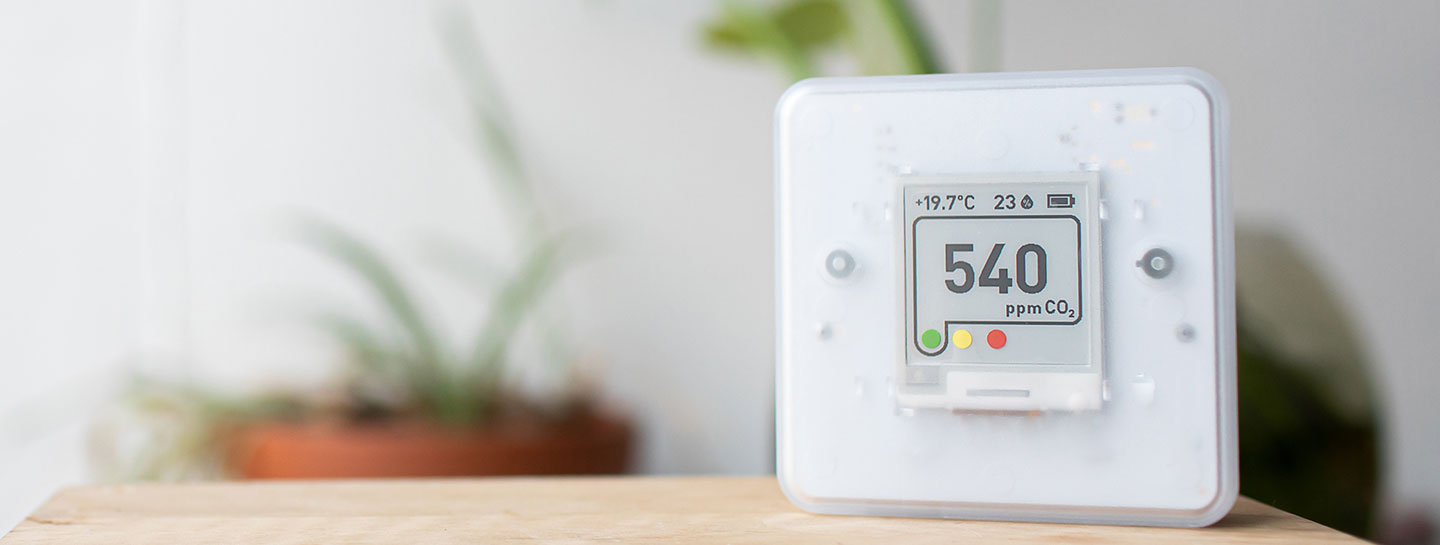
- establishes enforceable indoor air quality performance standards in public buildings to enable clean indoor air that improves productivity by reducing the transmission of disease, reducing absenteeism, and improving cognitive performance
- adopts a national circular economy and resource efficiency framework.
Science beyond borders
On this page
Regional Collaborations Programme
Across the themes of health, environmental sustainability and science solutions in developing countries, this series of videos made for the Australian Government-funded Regional Collaborations Programme emphasises the importance of collaborations to science and technology outcomes. It also shows us the value of removing barriers for scientific collaboration throughout the Asia-Pacific and celebrates the achievements of our region’s researchers.
Learn more about the Regional Collaborations Programme.
Global efforts to beat hepatitis B
The International Coalition for the Elimination of Hepatitis B linked researchers in different parts of the world, including Professor Sharon Lewin from the Doherty Institute, ensuring the same methods are used to study people receiving various treatments and allowing for the best possible solutions to be found to cure this infectious disease.
Small devices solving big problems
Rather than people needing to visit a clinic to test for things such as cancer, smart devices could soon make the process as simple as cleaning your teeth at home, the same way at-home COVID tests simplified testing. Associate Professor Craig Priest says regional collaboration makes all the difference because these types of innovations require support from a range of experts, in different parts of the world.
Teeth reveal secrets of the past
Professor Tanya Smith from the Australian National University is a human evolutionary biologist whose research is shedding light on historic climates and living conditions throughout the Asia-Pacific. She collaborates with archaeologists, geochemists and Earth scientists to create the broadest possible story about an individual’s life. She does this by studying teeth – very old teeth – which serve as a ‘black box’ for our bodies.
Personal mission to improve stroke outcomes
Dr Hoang Phan’s reasons for studying medicine were very personal. Her adoptive mother died from a stroke – the leading cause of death and disability in her native Vietnam. Dr Phan’s goal is to support people who have suffered a stroke to recover to maximum potential, so together with Professor Dominique Cadilhac of Monash Uni, they embarked on a program to build the capacity of clinicians in Vietnam.
Every island ‘has a story to tell’
Associate Professor Sarah Hamylton has been working closely with scientists from Indonesia’s Universitas Hasanuddin to study two groups of islands – one in Indonesia and one in Australia. Their partnership is helping to unlock the mysteries of the coastlines as climate change muddies the waters ahead.
Tackling asbestos beyond borders
Around 4000 Australians lose their lives to asbestos-related diseases each year. It lurks in unexpected places such as under old tiling and in pipes. Associate Professor Sonja Klebe leads the team at the Asbestos Diseases Research Institute working to help developing countries counter their own growing problems with asbestos.
Australian–Chinese science in the spotlight
China is an important collaborative partner for Australia in science and research. Research collaborations beyond international borders allow the exchange of knowledge to overcome society’s biggest challenges, including creating sustainable energy, feeding the world and improving chronic disease outcomes.
Learn more about the scientific relationship between Australia and China
The world's largest radio telescope
Professor Elaine Sadler and Dr George Hobbs of CSIRO, and Associate Professor Shi Dai of Western Sydney University, describe their collaborative astronomy research using the world’s largest radio telescope.
English:
Simplified Chinese:
‘Lazy plants’ threaten global biosecurity
Professor Jim Whelan of La Trobe University and Professor Huixia Shou of Zhejiang University tell the story of their collaborative research on food security in agriculture.
English:
Simplified Chinese:
What caused China’s high rate of diabetes?
Professor Mark Cooper and Dr Zhonglin Chai, both from Monash University, share how China and Australia collaborate to increase health outcomes from diabetes in both nations.
English:
Simplified Chinese:
Global scientific effort to save mangroves
Professor Catherine Lovelock of the University of Queensland and Professor Joe Lee of the Chinese University of Hong Kong feature in this video about the international collaborations that are helping to save vital mangrove ecosystems.
English:
Simplified Chinese:
Powering the world with green energy
Colleagues from the University of Western Australia, Professor Eric May and Professor Dongke Zhang, collaborate with researchers in China to improve green energy technology and reduce global greenhouse gas emissions.
English:
Simplified Chinese:
This video series was produced by the Australian Academy of Science and supported by the National Foundation for Australia-China Relations. This is an Australian Government initiative.
India@75
This series was produced by the Australian Academy of Science and DFAT to celebrate the 75th anniversary of India’s independence and Australia and India’s close bilateral relationship.
Learn more about the contributions of Australia’s dynamic Indian diaspora to the sciences.
The scientists creating a better future for Australia and India
Academy Fellows Professor Mahananda Dasgupta, Dr Surinder Singh and Professor Veena Sahajwalla are part of a cohort of Indian-Australian scientists at the forefront of ground-breaking research.
The Indian-Australian scientist improving climate and air quality predictions
Dr Ashok Luhar of CSIRO’s Climate Science Centre has been studying the impact of greenhouse gases and pollutants in our atmosphere for more than three decades. His pioneering work has helped improve climate models in Australia and around the world.
Drought-proofing crops in Australia and India
Dr Gupta Vadakattu is a Senior Research Scientist at CSIRO Food and Agriculture who is looking into ways to improve crop health, and ultimately increase crop yield.
Australian science tackling water quality in the Ganges
Dr Anu Kumar is a Principal Research Scientist at CSIRO Land and Water. Her team is looking at the impacts that chemicals from sewage and industries have on our health and the environment. This research is an example of scientific collaboration between Australia and India that is helping to tackle global health and environmental challenges.
The Australian technology slowing the spread of dengue fever
Dr Prasad Paradkar is a senior research scientist at CSIRO’s Australian Centre for Disease Preparedness. His team is working on research to genetically engineer mosquitoes, preventing them from transmitting diseases such as dengue or Zika.
Better data to fight fires in Australia and India
Scientific collaboration between Australia and India is strengthening bushfire adaptation efforts in both countries. Dr Chandrama Sarker of CSIRO’s bushfire adaptation team improving the way Australia maps bushfire-prone areas and how we can lessen their impact.
Australia–Japan science collaborations
Japan and Australia, two global leaders in science, have a rich history of working together. It is now over 40 years since the bilateral science and technology treaty between the two countries was signed.
Read more about the long, fruitful history of Japanese-Australian collaboration in STEM
Australia and Japan science collaboration
A long, fruitful history of Japanese-Australian collaboration in STEM.
Nobel Laureates offer hope to young scientists
Meetings with Nobel Laureates prove how networks forged as a young scientist can result in connections that continue across a whole career.
As the world looks up, Australia looks away
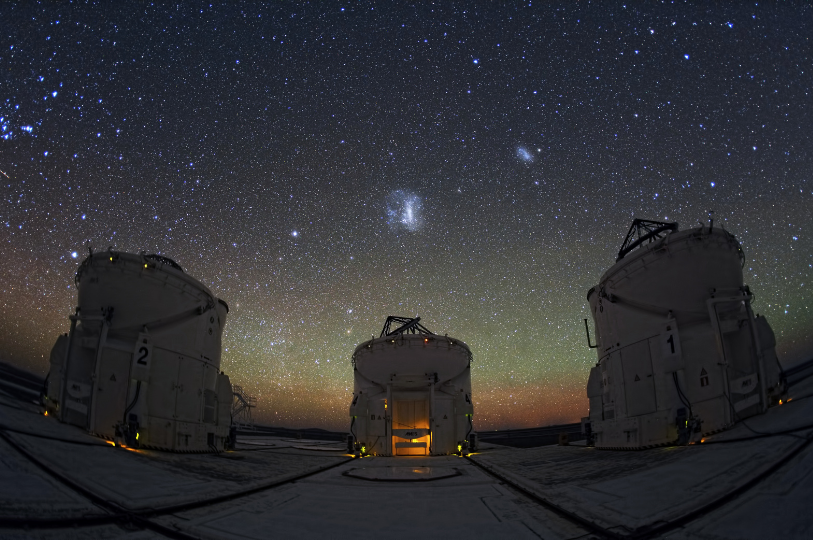
These moveable units are part of the Very Large Telescope Interferometer (VLTI) in Chile, an ESO facility. Image credit: Y. Beletsky (LCO)/ESO (CC BY 4.0).
The Australian Academy of Science has condemned the Australian Government’s decision to withdraw from its association with the European Southern Observatory (ESO), calling it short-sighted and warning the move will inflict lasting damage to a research and development system already facing deep structural underinvestment.
“Stepping back now risks long-term damage to our capability and competitiveness, and this decision means Australia will no longer remain at the forefront of astronomy research and discovery,” said Professor Margaret Sheil AO FAA FTSE, Secretary of Science Policy at the Australian Academy of Science.
Full membership of ESO was a key recommendation of the Academy’s Astronomy decadal plan 2026–2035 launched last year. Abandoning ESO directly contradicts that plan, which identified full membership as essential to Australia’s research future. Under the Government’s decision, access to ESO will be shut off entirely from 2027.
“ESO is a gateway to collaboration. It connects Australian researchers to world-leading facilities and international teams, multiplying the impact of domestic investment. In a field defined by scale and precision, partnerships are not optional extras, they are core capability,” Professor Sheil said.
Australia’s strategic partnership with ESO, established in 2017, had provided Australian scientists access to world-leading infrastructure that cannot be replicated by Australia alone.
Membership has fuelled a thriving Australian astronomy instrumentation program, expanding engagement with industry, and growing astronomy applications across medicine, defence, mining and other sectors.
Professor Sheil said the Government’s decision puts all of that at risk.
“When baseline funding is already thin, withdrawing from shared global infrastructure reduces access to data, talent, and opportunity – without solving the underlying problem. You cannot build world class science in isolation,” she said.
The announcement comes as the Artemis II lunar mission – the first crewed Moon voyage in more than 50 years – captures public imagination.
Professor Sheil said the timing makes this decision harder to understand.
“Astronomy does more than deliver discoveries. It inspires students, engages communities, and builds the pipeline of future scientists. Stepping back from a flagship international collaboration at the very moment the world is looking up risks dimming that inspiration for a generation,” she said.
John Foxton Ross Kerr 1934–2024
John Kerr (1934–2024) was internationally renowned for the discovery of apoptosis, the process of cell death to which he gave that name in 1972.
He studied Medicine at the University of Queensland, completed a PhD at the University College Hospital, London, and qualified as an anatomical pathologist and a physician in both Australia and England. Most of his working life was spent at the University of Queensland, where he was Professor of Pathology for 20 years and also at the Royal Brisbane Hospital.
As well as being a gifted and meticulous researcher, he was an inspirational lecturer. His lifelong hobby was as a lepidopterist, and his impressive collection of butterflies and moths, one of the best in the country, was donated to the Australian National Insect Collection (ANIC), a major scientific resource managed by the Commonwealth Scientific and Industrial Research Organisation (CSIRO).
He received numerous highly competitive awards for his groundbreaking research, including Officer in the General Division of the Order of Australia; the Fred W. Stewart Award, Memorial Sloan-Kettering Cancer Centre; the Paul Ehrlich and Ludwig Darmstaedter Prize; and the International Charles IV Prize, Charles University and the City of Prague.
Kerr’s early work on apoptosis fostered innumerable studies about the mechanisms of cell death in both normal physiological processes and in a wide variety of disease states, particularly degenerative diseases and carcinoma.
Download the memoir
Supplementary material
About this memoir
This memoir was originally published in Historical Records of Australian Science, vol. 37(1), 2026. It was written by Margaret C. Cummings.