




Sixty years of illuminating the history of Australian science

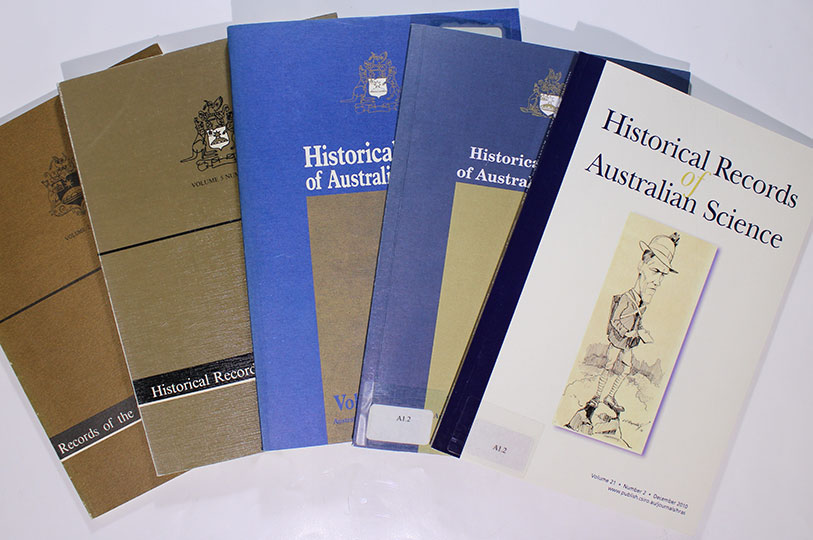
This year marks the 60th anniversary of the Academy’s journal Historical Records of Australian Science (HRAS).
Established in 1966, the journal has transformed from an Academy-specific publication to a respected, peer-reviewed journal. It remains the only dedicated history of science journal published in the Southern Hemisphere.
The journal’s beginnings
Originally known as the Records of the Australian Academy of Science, the journal’s establishment was not without difficulty.
Mrs Ann Mozley, later known as Ann Moyal, was hired as a part-time research associate at the Academy’s Basser Library in 1962.
Having arranged for the biographical memoir of respected Professor of Anatomy Professor James T. Wilson FRS to be written, Moyal advocated for the Academy to establish its own journal in which it could be published.
In June 1964 she noted, “The Council of the Academy now finds that we lack the finance for this publishing venture at this stage ...”
But just five months later, she noted in a letter that “the Council of the Academy has agreed, in principle, to establishing a journal of the history of science and the question of costs and estimates is now being budgeted. It therefore seems as if we will have our own journal before the end of 1965.”
The first volume was eventually published in 1966.
It is fitting that the impetus for the journal centred around a memoir, as this remains a cornerstone for HRAS.
The journal’s first issue included a biographical memoir for geologist and Antarctic explorer Frank Stillwell.
The Academy’s then-president, Sir Frank MacFarlane Burnet, summarised this priority in the foreword of the inaugural issue:
“In the first place, our journal will provide a suitable place where the personality and achievements of deceased Fellows may be placed on record in a form equivalent to that of the Obituary Notices of our parent body [Royal Society].”
However, he also expanded the journal’s function beyond the Academy, writing,
“The lasting justification of the ‘Records’, however, will be as a repository for articles of scholarship and distinction on the history of science and scientists in Australia ... gradually become a forum for discussion of the interaction of science and the community and where necessary to help resolve tensions of motive, prestige and expediency within science itself.”
First decade of eclectic material
Despite the first issue in 1966 being met with praise and copies requested by libraries and Fellows alike, it also had its critics.
Moyal, who departed the Basser Library in 1964 and went on to become a respected author and science historian, wrote two letters to the Academy assessing the first issue, noting:
“The two articles are good; but I confess to keen disappointment in the Journal ... The saddening thing to me is that it makes no pretensions to standards; no editor, no Board, and no attempt to find a systematic method for its referencing. It is not a scholarly journal ...”
In fact, the Academy did have an established editorial board which included Professor John La Nauze, Sir Keith Hancock, Sir Harold Raggatt, Sir Robert Price and Dr Maxwell Day. Sir Mark Oliphant, the Academy’s first president, was also listed as a member.
Despite Moyal’s misgivings, the journal continued and over the next decade was summarised as an “eclectic collection of lectures, reports, articles and memoirs rather than as systematic scholarship.”
Dr John Phillip, an Academy Fellow and member of the editorial board, noted in 1978 that the future success for the journal would “require a level of professionalism not always achieved in the past. Regular, rapid, publication is a first desideratum … success would demand thorough-going professionalism and … careful and responsible refereeing.”
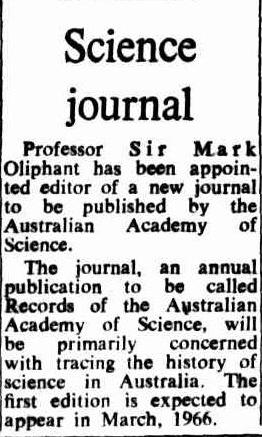
Newspaper excerpt, The Canberra Times, ‘Science journal’, 4 November 1965 reporting that Sir Mark Oliphant was the Academy journal’s new editor.
Professionalism and scholarly output
The year 1979 marked a turning point. Science historians Dr Lyndsay Farrall and Professor Roderick Home joined the editorial board and the next issue was published under the new title, Historical Records of Australian Science.
The new direction inspired confidence with an early special edition marking the Academy’s silver jubilee sent to Prince Charles.
CSIRO Publishing was also engaged to publish the journal, providing further support and expertise.
The journal was expanded to include book reviews and bibliographies, while lectures and presidential reviews were no longer included.
Professor Home attributes this revitalisation to the direction and support of then Academy president Dr Lloyd Evans AO FAA FRS. Indeed the 1979 Academy’s Council, led by Evans, “resolved to retain the historical focus of the journal and endeavour to expand its role in this area.”
Since then, the journal has continued to adapt to changes in the publication scene and technology. In 2015, the publication transitioned solely to online. A hybrid publishing model allowed open access options, with increasing 'Read and Publish' agreements allowing a larger proportion of content to be published open access. From 2024, HRAS moved to continuous publication and became available to researchers from lower-income countries free of charge through the Research4Life initiative.
From 2006, winners of the Mike Smith Student Prize had their research essays published in HRAS, representing a sustained effort to foster the next generation of historians of science.
Material variety
More than 784 pieces of content about Australian science history have been published since the first issue in 1966, including peer-reviewed research articles, book reviews, historical documents, biographical memoirs and bibliographies.
Research covers a wide variety of topics and areas of science from women scientists studying coral to efforts to stop disease in Australia’s fruit industry.
Content also goes beyond Australia’s shores with articles diving into forest surveys in Papua and New Guinea and earlier scientific endeavours in the Pacific.
The journal’s most cited article is ‘On visiting the 'Moving Metropolis': Reflections on the architecture of imperial science’.
Another notable article that attracted popular attention was Russell McGregor’s 2021 article, ‘Alex Chisholm and the extinction of the paradise parrot’.
The team
The success of the journal is due to its dedicated team. HRAS has had nine editors and co-editors over the last six decades. Many of these editors provided stability through their long terms. Professor Home served a total of 28 years as editor and then co-editor. Another long-term guiding-hand has been Professor Ian Rae, the journal’s current co-editor alongside Dr Ruth Morgan. Rae has been co-editor for more than 11 years, and was previously (from 2006) a member of the journal’s editorial board.
The Academy’s partnership with CSIRO Publishing has also proved integral to success, enabling HRAS to stay current with changing publishing trends and provide access to a variety of audiences.
The Academy thanks the Fellows and wider community who have supported HRAS over the last 60 years by editing, reviewing, serving on the editorial board, and submitting articles and memoirs for publication.
All Academy Fellows have free online access to HRAS articles through the Fellows Portal and more content is being released as open access.
Read through some highlight articles from the past 60 years:
- ‘On the Oliphant Deign, Now to Sound the Blast’: How Mark Oliphant secretly warned of America’s post-war intentions of an atomic monopoly
- Alex Chisholm and the extinction of the paradise parrot
- Robert Kirk: blood, genetics, race and rights in the twentieth century
- Building the history of Australian science: Five projects of Professor R.W. Home (1980–present)
Indigenous scientists recognised for climate resilience research
The Australian Academy of Science has awarded its 2026 Aboriginal and Torres Strait Islander Scientist Award to Dr Cassandra Sedran-Price from the University of Sydney and Mr Jacob Birch from the University of Queensland.
The award recognises high-impact research by Aboriginal and Torres Strait Islander PhD students and early- and mid-career scientists working across the physical and biological sciences.
Seed banks to safeguard Country and culture
Dr Sedran-Price is driving research that positions seed banking as a frontline response to climate change. Her work demonstrates how community-led seed banks can protect culturally significant plant species while creating new opportunities in bush foods, education and environmental healing.
Working with Bundjalung Tribal Society through their property Namabunda Farm in Alstonville, New South Wales, Dr Sedran-Price is integrating Indigenous knowledge with contemporary science to safeguard biodiversity and strengthen community wellbeing through development of the on-Country seed bank.
“I share this award with Bundjalung Tribal Society, whose vision and guidance continue to strengthen and inspire this work grounded in Country, culture and climate resilience,” said Dr Sedran-Price, a Muruwari woman of the Gangugari clan and the first person in her family to attend university.
She said the recognition signals a broader shift in Australian research.
“The Academy’s acknowledgement of this community-led, on-Country science reflects the growing importance of Indigenous leadership, knowledge systems and governance in research.”
Reviving native grains to rebuild resilience
Mr Birch is restoring native grain systems to strengthen food security in climate-vulnerable regions. His research focuses on reintroducing drought-tolerant species adapted to Australia’s harsh conditions as a foundation for Indigenous-led economic development.
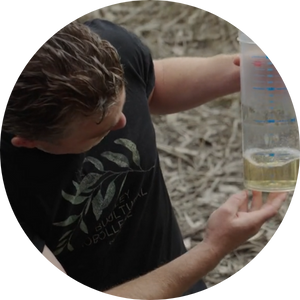
“The northern Murray–Darling Basin is highly susceptible to climate change, so we are rebuilding resilience in the landscape through species like ganalay, which is incredibly drought tolerant,” said Mr Birch, a Gamilaraay man, PhD candidate and Managing Director of social enterprise Yaamarra & Yarral.
He said the award will accelerate community benefit.
“This award funding will allow me to advance this research and it’s the whole community that will benefit.”
About the award
Up to $20,000 is available to support outstanding Aboriginal and Torres Strait Islander PhD students and early- to mid-career scientists. Applications are now open for the 2027 award and close 1 June 2026.
Pacific excellence harnessed at science congress
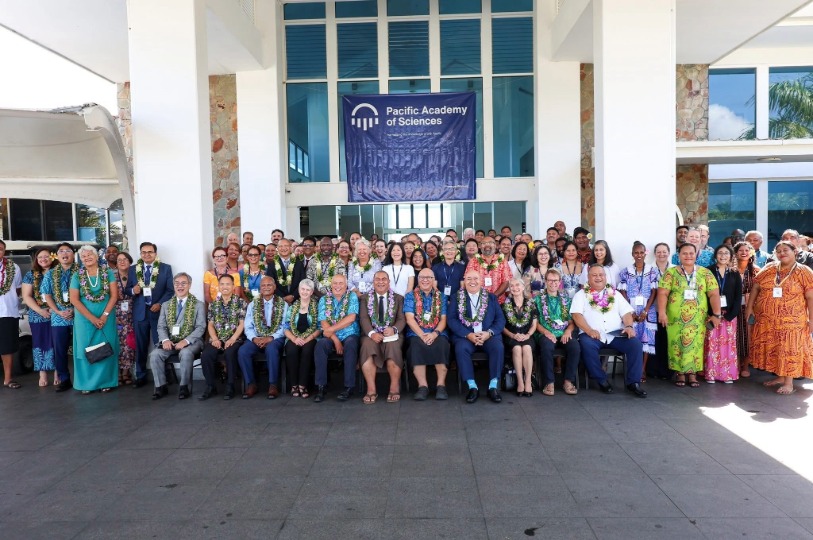
Pacific Academy Congress delegation.
'Harnessing the strength of the Pacific' was the theme of the inaugural Pacific Academy of Sciences Congress, held from 16 to 18 February 2026. True to its focus, the gathering brought together scholars from across the region to exchange ideas on empowering Pacific nations, uplifting communities, and influencing the international science system with Pacific perspectives and knowledge systems.
Keynote addresses included Hon Aiono Dr Alec Ekeroma, who delivered a compelling reflection on the collective power of Pacific nations and the importance of Indigenous knowledges working alongside western science to reinforce one another.
“For many years, the voices of the global south have rarely made it to an international stage. This is also true when it comes to science. The result has been decisions about the Pacific being made by those who do not represent us. Research on the Pacific has excluded us and our Indigenous knowledges. And our communities have been unable to equally share in the benefits of science.
That tide has now changed.
“Our Pasifika community has shown that meaningful change can only come from self-determined, regional-based solutions. The establishment of the International Science Council’s Regional Focal Point for Asia and the Pacific reflects global recognition of this fact. And the Pacific Academy of Sciences demonstrates our region’s strong scientific capacity and growing knowledge generation.
We now have a clear, unified way for Pacific scientific voices to be heard on the world stage."
Professor Frances Separovic, representing the Australian Academy of Science and serving as Co-Chair of the International Science Council (ISC) Regional Focal Point’s (RFP's) Advisory Council, reflected on the speed at which the Pacific Academy was established; a testament to the depth of expertise across the region. She also underscored the solidarity between Australia and Pacific states, exemplified by collaboration between the RFP and the Pacific Academy.
“Since 2023, the ISC Regional Focal Point has worked hand-in-hand with Pacific partners to support the emergence of the Pacific Academy of Sciences. Along the way, our teams have become deeply enmeshed, working across organisations, time zones, and mandates so closely that it is often hard to tell where one team ends and another begins."
New Fellows were formally inducted, joining the ranks of the Pacific’s most distinguished researchers.
The Academy also launched the Pacific Research Hub, the first Pacific-specific online research platform powered by artificial intelligence.
Day two featured rich knowledge exchange from across the region, with sessions spanning interdisciplinary work in climate health, biomedical research, governance, and science diplomacy.
The day also saw the launch of An assessment of research and development investment and capacity in ten Pacific small island developing states, a UNESCO-funded report examining research and development ecosystems across 10 Pacific countries.
The evening program included Hon Kinoka Feo, Papua New Guinea’s Minister for Higher Education, Research, Science and Technology, and Sport. His impassioned address grounded Pacific science in Indigenous knowledges, research ethics, and collective capacity building. Proceedings concluded with traditional Samoan performances by the talented young people of EFKS Apia.
On the final day, attendees heard from Professor Letuimanu’asina Emma Kruse Va’ai, Pro Chancellor of the National University of Samoa, who spoke about safeguarding culture and language in education through children’s books that tell Pacific stories. Educators from across the region then shared research challenging deficit models in science and education, highlighting innovative, localised and place-based approaches to teaching Pacific and Indigenous students. Additional sessions explored Pacific ethics governance mapping, community-led research frameworks, and data sovereignty to complement and empower local communities.
Preliminary discussions also laid the groundwork for the first Pacific Young Academy.
Congratulations to the Pacific Academy of Sciences (PAS) on a landmark Congress that provided a platform for diverse Pacific scholars to showcase knowledge strengthening science across the region. The RFP-AP is proud to support this initiative and looks forward to deepening collaboration with the PAS as it continues to grow.
Support for the Pacific Academy of Sciences comes from the Australian Government Department of Industry, Science and Resources, through the International Science Council Regional Focal Point for Asia and the Pacific.
Message from the President: February 2026
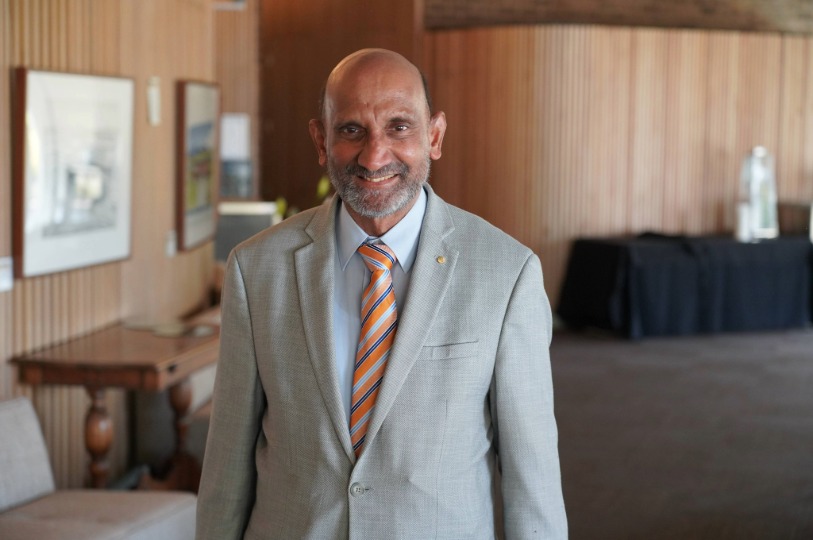
Welcome to our first – and bumper – newsletter of 2026.
As I read through this edition, one thing stood out: the sheer breadth and depth of the research being led by Australia’s next generation of innovators – our early and mid-career researchers (EMCRs).
The Academy backs the next generation of scientists in practical ways – through targeted grants, funding programs and national recognition. You’ll see several examples in this edition. But support goes beyond funding. We are also advocating for policy settings that will allow scientists to build sustainable, long-term careers.
We’ve been clear with the Australian Government: structural challenges demand structural solutions. One-off funding boosts and short-term measures will not secure Australia’s research future.
That’s why we have actively shaped and supported the Strategic Examination of R&D – a once-in-a-generation opportunity to redesign our national R&D system so early-career researchers can thrive. We are urging the Government to begin implementing its recommendations to commit to sustained investment over the next decade, starting in the May budget.
The 2026–27 federal Budget will be a defining moment for Australian science. In our pre-Budget submission, we set out a clear path: commit to a 10-year national R&D plan, invest urgently in critical supercomputing infrastructure, and embed expert scientific advice at the centre of government decision-making. I encourage you to read the full submission and add your voice to the case for long-term reform.
There is much to look forward to this year including our 2026 Public Speaker Series, Bright Minds, Bold Voices. It will open with a compelling conversation between Academy Fellow Professor Stephen Simpson AC and Qantas CEO Vanessa Hudson. They will explore how evidence-based research is shaping the future of ultra-long-haul travel. Join us in person or online – tickets are now available.
Please also take note of the dates for Science at the Shine Dome, our annual celebration of Australian science and the Academy community, which will take place 15–17 September 2026.
Next month we will announce the recipients of our 2026 honorific awards. Nominations are now open for the 2027 honorific awards, and applications are also open for workshops, research awards and travelling fellowships. I encourage you to nominate a deserving colleague or apply for opportunities that support your work.
To mark the International Day of Women and Girls in Science, we featured two outstanding early-career researchers – Rebecca Greening and Dr Nina Wootton. Their work is delivering vital environmental insights, made possible with the support of our philanthropic partners.
Earlier this month, our Foreign Secretary Professor Frances Separovic AO FAA represented the Academy at the inaugural Pacific Academy of Sciences Congress, where new Fellows were officially inducted and the Pacific Research Hub was launched. Congratulations to everyone involved.
As I enter the final months of my Presidency, I do so with gratitude. I look forward to handing over to incoming President Professor Sam Berkovic AC in May, and to the year ahead for the Academy and Australian science and research.
I hope you enjoy this edition – and I thank you for being part of our community.
Professor Chennupati Jagadish AC PresAA FRS FREng FTSE
Fellows update: February 2026
Honours and awards to Fellows
Emeritus Professor Bruce Armstrong AC FAA – appointed a Companion of the Order of Australia
Professor John Cannon AO FAA – appointed an Officer of the Order of Australia
Professor Mark Cassidy AM FAA FTSE – appointed a Member of the Order of Australia
Professor Graeme Clark AC FAA FTSE FRS – awarded the 2026 Queen Elizabeth Prize for Engineering, alongside Erwin Hochmair, Ingeborg Hochmair, and Blake Wilson
Professor Michelle Haber AM FAA FAHMS – Royal Society of New South Wales (RSNSW) James Cook Medal
Scientia Professor Xiaojing Hao FAA FTSE – RSNSW Edgeworth David Medal
Professor Anne Kelso AC FAA FAHMS – appointed a Companion of the Order of Australia
Professor Max Lu AO FAA FTSE – elected an International Fellow of the Royal Swedish Academy of Engineering Sciences (IVA).
Dr Linda Richards AO FAA FAHMS – recognised in the 2026 Australia Day Gala at the Australian Embassy in Washington DC
Scientia Professor Michelle Simmons AC FAA FTSE FRS – appointed a Companion of the Order of Australia
Obituaries
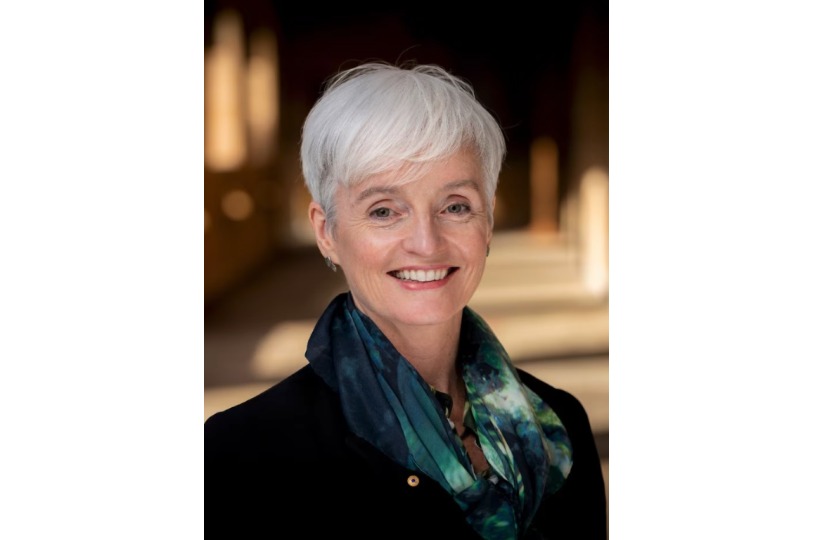
Professor Emma Johnston AO FAA FTSE
(11/6/1973 – 26/12/2025)
Professor Emma Johnston AO was elected a Fellow of the Australian Academy of Science in 2022 recognising her leadership in the field of marine ecology, and her pioneering research which has been widely adopted into policy by governments in Australia and overseas.
Professor Johnston was also a highly influential leader, advocate and voice for Australian higher education, science and research, and diversity in STEM. She held leadership roles including at the University of Melbourne, University of Sydney and UNSW, as well as at Science and Technology Australia, the Ian Potter Foundation, CSIRO, the Great Barrier Reef Marine Park Authority, and the Sydney Harbour Institute for Marine Science.
Combined with her extensive track record of science communication, mentorship and outreach, Johnston was an exceptional role model and science champion.
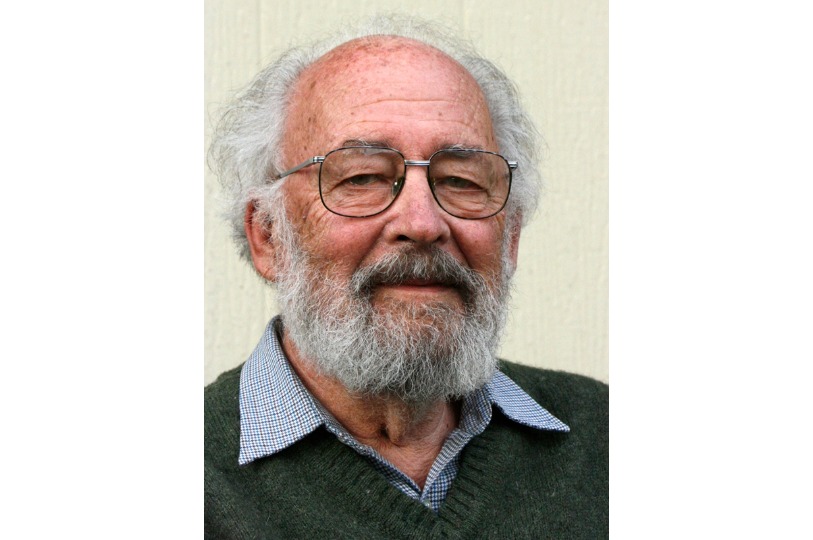
Professor Stephen Vickers Boyden AM FAA
(8/2/1925 – 26/12/2025)
Professor Stephen Boyden AM was elected to the Academy in 1966 for his contributions to immunology. He invented the Boyden Chamber, a laboratory device that allows researchers to measure how cells move toward or away from chemical signals.
In 1992, Professor Boyden became a founding member of the Nature and Society Forum, an organisation dedicated to improving society’s understanding of life processes and the place of humans in nature and how these relate to health and environmental issues facing people today. At the age of 98, he published the book Biorenaissance.
Professor Boyden gave his time generously to the Academy, serving on a number of committees.
Professor Boyden was interviewed by Professor Frank Fenner in 2003, where he spoke about his life and career.
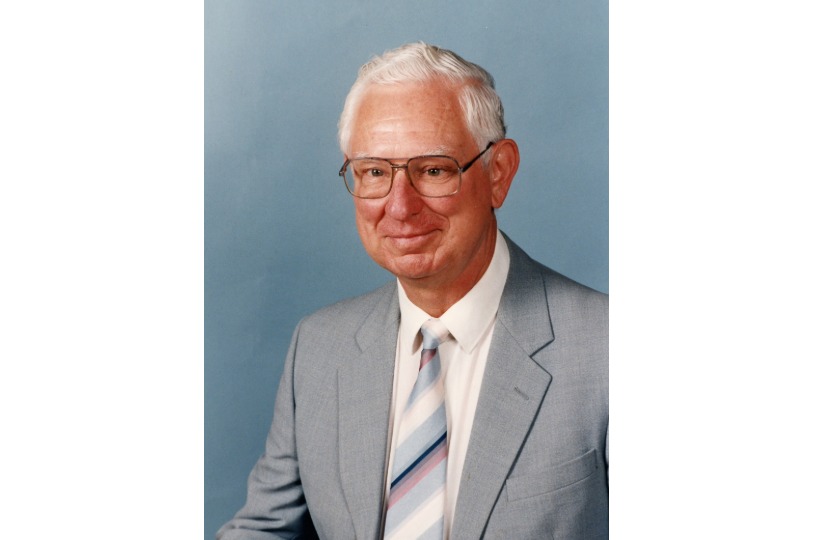
Dr Michael (Mike) William McElhinny FAA
(9/12/1933 –14/2/2026)
Dr Mike McElhinny was elected to the Academy in 1981 for his work on palaeomagnetism. He was a pioneer in combining palaeomagnetic information with the theory of plate tectonics. His work included determining polar movement patterns in Africa, Australia, India and Madagascar, and notably he established the structure of the supercontinent Gondwanaland.
Dr McElhinny was born in London while his parents were on a period of home leave from India. The family returned to India then moved to South Africa when Mike was eight years old. He received his BSc (Hons) from Rhodes University in South Africa where he became a junior lecturer. In 1956, he spent time as a scientific officer at British Dielectric Research in London before taking a position as assistant lecturer in physics (later lecturer, then senior lecturer) at University College of Rhodesia and Nyasaland (now the University of Zimbabwe). In 1967, Mike moved to Australia and the position of Senior Fellow in Geophysics within the Department of Geophysics and Geochemistry at the Australian National University. In 1982, he became Chief of Geophysics at the Bureau of Mineral Resources, Geology and Geophysics (now Geoscience Australia). In 1988, Dr McElhinny and his wife, Jo Lock, founded Gondwana Consultants to digitise and standardise global paleomagnetic data.
Dr McElhinny was awarded the Academy’s Mawson Medal (1983) and the American Geophysical Union’s Fleming Medal (1988). He also received an Honorary Doctor of Science from the University of Western Australia (2003).
Dr McElhinny gave his time generously to the Academy over more than two decades.
Recently published biographical memoirs
Alongside the many fascinating history of science articles published in our journal, Historical Records of Australian Science, we publish biographical memoirs – biographies of deceased Fellows commissioned by the Academy. We are very grateful to all the authors who go to great lengths to make these articles as complete as possible.
Recent biographical memoirs:
John Oswald Newton (1924–2016)
Andrew (Andy) Reginald Howard Cole (1924–2024)
Opportunities for scientists: February 2026
Seeds of Science, Asia opens second round
Following a successful inaugural round, the International Science Council Regional Focal Point for Asia and the Pacific (ISC RFP-AP) is pleased to launch the second round of the Seeds of Science, Asia program.
Seeds of Science is an opportunity for scientists, researchers, academics and practitioners in Asia to share their knowledge and insights with members of the scientific community and policymakers in their respective countries. Equally, it is an opportunity for policymakers, civil servants, and government officials to explore how science advice can best support their work, and to provide relevant advice to scientists about the complexities of policymaking, and how science can be efficiently integrated therein.
This year the program is expanding to include partnerships with Australia. Seeds of Science, Asia will be offering grants of up to A$15,000 each to successful applicants with well-outlined proposals to organise workshops, trainings, focused advocacies and wider activities promoting science advice at an institutional or national level in their respective countries. Successful applicants will be mentored by experts at the science-policy nexus who will provide valuable guidance and support for the successful implementation of their workshops.
Visit the ISC RFP-AP website for more information and to apply
Applications close 27 April 2026.
Nominate or apply for the Falling Walls Global Call for Science Breakthroughs
The Falling Walls Global Call for Science Breakthroughs 2026 is now open, and you can submit your nominations and applications for the Falling Walls Science Breakthroughs of the Year by 15 April 2026.
The Falling Walls Science Summit is the international, interdisciplinary and intersectoral forum for global science leaders, celebrating science breakthroughs that shape the future.
You can nominate outstanding research or apply with your own project in the following categories:
- life sciences
- physical sciences
- engineering and technology
- social sciences and humanities
- art and science
- Women’s Impact Award (female science talents)
- science start-ups (Falling Walls Venture)
- science engagement (Falling Walls Engage)
Nominators of projects selected as finalists will receive a free ticket to the Falling Walls Science Summit in Berlin.
Research round-up: Quolls, dingoes and bushfires
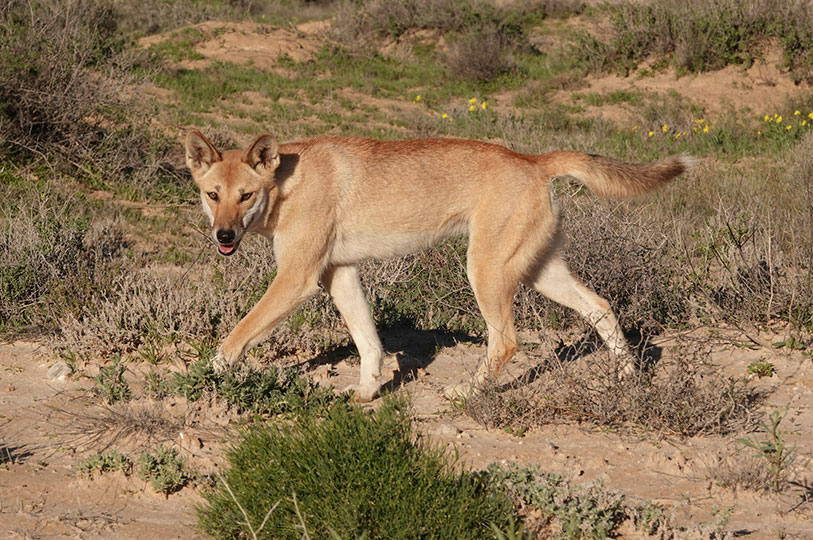
Image credit: Paul Coddington via iNaturalist (CC BY 4.0).
The Academy is pleased to partner with CSIRO Publishing Journals to champion Australian science excellence. In this regular research round-up series, we feature recent discoveries reported in CSIRO Publishing Journals.
Indigenous knowledge reveals decline of Pilbara northern quolls
"This is the one you got to take care of when I’m gone; this is the very important one.” Heather Samson, Martu Elder of the western desert of WA, remembers her father’s words about wiminyji, the northern quoll.
Across their two lifetimes, numbers of wiminyji have rapidly dwindled. The small carnivorous marsupials used to be everywhere in rocky and sandy Country, Martu Elders say.
The quolls disappeared in the mid-20th century, as invasive predators (cats and foxes) arrived and ‘wrong-way fire’ disrupted traditional burning practices.
Martu Elders shared these insights with researchers as part of ninti, or knowledge sessions, held on Country close to a population of wiminyji first detected by western scientists in 2012.
The Elders’ knowledge fills critical gaps in scientific understanding of where wiminyji once lived, and highlights the importance of Indigenous perspectives in conservation.
Bushfires leave long shadow for water quality
During the Black Summer bushfires of 2019–20, half a million hectares of the Lake Hume catchment burned. But the fallout for the major water reservoir on the NSW–Victoria border lasted far longer than the flames.
For five years, researchers tracked how the bushfire affected the water flowing into the lake.
In the Mitta Mitta River, water quality didn't noticeably change, since an upstream reservoir helped to trap ash and sediment.
But in the Murray River, sediment entering the system surged up to 15 times higher than usual and stayed elevated for five years. Nutrients such as nitrogen and phosphorus rose to around three times normal levels for several years, increasing the risk of harmful algal blooms.
The findings highlight how bushfires can have lasting impacts on waterways, with implications for ecosystems, drinking water and post-fire recovery.
Read the original research in Marine and Freshwater Research
Read the Academy's evidence briefs on the impact of bushfires on soil, wildlife and health.
Outback dingoes return
Dingoes vanished from a vast swathe of WA pastoral land in the mid-20th century after decades of intensive eradication effort – but began to bounce back after 2000, new research shows.
The research, co-authored by Academy Fellow Professor Chris Dickman, draws on historical archives and interviews with people who have lived and worked across three million hectares of station country.
It charts the sharp decline, decades-long disappearance, and eventual resurgence of the dingo, alongside interactions with other animal populations such as kangaroos, foxes and goats.
The dingo’s comeback was triggered by shifts in social, environmental and economic conditions, including a move from sheep to cattle farming. With the prevailing view that cattle are less affected by dingo predation, the impetus to control dingo populations has waned.
Check out the new Editor’s Choice article in Historical Records of Australian Science
This year marks the 60th anniversary of the Academy’s journal, Historical Records of Australian Science (HRAS).
Celebrate with us by sharing your favourite articles, or by checking out the journal’s recent issues.
If you’re looking for a new highlight, try our HRAS Editor’s Choice and dive into the fascinating history of Australian science diplomacy in ‘Scientific attaché in Moscow: The 1944 appointment of Professor Eric Ashby to the Australian Legation in Soviet Russia’.
All Fellows have full access to six decades’ worth of HRAS articles through the Fellow’s Portal on the Academy website. Many recent articles, like the account of Ashby, are also open access and can be shared widely.
If you have, or find, a favourite HRAS article, please let us know and it could be featured in an online collection on CSIRO Publishing’s website to help promote it to future readers.
Sir Ernest Rutherford: A man of sums and sketches
Sir Ernest Rutherford was a towering figure in 20th century science, influencing a generation of researchers including future president of the Australian Academy of Science, Sir Mark Oliphant.
Considered the father of nuclear physics, Sir Ernest won the 1908 Nobel Prize for Chemistry for his investigations into radioactive substances and his discoveries led to our modern understanding of an atom’s structure.
He became the director of the Cavendish Laboratory at the University of Cambridge in 1919. Sir Mark initially studied under Sir Ernest as a doctoral student from 1927, before becoming a fellow staff member.
This career connection has provided the Academy’s Fenner Archives with a unique piece of Rutherford history – a Four figure mathematical tables booklet. The 59-page booklet might strike the viewer as ordinary. It is, however, full of surprises!
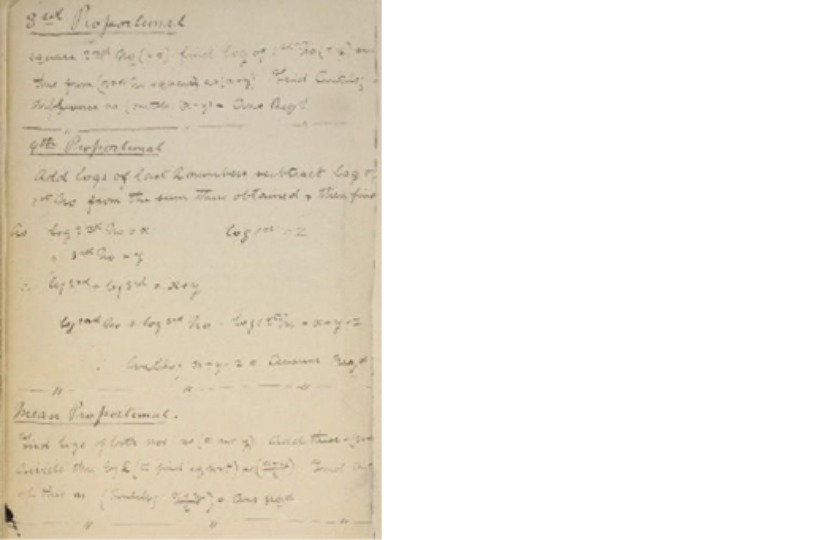
Image 1: Close-up of handwritten equations on page 3, titled ‘3rd Proportimal, 4th Proportimal and mean Proportimal’.
Firstly, it is important because it reminds many of us – who have technology at our fingertips –that Sir Ernest achieved his discoveries in physics without an electronic calculator. Two internal pages are filled with handwritten equations by Sir Ernest (Image 1). On the last page, Sir Ernest has written instructions ‘to find line chasm from L of Δ’ (Image 2). It is comforting to know that even a Nobel Prize winner appreciated an equation cheat sheet.
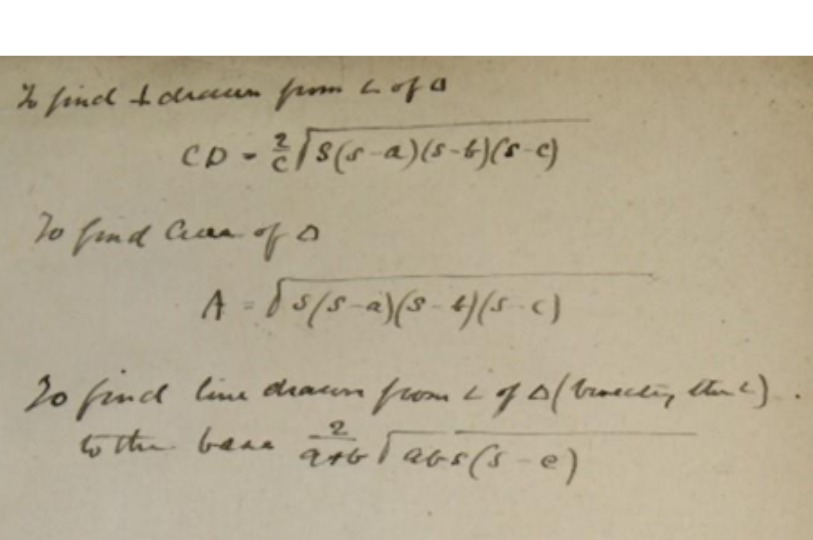
Image 2: Close-up of handwritten equations on page 61.
There are annotations at the top of nine pages – sometimes an equation, other times an arrow. There are extensive repairs carefully administered inside its pages with 18 different tears strengthened. This book was well used and preserved repeatedly to lengthen its working life.
We don’t know if Oliphant also used the book in his work, since only ‘ER’ is scrawled on the front cover. The booklet most likely travelled to Australia in the 1950s, with Oliphant later donating it to the Fenner Archives in 1971.
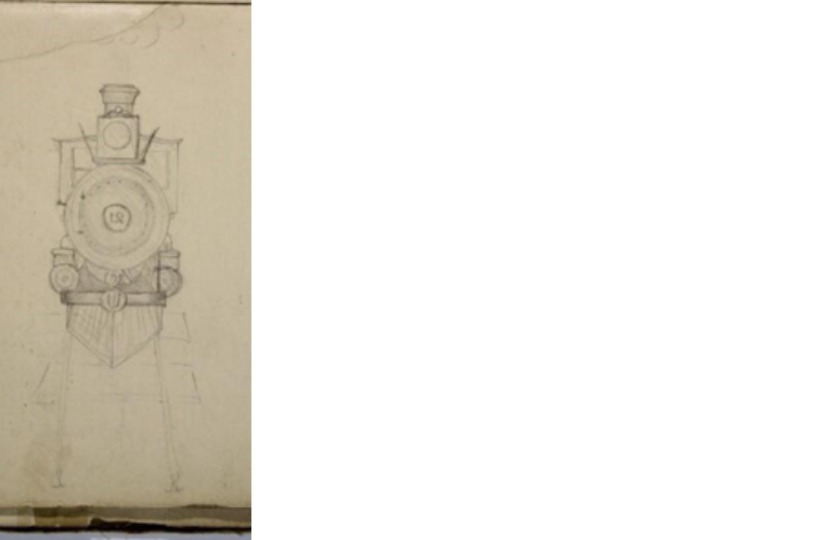
Image 3: Sketch of No.21 steam-engine found on page 60.
Mathematical annotations are one thing – but what sets this working booklet apart is two pencil sketches at the back: an approaching no.21 steam engine train (Image 3) and the side of the no.101 train (Image 4).
The train depicted appears to depict a 4-4-0 American-type steam locomotive. The artist has taken care to sketch the headlight lamp at the head of the train, as well as its bell and metal pilot.
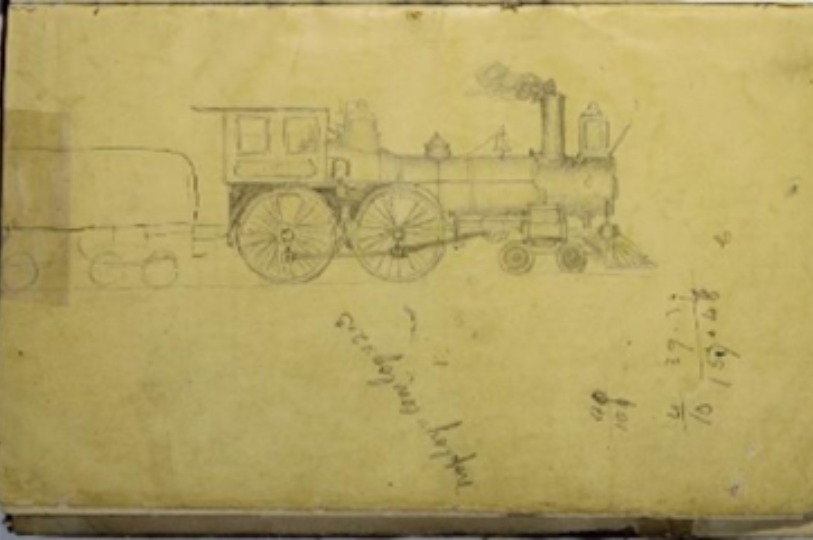
Image 4: Pencil sketch of No.101 steam-engine found on page 62.
We will never know whether the sketches were done by – Rutherford, Oliphant or another artist. Share your hypotheses with us at library@science.org.au.
Support our work
The quality digitisation of this fragile piece of science history was enabled through the Library’s ATIZ book scanner.
We thank David Anstice for his support in purchasing this scanner that has breathed new life into numerous pages of material from the Fenner Archives for the digital era, now preserved and accessible to the public.
Contact our philanthropy team on philanthropy@science.org.au if you would also like to contribute and support the wider digitisation project.