


A starting point, not a solution: The 2026–27 Budget for Australian science

The Budget scorecard for science
The 2026–27 Budget takes meaningful first steps on R&D reform but falls well short of reversing a decade of structural underinvestment. Australia’s science system needed a step-change; what it has received is a starting point.
National resilience, productivity and ambition are the Government’s central themes for the 2026–27 Budget. The measures announced signal genuine commitment to reforming Australia’s broken R&D system. However, the $1.5 billion over the forward estimates for research and science agencies is funded by cuts to existing research programs which does nothing to begin reversing the long-term decline in overall research investment.
| Area | Assessment |
| Overall R&D investment trajectory | Insufficient |
| Science system reform – implementing Ambitious Australia | First step |
| CSIRO and research agency stability | Positive |
| Medical research | Positive |
| Horizon Europe association | Positive |
| Higher education research commercialisation | Mixed |
| AI and emerging technologies | Positive |
| Research infrastructure (high-performance computing and data, NCRIS) | Not addressed |
| STEM education programs | Partial |
The Budget at a glance
Key measures in the budget for science and R&D:
- Ambitious Australia implementation begins with establishment of a National Resilience and Science Council and R&D Tax Incentive reforms.
- $387.4 million for CSIRO over four years to support financial stability on top of $233 million announced at MYEFO (Mid-Year Economic and Fiscal Outlook) in December 2025.
- Commitment to lift Medical Research Future Fund (MRFF) cap from $650 million to $1 billion by 2031, subject to completion of the National Health and Medical Research Strategy.
- Funding confirmed for Australia’s association to Horizon Europe, subject to treaty negotiations, enabling Australian researchers to access the world’s largest research funding pool and deepen collaborations with the EU and other associated countries.
- National Measurement Institute, Australian Nuclear Science and Technology Organisation (ANSTO), the Australian Space Agency and the Square Kilometre Array all receive funding.
- $1.8 million in 2026–27 for the Academy’s school science, technology, engineering and mathematics (STEM) programs, supporting teacher confidence and student capability.
- Cuts to offset new spending: ~$800 million in uncommitted Australia’s Economic Accelerator funds redirected and the Trailblazer Universities Program (~$86 million) wound up; $67 million cut to the National Environmental Science Program.
- Not addressed: high-performance computing and data capability, long-term certainty for NCRIS, and a national R&D investment plan.
Where the Academy's advocacy delivered
| What the Academy called for | What the Budget delivered |
| Lift the MRFF disbursement cap | Cap raised to $1 billion/year by 2030–31 ✔ |
| Sustainable, increased CSIRO funding | $387.4 million over four years and $38 million per year ongoing + $233 million at MYEFO ✔ |
| Association with Horizon Europe | Funding confirmed, treaty negotiations underway ✔ |
| R&D Tax Incentive reform to target genuine R&D | Multiple targeting reforms introduced ✔ |
| National R&D coordination mechanism – implementing Ambitious Australia | National Resilience and Science Council established ✔ |
| $8.9 million over four years to extend the Academy’s STEM education programs for teachers | $1.8 million in 2026–27 for the Academy to continue its STEM education programs |
The details: Budget measures relating to science
Ambitious Australia implementation
In this Budget, the Government takes its first steps to respond to Ambitious Australia, the final report from the Strategic Examination of Research and Development.
National Resilience and Science Council: the Budget establishes a new Council to provide advice to Government on research investment, improving coordination and enabling priority setting across the Government’s R&D programs in alignment with industry investment priorities.
R&D Tax Incentive (RDTI) reform: The RDTI comprises around 30% of the Government’s investment in R&D and is its primary mechanism to incentivise business investment in R&D. Several overdue reforms are introduced to better target the R&DTI and reward genuine R&D activity:
- The maximum expenditure threshold rises from $150 million to $200 million, increasing the offset for core R&D.
- The offset rates for core expenditure are increased by 4.5 percentage points.
- Eligibility for ‘supporting R&D expenditure’ is removed.
- The R&D intensity threshold is reduced from 2% to 1.5%.
- The turnover threshold for the refundable tax offset is raised from $20 million to $50 million so that growing firms can access it for longer.
- Research activities under $50,000 must be conducted with a Research Service Provider or Cooperative Research Centre to be eligible for the tax incentive – encouraging industry–research collaboration.
Government expects the RDTI reforms to deliver a net $400 million increase in R&D by young firms.
Reducing the intensity threshold may inadvertently disadvantage capital-intensive research sectors. This will require careful monitoring.
Raising the expenditure threshold will only benefit a few of the largest R&D-intensive companies, however it provides an incentive for these large companies to undertake additional R&D in Australia and may make Australia more internationally competitive and attractive for R&D activity. Previous increases to the threshold from $100 million to $150 million have not changed large business investment trends.
The parallel reforms to venture capital tax settings to support early-stage commercialisation is welcome.
Government science agencies
The budget introduces a suite of measures aimed to boost productivity through promoting research, development and innovation.
CSIRO: The Government provides a $387.4 million funding boost over four years, and $38 million per year ongoing, to support financial stability. This is on top of $233 million for CSIRO at MYEFO. These investments follow a Senate inquiry into the funding and resourcing of CSIRO, which concluded that sustainable investment is needed to maintain Australia’s public-good research and sovereign science capability. CSIRO also receives funding for the part-life refit of the Centre for Disease Preparedness, and $4.5 million over three years for its Transport Network Strategic Investment Tool.
National Measurement Institute: $273 million over four years to maintain essential national measurement capability.
ANSTO: An allocated $10.6 million over two years to continue radiological baselining, monitoring, and advise on safe implementation of nuclear technology in the context of the nuclear-powered submarine program.
Australian Space Agency: $21.7 million to deliver its regulatory and policy functions.
SKA radio astronomy project: Continued funding for Australia’s delivery obligations of the Square Kilometre Array.
Research funding
Medical Research Future Fund (MRFF): The Government has committed to lifting the MRFF disbursement cap from $650 million to $1 billion annually by 2030–31. This follows sustained pressure from the research sector, including the Australian Academy of Science. This will provide $508.5 million over four years to fund the staged increase. The funds will sit in the Contingency Reserve pending the completion of the National Health and Medical Research Strategy.
National Health and Medical Research Council (NHMRC): The NHMRC is allocated $24.3 million over two years for operations and a feasibility study for a Research Grant Hub. Such a grant hub should seek to modernise and address the administrative burden of grant application and management processes.
Horizon Europe: The Budget also provides funding for Australia’s association to Horizon Europe, pending formal treaty negotiations. This will give Australian researchers access to the world’s largest pool of research funding, diversify Australia’s international research partnerships and deepen collaborations with the EU.
Higher education
The Government frames universities not only as education providers, but as critical national assets for economic transformation, advanced manufacturing, defence capability, health innovation and workforce development. However, this Budget reduces research commercialisation programs: the Trailblazer Universities Program (~$86 million) winds up and $800 million in uncommitted Australia’s Economic Accelerator program funds are redirected. These cuts will affect researchers who invested substantial time and resources in applications.
The Australian Tertiary Education Commission is tasked with advising on reforming university registration requirements to remove the condition of research breadth to enable universities to build scale in areas of specialisation and comparative advantage. This was a recommendation of the Ambitious Australia report.
Artificial Intelligence (AI) capability
AI is identified as a key technology for productivity and economic growth. Measures to implement the National AI Plan include up to $70 million for an ‘AI Accelerator’ grant funding round under the Cooperative Research Centres program, to scale national AI capability and commercialisation.
Additional measures include $105.9 million over four years to develop AI-enabled environmental approvals and data sharing systems, continued development of the Australian AI Safety Institute, and implementation of safeguards under existing frameworks. These are welcome steps, though sustained investment in AI research capacity, including compute infrastructure, will be necessary to realise Australia’s AI capability ambitions.
STEM education and engagement
Several STEM education and engagement programs received funding in the Budget. The Academy will receive $1.8 million in 2026–27 to extend its school programs directly supporting the confidence and capability of STEM teachers and students. These investments are welcome but do not provide longer-term program certainty. Single-year funding makes it difficult for organisations to plan, recruit and deliver effectively. The Academy will continue to advocate for a multi-year commitment.
Other funding commitments in education and engagement include:
- $1.2 million for CSIRO’s STEM Professionals in Schools
- $1.5 million for the Smith Family’s Let’s Count Program
- $0.7 million for the Australian Mathematics Trust’s Curious Minds Program
- $0.7 million to Froebel Australia’s Little Scientists program.
Scitech and Questacon also receive funding to enhance science engagement activities in Western Australia.
Environment protection reforms
The Budget commits to a suite of actions to implement the Environment Protection and Biodiversity Conservation Act 1999 environment protection reforms – including establishing the new National Environmental Protection Agency (NEPA), the Nature Repair Market and enabling environmental offsets.
The Budget also allocates $105.9 million over four years from 2026–27 for the Department of Climate Change, Energy, the Environment and Water (DCCEEW) and NEPA to modernise environmental information, data and digital systems (including using AI) to speed up environmental approvals.
The cost of these measures is partly met from savings of $2.2 billion over 14 years from the Climate Change, Energy, the Environment and Water portfolio, which includes a $67 million cut to the National Environmental Science Program (NESP) over 7 years. The Academy notes with concern that this is around a 38% decrease in the program’s budget ($9.6 million per year). The NESP funds partnerships between scientists and Traditional Owners, government, community and industry to conduct environment and climate research. This cut is a blow to Australia’s environmental research capacity.
Other positive measures include $91.8 million over two years for Great Barrier Reef protection and restoration, and $11.5 million in 2026–27 for Australian Marine Parks and ocean leadership.
What the Academy is looking out for next
High-performance computing and national research infrastructure: Australia’s national supercomputers are oversubscribed and approaching end of life. The National Collaborative Research Infrastructure Strategy (NCRIS) faces a funding cliff in 2028–29. Neither was addressed in this Budget. The Academy urges the Government to commit to a national strategy for high-performance computing and data infrastructure before the next Budget.
A 10-year national R&D investment plan: Australia’s investment in R&D has been declining in for more than a decade – dropping well below the OECD average (1.69% vs 2.72% of GDP). A single Budget cannot reverse this. Ambitious Australia recommended reversing the decline in competitive grant funding to protect and support fundamental research. The Academy calls on the Government to mandate the new National Resilience and Science Council to develop a 10-year investment plan for R&D with clear funding trajectories to raise Australia’s R&D investment.
Multi-year certainty for STEM education programs: Single-year funding for programs like the Academy’s school STEM initiatives prevents effective long-term planning. The Government should move to a minimum three-year funding commitment for flagship science engagement programs.
The bigger picture: a system at a critical point
The 2026–27 Budget signals increasing support for reform of Australia’s science system. But signal is not the same as investment. For the past decade, Australia’s spending on R&D has been declining, with both Government and business investment falling as a share of GDP. Australia now spends 1.69% of GDP on research – far below the OECD average of 2.72%.
Without a sustained, long-term increase in R&D investment, Australia will lose the scientific and technological capability it needs to drive economic growth, resilience and national wellbeing. This Budget takes the first steps. The Government must be held to account for the investment that must follow.

Budget signals support for ambitious reform for Australian science
The Australian Academy of Science has welcomed a number of measures in the 2026–27 Federal Budget as a commitment on long-overdue science reform.
This budget will establish the National Resilience and Science Council. The Council is the foundation of the reform proposed in the Ambitious Australia report resulting from the Strategic Examination of Research and Development.
The Council will be key to bringing coordination to a fragmented science system and will ensure science is at the centre of government decision-making.
Other measures to implement the Ambitious Australia report recommendations include changes to better target the Research and Development Tax Incentive.
The Academy welcomes the government’s commitment to lift the cap on spending from the Medical Research Future Fund, which will increase disbursements from $650.0 million in 2025–26 to $1.0 billion annually from 2030–31.
This will allow medical researchers to make life-saving discoveries without depleting the underlying capital of the fund.
The Academy also welcomes the following measures in tonight’s Budget:
- $387.4 million over four years to support the financial stability of the CSIRO. CSIRO is also receiving investments for the Australian Centre for Disease Preparedness and its STEM Professionals in Schools program.
- $10.6 million over two years from 2026–27 for the Australian Nuclear Science and Technology Organisation to continue radiological baselining and monitoring and advise on the safe implementation of nuclear technology.
- $24.3 million over two years to uplift operating resources for the National Health and Medical Research Council (NHMRC), including conducting a feasibility study for a Research Grant Hub.
- $273 million over four years from 2026–27 for the National Measurement Institute.
- $105.9 million over four years from 2026–27 for the Department of Climate Change, Energy, the Environment and Water (DCCEEW) and the National Environmental Protection Agency (NEPA) to modernise environmental information, data and digital systems.
The Academy also welcomes continued Government support for the Academy’s STEM education programs. The Academy will receive $1.8 million in 2026–27 to extend its school programs to boost the confidence and capability of STEM teachers and their students.
Academy President Professor Chennupati Jagadish AC said teachers are facing unprecedented workload pressures, workforce shortages and out‑of‑field teaching demands.
"Continued investment in this program is welcome news for schools, teachers and students across Australia.
"Building on this commitment with multi-year funding is the natural next step. That kind of certainty allows schools to plan, supports teachers' ongoing development, and lets the benefits of these programs compound year on year which is exactly what Australia's future STEM workforce will need."
Professor Jagadish added that genuine reform processes are difficult.
"Some elements of the Budget are disappointing, including the repurposing of Australia’s Economic Accelerator Program to fund many of these measures.
"There is also a lack of forward investment in national research infrastructure including high-performance computing.
"Overall, the absence of a material increase in the government’s investment in science means these initial reforms are only a welcome first step and more is needed.
“The Ambitious Australia report recognised that a truly coordinated science system cannot be built without courageous decisions about structures and priorities, and we acknowledge these important first step of these reforms."

Australian perspectives of early- and mid-career researchers: 2025 survey dashboard
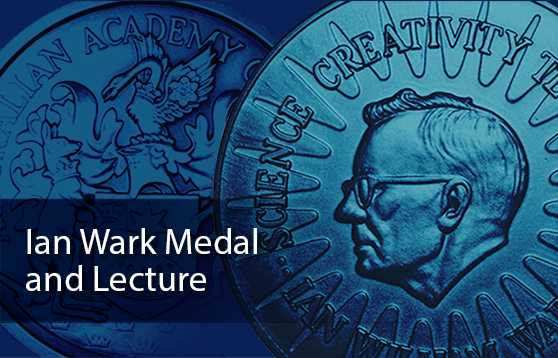
2026 Ian Wark Lecture by Dr Tony Murphy
About the lecture
From (very) hot gas to a cooler and safer planet: Plasmas protecting the ozone layer and reducing global warming
Plasmas (ionised gas) make up 99.9% of the visible universe. The sun and other stars are composed of plasma; lightning and sparks are everyday ‘down-to-earth’ examples.
Plasmas are also extremely useful. Since they were first used for street lighting in the late 19th century, their applications have multiplied to include welding and cutting of metals, etching of the semiconductors used in all electronic devices, deposition of a wide range of coatings, and purification of water – to name a few.
Plasmas can also be good for the environment. Dr Tony Murphy helped develop the PLASCON (now PyroplasTM) plasma process that was used to destroy stockpiles of ozone-depleting substances in Australia, the UK and the US, and is now being applied to potent global warming gases such as trifluoromethane.
He has also contributed to the international effort to replace the sulfur hexafluoride (another strong global warming gas) used in high-voltage circuit breakers with more benign alternatives.
Dr Murphy will discuss his role in these projects, showing how a fundamental understanding of plasma physics and chemistry was essential to developing real solutions.
He will also describe a new plasma process under development that aims to turn iron- and steelmaking – which are currently responsible for 7 to 9% of global carbon emissions – into an environmentally friendly process that would ensure the future of Australia’s huge iron ore deposits.
The lecture will begin at 7.30pm and will be preceded by a cocktail function in the Wild Planet gallery at 6.30pm.
About the speaker
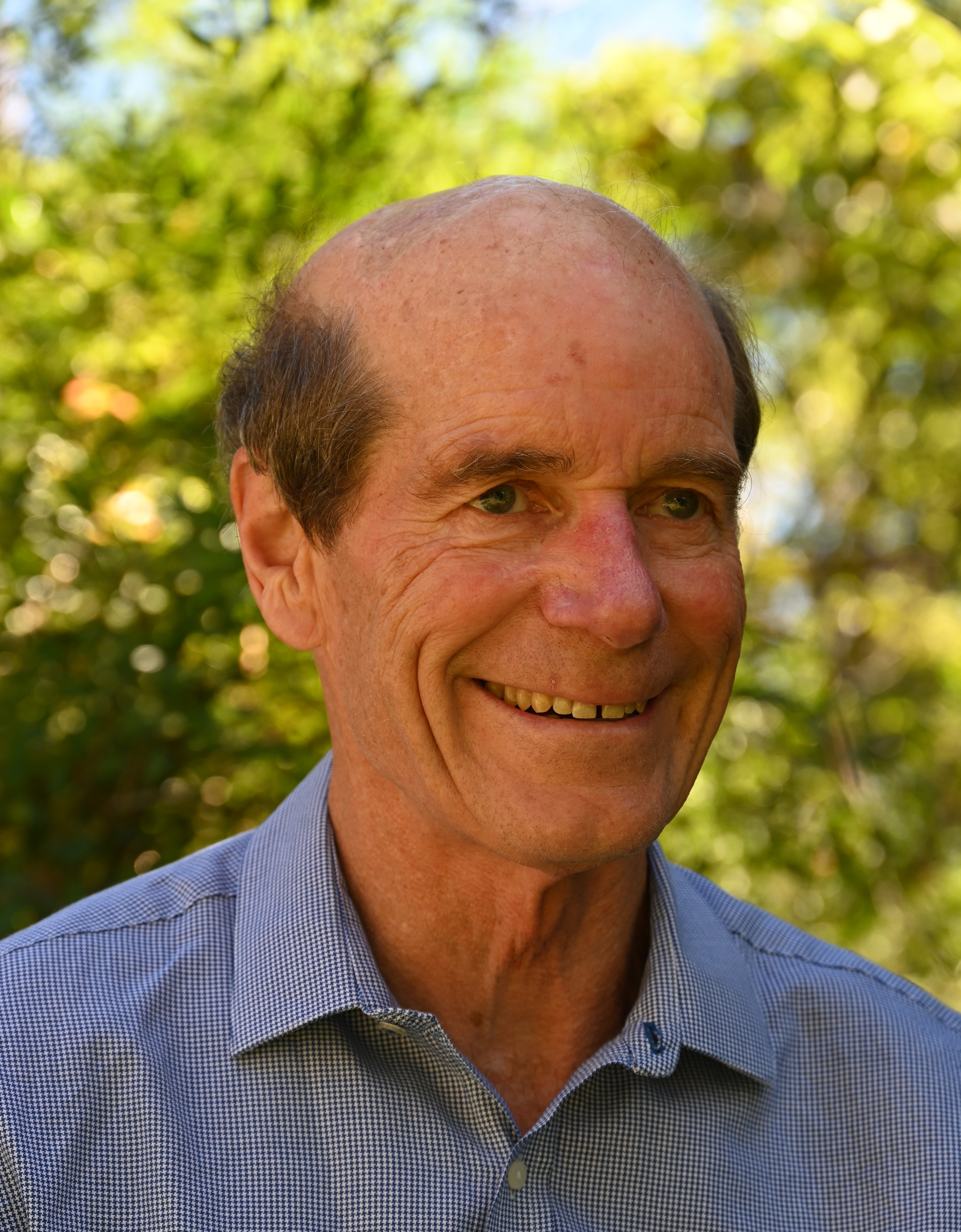
Tony Murphy
- Chief Research Scientist and Team Leader, CSIRO Manufacturing Research Unit
Event details
Date: Thursday 11 June 2026
Time: Cocktail function from 6.30pm, with the lecture commencing at 7.30pm AEST
Venue: Australian Museum, 1 William Street, Darlinghurst NSW 2010
Cost: Free
About the award
The Ian Wark Medal and Lecture commemorates the contributions to Australian science and industry by the late Sir Ian William Wark CMG CBE FAA FTSE. The award recognises research that contributes to the prosperity of Australia where that prosperity is attained through the advancement of scientific knowledge or its application, or both.
For all event enquiries, please contact awards@science.org.au.

New Futures Mobility Fund
Program highlights
- Funding support to attend recognised scientific conferences and similar professional events in Australia
- Build your research profile through networking, visibility and career development opportunities
- Flexible funding to help remove cost barriers and make participation more accessible
The New Futures Mobility Fund (New Futures) is a grant program delivered by the Australian Academy of Science (the Academy). It provides competitive mobility grants to support eligible humanitarian visa holders living in Australia to participate in recognised scientific conferences, symposia and similar professional events in Australia.
The fund offers flexible funding support to help remove cost barriers and enable participation in professional scientific opportunities. It is intended to strengthen professional visibility, support career development, and grow research networks through engagement with Australia’s scientific community.
Key dates
Below are the key dates for the application process. While we aim to keep to this schedule, some dates may change depending on circumstances.
GUIDELINES
The following guidelines provide important information about eligibility, submission requirements, and assessment processes. Please review them carefully before submitting an application.
Applicant eligibility
At the time of application, applicants must:
- be living in Australia
- hold an eligible humanitarian visa subclass (see list below)
- be engaged in research training or research activity in Australia
- be seeking funding support to attend a recognised STEM scientific conference, symposium or similar professional event in Australia
Eligible humanitarian visa subclasses are below:
- Refugee (subclass 200)
- In-country Special Humanitarian (subclass 201)
- Global Special Humanitarian visa (subclass 202)**
- Emergency Rescue (subclass 203)
- Woman at Risk (subclass 204)
- Protection visa (subclass 866)**
Eligible applicants may include:
- Masters students and PhD candidates
- Early- and mid-career researchers (EMCRs) with a Masters or PhD degree awarded up to 15 years* prior to the application deadline (where applicable).
* An extension to this timeframe may be considered in the case of significant career interruptions.
** As of 29 May 2026, two additional permanent refugee visa subclasses, Subclass 866 (Protection visa) and Subclass 202 (Global Special Humanitarian visa), have been included as eligible visa types.
Activity eligibility
Eligible activities are those with a structured scientific or professional development program and a clear rationale for how attendance will strengthen the applicant’s research capability, networks, and career development. Events must be Australia-based (no international travel).
Eligible activities may include:
- Professional conferences, symposia, workshops or similar professional events
- Specialist training courses or masterclasses delivered alongside a recognised scientific conference or symposium event.
- Professional development opportunities that support the applicant’s research training or research activity.
- Research translation and industry engagement forums with a STEM focus, where attendance supports research career pathways.
Other professional opportunities within Australia, as approved by the Academy
The Academy may request clarification where an event’s scientific standing or relevance is not clear from the application materials.
Fields of research
Applications are welcome from all fields of science, technology, engineering, and mathematics (STEM).
Eligible Australian research organisations (EROs)
Applicants must be employed by an eligible research organisation, including:
- Australian tertiary education institutions (as defined in the Higher Education Support Act 2003)
- Australian cooperative research centres
- publicly funded research agencies
- state- or territory-funded research organisations
- Australian public or private research companies
- Australian not-for-profit research organisations
- other incorporated Australian entities.
An ERO must be registered for GST, and if a university, must be exempt from income tax. Non-corporate Commonwealth entities (as defined under the Public Governance, Performance and Accountability Act 2013) are not eligible.
Successful applicants will be offered a grant from the Academy of up to A$5,000 (GST exclusive) towards the cost of attendance at recognised scientific conferences, symposia and similar professional events in STEM fields in Australia.
Grant funding can be used towards the cost of:
- professional development or professional event registration fees (including event access fees)
- return economy airfare from the applicant's home city to the event location in Australia, and
- accommodation costs that are specifically aligned with the requested activity dates.
Travel must commence after 1 October 2026 and be completed by 30 September 2027. Awardees are required to organise their own event registration, travel and accommodation arrangements, in accordance with the awarded fund conditions.
Funding is intended to cover the applicant’s costs associated with attending an eligible STEM event in Australia and does not provide support for caring or carer costs. Dependants may accompany the successful applicant at their own cost. The grant does not provide funds for bench fees, managerial, visa or insurance costs.
Successful applicants will be issued a funding agreement setting out funding conditions, eligible expenditure, reporting requirements and acquittal requirements. Grant funds will only be released on receipt of the signed funding agreement and required activity supporting evidence.
Applications must be submitted via the Academy’s Good Grants online portal and must be completed in full and include the following attachments as supporting evidence:
- brief curriculum vitae, including publications (maximum six pages)
- copy of eligible humanitarian visa grant notice
- letter of support from current supervisor or equivalent institute delegate. See the letter of support information sheet (PDF download below and on the templates tab) for details on what information should be included in it.
- event invitation, registration details, or equivalent supporting evidence confirming event outline and cost
- indicative budget outlining proposed use of funds
Applications must be complete at the time of submission to be considered. Incomplete applications, including those missing any required supporting material, will be deemed ineligible and will not proceed to merit assessment.
Privacy note: Visa evidence is sensitive personal information. Access to visa evidence in Good Grants will be restricted to authorised Academy Secretariat staff for eligibility checking. Visa evidence will not be provided to assessors and will not be exported to other systems.
Applications are considered carefully against the assessment criteria by a panel convened by the Academy and comprising Academy Fellows with relevant subject matter expertise. The decisions of the panel are based on the assessed competitiveness of each application.
Applications will be assessed on the criteria below, without any weighting:
- The quality and suitability of the proposed professional development opportunity, including the standing and relevance of the event to the applicant’s research and career stage.
- The expected benefits of attendance, including opportunities to build networks, strengthen professional visibility, and support career development.
- The extent to which the grant will enable access to the opportunity (including consideration of barriers and the appropriateness of the requested costs).
- Feasibility and value for money, including whether the budget is reasonable, clearly explained and aligned to eligible costs.
The Academy is not able to enter into discussion or correspondence regarding the reasons an application is successful or unsuccessful.
Successful awardees are required to submit a report within three months of activity completion. The report template will be provided to awardees.
Any publication resulting from activities funded by this program must acknowledge the support of the Australian Academy of Science and the New Futures Mobility Fund (exact acknowledgement wording will be provided to successful applicants). Any case studies, testimonials or impact stories are optional and will be subject to informed consent.
Applications are to be completed through an online form found by clicking on the Apply button on the top right of this web page when the round is open.
The letter of support information sheet can be downloaded from below.

Academy backs early-career researchers protecting Australia's wildlife
A tadpole vaccination program and a suburban lizard mystery have earned two early-career researchers a prestigious environmental science award from the Australian Academy of Science.
Dr Joseph Chung from the University of Canberra and Mr Jules Farquhar from Monash University are this year’s recipients of the Max Day Environmental Science Fellowship Award.
Vaccinating tadpoles to save threatened frogs
Dr Joseph Chung (University of Canberra) is contributing to global efforts to save threatened frog species by vaccinating tadpoles against a deadly fungal disease, known as chytridiomycosis, before they are released into the wild.
"Chytridiomycosis has affected more than 500 amphibian species and is pushing 10% of these species to extinction," Dr Chung said.
While conservation programs regularly reintroduce captive-bred frogs into their natural habitat, many die shortly after their release due to the disease.
His project is trialling cost-effective immunisation of the green and golden bell frog (Ranoidea aurea) tadpoles, a threatened species found in south-eastern Australia.
The interdisciplinary project draws on physiology, behaviour, genetics and ecological modelling to examine whether immunisation affects cognition, survival and reproduction, and whether male and female frogs respond differently.
“My project will test whether reintroduction success can be improved by immunising tadpoles before release,” Dr Chung said.
Backyard takeover by six-toothed rainbow skink
The six-toothed rainbow skink was introduced to Darwin from Arnhem Land in the late 1990s, and preliminary data from Mr Jules Farquhar (Monash University) shows it continues to spread.
Mr Farquhar describes the six-toothed rainbow skink as a “backyard bully” due to its large size in comparison to native Darwin skinks.
“It is now the most common lizard in Darwin backyards, but its impact on native lizard species is unknown.
“Through fieldwork, lab experiments, and genetic analysis, this project will uncover how and why this species has been so successful, whether it’s displacing native species, and how human-modified environments may be helping it spread.”
The findings will shed light on an overlooked but growing conservation challenge: the movement of species within a country's borders.
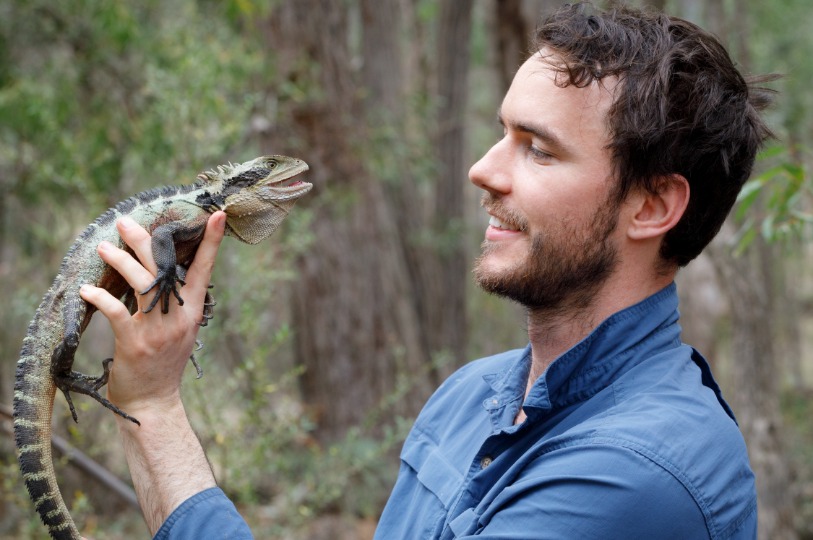
Mr Jules Farquhar. Photo: supplied.
Highly commended
Another three researchers and their projects were highly commended for their 2026 Max Day Environmental Science Fellowship Award applications:
- Ms Lily Dun, University of Queensland: ‘Uncovering the role of tree architecture in shaping biodiversity and ecosystem function in Australian rainforests’
- Mr Luke Florence, La Trobe University: ‘Hidden beneath our feet: uncovering endemism and conservation priorities of mycorrhizal fungi in Australian forests’
- Dr Wei Wei, University of Technology Sydney: ‘Powering a sustainable future: resolving micro- and nanoplastics barriers in waste-to-energy biotransformation’
About the award
The Max Day Environmental Science Fellowship Award is an annual award of up to $20,000 per awardee to assist PhD students or early-career researchers working on the conservation of Australia’s flora and fauna using an interdisciplinary approach.
The award is named in honour of the late Dr Maxwell Frank Cooper Day AO FAA, who spent a lifetime championing entomology, conservation and forestry, as well as helping other scientists.
International grants supercharging Australian research collaborations
Australian innovations in the fields of cancer radiotherapy, renewable hydrogen for export, and lunar exploration are a step closer to reality, with $6.2 million in grants announced today under round 2 of the Global Science & Technology Diplomacy Fund – Strategic Element.
Led by the Australian Academy of Technological Sciences and Engineering (ATSE) in partnership with the Australian Academy of Science, and supported by the Australian Government, the fund supercharges collaborations between Australian researchers and developers, and international partners in priority areas like advanced manufacturing and AI.
This includes initiatives like that of Dr Hazer Inatelkin and his team at Macquarie University. They will receive $592,645 to work with South Korean collaborators to build a machine learning framework that will help satellites work together as a smart, self-organising network – to keep communications running even as satellites move or failures occur.
This will enable more reliable satellite services that support remote communities, emergency response, agriculture, mining, public safety and critical infrastructure.
Another project funded as part of today’s announcement comes from Dr Hien Duong’s team at the University of Sydney, developing a precision biological treatment to remove harmful bacteria that cause major losses at shrimp farms.
Thanks to a $1 million grant, Dr Duong and a Vietnamese team will collaborate to strengthen food security and improve farmer livelihoods, reducing antimicrobial use and offering a sustainable solution for scalable aquaculture.
Academy President, Professor Chennupati Jagadish AC, said when researchers collaborate with industry partners, it can deliver big rewards and accelerate innovation, particularly when done on an international scale.
“The Academy is proud to be partnering with ATSE and the Australian Government to deliver this program, and in the process building stronger science and technology capability in our Asia–Pacific region.
“Congratulations to all the successful recipients of this latest funding round.”
Find out more about the Fund and see the full list of recipients
James Graham McLeod 1932–2022
James McLeod was an outstanding clinical neuroscientist who achieved Australian and international renown and leadership in two distinct areas of clinical neurology, disorders of peripheral nerve and multiple sclerosis.
He introduced and established clinical neurophysiology in Australia, which facilitated the diagnosis and management of neuromuscular disease and multiple sclerosis prior to the advent of magnetic resonance imaging (MRI).
His careful and detailed clinical and neurophysiological studies were essential to the discovery in his laboratory of the gene mutation for the commonest hereditary neuropathy Charcot Marie Tooth disease. He and his team were among the first internationally to define a disabling autoimmune neuropathy and collaborate with appropriate hospital departments (immunology and haematology) to introduce effective therapy for it.
With Professor Basten (Immunology) he conducted the first clinical trial of immunotherapy for multiple sclerosis (MS) and participated in the first international studies of immune therapies which greatly improved the outlook for patients with this disease. McLeod also made major contributions to the epidemiology of MS.
McLeod worked tirelessly not only to improve disease but to support the patients afflicted by these conditions and his students and colleagues working in this endeavour. He was committed to the practice of medicine, education and the improvement of disease outcomes through research. His life of service was extraordinary.
McLeod died on 27 June 2022 and the University of Sydney arranged a memorial service in his honour. Jim McLeod was appointed to the first named chair of neurology in Australia, the Bushell Chair in 1978, and in 2025 the University of Sydney established the James McLeod Chair of Neurology in his honour.
Download the memoir
Supplementary material
About this memoir
This memoir was originally published in Historical Records of Australian Science, vol. 37(1), 2026. It was written by John D. Pollard, Simon Hammond and Jane Firth.
Academy Council appoints inaugural Executive Director
The Council of the Australian Academy of Science is pleased to announce the appointment of Ms Melissa Abberton as the Academy’s inaugural Executive Director, marking a deliberate evolution in the organisation’s leadership structure.
The move to an executive director model reflects contemporary governance practice for mission-driven organisations, and a deliberate choice to deepen the partnership between Council and the Academy’s executive leadership in advancing the Academy’s strategic direction.
“This change reflects how we believe the Academy should be led at this point in its history, with Council closely engaged in our strategic direction, and an Executive Director who brings both the operational capability and the relationship depth with our Fellows, partners and stakeholders, to deliver that strategy,” Academy President Professor Chennupati Jagadish AC said.
Ms Abberton has served the Academy for the past five years as Chief Operating Officer, bringing broad commercial and financial management expertise, extensive experience leading organisational and cultural change, and a genuine and deeply held commitment to the Academy’s purpose and its people.
“I am deeply honoured by Council’s confidence, and I look forward to working alongside the President, Fellows, staff and our partners to advance the Academy’s mission,” Ms Abberton said.
Ms Abberton’s appointment comes as the Academy’s incoming President, Professor Sam Berkovic AC, begins his role in late May.
Submission – Murray–Darling Basin Authority 2026 Basin plan review
The Murray–Darling Basin is home to 2.4 million Australians, 40% of all Australian farms, and contains a variety of unique and delicate ecosystems.
In preparing this submission, the Academy has sought perspectives from experts in water quality, surface water hydrology, ecotoxicology, agriculture, geography, earth system science, and ecology, evolution and conservation science.
The Academy recommends that:
- adjustments to the Sustainable Diversion Limits should be considered due to impacts of climate change on the environmentally sustainable level of take, and that Sustainable Diversion Limit accounting should be independently peer reviewed
- sustained, coordinated, national investment is needed in climate science to inform evidence-based decision-making in the Basin
- water quality targets are aligned with contemporary guidance, a wider range of water quality parameters are monitored, and real-time monitoring techniques are expanded
- the high-priority scientific knowledge gaps identified in the Academy’s 2019 report are reviewed by the Murray–Darling Basin Authority as part of the 2026 Basin plan review
- the revised plan should ethically include First Nations people’s science and knowledge to inform Basin water management.