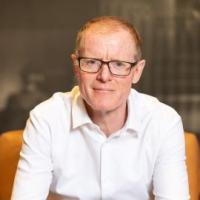


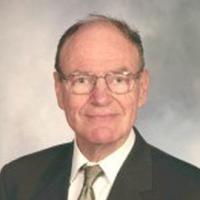

Professor

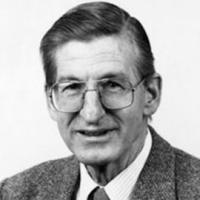
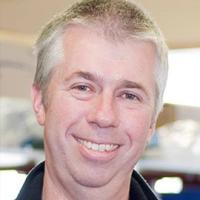
Keith Sutherland

OBE FAA

Keith Sutherland
Image Description

Please contact fellowship@science.org.au to request any updates to the data.

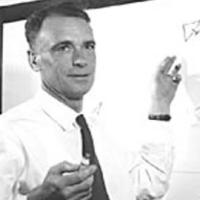
Professor

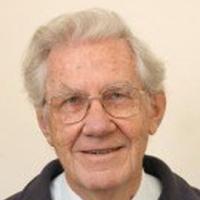
William Wittrick

FAA FRS

William Wittrick
Image Description
Dr. Wittrick took the Mechanical Sciences Tripos at Cambridge in 1942, was awarded First Class Honours and the Archibald Denny Prize; has held positions of Demonstrator in Engineering at Cambridge, Senior Lecturer and, more recently, Reader in Aeronautical Engineering at Sydney University; over the last ten years has made notable contributions to the theory of elasticity. In 1949 he received the Ph.D. degree and in 1953 was awarded a Fulbright Fellowship and a Research Fellowship at California Institute of Technology to work in his special field of theory of elasticity. That work together with his earlier contributions are highly regarded in America.

Please contact fellowship@science.org.au to request any updates to the data.

Professor

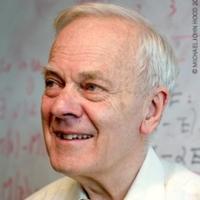
Adrien Albert

AO FAA

Adrien Albert
Image Description
Adrien Albert occupies the Chair of Medical Chemistry in the John Curtin School of Medical Research, the Australian National University, Canberra. He is distinguished for work in the organic chemistry, and physical organic chemistry, of substances of biological interest. He has advanced the understanding of nitrogenous heterocyclic chemistry, particularly in the field of correlating structure with physical and chemical properties and is at present writing a book on this subject, commissioned by the University of London. His monograph, "The Acridines" (1951), appeared at the end of seventeen years' work in that field, and he has since turned his attention to other nitrogenous heterocycles, notably the pteridines (on which he is a world-authority) and purines. He is also active in the study of the comparative avidities with which cell-constituents and drugs bind the heavy metals. His interest in the correlation of the physico-chemical properties of drugs with their biological action, resulted in the book, "Selective Toxicity" (1951), now in English, Russian and Japanese editions.

Expertise type

  • Chemistry
  • Pharmacology
  • Pharmaceutical Sciences
  • Medicinal Chemistry

Please contact fellowship@science.org.au to request any updates to the data.

Professor

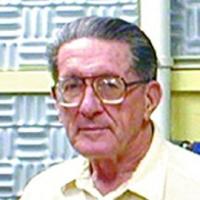
Robert Morton

FAA

Robert Morton
Image Description
Distinguished for his contributions to enzyme biochemistry, particularly in the field of cytochromes and phosphatases. Morton has purified alkaline phosphatase by a unique method and has demonstrated the transphosphorylating action of phosphatases. He has greatly contributed to the recognition of the importance of microsomes as centres of enzymic activity. In addition to alkaline phosphatase, microsomes from animal tissues have been shown to contain a hydrogen (electron)-transport system involving a newly­identified haemoprotein (cytochrome b5). A similar system involving cytochrome b3 has been identified in microsomes from plant tissues. Morton has isolated lactic dehydrogenase (cytochrome b2) of yeast in crystalline form, and has shown it to be a protein containing both flavin and haem. His butanol method has proved itself a valuable tool for the purification of other enzymes.

Please contact fellowship@science.org.au to request any updates to the data.

Professor

Martin Glaessner

AM FAA

Martin Glaessner
Image Description
Distinguished for his work on Geomorphology and Stratigraphy, and especially for his studies in Micropalaeontology, in which subject he is a world authority. His many contributions to the scientific literature have exerted wide influence in these fields, and his publication, PRINCIPLES OF MICRO­PALAEONTOLOGY (Melbourne 1945) New York (1947), is now a standard University Text in most European countries, in U.S.A. and in Australia.

Expertise type

  • Geology
  • Micropalaeontology
  • Earth Sciences
  • Palaeontology

Please contact fellowship@science.org.au to request any updates to the data.

Dr

Roland Andrews

CMG FAA

Roland Andrews
Image Description
Distinguished for his contributions to chemical engineering especially in the field of Fuel Technology. He was the Chairman of the National Gas Association of Australia and was responsible for the installation at Yallourn of a modified Lurgi gasification plant designed to supply the City of Melbourne.

Expertise type

  • Chemistry
  • Industrial chemistry
  • Chemical Engineering
  • Fuel technology

Please contact fellowship@science.org.au to request any updates to the data.

Professor

John Turner

OBE FAA

John Turner
Image Description
Distinguished for researches in plant physiology, especially plant respiration in higher plants. This earlier work was concerned with the anaerobic (fermentative) stages in the respiration process and contributed to our knowledge of the Pasteur effect. Later he investigated the aerobic stages of respiration with particular reference to the absorption and utilisation of organic acids. He has also worked on the oxygen effect in photosynthesis. He has also contributed to plant ecology and has been particularly active in the study of grazing in relation to erosion on the Bogong High Plains, Victoria. During the war he was concerned in research on tropic proofing of optical instruments and the production of graticules for optical munitions.

Expertise type

  • Conservation
  • Plant Biology
  • Botany
  • Biology
  • Plant Physiology

Please contact fellowship@science.org.au to request any updates to the data.

Professor

Michael White

FAA FRS

Michael White
Image Description
Distinguished for his contributions to cytology, particularly of insects. He is especially known for his major contributions to the population genetics of grasshoppers and as the leading world authority on animal cytology. He is the author of an important monograph on animal cytology and evolution. He has made substantial contributions to a diversity of subjects, such as cytotaxonomy, hybridity, and the evolution of sex chromosomes. He made pioneer observations of the effects of X-rays on chromosomes and of the influence of temperature on chiasma frequency.

Please contact fellowship@science.org.au to request any updates to the data.

Professor

Edward Derrick

CBE

Edward Derrick
Image Description
Distinguished for his contributions to the knowledge of infectious disease in Australia, in particular for his first recognition and elucidation of two human diseases now known to be of world-wide importance Q fever and Pomona leptospirosis. He has also carried out valuable investigations on other human infectious diseases in Queensland including leptospiroses and rickettsial infections.

Expertise type

  • Medical Sciences
  • Scrub typhus
  • Q fever
  • Infectious Diseases
  • Asthma
  • Dengue

Please contact fellowship@science.org.au to request any updates to the data.

Professor

Victor Bailey

FAA

Victor Bailey
Image Description
V. A. Bailey is well known for his experimental work on the motions of slow electrons in gases and in particular for his method of measuring the attachment coefficient of electrons to gas molecules. His experience with the properties of slow electrons in gases led him to an exploration of the phenomenon of radio wave interaction. He has also contributed to magnetic-ionic theory and to the theory of electro-magnetic oscillations in ionized genes. Other subjects to which he has made original contributions are, the theory of animal populations and miscellaneous topics in pure and applied mathematics.

Expertise type

  • Physics
  • Radiophysics

Please contact fellowship@science.org.au to request any updates to the data.