
Professor

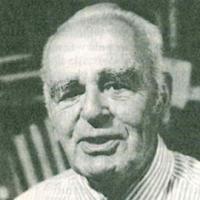
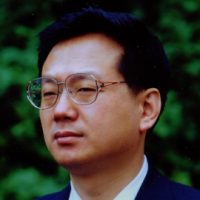
Edward Slater

FAA FRS

Corresponding member


Edward Slater
Image Description

Please contact fellowship@science.org.au to request any updates to the data.

Dr

Frederick Sanger

OM CH CBE FAA FRS Nobel Laureate

Corresponding member

Frederick Sanger
Image Description

Please contact fellowship@science.org.au to request any updates to the data.

Dr

Bart Bok

FAA

Corresponding member
Bart Bok
Image Description
Professor Bart J. Bok was for several years Director of the Mount Stromlo Observatory. He was responsible for the establishment of the Siding Spring Observatory.

Please contact fellowship@science.org.au to request any updates to the data.

Professor

Dorothy Hodgkin

OM FAA FRS Nobel Laureate

Corresponding member

Dorothy Hodgkin
Image Description

Please contact fellowship@science.org.au to request any updates to the data.

Professor

John Cockcroft

KCB OM Nobel FRS

Corresponding member

Photo not available
Image Description

Please contact fellowship@science.org.au to request any updates to the data.

Professor Sir

Philip Cohen

FAA FRS FRSE

Corresponding member
Philip Cohen
Image Description

Expertise type

  • Biology
  • Biochemistry

Please contact fellowship@science.org.au to request any updates to the data.

Professor

Linfa Wang

FAA FTSE

Corresponding member
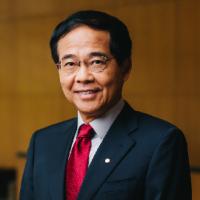
Linfa Wang
Image Description
Linfa Wang is globally recognised for his contributions to bat viruses and bat biology, and the successful translation of his discoveries into biomedical innovations that have helped combat viral outbreaks, from Hendra virus in Australia to the COVID-19 pandemic. Nicknamed “batman”, Wang has established bats as a new model system for understanding zoonotic viral diseases and for translating knowledge of the unique immune system of bats to better manage human medical disorders. His breakthrough research and biomedical innovations have informed public health policies at national and international levels, and Wang has served on multiple World Health Organisation (WHO) COVID-19 committees.

Fields of research

31 BIOLOGICAL SCIENCES
  • 3101 BIOCHEMISTRY AND CELL BIOLOGY
  • 3105 GENETICS
    • 310507 Genetic Immunology
  • 3107 MICROBIOLOGY
    • 310702 Infectious Agents
32 BIOMEDICAL AND CLINICAL SCIENCES
  • 3207 MEDICAL MICROBIOLOGY
    • 320705 Medical Virology

For full list of research codes, please visit the ARC Website .

Expertise type

  • Evolutionary Biology
  • Infectious Diseases
  • Inflammation
  • Innate Immunity
  • Protein-protein Interactions
  • Biochemistry
  • Functional Genomics
  • Medical Sciences
  • Virology

Please contact fellowship@science.org.au to request any updates to the data.

Professor

Gareth McKinley

FAA FRS

Corresponding member

Gareth McKinley
Image Description
Gareth Mckinley has made outstanding contributions to viscoelastic fluid mechanics, understanding flow instabilities and stretching flows. His research group has developed novel instrumentation and customised rheological analysis techniques that have driven the field of rheometry for complex and soft fluids. McKinley’s instrumentation and testing algorithms are used across the fields of Australian science and engineering. McKinley’s freely distributed code for analysing Large Amplitude Oscillatory Shear Flow, now used at a large number of Australian universities and CSIRO, especially for characterising and distinguishing the non-linear rheological responses of different wheat flours. He has developed extensive relations with Australian science and scientists.

Fields of research

40 ENGINEERING
  • 4004 CHEMICAL ENGINEERING
    • 90408 Rheology
  • 4016 MATERIALS ENGINEERING
    • 401609 Polymers and Plastics
51 PHYSICAL SCIENCES
  • 5103 CLASSICAL PHYSICS
    • 20303 Fluid Physics

For full list of research codes, please visit the ARC Website .

Expertise type

  • Nonlinear Continuum Mechanics
  • Rheology
  • Food Science
  • Mechanical Engineering
  • Microfluidics
  • Nanoparticles
  • Chemical Engineering
  • Classical Mechanics
  • Fluid Dynamics
  • Polymer Processing
  • Engineering

Please contact fellowship@science.org.au to request any updates to the data.

Professor

Anne Dell

CBE FAA FRS

Corresponding member
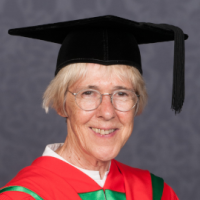
Anne Dell
Image Description
Anne Dell is a biochemist and pioneer in the field of glycobiology and seeks to understand the role played by sugars in human health and disease. Dell was amongst the first investigators worldwide to successfully apply advanced mass spectrometric techniques to carbohydrate containing biopolymers. Her laboratory continues at the leading edge of biological mass spectrometry for solving structural problems in glycobiology and facilitating the development of new drugs and vaccines. Her research has been recognised by election to the Fellowship of the Royal Society in 2002 and the Academy of Medical Sciences in2008. She was appointed a Commander of the Order of the British Empire (CBE) in 2009 for services to science.

Fields of research

31 BIOLOGICAL SCIENCES
  • 3101 BIOCHEMISTRY AND CELL BIOLOGY
    • 310101 Analytical Biochemistry
    • 310105 Cellular Interactions (incl. Adhesion, Matrix, Cell Wall)
    • 310109 Proteomics and Intermolecular Interactions (excl. Medical Proteomics)
    • 310199 Biochemistry and Cell Biology not elsewhere classified

For full list of research codes, please visit the ARC Website .

Expertise type

  • Biotechnology
  • Biological Chemistry
  • Biology
  • Bacterial Pathogens
  • T Lymphocytes
  • Cancer Immunotherapy
  • Carbohydrates
  • Female Reproductive Tract
  • Glycosides
  • Immune-oncology
  • Protein Structure-Function Relationships

Please contact fellowship@science.org.au to request any updates to the data.

Professor

Lei Jiang

FAA

Corresponding member
Lei Jiang
Image Description
Learning from nature, Lei Jiang established the basic principles of superwettability for interfacial materials systems. He determined that: static wetting is determined by the cooperative effect of nanostructure and surface energy; the transition point of the superlyophilicity and superlyophobicity on the nanostructure is the lyophilicity-lyophobicity limitation; and that the direction of liquid transport is regulated by chemical composition gradient, rough gradient, and curvature gradient, among many other factors. More than ten superwetting interfacial material systems have been applied to various fields including energy, health, resources, the environment, material and chemical industry. In 2021, superwettability technology was selected by the International Union of Pure and Applied Chemistry (IUPAC) as one of the top ten emerging technologies in chemistry, recognising its potential to foster the well-being of society and the sustainability of the Planet.

Expertise type

  • Materials Science
  • Chemistry
  • Nanomaterials

Please contact fellowship@science.org.au to request any updates to the data.