

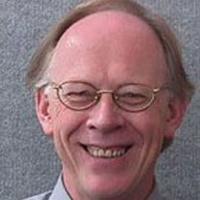

Professor

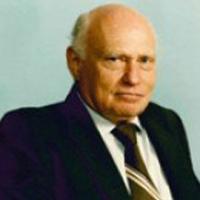
Fedor Sukochev

FAA

Fedor Sukochev
Image Description
Fedor Sukochev is a world leader in finding novel analytic approaches to complicated interdisciplinary problems. His research covers the area of mathematics inspired by quantum mechanics, where commuting variables are replaced by non-commuting ones. He is an internationally recognised expert in three related but distinct areas: noncommutative analysis; non-commutative geometry and; non-commutative probability.

Expertise type

  • Algebra
  • Mathematics
  • Non-commutative Analysis
  • Operator Theory

Please contact fellowship@science.org.au to request any updates to the data.
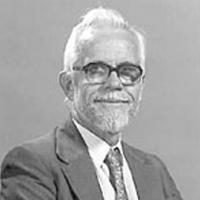
Professor

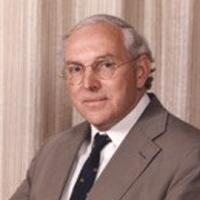
George Willis

FAA

George Willis
Image Description
Willis is known internationally as an innovator and problem solver in diverse fields of mathematics. In topological algebra, his insights into locally compact groups and fundamental concepts that he has introduced, such as the scale function and flatness, have initiated new research directions and made new applications possible. He has made advances in harmonic analysis by combining algebraic and probabilistic methods in a novel way, and has made decisive contributions in functional analysis through the construction of key examples.

Fields of research

49 MATHEMATICAL SCIENCES
  • 4904 PURE MATHEMATICS
    • 490405 Group Theory and Generalisations
    • 490406 Lie Groups, Harmonic and Fourier Analysis
    • 490408 Operator Algebras and Functional Analysis

For full list of research codes, please visit the ARC Website .

Expertise type

  • Algebra
  • Group Theory
  • Mathematics
  • Pure Mathematics

Please contact fellowship@science.org.au to request any updates to the data.

Professor

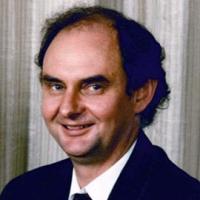
Andrew Hassell

FAA

Andrew Hassell
Image Description
Andrew Hassell is a leading Australian mathematical analyst, who specialises in the spectral theory of partial differential equations, and harmonic analysis of manifolds. He has made significant contributions to mathematics in the areas of quantum ergodicity and quantum chaos, analysis on asymptotically conic spaces, time-dependent Schrodinger equations and Strichartz estimates, scattering theory, spectral invariants and numerical analysis. He has aroused considerable interest internationally by exhibiting examples of planar domains on which the billiard flow is quantum ergodic without being quantum unique ergodic.

Fields of research

49 MATHEMATICAL SCIENCES
  • 4904 PURE MATHEMATICS

For full list of research codes, please visit the ARC Website .

Expertise type

  • Mathematics
  • Partial Differential Equations
  • Pure Mathematics
  • Scattering Theory

Please contact fellowship@science.org.au to request any updates to the data.

Professor

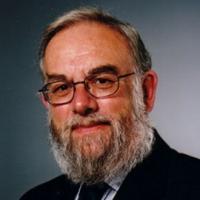
Benjamin Andrews

FAA

Benjamin Andrews
Image Description
Ben Andrews is a leading international researcher in differential geometry and related partial differential equations and is particularly famous for his work in geometric evolutions. Among many notable achievements is his resolution of Firey’s conjecture in 1999 on the shape of rolling stones and the recent resolution of one of the most celebrated open problems in mathematics, the fundamental gap conjecture for the eigenvalues of the Laplacian. His research successes have been recognised by many awards, including a prestigious invited lecture in the geometry section of the International Congress of Mathematicians in 2002.

Expertise type

  • Differential Equations
  • Differential Geometry
  • Mathematics

Please contact fellowship@science.org.au to request any updates to the data.

Professor

Louise Ryan

AO FAA

Louise Ryan
Image Description
Louise Ryan is an internationally recognized statistician with an outstanding ability to balance deep engagement in applications with fundamental methodological development. She is also well known for her leadership ability and passion for developing young scientists. After 25 years as a faculty member at Harvard University, she returned to Australia in 2009 as Chief of CSIRO’s Division of Mathematics, Informatics and Statistics. Ryan’s contributions to public health research have been recognized through prestigious awards and election to the US Institute of Medicine. She has also made important methodological contributions in survival analysis and the analysis of correlated and multivariate data.

Fields of research

49 MATHEMATICAL SCIENCES
  • 4905 STATISTICS
    • 490501 Applied Statistics

For full list of research codes, please visit the ARC Website .

Expertise type

  • Mathematical Statistics
  • Biostatistics
  • Informatics
  • Mathematics
  • Statistics

Please contact fellowship@science.org.au to request any updates to the data.

Professor

Jonathan Borwein

FAA FRSN FRSC

Jonathan Borwein
Image Description
Borwein has made substantial contributions to distinct mathematical disciplines: optimization theory and practice, number theory, classical analysis, theory of computation, and functional analysis. The fundamental Borwein-Preiss smooth variational principle in optimization theory enables classical techniques to be applied to highly nonsmooth problems. Borwein's cubic analogue of Jacobi's seminal 19th century quartic theta function identity is celebrated in number theory. Borwein is also a world leader in the field of experimental mathematics using intensive computation for pure mathematical discovery. Highly successful as supervisor, expositor, and populariser of mathematics, Borwein authored with E.J. Borowski the best selling modern dictionary of mathematics.

Expertise type

  • Mathematics
  • Computational Methods
  • Number Theory
  • Optimisation Theory

Please contact fellowship@science.org.au to request any updates to the data.

Emeritus Professor

Xu-Jia Wang

FAA

Xu-Jia Wang
Image Description
Wang is a leading international researcher in non-linear partial differential equations and applications, mainly to geometry and optimal transportation. He has solved major outstanding problems, including the Chern conjecture and the affine Plateau problem in affine geometry, the existence of Ricci solitons on toric Kahler manifolds in complex geometry and the higher order Yamabe problem in conformal geometry. In optimal transportation, he was involved in the final resolution of the Monge problem and the discovery of conditions on costs to ensure regularity. His international recognition includes an invited talk at the International Congress of Mathematics and the Morningside Gold Medal.

Fields of research

49 MATHEMATICAL SCIENCES
  • 4904 PURE MATHEMATICS
    • 490402 Algebraic and Differential Geometry
    • 490410 Partial Differential Equations

For full list of research codes, please visit the ARC Website .

Expertise type

  • Differential Geometry
  • Mathematics
  • Nonlinear Partial Differential Equations
  • Pure Mathematics

Please contact fellowship@science.org.au to request any updates to the data.

Professor

Nalini Joshi

AO FAA

Nalini Joshi
Image Description
Professor Nalini Joshi has obtained international recognition for her fundamental work on the mathematical structure of nonlinear integrable systems. She has tackled longstanding unsolved problems concerning the delicate asymptotic structure of the solutions to key nonlinear integrable differential equations, using novel techniques in complex analysis. Her results have led to crucial information about singularity structure, and to improved tests for the identification of integrable systems. She has tackled traditional continuous systems where her results have brought a more unified understanding, and she is a pioneer in developing complex analytic techniques for the study of integrable discrete systems.

Fields of research

49 MATHEMATICAL SCIENCES
  • 4901 APPLIED MATHEMATICS
  • 4902 MATHEMATICAL PHYSICS
  • 4904 PURE MATHEMATICS
  • 4905 STATISTICS

For full list of research codes, please visit the ARC Website .

Expertise type

  • Applied Mathematics
  • Mathematics
  • Nonlinear Differential Equations

Please contact fellowship@science.org.au to request any updates to the data.

Professor

Alan Welsh

FAA

Alan Welsh
Image Description
Welsh’s work addresses a particularly wide variety of problems. In a parametric setting, his research on distance sampling and related topics is especially important. His work on semiparametric inference includes his remarkable contributions to robust inference in linear regression, using order statistics. Here he has provided an ingenious solution to a problem that has baffled experienced workers in the field. In the setting of nonparametric inference, his research on applications of smoothing methods to clustered data has produced many surprises, including his demonstration that remarkable improvements in performance can be achieved by taking proper and careful account of the dependence structure when constructing a smoother. All this work, and much more besides, has the unusual but, for Welsh, almost universal characteristic of theoretical depth combined with substantial practical relevance.

Fields of research

49 MATHEMATICAL SCIENCES
  • 4905 STATISTICS

For full list of research codes, please visit the ARC Website .

Expertise type

  • Mathematics
  • Robustness
  • Statistical Modelling
  • Statistics

Please contact fellowship@science.org.au to request any updates to the data.

Professor

Igor Shparlinski

FAA

Igor Shparlinski
Image Description
Igor Shparlinski is an outstanding mathematician whose primary area of research is number theory, encompassing both its classical and computational aspects. He has obtained a number of new results and solved several well-known problems which despite the efforts of many distinguished researchers had remained open for decades, among them a problem of Erdos. He applied advanced methods of analytical number theory to computer science and cryptography, leading to a series of remarkable results, notably a recent rigorously proved attack on the Digital Signature Algorithm, and establishing the bit security of the Diffie-Hellman protocol. Among other distinctions, he is a recipient of the Medal of the Australian Mathematical Society.

Fields of research

49 MATHEMATICAL SCIENCES
  • 4901 APPLIED MATHEMATICS

For full list of research codes, please visit the ARC Website .

Expertise type

  • Cryptography
  • Mathematics
  • Number Theory
  • Pure Mathematics

Please contact fellowship@science.org.au to request any updates to the data.