


Professor

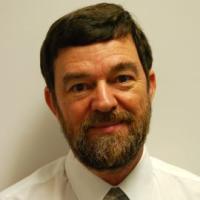
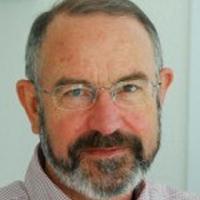
Brian Anderson

AC FAA FTSE FRS

Brian Anderson
Image Description
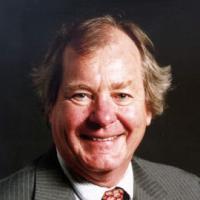
Professor Brian Anderson is distinguished for his contributions to system theory, in the areas of optimal control, including quadratic minimalisation problems, linear filtering and smoothing theory, including covariance factorisation, stability theory, and especially for the pioneering application of state-variable methods to network theory, particularly passive network synthesis.

Fields of research

40 ENGINEERING 400607 Signal Processing 400702 Automation engineering

For full list of research codes, please visit the ARC Website .

Expertise type

  • Electrical Engineering
  • Engineering
  • Signal Processing
  • Applied Mathematics

Please contact fellowship@science.org.au to request any updates to the data.

Professor

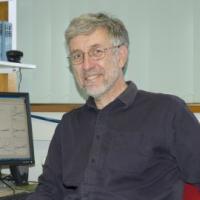
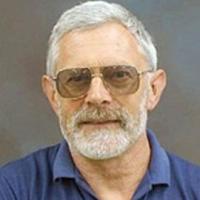
John Cowley

FAA FRS

John Cowley
Image Description
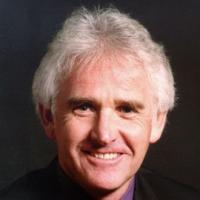
Dr Cowley has a considerable international reputation for his pioneer work on high-resolution electron diffraction and structure analysis. He is distinguished for:- the initiation and development of single-crystal structure analysis by electron diffraction, including new experimental methods and theoretical techniques; the development (in collaboration with A.F. Moodie) of a Completely new formulation of physical optics, which has, in particular, advanced considerably the theory of electron scattering; the discovery), interpretation and realization of the significance of the new optical phenomenon of Fourier images (in collaboration with A. F. Moodie); the first measurements of short-range order in single crystals of alloys and significant advances in the theory of short-range order.

Expertise type

  • Diffraction
  • Electron Crystallography
  • Electron Scattering

Please contact fellowship@science.org.au to request any updates to the data.

Dr

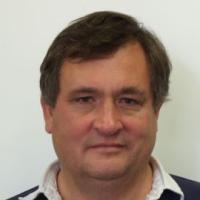
Edward Bowen

CBE FAA FRS

Edward Bowen
Image Description
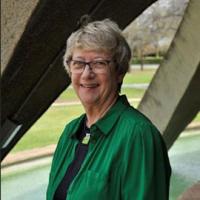
With Watson-Watt and Wilkins pioneered radar in England in 1935. Played essential part in subsequent all-important development. (Contribution recognized by British Government by award of O.B.E. and special grant of £12,000). Appointed Chief of Radiophysics Laboratory in 1946 and transformed it from a radar development establishment to one in which no less than three phases of its work (radio astronomy, rain physics and radio aids to navigation) have acquired international reputations. Personally mainly responsible for:- (i) The development of several radar aids to aerial navigation. (This was recognized by Thurlow Award given by American Institute of Navigation for ""the most outstanding contribution to the science of navigation during 1950""). (ii) Important advances in rain physics, particularly in the recognition of the importance of coalescence between drops as a rain-forming process, in personally undertaking and stimulating aircraft observations of clouds and in studies of the role of freezing nuclei in rain formation.

Expertise type

  • Radar
  • Engineering
  • Radiophysics
  • Physics

Please contact fellowship@science.org.au to request any updates to the data.

Professor

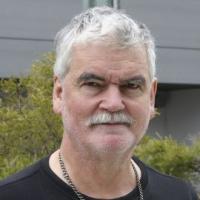
Naomi Wray

FAA FAHMS

Naomi Wray
Image Description
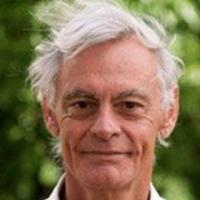
Naomi Wray is a leading complex trait statistical geneticist. She has significantly contributed to quantitative genetic and evolutionary selection theory, with applications in agriculture and medicine. Her theoretical work on the prediction of rates of inbreeding in populations undergoing selection, led to changes in agricultural selection programmes worldwide in balancing genetic improvement with levels of inbreeding. She has developed innovative quantitative genetic methods for the estimation of genetic parameters from genetic epidemiology studies and methods for genetic risk prediction. She has applied these to psychiatric disorders, thereby contributing to the elucidation of the genetic basis of common, distressing, complex diseases.

Fields of research

31 BIOLOGICAL SCIENCES
  • 3105 GENETICS
    • 60412 Quantitative Genetics (incl. Disease and Trait Mapping Genetics)
32 BIOMEDICAL AND CLINICAL SCIENCES 4203 HEALTH SERVICES AND SYSTEMS
  • 420313 Mental Health

For full list of research codes, please visit the ARC Website .

Expertise type

  • Genetic Epidemiology
  • Psychiatry
  • Clinical Neurology
  • Biology
  • Genetics
  • Genomics
  • Statistics

Please contact fellowship@science.org.au to request any updates to the data.

Professor

Alex McBratney

AM FAA

Alex McBratney
Image Description
Alex McBratney is a world-leading soil scientist who conceived and developed pedometrics, digital soil mapping and soil security, radically strengthening the knowledge base of soil science. He established new theory and empirical models of soil variation in landscapes and developed their applications, for example, in precision agriculture. His contributions have revolutionised the availability of soil information and led to improved agricultural practices with reduced environmental impacts and enhanced security of the world’s soil.

Fields of research

41 ENVIRONMENTAL SCIENCES
  • 4106 SOIL SCIENCES

For full list of research codes, please visit the ARC Website .

Expertise type

  • Agricultural Science
  • Biology
  • Soil Science

Please contact fellowship@science.org.au to request any updates to the data.

Professor

Stephen Nutt

FAA

Stephen Nutt
Image Description
Professor Goodwin has made outstanding contributions to the area of systems science and dynamical systems over a period of 25 years. His work has had a major international impact and is known in virtually every country in the world. Of particular significance is his capacity to link fundamental theoretical research with engineering applications. He made pioneering contributions of lasting significance on the convergence of adaptive controllers and on numerical issues in digital filtering and control. More recent work on switching strategies in adaptive control may turn out to be a key concept in the emerging area of hybrid dynamical systems.

Fields of research

32 BIOMEDICAL AND CLINICAL SCIENCES
  • 3204 IMMUNOLOGY
    • 320405 Humoural Immunology and Immunochemistry

For full list of research codes, please visit the ARC Website .

Expertise type

  • Antibodies
  • T Cells
  • B Cells
  • Transcriptional regulation
  • Transcription Factor
  • Biology
  • Immunology
  • Molecular Genetics
  • Stem Cells

Please contact fellowship@science.org.au to request any updates to the data.

Professor

Jamie Rossjohn

FAA FAHMS FRS

Jamie Rossjohn
Image Description
Jamie Rossjohn has had a profound impact on our understanding of immune recognition. By bringing the power of structural biology to bear, he has explained the pre-T-cell receptor (TCR) self-association in thymocyte ontogeny, provided novel insights into how TCRs interface with viral peptides bound to polymorphic HLA glycoproteins, and illuminated the aberrant T-cell reactivity that leads to autoimmunity and drug/food hypersensitivities. From the aspect of innate immunity, he pioneered the structural definition of Natural Killer cell specificity and defined the lipid-based immunity mediated by Natural Killer T-cells. Functioning at the cutting edge of immunology, Rossjohn has a stellar international reputation.

Fields of research

31 BIOLOGICAL SCIENCES
  • 3101 BIOCHEMISTRY AND CELL BIOLOGY
    • 310112 Structural Biology (incl. Macromolecular Modelling)
32 BIOMEDICAL AND CLINICAL SCIENCES
  • 3204 IMMUNOLOGY
    • 320403 Autoimmunity
    • 320404 Cellular Immunology
    • 320407 Innate Immunity
    • 320409 Tumour Immunology
  • 3205 MEDICAL BIOCHEMISTRY AND METABOLOMICS
    • 320506 Medical Biochemistry: Proteins and Peptides (incl. Medical Proteomics)

For full list of research codes, please visit the ARC Website .

Expertise type

  • Protein Structure
  • T Cells
  • X-ray Crystallography
  • Structural Biology
  • Immunology
  • Infection
  • Medical Sciences
  • Pathology

Please contact fellowship@science.org.au to request any updates to the data.

Professor

Patrick McGorry

AO FAA FAHMS

Patrick McGorry
Image Description
Patrick McGorry’s work has created new concepts for psychotic disorders and a new clinical and research focus on youth mental health. His work commenced with the development of a novel clinical service – Early Psychosis Prevention and Intervention Centre (EPPIC) – that focussed on the early phase of illness. This approach has been replicated worldwide and recently expanded to include other psychiatric illnesses. The concept of youth mental health has led to national mental health reform including headspace, a model that has also been replicated internationally. His work has led to earlier diagnosis, better treatment and outcomes for young people with mental illness.

Expertise type

  • Medical Sciences
  • Mental Health
  • Psychiatry

Please contact fellowship@science.org.au to request any updates to the data.

Professor

Geoffrey Lindeman

FAA FAHMS

Geoffrey Lindeman
Image Description
Geoff Lindeman and his team identified the stem and progenitor cells that generate all ductal tissue in the breast, in both mice and humans. His laboratory was the first to identify the culprit progenitor cell responsible for breast cancer in BRCA1 mutation carriers. Discoveries from his group have provided a new framework for studying the molecular and cellular events that lead to breast cancer, with direct implications for the treatment and prevention of breast cancer. He has translated his group’s fundamental research findings into novel early phase clinical trials.

Expertise type

  • Clinical Translation
  • BRCA1/2
  • Cancer Therapy
  • Breast Cancer
  • Cancer Biology
  • Medical Sciences
  • Stem Cells

Please contact fellowship@science.org.au to request any updates to the data.

Professor

Wendy Hoy

AO FAA

Wendy Hoy
Image Description
Professor Wendy Hoy is recognised internationally for her multidisciplinary research on kidney and related chronic disease and for the scientific rigour she applied to Aboriginal health research. Her work has transformed Aboriginal health services in Australia, saved lives, reduced the need for dialysis and supported development of early intervention programs globally. Wendy’s studies demonstrated the contribution the number of functioning nephrons at birth makes to an individual’s susceptibility to kidney disease and her work has underpinned new kidney imaging technologies.

Fields of research

32 BIOMEDICAL AND CLINICAL SCIENCES
  • 3202 CLINICAL SCIENCES
    • 320214 Nephrology and Urology
4202 EPIDEMIOLOGY 4504 Aboriginal and Torres Strait Islander health and wellbeing

For full list of research codes, please visit the ARC Website .

Expertise type

  • Epidemiology
  • Aboriginal Kidney Disease
  • Kidney
  • Clinical Epidemiology
  • Disadvantaged/High-Risk Populations

Please contact fellowship@science.org.au to request any updates to the data.