
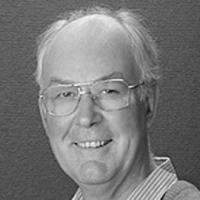

Professor

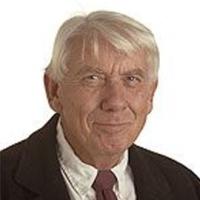
John Barker

FAA FRS

John Barker
Image Description
Dr. Barker has made major contributions to our knowledge of solutions and dense vapours by his work on the statistical mechanics of molecular interactions, especially of polar molecules. His studies of the effects of correlation between the motions of adjacent molecules have led to his important new "tunnel theory" of liquids, which in many respects constitutes a marked advance on previous "cell" theories. He has also done high-quality experimental work on alcohol solutions, and has contributed to the study of diffusion in graphite, counter-current distribution in liquids, and critical solution phenomena.

Expertise type

  • Chemical Physics
  • Physics
  • Theoretical Physics

Please contact fellowship@science.org.au to request any updates to the data.

Professor

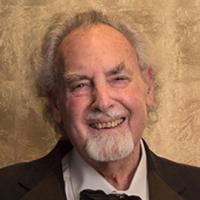
Karl Glazebrook

FAA

Karl Glazebrook
Image Description
Karl Glazebrook is a world-leading astronomer whose research has led to major advances in our understanding of how galaxies and the Universe evolve over time. His ground-breaking work includes, establishing the existence of massive galaxies only three billion years after the Big Bang, and discovering the local analogues of primordial galaxies. Glazebrook has also pioneered near-infrared surveys and developed new award-winning instrumental techniques for carrying out ultra-deep spectroscopic surveys on the world’s largest telescopes. He has also been at the vanguard in the application of new observational techniques for quantifying the effects of dark energy on the accelerating expansion of the Universe.

Fields of research

51 PHYSICAL SCIENCES
  • 5101 ASTRONOMICAL SCIENCES
    • 510103 Cosmology and Extragalactic Astronomy

For full list of research codes, please visit the ARC Website .

Expertise type

  • Astronomy
  • Astrophysics
  • Galaxy Evolution
  • Cosmology
  • High-redshift Galaxies
  • Galaxies
  • Astronomical Instrumentation
  • Physics

Please contact fellowship@science.org.au to request any updates to the data.

Professor

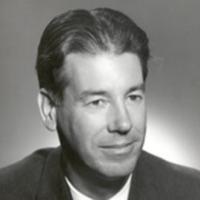
Igor Bray

AM FAA

Igor Bray
Image Description
Igor Bray ranks in the top few in the world in the field of atomic and molecular collision physics. He is responsible for several major paradigm shifting research breakthroughs during his career. His convergent close-coupling (CCC) formalism yielded unprecedented agreement with experiment, and has been extended to calculate ionization processes. This unified the approach to all collision processes. Bray and his group were also able to provide the first mathematically rigorous treatment of collisions involving the ubiquitous Coulomb potential. Most recently, the CCC method has been extended to heavy projectiles and molecular targets.

Fields of research

51 PHYSICAL SCIENCES
  • 5102 ATOMIC, MOLECULAR AND OPTICAL PHYSICS
510601 Nuclear Physics

For full list of research codes, please visit the ARC Website .

Expertise type

  • Atomic Physics
  • Molecular Physics
  • Antiproton Scattering and Ionisation
  • Electron Ionisation
  • Few-body Problems
  • Electron Scattering
  • Ionisation and Charge Exchange
  • Ionisation and Positronium Formation
  • Photoionisation
  • Proton Scattering
  • Physics

Please contact fellowship@science.org.au to request any updates to the data.

Professor

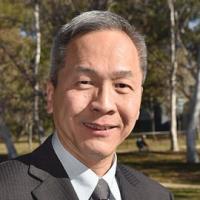
Susan Scott

FAA

Susan Scott
Image Description
Susan Scott has made ground-breaking discoveries in the fields of general relativity and gravitational wave science. Her theoretical work includes advancing our understanding of both singularities and the global structure of space-time. Professor Scott has also been a pioneer in the analysis of astrophysical signatures in gravitational wave experiments.

Expertise type

  • Astronomy
  • Astrophysics
  • Cosmology
  • Gravitational Physics
  • Physics
  • Relativity

Please contact fellowship@science.org.au to request any updates to the data.

Professor

Martin Asplund

FAA

Martin Asplund
Image Description
Professor Martin Asplund is distinguished for his research on solar and stellar physics, planets outside the Milky Way, the evolution of the Milky Way and the first stars to form in the Universe. His innovative work on the atmospheres of stars provides a new level of precision in understanding the stars’ elements, because of the realistic way in which it treats convection in their atmospheres. Martin’s revisions to the solar element abundances, based on these new models, have impacted research in atomic and nuclear physics and in a wide range of astrophysics, from planetary science and stellar physics through to Galactic archaeology and cosmology.

Fields of research

51 PHYSICAL SCIENCES
  • 5101 ASTRONOMICAL SCIENCES
    • 510104 Galactic Astronomy
    • 510109 Stellar Astronomy and Planetary Systems

For full list of research codes, please visit the ARC Website .

Expertise type

  • Astronomy
  • Physics
  • Planetary Science

Please contact fellowship@science.org.au to request any updates to the data.

Professor

Christine Charles

FAA

Christine Charles
Image Description
Professor Christine Charles is internationally recognised for her research on ion acceleration in expanding magnetised plasmas and its applications to a new generation of space engines and advanced material processing. Her discoveries have led to two new sub-fields of physics: current-free double layer physics, and new generation space propulsion plasma engines. Christine’s research into innovative plasma processes has led to recent advances in hydrogen fuel cell development and modelling of plasma-surface interactions for bio-medical applications.

Fields of research

40 ENGINEERING
  • 4016 MATERIALS ENGINEERING

For full list of research codes, please visit the ARC Website .

Expertise type

  • Materials
  • Nanofabrication
  • Physics
  • Plasma Physics

Please contact fellowship@science.org.au to request any updates to the data.

Professor

Margaret Reid

FAA

Margaret Reid
Image Description
Margaret Reid has pioneered work on new, fundamental tests of quantum theory with her innovative development of inferred Heisenberg inequalities. This work directly inspired the first experimental demonstration of the Einstein-Podolsky-Rosen (EPR) paradox in its original, continuous variable form. Her EPR ideas have led to many subsequent developments in quantum information, ranging from new forms of cryptography to demonstrations of quantum teleportation. More recently she has worked on macroscopic tests of quantum mechanics, which are relevant not just to quantum optics, but also to emerging fields of quantum science including ultra-cold atomic physics and nano-mechanical oscillators.

Expertise type

  • Cryptography
  • Physics
  • Quantum Physics
  • Teleportation

Please contact fellowship@science.org.au to request any updates to the data.

Professor

Lisa Kewley

FAA

Lisa Kewley
Image Description
Professor Kewley has made fundamental advances in our understanding of the cosmic chemical and star-formation history of the universe. Her globally acclaimed research has proven critical to our understanding of how galaxies like our own Milky Way formed and evolved from the Big Bang to the present day. Her work exploits advances in multi-wavelength instrumentation and spectroscopy and combines new observations with the latest generation of theoretical models. These allow the power sources exciting the plasma in galaxies to be both reliably identified and physically characterized.

Fields of research

51 PHYSICAL SCIENCES
  • 5101 ASTRONOMICAL SCIENCES

For full list of research codes, please visit the ARC Website .

Expertise type

  • Astrophysics
  • Astronomy
  • Cosmology
  • Galaxy Evolution
  • Physics

Please contact fellowship@science.org.au to request any updates to the data.

Professor

Bryan Gaensler

FAA

Bryan Gaensler
Image Description
Bryan Gaensler has made fundamental contributions to our understanding of the Universe through his outstanding research on high-energy astrophysics, cosmic magnetic fields and the structure of our Galaxy. His pioneering studies have delivered a unique view on the brightest explosion in history, have provided the standard framework for relativistic outflows from neutron stars, have revealed the distribution of magnetic fields throughout the Universe, and have revised our estimates of the thickness of the Milky Way.

Fields of research

51 PHYSICAL SCIENCES
  • 5101 ASTRONOMICAL SCIENCES
    • 510102 Astronomical instrumentation
    • 510103 Cosmology and Extragalactic Astronomy
    • 510104 Galactic Astronomy
    • 510106 High Energy Astrophysics; Cosmic Rays

For full list of research codes, please visit the ARC Website .

Expertise type

  • Astronomy
  • Cosmic Magnetism
  • High Energy Astrophysics
  • Physics

Please contact fellowship@science.org.au to request any updates to the data.

Professor

Geoffrey Taylor

FAA

Geoffrey Taylor
Image Description
Australian physicists, led by Geoffrey Taylor, made important contributions to the recent discovery of the Higgs Boson. He has played a major role in the design and construction of the advanced detectors for the proposed Large Hadron Collider at CERN right from the initial 1989 ideas. The inner tracking component at the heart of the ATLAS detector which was designed and built in Melbourne under Taylor's direction is one of the many independent scientific and technical advances which led to the successful outcome. Taylor's work on ATLAS is just a part of his distinguished career in Experimental Particle Physics going back several decades.

Fields of research

51 PHYSICAL SCIENCES
  • 5102 ATOMIC, MOLECULAR AND OPTICAL PHYSICS
  • 5107 PARTICLE AND HIGH ENERGY PHYSICS
    • 510703 Particle Physics

For full list of research codes, please visit the ARC Website .

Expertise type

  • CERN
  • High Energy Physics
  • Physics
  • Synchrotron Science

Please contact fellowship@science.org.au to request any updates to the data.