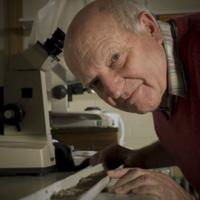


Professor

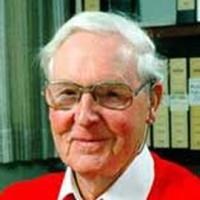
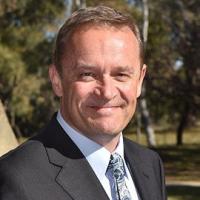
George Dracoulis

FAA

George Dracoulis
Image Description
Professor Dracoulis has made important contributions to the spectroscopy of very neutron-deficient nuclei and to the understanding of unusual Nuclear states, particularly through the elucidation of the interplay between single-particle and collective degrees of freedom. These contributions have come through a commitment to both theoretical interpretation and to comprehensive and definitive time-correlated γ-ray and electron nuclear spectroscopy, for which he has an international reputation. This has placed Dracoulis's group amongst the recognised leaders in the field.

Expertise type

  • Nuclear Physics
  • Physics

Please contact fellowship@science.org.au to request any updates to the data.

Professor

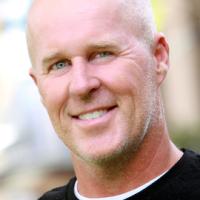
Michael Dopita

AM FAA

Michael Dopita
Image Description
Dr Dopita is one of the top two or three international authorities in the very active field of interstellar astrophysics. His range of achievements in theoretical astrophysics and ground-based and space observational astrophysics is extraordinarily broad. He has made fundamental contributions to research on astrophysical plasma diagnostics, star formation in galaxies, the physics of planetary nebulae, supernova remnants, active galactic nuclei and radio jets. He is a major user of the Hubble Space Telescope, and his prestige and judgement were recognised by his appointment to the Hubble Space Telescope Time Assignment Committee.

Expertise type

  • Interstellar Plasma Physics
  • Astronomy
  • Galaxy Evolution
  • Physics

Please contact fellowship@science.org.au to request any updates to the data.

Professor

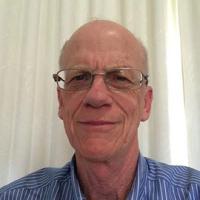
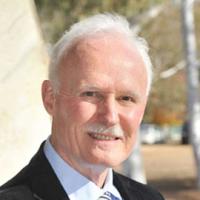
Peter Hannaford

AC FAA

Peter Hannaford
Image Description
Distinguished for his contributions to atomic spectroscopy including:- the analysis and interpretation of the profiles of atomic resonance lines emitted by hollow-cathode atomic spectral lamps; the development of methods of generating atomic vapours by cathodic sputtering; the realization that such vapours would greatly facilitate many fundamental investigations by high-resolution and time-resolved laser spectroscopy; the application of such methods to the accurate determination of the atomic lifetimes of refractory elements including zirconium, yttrium, niobium, molybdenum and vanadium, leading to revised measurements of their solar abundances. These contributions constitute the creation of this increasingly important new field of laser spectroscopy with sputtered atoms.

Expertise type

  • Laser Spectroscopy
  • Optics
  • Physics
  • Ultrafast Spectroscopy

Please contact fellowship@science.org.au to request any updates to the data.

Professor

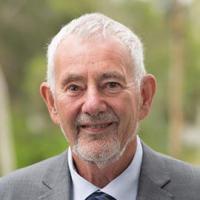
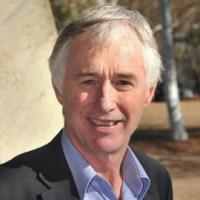
Stjepan Marcelja

FAA

Stjepan Marcelja
Image Description
From the beginning of his career Stjepan Marcelja has made seminal, profoundly deep, succinct contributions to numerous fields: superconductivity, liquid crystals, membrane biophysics, colloid science, molecular forces and water structure, self assembly of biological molecules, solution theory, neural nets and artificial intelligence. Invariably these contributions are highly original, have immediate impact and have stood the test of time. Almost all of his papers mark the beginning of a whole rich new field of scientific endeavour, whether in the biological or physical sciences.

Expertise type

  • Chemistry
  • Colloids
  • Physical Chemistry
  • Surfaces

Please contact fellowship@science.org.au to request any updates to the data.

Professor

Anthony Thomas

AC FAA

Anthony Thomas
Image Description
Professor Thomas has an outstanding international reputation on the borderline of nuclear and particle physics. He developed an understanding of pion-nucleus interactions and nuclear structure based initially on a three-body calculation of the pion-nucleon-nucleon system. His cloudy bag model describes the nucleon as three confined quarks obeying chiral symmetry through interaction with a pion cloud. It predicts important nucleon properties such as the neutron charge distribution and describes the nucleon in the presence of other nucleons which helps to understand the apparent dependence of nucleon structure on the nuclear environment.

Fields of research

51 PHYSICAL SCIENCES
  • 5106 NUCLEAR AND PLASMA PHYSICS
    • 510601 Nuclear Physics
  • 5107 PARTICLE AND HIGH ENERGY PHYSICS
    • 510703 Particle Physics

For full list of research codes, please visit the ARC Website .

Expertise type

  • High Energy Physics
  • Nuclear Physics
  • Particle Physics
  • Physics

Please contact fellowship@science.org.au to request any updates to the data.

Professor

Bruce McKellar

AC FAA

Bruce McKellar
Image Description
Professor McKellar's work on the borderline of nuclear and particle physics has earned him international distinction. He is a pioneer and leader in the study of the part of the nucleon-nucleon force due to the weak interaction. He has made major contributions in the application of meson theory to the study of many-body forces in nuclei, which is necessary for a fully-quantitative understanding of nuclear structure. His recent work on nucleon structure and decay promises to be very significant for particle physics and astrophysics.

Fields of research

49 MATHEMATICAL SCIENCES
  • 4902 MATHEMATICAL PHYSICS
    • 490203 Mathematical aspects of classical mechanics, quantum mechanics and quantum infor
51 PHYSICAL SCIENCES
  • 5102 ATOMIC, MOLECULAR AND OPTICAL PHYSICS
  • 5107 PARTICLE AND HIGH ENERGY PHYSICS
    • 510703 Particle Physics

For full list of research codes, please visit the ARC Website .

Expertise type

  • Nuclear Physics
  • Particle Physics
  • Atmospheric Physics
  • High Energy Physics
  • Physics
  • Theoretical Physics

Please contact fellowship@science.org.au to request any updates to the data.

Professor

Erich Weigold

AM FAA FTSE

Erich Weigold
Image Description
Weigold is a world leader in experiments with electron beams incident on atoms and molecules. His work has had outstanding significance in investigating the mechanism of such reactions, in particular all aspects of the Coulomb three-body problem. He pioneered electron momentum spectroscopy, which is a probe of unprecedented power for electronic structure. It arises from his understanding of the mechanism of an (e,2e) coincidence experiment. A kinematic range can be found where the experiment directly observes spherically-averaged squares of momentum-space orbitals and critical aspects of many-electron wave functions.

Fields of research

51 PHYSICAL SCIENCES
  • 5102 ATOMIC, MOLECULAR AND OPTICAL PHYSICS
    • 510201 Atomic and Molecular Physics
  • 5104 CONDENSED MATTER PHYSICS
    • 510402 Condensed Matter Imaging

For full list of research codes, please visit the ARC Website .

Expertise type

  • Chemical Physics
  • Condensed Matter Physics
  • Physics
  • Quantum Mechanics

Please contact fellowship@science.org.au to request any updates to the data.

Dr

Donald Morton

FAA

Donald Morton
Image Description
Morton is distinguished for his contributions to observational and instrumental optical astronomy. He was intimately concerned with both the Princeton rocket spectrographs end with the highly successful Copernicus satellite. With the former he obtained the first useful stellar spectra in the rocket ultra-violet, and from his results deduced the existence of stellar winds, now recognized as a major phenomenon in the evolution and atmospheric structure of giant stars generally. From the Copernicus results he made fundamental determinations of chemic abundances in the interstellar medium. During the time he has been its Director (since 1976) the Anglo-Australian Telescope has consolidated its position as the finest of the world's large telescopes, and has become the dominant influence in British and Australian optical astronomy.

Expertise type

  • Astronomy
  • Astrophysics
  • Physics
  • Spectroscopy

Please contact fellowship@science.org.au to request any updates to the data.

Professor

Keith Cole

FAA

Keith Cole
Image Description
Professor Cole has made very substantial contributions to the theory of the upper atmosphere, the ionosphere and the magnetosphere also to more general areas of theoretical physics. Cole's prediction that energy pumped into the earth's atmosphere by the solar 'wind' could be of almost as great significance as the electromagnetic input has stimulated much experimental work, and his theories are now widely accepted. Cole has established an active research school, involved in international collaborative programs. He works actively on many scientific committees in his field, and is presently Chairman of the International Scientific Committee on Solar Terrestrial Physics of I.C.S.U.

Expertise type

  • Physics
  • Theoretical Physics
  • Solar-Terrestrial Physics

Please contact fellowship@science.org.au to request any updates to the data.

Professor

Neville Fletcher

AM FAA FTSE

Neville Fletcher
Image Description
Professor Neville Fletcher graduated B.S.C, Sydney, with first class honours in Mathematics and Physics. He was awarded University Medal in Mathematics and Physics and a fellowship to Harvard where he gained M.A in 1953 and Ph.D in 1956. He joined Radiophysics Division, C.S.I.R.O, in 1956, doing distinguished work on semi-conductors and physics of water and ice phase. In 1960, Fletcher became Senior Lecturer in Theoretical Physics, University of New England. In 1963, he was appointed by University Council to Personal Chair of Physics - the only one of its kind in Australia. Is now Dean of Science of University and Acting Head, Department of Physics. Fletcher has many publications to his credit, is an inspiring teacher and one of the foremost exponents of Solid State Physics in Australia.

Expertise type

  • Acoustics
  • Applied Physics
  • Materials
  • Physics

Please contact fellowship@science.org.au to request any updates to the data.