
Professor

Tony Basten

AO FAA FTSE
Tony Basten
Image Description
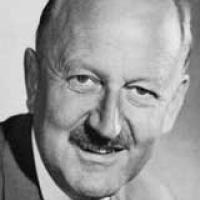
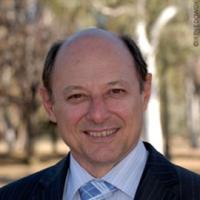
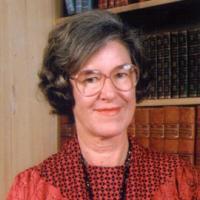
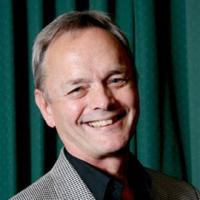
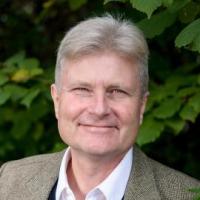
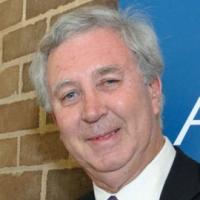
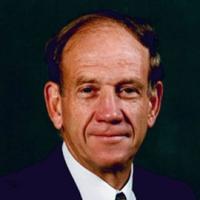
Professor Basten has earned an international reputation for his work on cell-cell interactions in both immune response and tolerance. He is best known for his innovative work on T cell dependence of eosinophilia , Fc receptors on B cells and the phenomenon of suppressor cell memory, and most recently for the development of a unique transgenic model which has shed new light on the mechanism of self-tolerance in B cells. His contributions to immunology have been recognised by the award of the Inaugural Wellcome Australia Medal for distinguished scientific achievement in the field of immunology in 1980, election to the Australian Academy of Technological Sciences in 1981 and selection as the 1989 Florey Lecturer of the Royal Society, London.

Fields of research

32 BIOMEDICAL AND CLINICAL SCIENCES
  • 3204 IMMUNOLOGY

For full list of research codes, please visit the ARC Website .

Expertise type

  • Immune Regulation
  • Autoimmune Disease
  • B Cells
  • Medical Sciences

Please contact fellowship@science.org.au to request any updates to the data.

Professor

H Newton Barber

FAA FRS

horace barber
Image Description
Barber is distinguished for his contribution to plant cytogenetics. Contributed greatly to the knowledge of chromosome movement on the spindle by the study of time elapse photographs of living cells. Has advanced the knowledge of chromosome behaviour in many ways by experimental studies, including the origin of diplochromosomes following heat treatment, reaction of cold and colchicine on mitosis, and the discovery of multiple sex chromosomes in marsupials. Recently has turned to the study of the physiological genetics of flowering in Pisum. He has also studied the ecological adaptiveness of variation in Eucalyptus and of coat colour genes in wild rabbits in Tasmania.

Expertise type

  • Plant Biology
  • Biology
  • Botany
  • Taxonomy
  • Cytogenetics

Please contact fellowship@science.org.au to request any updates to the data.

Professor

Tony Bacic

FAA

Tony Bacic
Image Description
Professor Antony Bacic’s major contribution is in understanding the structure and biology of complex carbohydrates. This group of molecules is fundamental to recognition and regulation in biological systems. His input to work on arabinogalactan-proteins (AGPs) led to cloning of the protein backbone and then to an entire gene family. These AGPs are present in all plant tissues and his work created tools to examine their function. A whole new filed of research was opened. Other major contributions are the synthesis of polysaccharides characteristic of grasses, antigens of the human parasite Leishmania and gums from red algae.

Expertise type

  • Biochemistry
  • Biology
  • Carbohydrates

Please contact fellowship@science.org.au to request any updates to the data.

Professor

John Andrews

FAA

John Andrews
Image Description
Professor Andrews is distinguished for his contributions to our understanding of the mechanism of action, structure and regulation of the key photosynthetic enzyme ribulose 1,5-bisphosphate carboxylase-oxygenase (Rubisco). He shared in the discovery of the oxygenase function of Rubisco and its role in photorespiration. Since then he has made major contributions to defining aspects of Rubisco function, especially the role of the small subunit in determining catalytic competence, the carbamylation-based mechanism of regulation of the enzyme, and the factors contributing to the renowned catalytic inefficiency of the enzyme. Andrews, separately or with his colleague Lorimer, has been responsible for developing and refining key concepts about Rubisco including basic features of the mechanism of the carboxylation reaction, the consequent unavoidable nature of the oxygenase reaction and the evolutionary implications of these features.

Expertise type

  • Biochemistry
  • Biology
  • Molecular Biology
  • Photosynthesis

Please contact fellowship@science.org.au to request any updates to the data.

Professor

Jan Anderson

FAA FRS

Jan Anderson
Image Description
Anderson is distinguished for her outstanding contributions to the understanding of the molecular organization of the chloroplast thylakoid membrane. She was associated with N.K. Boardman in achieving the first physical separation of the photochemical systems of photosynthesis. Dr Anderson developed an improved method for resolving chlorophyll protein complexes, and applied it to an analysis of thylakoid membrane fractions, representing the unstacked and stacked membranes of the chloroplast. She demonstrated an extreme lateral heterogeneity of the chlorophyll-protein complexes and the photosystems between the stacked and unstacked membrane regions, and proposed novel concepts for the operation of the photosynthetic electron chain. She has done pioneering work on the pigment protein complexes of brown seaweeds.

Expertise type

  • Photosynthesis
  • Plant Biology
  • Biology

Please contact fellowship@science.org.au to request any updates to the data.

Professor

John Aitken

FAA FAHMS

John Aitken
Image Description
John Aitken's research has elucidated fundamental cellular and molecular mechanisms regulating mammalian sperm function, fertilisation and early embryonic development. Demonstrating that oxidative stress, due to electron leakage, plays a major role in defective sperm function, his work linked this pathway to DNA damage and provided the basis for anti-oxidant therapy. Using proteomic approaches, he has identified a number of novel mediators of sperm-egg interactions. These studies unravelled new mechanisms which prevent sperm degeneration by blocking apoptotic pathways. Based on this information, his work provides opportunities to improve fertility and also pathways for new contraceptive development.

Expertise type

  • Animal Biology
  • Biology
  • Contraception
  • Reproductive Biology

Please contact fellowship@science.org.au to request any updates to the data.

Professor

Lloyd Hollenberg

FAA

Lloyd Hollenberg
Image Description
Lloyd Hollenberg has a sustained record of achievements in quantum information science. He has created the physical-quantum information basis for a full-scale silicon quantum computer, drawing on his deep understanding of the physics involved. He has achieved major theoretical and experimental advances in the use of nitrogen-vacancy centres in diamond as quantum sensors in physical and biological applications. Hollenberg has also played a major leadership role in the Centre for Quantum Computation and Communications Technology, including mentorship of many students and post-doctoral fellows, service to the discipline, and enthusiastic promotion of physics to the public.

Fields of research

51 PHYSICAL SCIENCES
  • 5108 QUANTUM PHYSICS
    • 510803 Quantum Information, Computation and Communication
    • 510899 Quantum Physics not elsewhere classified

For full list of research codes, please visit the ARC Website .

Expertise type

  • Quantum Computing
  • Quantum Information
  • Quantum Science
  • Quantum Sensing
  • Quantum Technology
  • Physics

Please contact fellowship@science.org.au to request any updates to the data.

Dr

Donna Strickland

FAA FRS Nobel Laureate

Corresponding member
Donna Strickland
Image Description
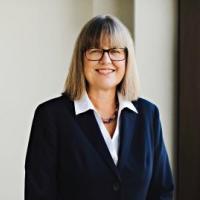
Professor Donna Strickland made groundbreaking discoveries in the field of laser physics devising a method of generating high-intensity, ultra-short optical pulses. Her chirped pulse amplification technique, or CPA, became standard for subsequent high-intensity lasers. In this technique, first the laser pulses are stretched in time to reduce their peak power, then these pulses are amplified, and finally compressed. If a pulse is compressed in time and becomes shorter, then more light is packed together in the same tiny space – and the intensity of the pulse increases dramatically. Uses of Professor Strickland’s technique include the millions of corrective eye surgeries that are conducted every year using the sharpest of laser beams.

Fields of research

51 PHYSICAL SCIENCES
  • 205 OPTICAL PHYSICS
  • 5102 ATOMIC, MOLECULAR AND OPTICAL PHYSICS
    • 510203 Nonlinear Optics and Spectroscopy

For full list of research codes, please visit the ARC Website .

Expertise type

  • Optical Physics
  • Laser Physics
  • Nonlinear Optics
  • Physics
  • Lasers

Please contact fellowship@science.org.au to request any updates to the data.

Professor

Eric Warrant

FAA

Corresponding member
Eric Warrant
Image Description
Eric Warrant is a world leader in the fields of neuroethology, comparative vision, and visual ecology, and actively leads and serves these fields on the international stage. He is the world authority on vision and navigation in extremely dim light and has elucidated the optical and neural principles that dramatically improve visual performance in nocturnal and deep-sea animals. These have been applied in novel camera technologies. Warrant has also discovered the sensory mechanisms that enable nocturnal animals to navigate while homing or migrating, including the magnetic and stellar compasses of the iconic and endangered Bogong moth.

Fields of research

31 BIOLOGICAL SCIENCES
  • 3109 ZOOLOGY
    • 310906 Animal Neurobiology
52 PSYCHOLOGY
  • 5204 Cognitive and computational psychology

For full list of research codes, please visit the ARC Website .

Expertise type

  • Animal Biology
  • Brain Function
  • Flying Insects
  • Neurophysiology
  • Biophysics
  • Insects
  • Retinal Photoceptors
  • Animal Behaviour
  • Vision Science
  • Modelling
  • Vision
  • Neurobiology
  • Optics
  • Electrophysiology
  • Behavioural Ecology
  • Ecology
  • Visual Processing
  • Sensation
  • Vertebrate Vision
  • Visual Receptors
  • Biology

Please contact fellowship@science.org.au to request any updates to the data.

Professor

Brian Lawn

FAA

Corresponding member
Brian Lawn
Image Description
Brian Lawn is arguably the world's leading researcher on brittle fracture. Author of a classic text on the subject (published in 1975, still in print), he has been a pioneer in ceramic science, with a broad reach into biological materials. He is one of the most cited materials scientists. He obtained his degrees in physics at UWA and lectured at UNSW before joining NIST in 1981. In 2001 he was elected to the U.S. National Academy of Engineering. He collaborates extensively with researchers at UWA and Curtin. In 2008 he was awarded an Honorary Doctorate in Engineering by UWA.

Expertise type

  • Engineering

Please contact fellowship@science.org.au to request any updates to the data.