
Professor

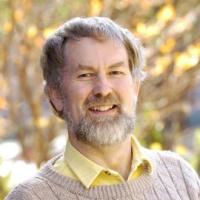
John Endler

FAA FRS

John Endler
Image Description
John Endler is widely held as one of the world’s leading evolutionary biologists. He was instrumental in showing how geographically varying elements can cause divergent evolution and speciation, despite significant gene flow. His experimental evolution studies of sexual seduction and natural selection on colour patterns of guppies were groundbreaking, and his demonstration of the modes and strength of selection in the wild has spawned a generation of research into selection in natural populations. His work on colour vision has revolutionised our understanding of how animals perceive the world, and he has pioneered the new science of Sensory Ecology.

Fields of research

31 BIOLOGICAL SCIENCES
  • 3103 ECOLOGY
    • 310399 Ecology not elsewhere classified
  • 3104 EVOLUTIONARY BIOLOGY
3209 NEUROSCIENCES
  • 320907 Sensory Systems

For full list of research codes, please visit the ARC Website .

Expertise type

  • Biology
  • Ecology
  • Evolution

Please contact fellowship@science.org.au to request any updates to the data.

Professor

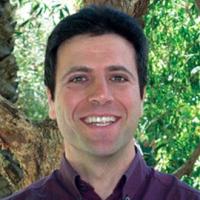
Scott O'Neill

FAA

Scott O'Neill
Image Description
Scott O’Neill is internationally recognized for his contributions to the field of insect symbiosis. His studies focused on Wolbachia have shown that intimate bacterial associations of invertebrates are ubiquitous and can generate major effects on the reproductive physiology, developmental biology and ecology of the insects they infect. His work has made major contributions to understanding how insect symbionts exert their effects and the consequences for infected hosts. An applied focus of his work has been the use of insect symbiont systems to establish innovative approaches to control insect transmitted diseases of humans such as dengue fever.

Expertise type

  • Biology
  • Insect Bacteria Interactions
  • Insects
  • Mosquito Born Diseases

Please contact fellowship@science.org.au to request any updates to the data.

Professor

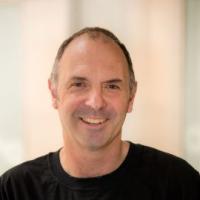
Marilyn Ball

FAA

Marilyn Ball
Image Description
Professor Marilyn Ball has an international reputation based on achievements in an unusually wide range of topics, all aimed at linking physiological mechanisms of stress tolerance with larger scale patterns in whole plant structure and function along complex environmental gradients. Her work has advanced understanding of plant function in complex, highly variable environments. Her research achievements include seminal studies of salinity tolerance in relation to mangrove ecology, the first linkage of cold-induced photoinhibition with regeneration in temperate evergreens, the discovery that elevated CO2 enhances freezing stress, and discovery of a novel interaction between plants, namely that alteration of the thermal environment can be a major component of competitive interactions between grass and trees.

Expertise type

  • Biology
  • Plant Biology
  • Plant Physiology
  • Stress

Please contact fellowship@science.org.au to request any updates to the data.

Professor

Leigh Simmons

FAA

Leigh Simmons
Image Description
Professor Simmons, a Federation Fellow at the University of Western Australia, transformed our understanding of mate choice and sexual selection through scholarly synthesis, ingenious experiments, and development of novel empirical models from the Australian insects. Important contributions include recognition that female choice of mates can occur cryptically after copulation through sperm assortment, showing why female-female competition over mates only occasionally develops in response to evolution of paternal care, and demonstrating the benefits that females gain from polyandrous mating. His prodigious output includes a major book and eight papers in Nature or Science, and attracts more than 500 citations annually.

Expertise type

  • Animal Biology
  • Biology
  • Evolutionary Biology
  • Sexual Selection

Please contact fellowship@science.org.au to request any updates to the data.

Professor

Mark Westoby

FAA

Mark Westoby
Image Description
Westoby’s contributions have defined major dimensions of ecological strategy variation across plant species. He has led a transition to global scale for quantitative datasets about key ecological traits, and has developed evolutionary cost-benefit theory about leaf lifespan and seed size. Mapping quantitative traits down the evolutionary history of angiosperms, he has shown the interplay of adaptive radiation with niche conservatism. Westoby’s state-and-transition model has been widely adopted for managing hazards and opportunities in arid zones and rangelands. By elucidating kinship relations among maternal, offspring and triploid endosperm tissues, he has pointed to new interpretations of seed maturation processes and of the evolutionary emergence of flowering plants.

Expertise type

  • Biology
  • Ecology
  • Evolution
  • Plant Biology

Please contact fellowship@science.org.au to request any updates to the data.

Professor

David Lindenmayer

AO FAA

David Lindenmayer
Image Description
Professor David Lindenmayer is one of Australia’s leading ecologists. His interest is the quantification of factors governing the distribution, abundance and population dynamics of vertebrate populations in natural and disturbed landscapes, particularly those subject to forestry practices and landscape fragmentation. His research is marked by rigorous experimental design, meticulous and detailed sampling at a landscape scale and innovative mathematical and statistical analyses that have led to new insights into the management of Australia’s biota. This is an original and ambitious approach to large ecological questions and has earned him wide recognition internationally as well as in Australia.

Expertise type

  • Landscape ecology, conservation and biodiversity
  • Biology
  • Ecology
  • Population Dynamics
  • Statistical Analysis
  • Fire Ecology
  • Forest ecology and management

Please contact fellowship@science.org.au to request any updates to the data.

Professor

Mark Burgman

FAA

Mark Burgman
Image Description
Professor Burgman’s research into the fundamentals of uncertainty in ecology has applied new knowledge to a long-standing problem — how to make decisions for conservation. His skills in ecology, applied mathematics and statistics, and conservation planning have led him to develop novel approaches to decision making. He has published numerous book chapters and papers in high impact journals as well as the seminal book on risk assessment for conservation and a broader treatment of uncertainty in environmental management. His joint Nature paper in 2000, on the predictive accuracy of Population Viability Analysis is listed in the top 1% in its field.

Expertise type

  • Conservation Biology
  • Applied Mathematics
  • Environmental Risk Assessment
  • Biology
  • Ecology
  • Plant Biology

Please contact fellowship@science.org.au to request any updates to the data.

Professor

Hugh Possingham

FAA FRS

Hugh Possingham
Image Description
Possingham has made major contributions to four areas of mathematical and theoretical ecology. Early work focussed on the application of behavioural and life-history mechanisms to understanding ecological theory. Second, seminal work introducing a spatial dimension to marine population modelling has underpinned advances in marine conservation planning. Third, building and testing models of the population viability of species has changed the way in which Population Viability Analysis is used internationally. Finally, his current research program is applying decision theory tools to problems in population management and conservation. This has enabled him to spearhead an emerging interdisciplinary field – applied theoretical ecology.

Fields of research

41 ENVIRONMENTAL SCIENCES
  • 4199 OTHER ENVIRONMENTAL SCIENCES

For full list of research codes, please visit the ARC Website .

Expertise type

  • Mathematics
  • Data Science
  • Environmental Ecology
  • Modelling
  • Biodiversity
  • Biology
  • Conservation Biology
  • Ecology
  • Ornithology
  • Conservation
  • Theoretical Biology

Please contact fellowship@science.org.au to request any updates to the data.

Professor

Richard Hobbs

FAA

Richard Hobbs
Image Description
From his early research in plant community dynamics, Hobbs has developed a broad research portfolio which has also advanced the development of thinking and application in conservation biology, landscape ecology and restoration ecology. Hobbs has promoted the effective communication of ecology to broader audiences, and has been recognized as one of the most highly cited researchers in his field. Throughout his career the focus has been on sound empirical studies coupled with conceptual and synthetic development, with both of these firmly linked back to practical on-ground application to the management and restoration of the world’s ecosystems.

Expertise type

  • Conservation Biology
  • Biology
  • Conservation
  • Ecology
  • Landscapes

Please contact fellowship@science.org.au to request any updates to the data.

Professor

Ary Hoffmann

AC FAA

Ary Hoffmann
Image Description
Professor Ary Hoffmann has investigated how natural populations evolve in response to environmental stresses, using Drosophila as a model system and applying the same approach to Trichogramma parasitoids and pest organisms. His work has led to major advances in understanding how stressful periods influence evolutionary rates, and how insects adapt to overcome stressful conditions. . He has made seminal contributions to the study of Wolbachia endosymbionts in insects including the discovery of Wolbachia infections in Drosophila, enabling the development of Drosophila as a model system for understanding the population dynamics of Wolbachia. Professor Hoffmann is regarded as a leader in evolutionary biology and the applications of evolutionary principles to applied problems.

Expertise type

  • Genetics
  • Entomology
  • Biology
  • Animal Biology
  • Evolutionary Biology
  • Genomics

Please contact fellowship@science.org.au to request any updates to the data.