


Professor

Richard Hartley

FAA FRS

Richard Hartley
Image Description
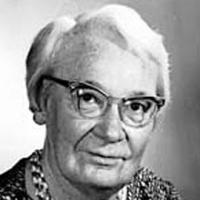
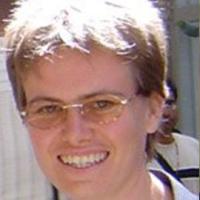
Professor Richard Hartley has made important scientific contributions in three areas: low dimension topology and Knot Theory; Computer-Aided Design of VLSI; and Computer Vision. His seminal work on the application of projective geometry to the analysis of image sequence initiated a new area of research that led to hundreds of papers by many authors in the past decade. This area became one of the major successes in Computer Vision in the 1990s. He wrote (with a co-author) the basic reference text for this subject and is considered to be one of a very small number of leading experts in this field.

Fields of research

46 INFORMATION AND COMPUTING SCIENCES
  • 4612 SOFTWARE ENGINEERING

For full list of research codes, please visit the ARC Website .

Expertise type

  • Computer Aided Design
  • Computer Science
  • Computer Vision
  • ICT

Please contact fellowship@science.org.au to request any updates to the data.

Professor

Maria Orlowska

FAA

Maria Orlowska
Image Description
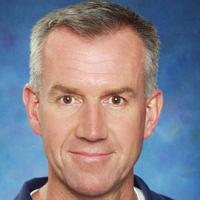
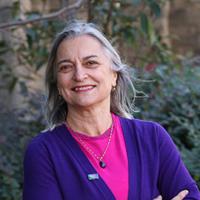
Professor Orlowska has a distinguished research record in the information technology area of database systems. She is a pioneer in the theoretical foundations of information storage and retrieval systems with incomplete information. Her later work has concentrated on data management issues such as advanced transaction processing, semantic query optimisation and relational database design. More recently, her study on distributed database foundations, i.e., data fragmentation and allocation to a network of computers and heterogeneous database interoperability has made a significant impact with international recognition.

Expertise type

  • Computer Science
  • Databases
  • ICT
  • Workflow Processes

Please contact fellowship@science.org.au to request any updates to the data.

Professor

David Bellwood

FAA

David Bellwood
Image Description
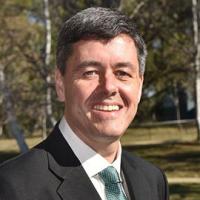
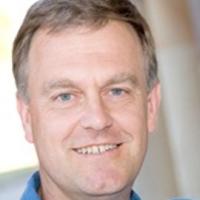
David Bellwood is a leading expert on the evolution and ecology of reef fishes. The central theme of his research is to understand the functional role that fishes play on coral reefs, and how reefs have changed through evolutionary time. His research themes include ecology, functional morphology, molecular phylogenetics, and palaeontology. At larger scales, he has made major contributions to our understanding of biogeography and the conservation of coral reefs, particularly the origin and maintenance of biodiversity hotspots, reef resilience, and the relationship between biodiversity and ecosystem function.

Fields of research

31 BIOLOGICAL SCIENCES
  • 3103 ECOLOGY
    • 310305 Marine and Estuarine Ecology (incl. Marine Ichthyology)
41 ENVIRONMENTAL SCIENCES
  • 4102 ECOLOGICAL APPLICATIONS
    • 410203 Ecosystem Function

For full list of research codes, please visit the ARC Website .

Expertise type

  • Biogeography
  • Evolution
  • Palaeontology
  • Biodiversity
  • Climate Change
  • Molecular Biology
  • Social-ecological Systems
  • Biology
  • Coral Reefs
  • Ecology
  • Marine Ecosystems
  • Fish

Please contact fellowship@science.org.au to request any updates to the data.

Professor

Craig Moritz

FAA

Craig Moritz
Image Description
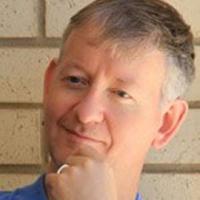
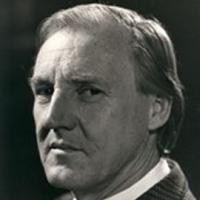
Professor Craig Moritz is currently an ARC Laureate Fellow of the Australian National University, is famous for his outstanding research contributions to evolutional biology, particularly concerning speciation and biogeography. Although his research is primarily based in natural populations, he has repeatedly developed new statistical and molecular methods, and developed approaches to improve our ability to conserve communities, populations and species. His research has been cited more than 14000 times (currently >1600 times per annum) and his H score is 56.

Expertise type

  • Biogeography
  • Biodiversity
  • Biology
  • Climate Adaptation
  • Conservation
  • Evolutionary Biology

Please contact fellowship@science.org.au to request any updates to the data.

Professor

Hanna Kokko

FAA

Hanna Kokko
Image Description
Professor Hanna Kokko, a Laureate Fellow at the Australian National University, has made a sustained and brilliant contribution to the disciplines of ecology and evolutionary biology. Although her contribution is dominated by her development of novel mathematical theory to probe key conceptual issues, her work is distinguished by her ability to apply clear thinking to questions deeply rooted in biology and natural history, and her astonishing degree of engagement with empiricists. Her numerous awards include election to the Finnish Academy of Science and Letters, and the Per Brinck Oikos Award for extraordinary and important contributions to the science of ecology.

Expertise type

  • Biology
  • Ecology
  • Evolutionary Biology
  • Modelling

Please contact fellowship@science.org.au to request any updates to the data.

Professor

Ove Hoegh-Guldberg

AC FAA

Ove Hoegh-Guldberg
Image Description
Professor Ove Hoegh-Guldberg discovered the molecular mechanism behind coral bleaching during his PhD and early career. He also pioneered our understanding of endosymbiosis between invertebrates such as reef-building corals and dinoflagellates (Symbiodinium), particularly the flow of energy and carbon and its breakdown during ecosystem-level mass-coral bleaching events. Hoegh-Guldberg’s discoveries have directly influenced global policy through their integration of the thermal physiology of corals with projections of future sea temperatures. His research was one of the first to demonstrate the extreme sensitivity of ecosystems to increases in anthropogenic CO2, emphasising the need for a 2°/450 ppm 'guardrail' in climate policy.

Fields of research

31 BIOLOGICAL SCIENCES
  • 3103 ECOLOGY

For full list of research codes, please visit the ARC Website .

Expertise type

  • Reproductive Biology
  • Molecular Biology
  • Population Genetics
  • Biology
  • Climate Change
  • Coral Reefs
  • Marine Biology

Please contact fellowship@science.org.au to request any updates to the data.

Professor

John Endler

FAA FRS

John Endler
Image Description
John Endler is widely held as one of the world’s leading evolutionary biologists. He was instrumental in showing how geographically varying elements can cause divergent evolution and speciation, despite significant gene flow. His experimental evolution studies of sexual seduction and natural selection on colour patterns of guppies were groundbreaking, and his demonstration of the modes and strength of selection in the wild has spawned a generation of research into selection in natural populations. His work on colour vision has revolutionised our understanding of how animals perceive the world, and he has pioneered the new science of Sensory Ecology.

Fields of research

31 BIOLOGICAL SCIENCES
  • 3103 ECOLOGY
    • 310399 Ecology not elsewhere classified
  • 3104 EVOLUTIONARY BIOLOGY
3209 NEUROSCIENCES
  • 320907 Sensory Systems

For full list of research codes, please visit the ARC Website .

Expertise type

  • Biology
  • Ecology
  • Evolution

Please contact fellowship@science.org.au to request any updates to the data.

Professor

Scott O'Neill

FAA

Scott O'Neill
Image Description
Scott O’Neill is internationally recognized for his contributions to the field of insect symbiosis. His studies focused on Wolbachia have shown that intimate bacterial associations of invertebrates are ubiquitous and can generate major effects on the reproductive physiology, developmental biology and ecology of the insects they infect. His work has made major contributions to understanding how insect symbionts exert their effects and the consequences for infected hosts. An applied focus of his work has been the use of insect symbiont systems to establish innovative approaches to control insect transmitted diseases of humans such as dengue fever.

Expertise type

  • Biology
  • Insect Bacteria Interactions
  • Insects
  • Mosquito Born Diseases

Please contact fellowship@science.org.au to request any updates to the data.

Professor

Marilyn Ball

FAA

Marilyn Ball
Image Description
Professor Marilyn Ball has an international reputation based on achievements in an unusually wide range of topics, all aimed at linking physiological mechanisms of stress tolerance with larger scale patterns in whole plant structure and function along complex environmental gradients. Her work has advanced understanding of plant function in complex, highly variable environments. Her research achievements include seminal studies of salinity tolerance in relation to mangrove ecology, the first linkage of cold-induced photoinhibition with regeneration in temperate evergreens, the discovery that elevated CO2 enhances freezing stress, and discovery of a novel interaction between plants, namely that alteration of the thermal environment can be a major component of competitive interactions between grass and trees.

Expertise type

  • Biology
  • Plant Biology
  • Plant Physiology
  • Stress

Please contact fellowship@science.org.au to request any updates to the data.

Professor

Leigh Simmons

FAA

Leigh Simmons
Image Description
Professor Simmons, a Federation Fellow at the University of Western Australia, transformed our understanding of mate choice and sexual selection through scholarly synthesis, ingenious experiments, and development of novel empirical models from the Australian insects. Important contributions include recognition that female choice of mates can occur cryptically after copulation through sperm assortment, showing why female-female competition over mates only occasionally develops in response to evolution of paternal care, and demonstrating the benefits that females gain from polyandrous mating. His prodigious output includes a major book and eight papers in Nature or Science, and attracts more than 500 citations annually.

Expertise type

  • Animal Biology
  • Biology
  • Evolutionary Biology
  • Sexual Selection

Please contact fellowship@science.org.au to request any updates to the data.