
Professor

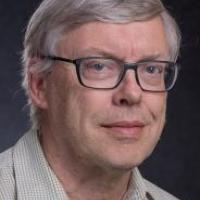
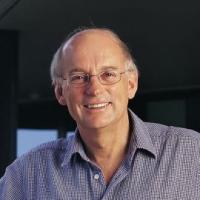
John Norris

FAA

John Norris
Image Description
John Norris is one of Australia’s most influential astronomers on the world scene. His research has forced major revisions of several basic concepts. He changed our concept of how the Galaxy formed. His discovery of the most metal-deficient stars has greatly illuminated the complexity of chemical evolution in the early Universe. His work on globular cluster chemistry opened up major new areas of research and initiated some very significant changes in the current theory of stellar evolution. His studies of the lithium abundance in the oldest stars put a strong upper limit on the baryon content of the universe.

Expertise type

  • Astronomy
  • Galaxy Formation
  • Physics
  • The Milky Way

Please contact fellowship@science.org.au to request any updates to the data.

Professor

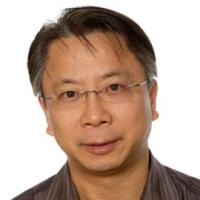
Michael Tobar

FAA FTSE

Michael Tobar
Image Description
Tobar has pioneered the invention, creation and applications of devices in the field of precision frequency generation and measurement. His most significant work, based on the novel application of cryogenic sapphire oscillators and interferometric technology, has provided the most stringent tests of Einstein’s theories of relativity, which strive to discover physics beyond the Standard Model of Particle Physics. This resulted in an invitation to develop the only southern-hemisphere user group of the European Space Agency’s "Atomic Clock Ensemble in Space" mission, which will perform higher precision tests of fundamental physics in a micro-gravity environment.

Fields of research

51 PHYSICAL SCIENCES
  • 205 OPTICAL PHYSICS

For full list of research codes, please visit the ARC Website .

Expertise type

  • Metrology
  • Physics
  • Precise Measurement
  • Precison Clocks and Oscillators

Please contact fellowship@science.org.au to request any updates to the data.

Professor

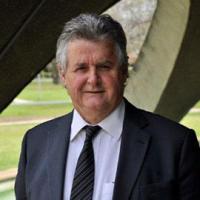
Ross McPhedran

FAA

Ross McPhedran
Image Description
McPhedran has made seminal contributions to the field of wave science, its techniques and applications. These have provided methods of unprecedented accuracy and insights which have enabled major developments in the performance of microstructured optical fibres, composite materials, diffraction gratings and photonic crystals. The multipole formulation has been developed as a major tool for solving scattering problems involving electromagnetic and elastic waves with both periodic and finite systems for applications like spectroscopy and photovoltaic and photothermal energy conversion. The associated tools of lattice sums, density of state functions, mode and defect analysis have advanced understanding and methodologies of wave science.

Fields of research

49 MATHEMATICAL SCIENCES
  • 4902 MATHEMATICAL PHYSICS
    • 490299 Mathematical Physics not elsewhere classified
51 PHYSICAL SCIENCES
  • 5103 CLASSICAL PHYSICS
    • 510301 Acoustics and Acoustical Devices; Waves

For full list of research codes, please visit the ARC Website .

Expertise type

  • Electromagnetic Theory
  • Photonics
  • Physics
  • Theoretical Physics

Please contact fellowship@science.org.au to request any updates to the data.

Professor

Vladimir Bazhanov

FAA

Vladimir Bazhanov
Image Description
Professor Bazhanov has made outstanding contributions to theoretical physics, gaining international recognition as a leading expert in the field of solvable models in statistical mechanics and field theory. He established an intimate and unexpected connection between the six-vertex model, quantum groups at roots of unity and the chiral Potts model. He went on to solve the sl(n) chiral Potts model, thereby opening up a whole field of solvable three–dimensional models. He has found a fascinating correspondence between the spectral properties of integrable quantum systems and ordinary differential equations such as the one-dimensional Schrödinger equation.

Expertise type

  • Field Theory
  • Physics
  • Statistical Mechanics
  • Theoretical Physics

Please contact fellowship@science.org.au to request any updates to the data.

Professor

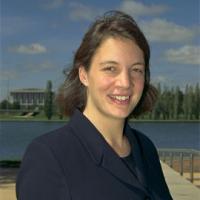
Elaine Sadler

AO FAA

Elaine Sadler
Image Description
Elaine Sadler has carried out world-leading research in the fields of astrophysics and galaxy evolution. Her fundamental contributions include the discovery that most bright elliptical galaxies have a weak central radio source powered by black-hole accretion, and the first measurement of the cosmic evolution of low-power radio galaxies over the past 5-6 billion years. By identifying the optical counterpart of the gamma-ray burst GRB 980425 as a supernova in which the core collapsed to a black hole rather than a neutron star, Professor Sadler has also made a ground-breaking contribution to the field of high-energy astrophysics.

Expertise type

  • Astronomy
  • Galaxy Evolution
  • High Energy Astrophysics
  • Physics

Please contact fellowship@science.org.au to request any updates to the data.

Professor

Raymond Volkas

FAA

Raymond Volkas
Image Description
Volkas has made seminal contributions to theoretical particle physics, early-universe cosmology and high-energy astrophysics. His most important work includes the discovery of the neutrino-oscillation-induced neutrino asymmetry generation mechanism (important for primordial nucleosynthesis), the exploration of atmospheric neutrino phenomenology, the invention of the mirror-matter model and its application to neutrino physics and the dark matter problem, pioneering studies on neutrino emission from the Galactic centre, an explanation of electric-charge quantization using standard physics only, studies in the persistence of quantal coherence despite strong system-environment coupling, and a novel symmetry-breaking mechanism for brane-world models.

Expertise type

  • Astrophysics
  • Cosmology
  • High Energy Physics
  • Physics

Please contact fellowship@science.org.au to request any updates to the data.

Professor

Howard Wiseman

FAA

Howard Wiseman
Image Description
Howard Wiseman is a pioneer and world-leader in quantum measurement and control theory. His seminal work on continuous measurements has built a theory with genuine experimental relevance in optics and solid-state. His measurement-based control protocols have significantly impacted the international experimental agenda in quantum optics, with several recent research programs dedicated to realizing them. He has co-authored the first book in these areas, entitled Quantum Measurement and Control, soon to be published by Cambridge University Press. In addition, he is internationally recognized for his contributions to the study of Bose-Einstein condensation, fundamental quantum phenomena, and quantum information theory.

Fields of research

50 PHILOSOPHY AND RELIGIOUS STUDIES
  • 5002 History and philosophy of specific fields
    • 500204 History and Philosophy of Science (incl. Non-historical Philosophy of Science
51 PHYSICAL SCIENCES
  • 5108 QUANTUM PHYSICS
    • 510803 Quantum Information, Computation and Communication
    • 510804 Quantum optics and quantum optomechanics
    • 510899 Quantum Physics not elsewhere classified

For full list of research codes, please visit the ARC Website .

Expertise type

  • Quantum Computing
  • Quantum Technology
  • Philosophy of Science
  • Physics
  • Quantum Information Theory
  • Quantum Mechanics
  • Quantum Physics

Please contact fellowship@science.org.au to request any updates to the data.

Professor

Min Gu

FAA FTSE

Min Gu
Image Description
Min Gu has pioneered the three-dimensional (3D) optical imaging theory for the fundamental understanding of modern 3D multiphoton optical microscopy. As such, he has led high-impact research in 3D nanophotonics and biophotonics. In particular, his breakthrough development of 3D photonic crystals reveals the new physical phenomena that underpin all-optical information technology. He has driven a new paradigm-shift in 3D optical data storage. His concept of femtosecond laser tweezing provides an entirely new way for understanding 3D dynamics of microcavity. His creative innovation of multiphoton optical endoscopy has firmly established a foundation for in vivo study of cancer origins.

Fields of research

10 TECHNOLOGY
  • 1005 COMMUNICATIONS TECHNOLOGIES
51 PHYSICAL SCIENCES
  • 205 OPTICAL PHYSICS

For full list of research codes, please visit the ARC Website .

Expertise type

  • 3D optical imaging theory
  • Biophotonics
  • Nanophotonics
  • Materials Science
  • Nanotechnology
  • Photonics
  • Physics

Please contact fellowship@science.org.au to request any updates to the data.

Professor

David Hinde

FAA

David Hinde
Image Description
Dr Hinde has made original contributions to the understanding of the fusion and fission of heavy nuclei. His development of novel experimental equipment and techniques allowed elucidation of the time-scale involved in heavy ion reactions. Together with measurements, of unrivalled precision, of fusion and fission as a function of energy, angular momentum, mass and charge, his work has led to a significant change in our knowledge of nuclear dynamics. His incisive interpretation of these processes and demonstration that global studies are imperative for a proper understanding, have made him a world leader, and resulted in a re-direction of international research.

Expertise type

  • Nuclear Fusion
  • Nuclear Physics
  • Physics
  • Fission

Please contact fellowship@science.org.au to request any updates to the data.

Professor

Stephen Hyde

FAA

Stephen Hyde
Image Description
Hyde has pioneered understanding of condensed atomic, molecular and macromolecular systems, revealing universality of forms within porous crystalline and liquid crystalline atomic and molecular matter over many length scales, from the nanometer to the micron scale. He has demonstrated the relevance of non-euclidean and topology to understand possible and actual structures of materials. His work has led to fundamental understanding of molecular and inorganic colloidal self-assembly and revealed the importance of curvature in dictating form in crystals, liquid crystals and colloids.

Fields of research

51 PHYSICAL SCIENCES
  • 5104 CONDENSED MATTER PHYSICS

For full list of research codes, please visit the ARC Website .

Expertise type

  • Colloids
  • Materials
  • Topology
  • Graph Theory
  • Self Assemby
  • Complex Materials
  • Physics
  • Theoretical Physics

Please contact fellowship@science.org.au to request any updates to the data.