
Emeritus Professor

Frances Separovic

AO FAA

Frances Separovic
Image Description
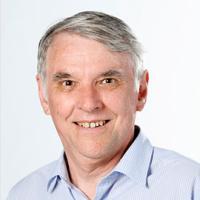
Frances Separovic is an outstanding biophysical chemist who is recognised internationally for her leadership in the field of biological solid-state NMR and membrane assembly. Frances is a pioneer in the structural studies of antibiotic peptides in model cell membranes and developed the technique of using NMR to study peptides in aligned lipid bilayers, which is being used worldwide to study both the structure of membrane proteins and their effects on the membrane. Her innovative research and multidisciplinary approach has advanced our understanding of how peptides insert into membranes and the application of solid-state NMR to a wide range of systems.

Fields of research

34 CHEMICAL SCIENCES
  • 3404 MEDICINAL AND BIOMOLECULAR CHEMISTRY
  • 3499 OTHER CHEMICAL SCIENCES

For full list of research codes, please visit the ARC Website .

Expertise type

  • Biophysical Chemistry
  • Chemistry
  • NMR Spectroscopy
  • Physical Chemistry

Please contact fellowship@science.org.au to request any updates to the data.

Professor

Paul Burn

FAA

Paul Burn
Image Description
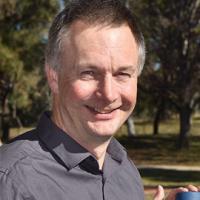
Paul Burn has made a major contribution to science, particularly in the field of organic semiconducting materials. It is a significant achievement in the highly competitive field of organic semiconductors to have been fundamentally involved in discovering and developing a world leading position for two new classes of materials, new characterisation techniques, and device technologies. The discovery of light-emitting polymers and dendrimers has led to worldwide interest in organic semiconductors across a broad range of applications. Burn’s impact is demonstrated by his many publications, the numerous invited talks he has given, the intellectual property portfolio, and subsequent commercialization.

Fields of research

10 TECHNOLOGY
  • 1099 OTHER TECHNOLOGY

For full list of research codes, please visit the ARC Website .

Expertise type

  • Chemistry
  • Organic Chemistry
  • Polymer Chemistry
  • Synthesis

Please contact fellowship@science.org.au to request any updates to the data.

Professor

Thomas Maschmeyer

AO FAA FTSE

Thomas Maschmeyer
Image Description
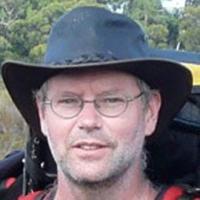
Professor Maschmeyer’s ground-breaking research in materials and catalysis led to his meteoric rise in international stature. His guiding principle of ‘selectivity tuning by active site design’ underlies discoveries from pharmaceutical synthesis to process intensification and biofuels. A rapid rise to Assistant Director of the Davy Faraday Laboratories, The Royal Institution (two years after his PhD) then Professor/Head of the Department of Applied Organic Chemistry and Catalysis, Delft Institute of Chemical Technology and Vice-Chairman of this Institute, has been mirrored by his outstanding record since his return to Australia in 2003 as a Federation Fellow and subsequently a Future Fellow.

Expertise type

  • Catalysis
  • Chemistry
  • Inorganic Chemistry
  • Nanomaterials

Please contact fellowship@science.org.au to request any updates to the data.

Professor

Jeffrey Reimers

FAA

Jeffrey Reimers
Image Description
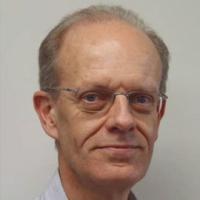
Jeffrey Reimers is a theoretical chemist of very great ability and originality, whose work receives wide international recognition. It is almost unparalleled in breadth and depth of elucidations of electronic and vibrational structure of complex materials. It ranges from fundamental chemical interactions to mutagenesis effects in proteins, to understanding of single molecule devices, to in depth interpretation of photosynthesis and to organic solar cells. He is invariably in close contact with experiment; this has led (inter alia) to collaboration in molecular memory design funded by INTEL. His work is underpinned by an ability to devise computational methods of great power.

Expertise type

  • Chemistry
  • Computational Chemistry
  • Quantum Chemistry
  • Theoretical Chemistry

Please contact fellowship@science.org.au to request any updates to the data.

Professor

Michael Parker

FAA FAHMS

Michael Parker
Image Description
Michael Parker’s international reputation in protein crystallography derives from his research on the structures of membrane-associated proteins, especially pore-forming toxins and cytokine receptors, and of detoxifying enzymes, especially the glutathione-S-transferases. The molecular structures that he has studied have in all cases led to new insights into the biology of the system, and in some cases have opened the way to pursue the discovery of new medicines for infectious disease, for cancer or for Alzheimer’s Disease. He has received several prestigious awards such as the Academy’s Gottschalk Medal in 1999 and he was appointed an ARC Federation Fellow in 2006.

Fields of research

32 BIOMEDICAL AND CLINICAL SCIENCES
  • 3205 MEDICAL BIOCHEMISTRY AND METABOLOMICS
    • 320506 Medical Biochemistry: Proteins and Peptides (incl. Medical Proteomics)

For full list of research codes, please visit the ARC Website .

Expertise type

  • Medical Sciences
  • Proteins
  • Structural Biology
  • X-ray Crystallography

Please contact fellowship@science.org.au to request any updates to the data.

Professor

Frank Caruso

FAA FTSE FRS

Frank Caruso
Image Description
Professor Frank Caruso is recognised internationally as a pioneer in the nanoengineering of surface structures through polymer self-assembly, imparting unique functions to colloids, especially for drug delivery and artificial cell research. He is the highest cited chemist in Australia for the last 10-year period and is ranked by citations in the top 2 per cent of chemists worldwide. Frank Caruso has received some $30 million of research funding over the past 10 years. He was appointed as a Federation Fellow in 2001 and reappointed in 2007 for a further 5-year period. He holds a Professorship at the University of Melbourne.

Fields of research

10 TECHNOLOGY 31 BIOLOGICAL SCIENCES
  • 3106 INDUSTRIAL BIOTECHNOLOGY
    • 310607 Nanobiotechnology
32 BIOMEDICAL AND CLINICAL SCIENCES
  • 3206 MEDICAL BIOTECHNOLOGY
    • 320604 Nanomedicine
40 ENGINEERING
  • 4016 MATERIALS ENGINEERING
  • 4018 NANOTECHNOLOGY

For full list of research codes, please visit the ARC Website .

Expertise type

  • Chemistry
  • Materials
  • Nanomaterials
  • Polymer Self-assembly

Please contact fellowship@science.org.au to request any updates to the data.

Professor

Paul Mulvaney

FAA

Paul Mulvaney
Image Description
Professor Paul Mulvaney is a pioneer in the field of nanoscience. He developed the technique of surface plasmon spectroscopy (SPS), which utilizes the unique colours of metal nanocrystals, to monitor surface chemical reactions. Using SPS, he was the first person to measure rates of electron transfer to metal nanocrystals and to follow the nucleation and growth of silver from the atom to the bulk. He showed that SPS enables the optical detection of electrons in metal nanostructures. This versatile optical tool opened up applications in single molecule sensing and biolabelling, and contributed to the development of the new multidisciplinary field of plasmonics.

Fields of research

34 CHEMICAL SCIENCES
  • 3406 PHYSICAL CHEMISTRY (INCL. STRUCTURAL)
    • 340603 Colloid and Surface Chemistry

For full list of research codes, please visit the ARC Website .

Expertise type

  • Chemistry
  • Materials Science
  • Nanomaterials
  • Plasmonics

Please contact fellowship@science.org.au to request any updates to the data.

Professor

Geoffrey Tregear

AM FAA

Geoffrey Tregear
Image Description
Professor Geoffrey Tregear has made outstanding original contributions in the field of biologically active peptides, specifically in the area of peptide synthesis and the chemistry and biology of parathyroid hormone and relaxin. He has an exceedingly strong record of achievement in translating research findings into health outcomes. A major thread running throughout Tregear’s research career has been the application of solid-phase polymers to radioimmunoassy, peptide synthesis and nucleic acid chemistry. Geoffrey Tregear is an outstanding leader in the field of peptide and nucleic acid chemistry. He has developed and exploited polymer chemistry to advance the field with a remarkable series of discoveries leading to major innovations.

Expertise type

  • Medical Sciences
  • Peptide Chemisty
  • Pharmacology
  • Relaxin

Please contact fellowship@science.org.au to request any updates to the data.

Professor

Peter Lay

FAA

Peter Lay
Image Description
Professor Lay has gained an outstanding international recognition across a range of research areas including bioinorganic chemistry (metal-based anti-inflammatory and anti-cancer drugs, the toxicity and efficacy of chromium carcinogens and anti-diabetic drugs, and the active sites of heme proteins) and synchrotron research. Recognition of the significance of this research is evidenced by the awards of the Rennie, Burrows and H. G. Smith medals of the RACI, and the successful floating of the company, Medical Therapies on the Australian Stock Exchange to take the metal anti-inflammatory and anti-cancer drugs (already internationally commercialized for veterinary applications) into human clinical trials.

Fields of research

30301 Chemical Characterisation of Materials 31 BIOLOGICAL SCIENCES
  • 3101 BIOCHEMISTRY AND CELL BIOLOGY
    • 310101 Analytical Biochemistry
    • 310112 Structural Biology (incl. Macromolecular Modelling)
32 BIOMEDICAL AND CLINICAL SCIENCES
  • 3205 MEDICAL BIOCHEMISTRY AND METABOLOMICS
    • 320503 Medical Biochemistry: Inorganic Elements and Compounds
  • 3206 MEDICAL BIOTECHNOLOGY
    • 320602 Medical Biotechnology Diagnostics (incl. Biosensors)
  • 3211 ONCOLOGY AND CARCINOGENESIS
    • 321101 Cancer Cell Biology
    • 321102 Cancer Diagnosis
34 CHEMICAL SCIENCES
  • 3401 ANALYTICAL CHEMISTRY
  • 3402 INORGANIC CHEMISTRY
  • 3404 MEDICINAL AND BIOMOLECULAR CHEMISTRY
    • 340401 Biologically Active Molecules
    • 340403 Characterisation of Biological Macromolecules
    • 340404 Cheminformatics and Quantitative Structure-Activity Relationships
    • 340406 Molecular Medicine
    • 340407 Proteins and Peptides
  • 3406 PHYSICAL CHEMISTRY (INCL. STRUCTURAL)
    • 30606 Structural Chemistry and Spectroscopy
    • 340604 Electrochemistry
51 PHYSICAL SCIENCES 511003 Synchrotrons

For full list of research codes, please visit the ARC Website .

Expertise type

  • Biophysical Chemistry
  • Synchrotron Science
  • Spectroscopy
  • Drug Mechanisms
  • Analytical Chemistry
  • Protein-protein Interactions
  • Trace Element Analysis
  • Drug Design
  • Drug Discovery
  • Transition Metal Chemistry
  • Bioinorganic Chemistry
  • Chemistry
  • Inorganic Chemistry
  • Medicinal Chemistry
  • Microplastics pollution
  • X-ray absorption spectroscopy
  • X-ray fluorescence microscopy

Please contact fellowship@science.org.au to request any updates to the data.

Professor

Douglas MacFarlane

FAA FTSE FRS

Douglas MacFarlane
Image Description
Professor MacFarlane has made extensive contributions to the field of Materials Chemistry, in particular the preparation and physical properties of new ionic materials. His group was the first to recognise the phenomenon of fast-ion conduction in plastic crystalline materials. They have also been leaders in identifying new families of Ionic Liquids, characterising their properties and exploring their applications. Applying the principles of materials chemistry to the field of Cryobiology, Professor MacFarlane was one of the originators of a paradigm shift in understanding of the role of vitrification at low temperatures. This has become one of the cornerstones of modern Cryobiology.

Expertise type

  • Chemistry
  • Cryobiology
  • Ionic Liquids
  • Materials Science

Please contact fellowship@science.org.au to request any updates to the data.