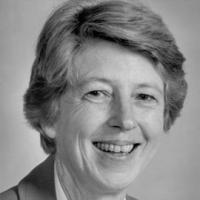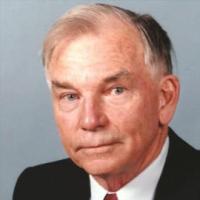


Professor

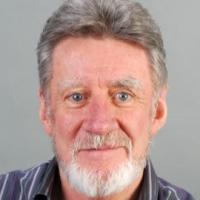
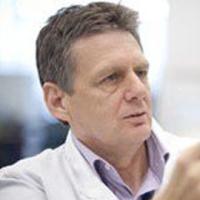
Frank Fenner

AC MBE FAA FRS

Frank Fenner
Image Description

Expertise type

  • Environmental Biology
  • Animal Virology
  • Environmental Ecology
  • History of Science

Please contact fellowship@science.org.au to request any updates to the data.

Professor

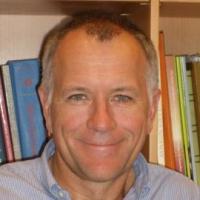
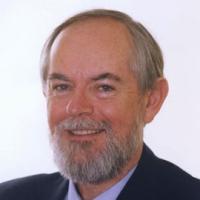
Bruce Runnegar

FAA

Bruce Runnegar
Image Description
In the past ten years, Dr. Runnegar has provided a new understanding of the evolution of the Mollusca through his work on Palaeozoic fossils. He has developed a coherent new hypothesis explaining the origin of the major living and extinct classes of molluscs, has demonstrated that at least five major lineages of molluscs have much longer histories than previously suspected, and that early (Cambrian) molluscs may be used successfully for biostratigraphic and biogeographic purposes. His work on Permian geology has greatly clarified knowledge of the palaeontology, stratigraphy and structure of that system in Australia. He has made significant contributions to palaeontology in its evolutionary, biostratigraphic and palaeoecological aspects.

Expertise type

  • Palaeontology
  • Astrobiology
  • Earth Sciences
  • Geology
  • Space Science

Please contact fellowship@science.org.au to request any updates to the data.

Emeritus Professor

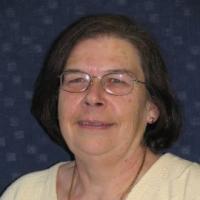
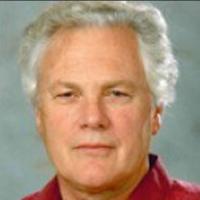
Neville Nicholls

FAA

Neville Nicholls
Image Description
Neville Nicholls is the world’s pre-eminent expert on the nature, causes, predictability and impacts of inter-annual climate variability in Australia and its region. His research is the basis for operational prediction of climate variations and their impacts including droughts, crop yields, bushfire and tropical cyclone activity, and human health impacts, in Australia and elsewhere. He initiated and led the development of high-quality historical climate databases for Australia and their use in understanding the causes of climate variations and change, and led national and international assessments of observed changes in climate, focussed on climate and weather extremes.

Fields of research

37 EARTH SCIENCES
  • 3701 ATMOSPHERIC SCIENCES
    • 370108 Meteorology
  • 3702 CLIMATE CHANGE SCIENCE
    • 370201 Climate Change Processes
    • 370202 Climatology (excl. Climate Change Processes)

For full list of research codes, please visit the ARC Website .

Expertise type

  • Southern Oscillation
  • Meteorology
  • El Niño
  • Atmospheric Science
  • Climate
  • Climate Variability
  • Earth Sciences

Please contact fellowship@science.org.au to request any updates to the data.

Dr

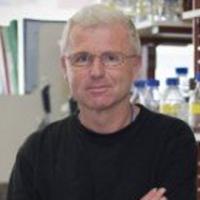
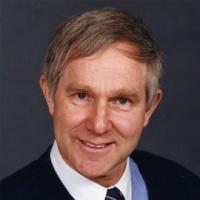
Ian Allison

AO FAA

Ian Allison
Image Description
Ian Allison is a glaciologist who has greatly advanced our understanding of the role of Antarctica and sea ice in climate variations. He pioneered the study of Antarctic sea ice with innovative and challenging year-round field campaigns, which documented for the first time the seasonal variation in growth, redistribution, and decay of sea ice through its interactions with the atmosphere and underlying water column. He has also shown the importance of melt and refreezing beneath ice shelves to mass loss from the ice sheet, and vulnerability to ocean change. He has been an outstanding leader of the Australian Antarctic program and international polar research collaboration over many decades, including co-chairing the peak committee responsible for the 2007-2008 International Polar Year.

Expertise type

  • Climate Science
  • Earth Sciences
  • Glaciology

Please contact fellowship@science.org.au to request any updates to the data.

Professor

Malcolm Sambridge

FAA

Malcolm Sambridge
Image Description
Professor Malcolm Sambridge has made lasting fundamental contributions to the understanding of the Earth and its internal processes through new mathematical approaches to analysing complex geophysical datasets. His robust approaches to modelling diverse observational data – including statistically meaningful estimates of uncertainty – has had wide-ranging impact in geoscientific research. Malcolm’s work has changed the way in which we analyse seismic waves for the structure of the Earth’s interior, model landscape evolution, understand populations of mineral ages from isotopic microanalysis, and interpret infrared absorption spectra associated with hydrous crystal defects in silicate minerals.

Fields of research

37 EARTH SCIENCES
  • 3706 GEOPHYSICS
    • 370609 Seismology and Seismic Exploration

For full list of research codes, please visit the ARC Website .

Expertise type

  • Seismology
  • Data inference
  • Earth Sciences

Please contact fellowship@science.org.au to request any updates to the data.

Professor

Matthew England

FAA

Matthew England
Image Description
Matthew England is Australia’s leading ocean modeller and the world’s foremost authority on the modelling of the Southern Ocean. He was the first to successfully capture Antarctic water-masses in global climate models. England is also one of the world’s leading scientists in the modelling of deep ocean ventilation using tracers: he pioneered the use of geochemical and age tracers, and was the first to use CFCs to assess ocean model skill. England has also changed our view of the ocean’s role in regional climate variability and climate dynamics, with a particular focus on the Southern Hemisphere and climate over Australia.

Fields of research

37 EARTH SCIENCES
  • 3701 ATMOSPHERIC SCIENCES
  • 3702 CLIMATE CHANGE SCIENCE
    • 370201 Climate Change Processes
    • 370202 Climatology (excl. Climate Change Processes)
  • 3708 OCEANOGRAPHY
    • 370803 Physical Oceanography

For full list of research codes, please visit the ARC Website .

Expertise type

  • Climate
  • Climate Change
  • Earth Sciences
  • Oceanography

Please contact fellowship@science.org.au to request any updates to the data.

Professor

Ian Jackson

FAA

Ian Jackson
Image Description
Jackson’s research has been on the physical properties of earth materials and their application in understanding the Earth’s interior structure and behaviour. He has developed innovative laboratory studies of seismic properties, with special application to olivine-rich rocks of the Earth’s upper mantle. These studies have explored factors such as frequency, temperature, grain size and partial melting that are responsible for seismologically-observed variations in earthquake wave propagation. In parallel, he has contributed to the refinement of theoretical models for thermoelastic and mechanical behaviour in order to provide a robust basis for using the experimental data in elucidating structure and processes in the Earth’s deep interior.

Expertise type

  • Seismology
  • Earth Evolution
  • Earth Sciences
  • Geology

Please contact fellowship@science.org.au to request any updates to the data.

Professor

Michael Sandiford

FAA

Michael Sandiford
Image Description
Professor Mike Sandiford is Professor of Geology and Inaugural Director fo the Melbourne Energey Institute at the University of Melbourne. He has made important contributions to metamorphic geology, tectonics, earthquake geology, geomorphology and geothermics with a special focus on the young tectonic activity in the Indo-Australian tectonic plate. His work on the thermal structure of the Australian crust has led to the current upsurge of interest in geothermal energy exploration in South Australia. He was awarded consecutive ARC Professorial Fellowships, in 2000 and 2005 and was recipient of the Mawson Medal, the Stillwell medal (three times) and the Hobbs medal.

Expertise type

  • Earth Sciences
  • Earthquake Geology
  • Geology
  • Tectonics

Please contact fellowship@science.org.au to request any updates to the data.

Professor

John Church

AO FAA FTSE

John Church
Image Description
Dr John Church is the pre-eminent authority on the rate of 20th century sea-level rise. He was a pioneer in what is now a standard approach to the use of observations to detect climate change in the ocean. He provided substantial improvements in estimates of ocean heat uptake, resolving discrepancies between observations and models and the long-standing conundrum about the causes of 20th century sea-level rise. Church elucidated the dynamical balances at work in some of the major current systems surrounding Australia. His multi-disciplinary work remains a model of the application of oceanographic information to biological fisheries issues.

Expertise type

  • Oceans
  • Climate
  • Earth Sciences
  • Sea Level Change

Please contact fellowship@science.org.au to request any updates to the data.

Emeritus Professor

Patrick De Deckker

AM FAA

Patrick De Deckker
Image Description
Patrick De Deckker pioneered the study of the Quaternary [last 2 million years] history of the oceans bordering Australia and principally used microfossils and their chemical composition to reconstruct past changes. He was also first in linking patterns of environmental change on land [through salt lake records] and at sea, again using microfossils and other proxies. He also found that the glacial oceans have become progressively warmer as aridity increased in Australia. His most recent innovative research deals with the microbiological and geochemical fingerprinting of airborne dust with the aim at linking dust events with changes in the oceans.

Fields of research

37 EARTH SCIENCES
  • 3705 GEOLOGY
    • 370504 Marine Geoscience
    • 370506 Palaeontology (incl. Palynology)
  • 3709 PHYSICAL GEOGRAPHY AND ENVIRONMENTAL GEOSCIENCE
    • 370905 Quaternary Environments

For full list of research codes, please visit the ARC Website .

Expertise type

  • Earth Sciences
  • Paeleooceanography
  • Palaeontology
  • Palaelimnology
  • Aeolian dust
  • Limnology
  • Trace elements geochemistry

Please contact fellowship@science.org.au to request any updates to the data.