
Professor

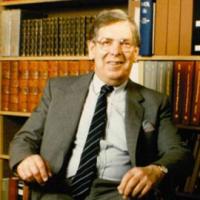
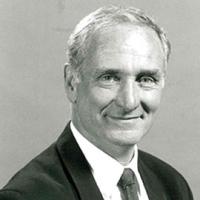
Gordon Ada

AO FAA

Gordon Ada
Image Description
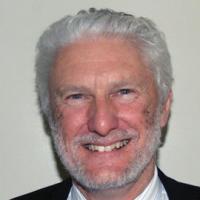
Dr. G.L. Ada is distinguished for two fundamental contributions to the fields of chemical virology and biochemistry. Ada and Perry, in 1954, for the first time unambiguously demonstrated that the genetic material of influenza virus is a ribonucleoprotein. Since all systems of genetic interaction available at that time were of the DNA type, this discovery greatly widened the scope of potential genetic studies. This finding, remarkable on considering the technical difficulties involved, has since been repeatedly confirmed in other laboratories and still serves as a model for the investigation of animal viruses. The second major achievement was the crystallization of Vibrio cholerae neuraminidase. This enzyme, isodynamic with the enzyme of the myxoviruses, has played an important role in the study of virus-host cell interaction and in the elucidation of the fine structure of sialo-glycoproteins since 1946. The availability of this enzyme without contaminating proteases is of the greatest value. A considerable amount of research work emerging from these discoveries was carried out in Ada's laboratory.

Expertise type

  • Virology
  • Immunology
  • Influenza Virus
  • Biology

Please contact fellowship@science.org.au to request any updates to the data.

Professor

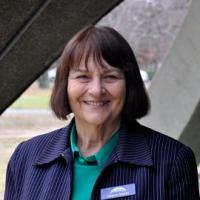
Halina Rubinsztein-Dunlop

AO FAA

Halina Rubinsztein-Dunlop
Image Description
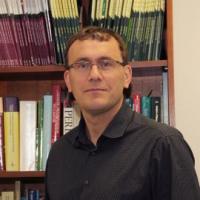
Halina Rubinsztein-Dunlop is recognised internationally for her achievements in laser physics, linear and nonlinear high resolution spectroscopy, laser micromanipulation, atom cooling and trapping and nano-optics. She is one of the originators of laser enhanced ionisation spectroscopy, and is a pioneer of laser micromanipulation and transfer of angular momentum of light and all optical drive micromechanics. She initiated the experimental programs in laser micromanipulation and atom optics at the University of Queensland that culminated in the demonstration of dynamical tunnelling in a Bose Einstein Condensate (BEC) in a modulated standing wave. She led the team that observed dynamical tunnelling in quantum chaotic systems.

Fields of research

51 PHYSICAL SCIENCES
  • 5199 OTHER PHYSICAL SCIENCES

For full list of research codes, please visit the ARC Website .

Expertise type

  • Laser Physics
  • Physics
  • Quantum Optics
  • Quantum Physics

Please contact fellowship@science.org.au to request any updates to the data.

Professor

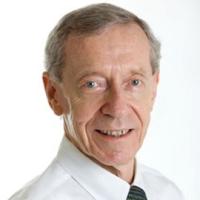
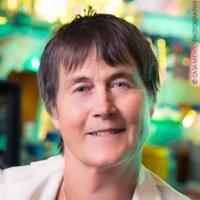
San Thang

AC FAA FTSE

San Thang
Image Description
Professor San Thang is a research innovator in polymer and materials science, with a focus on the interface between organic and polymer chemistry. He is a leading expert in the field of radical chemistry and polymer chemistry and has developed several key innovations in the area of controlled radical polymerisation. San is a co-inventor of the reversible addition-fragmentation chain transfer – the RAFT process, which is used to make better polymers with a tailored chemical structure and defined properties. RAFT has generated enormous academic and industrial interest worldwide, with a huge range of applications including performance coatings, adhesives, hydraulic fluids and membranes, cosmetics, biosensors and drug delivery.

Fields of research

34 CHEMICAL SCIENCES
  • 3403 MACROMOLECULAR AND MATERIALS CHEMISTRY

For full list of research codes, please visit the ARC Website .

Expertise type

  • Chemistry
  • Living Radical Polymerisation
  • Polymer Chemistry
  • RAFT

Please contact fellowship@science.org.au to request any updates to the data.

Professor

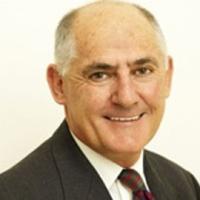
Maria Forsyth

AM FAA FTSE

Maria Forsyth
Image Description
Professor Maria Forsyth is a world leader in developing advanced materials for a range of energy and infrastructure technologies. Her group discovered a large new family of organic ionic "plastic" materials which are being used in advanced energy storage technologies. Maria has also developed significant understanding of charge transport at the interfaces between metals and electrolytes, and within other novel electrolyte materials. This has prompted the design of new materials for fuel cells, battery designs and technologies to prevent corrosion.

Expertise type

  • Chemistry
  • Electromaterials
  • Physical Chemistry
  • Solid State Ionics

Please contact fellowship@science.org.au to request any updates to the data.

Professor

Ivan Marusic

FAA FTSE FRS

Ivan Marusic
Image Description
Professor Ivan Marusic is an internationally leading figure in the field of fluid mechanics who has made fundamental and seminal contributions across a number of areas, most notably in advancing our understanding of wall-bounded turbulent flows. His research has resulted in the discovery of “superstructures” and uncovering the key role these large-scale motions play in wall turbulence. This in turn has led to new predictive tools based on physical modelling concepts. His research has also pioneered the development of novel analysis tools, experimental methods and instrumentation, which have produced unique datasets vital for our understanding of turbulent flows.

Fields of research

40 ENGINEERING
  • 4017 MECHANICAL ENGINEERING
  • 915 INTERDISCIPLINARY ENGINEERING
401213 Turbulent Flows

For full list of research codes, please visit the ARC Website .

Expertise type

  • Engineering
  • Fluid Dynamics
  • Mechanical Engineering
  • Turbulence

Please contact fellowship@science.org.au to request any updates to the data.

Professor

Rose Amal

AC FAA FTSE

Rose Amal
Image Description
Professor Amal is a world leader in photocatalysis. Her photocatalysis research addresses the core issues of energy and water, two highly critical resources in Australian as well as worldwide. Her research provides an ultimately clean solution by efficiently harnessing solar energy to purify water or/and generate H2. In particular, her highly active, stable and recyclable photocatalysts have paved the way for the sustainable use of photocatalysis in large industrial scale water treatment plants. Held in the highest regard nationally and internationally, her passion for both science and engineering has let to creating critical scientific knowledge and delivering significant engineering outcomes.

Fields of research

34 CHEMICAL SCIENCES
  • 3406 PHYSICAL CHEMISTRY (INCL. STRUCTURAL)
    • 340601 Catalysis and Mechanisms of Reactions
40 ENGINEERING
  • 4004 CHEMICAL ENGINEERING
    • 400410 Wastewater Treatment Processes
  • 4008 ELECTRICAL ENGINEERING
  • 4009 ELECTRONICS, SENSORS AND DIGITAL HARDWARE
    • 400910 Photovoltaic devices (solar cells)
  • 4014 MANUFACTURING ENGINEERING
  • 4017 MECHANICAL ENGINEERING
    • 401703 Energy Generation, Conversion and Storage Engineering

For full list of research codes, please visit the ARC Website .

Expertise type

  • Catalysis
  • Water
  • Chemical Engineering
  • Engineering
  • Nanotechnology

Please contact fellowship@science.org.au to request any updates to the data.

Professor

Yuri Estrin

FAA

Yuri Estrin
Image Description
Professor Yuri Estrin is one of the world leaders in Materials Science who has advanced physically based materials modelling in an outstanding way. The models associated with his name have become classic and are broadly used for calculating mechanical behaviour of materials. Yuri Estrin's seminal work in model-driven development of structural nanomaterials and geometry-inspired design of novel materials has also brought him international acclaim. For his contribution to science, Yuri Estrin has received numerous international awards, including an Alexander von Humboldt Award (Germany), an honorary doctorate from the Russian Academy of Sciences and a World-Class University professorship from Korea.

Fields of research

40 ENGINEERING
  • 4019 RESOURCES ENGINEERING AND EXTRACTIVE METALLURGY

For full list of research codes, please visit the ARC Website .

Expertise type

  • Chemical Engineering
  • Engineering
  • Materials
  • Metallurgy

Please contact fellowship@science.org.au to request any updates to the data.

Dr

Graeme Moad

AC FAA FTSE FRS

Graeme Moad
Image Description
Dr Moad is recognized as a world leader in the field of polymer chemistry specifically the areas of polymer design and synthesis and the kinetics and mechanism of radical polymerization where he has made a number of seminal contributions. His work has contributed substantially to the development of new synthetic methods for the controlled synthesis of polymers with defined architecture and molecular weight distribution. This research has revolutionized the field and resulted in highly cited publications and patent applications. Most notable is polymerization with reversible addition fragmentation chain transfer (RAFT).

Expertise type

  • Chemistry
  • Materials
  • Polymer Chemistry
  • Radical Polymerisation

Please contact fellowship@science.org.au to request any updates to the data.

Professor

Aibing Yu

FAA FTSE

Aibing Yu
Image Description
Professor Aibing Yu is distinguished for his contributions to the field of particle science and technology. He is particularly well known for the development of methods for the simulation and modelling of the motion of individual particles within large populations in flowing systems. His work emphasises the importance of micro-hydrodynamic interactions between particles, and their effect on the macro-behaviour of the system as a whole. His work is widely cited and has been recognised by many awards and distinctions.

Fields of research

40 ENGINEERING
  • 4004 CHEMICAL ENGINEERING
    • 400406 Powder and Particle Technology
    • 400407 Process Control and Simulation
    • 400499 Chemical Engineering not elsewhere classified
  • 4016 MATERIALS ENGINEERING
    • 401607 Metals and Alloy Materials
  • 4019 RESOURCES ENGINEERING AND EXTRACTIVE METALLURGY
    • 401904 Mineral Processing/Beneficiation

For full list of research codes, please visit the ARC Website .

Expertise type

  • Chemical Engineering
  • Metallurgy
  • Particle Science
  • Modelling
  • Mineral Beneficiation

Please contact fellowship@science.org.au to request any updates to the data.

Professor

Steven Prawer

FAA

Steven Prawer
Image Description
Professor Steven Prawer is Australia’s foremost authority on the physics of diamond and related materials. His work has brought Australia to the forefront in their study and the development of applications. In particular, he has been pivotal in elucidating the fundamental nature of the interaction of energetic ion beams with these materials and has pioneered the production of a new generation of nano-scale quantum devices based on diamond. His dynamic group is one of the largest and best equipped in the world devoted to quantum diamond research. It attracts top international researchers and invitations to collaborate from all over the world. His recent results are finding application in single photon sources for quantum cryptography for secure communications and in diamond-based devices for quantum computers.

Expertise type

  • Bionics
  • Diamonds
  • Materials Science
  • Physics

Please contact fellowship@science.org.au to request any updates to the data.