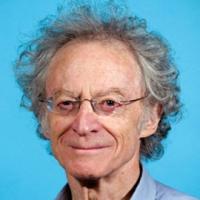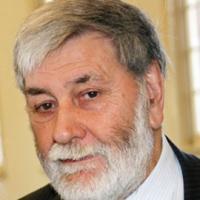


Professor

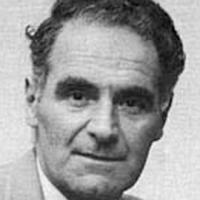
Murray Badger

FAA

Murray Badger
Image Description
Murray Badger is an acknowledged international leader of research into photosynthetic CO2 acquisition and metabolism in aquatic and terrestrial organisms. His distinctive early contributions defined the activation mechanism and conditions for measurement of CO2 fixation and O2 uptake by ribulose bisphosphate carboxylase-oxygenase (Rubisco). He is acclaimed for discovery of CO2 concentrating mechanisms (CCMs) in cyanobacteria and algae. These minimize O2 inhibition of CO2 fixation and thereby unmask the co-evolution of Rubisco kinetics and diversity of CCMs, from cyanobacteria to higher plants. His research is typified by integrated, innovative approaches that have greatly facilitated molecular, genomic and functional characterization of systems from the cyanobacterial CCM to rate limitations of photosynthesis in higher plants.

Expertise type

  • Biology
  • Carbon Dioxide
  • Metabolism
  • Plant Biology

Please contact fellowship@science.org.au to request any updates to the data.

Professor

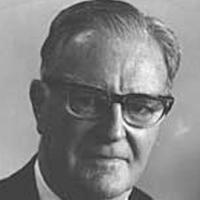
Ian Dawes

FAA

Ian Dawes
Image Description
Professor Dawes has made significant contributions to eukaryotic gene regulation during cell development and responses to the environment. His studies of yeast sporulation provided a detailed understanding of metabolism during meiosis and identified the motif that regulates specific gene expression during meiosis. He was first to show that eukaryotes can mount adaptable responses to oxidative stress and by combining biochemical, genetic and genomic analyses he has made a substantial contribution to elucidating mechanisms whereby cells adapt, maintain resistance, and respond, to oxidants. A significant outcome of this regulation research was identification of a novel system controlling one-carbon metabolism in yeast.

Expertise type

  • Biology
  • Gene Regulation
  • Genomics
  • Yeast Genetics

Please contact fellowship@science.org.au to request any updates to the data.

Emeritus Professor

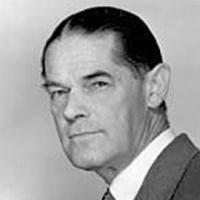
David Smyth

FAA

David Smyth
Image Description
Dr Smyth is distinguished for his contribution to the molecular genetics of plants. He discovered that some species contain vast numbers of mobile elements within their chromosomes. These elements replicate via an RNA intermediate and were previously known only from animals. Independently he has used the model species Arabidopsis thaliana to discover genes that control the identity of floral organs. Recently he has cloned genes that regulate carpel and ovule development. One of these encodes the founding member of a new family of transcription factors.

Fields of research

31 BIOLOGICAL SCIENCES
  • 3105 GENETICS
    • 310503 Developmental Genetics (incl. Sex Determination)
  • 3108 PLANT BIOLOGY
    • 310803 Plant Cell and Molecular Biology
    • 310804 Plant Developmental and Reproductive Biology

For full list of research codes, please visit the ARC Website .

Expertise type

  • Gene Expression
  • Genetics
  • Biology
  • Plant Biology
  • Regulation of Flowering

Please contact fellowship@science.org.au to request any updates to the data.

Emeritus Professor

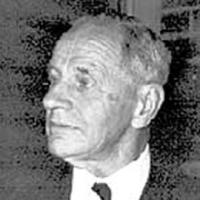
Michael Hynes

FAA

Michael Hynes
Image Description
Professor Hynes has made important contributions to eukaryotic gene regulation by studying catabolic pathways in filamentous fungi. Using classical and molecular genetics he was amongst the first to demonstrate multiple regulatory proteins controlling a single structural gene via a complex promoter. This work has also illuminated strategies used to coordinate carbon and nitrogen catabolism. His cloning of the Aspergillus nidulans amdS gene contributed significantly to the development of DNA mediated fungal transformation. His demonstration that this gene could be used to transform other fungal species has resulted in its widespread use in the genetic engineering of economically important fungi.

Fields of research

31 BIOLOGICAL SCIENCES
  • 3105 GENETICS
    • 310505 Gene Expression (incl. Microarray and other genome-wide approaches)

For full list of research codes, please visit the ARC Website .

Expertise type

  • Metabolism
  • Biology
  • Genomics
  • Microbiology
  • Gene Expression

Please contact fellowship@science.org.au to request any updates to the data.

Professor

Pauline Ladiges

AO FAA

Pauline Ladiges
Image Description
Professor Ladiges is distinguished for her studies of systematics, biogeography and ecology of Australian plants. She is best known for her innovative approach to resolving uncertainties about the classification and naming of Australia's most important group of trees, the eucalypts. She was the first to employ modern methods and DNA sequence comparison to establish definitively the relationships of the major groups of eucalypts and establish the basis of a robust classification, important to industry and biodiversity conservation. The methods she has developed for biogeography represent a major theoretical breakthrough, enabling analysis of relationships and evolutionary history of areas of endemism.

Expertise type

  • Biology
  • Botany
  • Eucalypts
  • Phylogeny
  • Taxonomy

Please contact fellowship@science.org.au to request any updates to the data.

Professor

Peter Reeves

FAA

Peter Reeves
Image Description
Professor Reeves is internationally renowned for his genetic analysis of enteric bacteria. He determined the genetic basis of the enormous variation in O antigens. There can be more than a I00 forms within a species and little overlap even between related species. This variation is due to reassortment of genes between O antigen genes and other gene clusters, and transfer of gene clusters between species. He showed that the 7th pandemic clone of Vibrio cholerae did not arise directly from the 6th pandemic clone, suggesting-it arose from an environmental strain, with implications for the origins of this major human pathogen.

Expertise type

  • Bacteriology
  • Biology
  • Microbiology
  • Molecular Genetics

Please contact fellowship@science.org.au to request any updates to the data.

Professor

Adrienne Hardham

FAA

Adrienne Hardham
Image Description
Dr Hardham is distinguished for her studies of the cytoskeletal basis of plant morphogenesis and host-pathogen interactions, focusing on properties of cell surface components. She was first to determine the nature of cortical microtubule arrays of plant cells and to quantify their augmentation by interpolation; she also characterised microtubule reassembly and roles in cell-shaping. Her innovative cytological, immunological and molecular researches on the zoosporic agents of infection of the dieback fungus, Phytophthora cinnamomi, have yielded significant new knowledge of infection processes used by this destructive plant pathogen, and of fundamental aspects of cell polarity, cytokinesis, Golgi function, secretion, chemotaxis and phylogeny, as well as practical applications in the form of diagnostic assays.

Expertise type

  • Biology
  • Plant Cell Biology

Please contact fellowship@science.org.au to request any updates to the data.

Professor

Arthur McComb

FAA

Arthur McComb
Image Description
Arthur McComb's work centres upon the control of plant growth by the environment. Beginning as a plant physiologist with interests in gibberellins, he now studies the detailed functioning of aquatic systems using field, laboratory and modelling techniques to examine the inter-relationships of benthic, epiphytic and planktonic plant components under conditions of increasing eutrophication. Much of the work concerns solving applied problems for government agencies, including the demise of seagrass meadows and algal nuisances in marine embayments or estuaries. As well as an extensive range of research papers and chapters for books, McComb has edited/co-authored major treatises on seagrass biology and Australian wetlands.

Expertise type

  • Biology
  • Environmental Biology
  • Water Quality
  • Wetlands

Please contact fellowship@science.org.au to request any updates to the data.

Dr

Graeme Caughley

FAA

Graeme Caughley
Image Description
Caughley' s major contributions have been to theoretical population dynamics and the methodology of studying and analysing communities of large vertebrates, particularly wild ungulates and kangaroos. Within this field he is best known for his contributions to the understanding of herbivore-vegetation dynamics in the New Zealand high country, Nepal Himalaya, southern Africa and the semi-arid rangelands of Australia. Through his seminal book the "Analysis of Vertebrate Populations" and his other publications he has had, and continues to have, a major influence on the thinking and practice in this field throughout the World. In 1990 he was appointed a Commissioner on the Resources Assessment Commission.

Expertise type

  • Conservation Biology
  • Animal ecology
  • Biology

Please contact fellowship@science.org.au to request any updates to the data.

Professor

Geoffrey Thorburn

AO FAA

Geoffrey Thorburn
Image Description
He was the first to use the radioactive inert gas technique for the measurement of organ blood flow in the kidney, skin, myocardium and testes. This work became a Citation Classic. He originated chronic fetal catheterization for studying the fetus in utero allowing for the first time, assessment of the physiological, hormonal and biochemical status of the undisturbed fetus and growth-retarded fetus. Using innovative surgical techniques, he was the first to examine the control of the secretion of growth hormones in the ovine fetus, providing the framework of present knowledge on fetal endocrinology. He and his group documented the link between the development of the fetal pituitary-adrenal axis, maturation of fetal organ systems and initiation of labour. His work has led to a new, unified concept of parturition in mammals, where prostaglandins released from the placenta form the final common pathway.

Please contact fellowship@science.org.au to request any updates to the data.