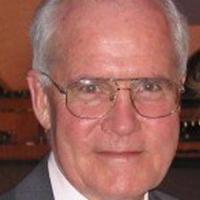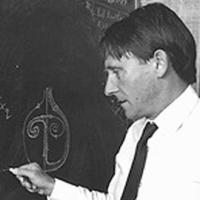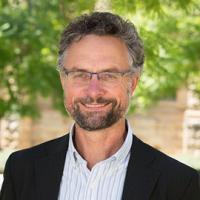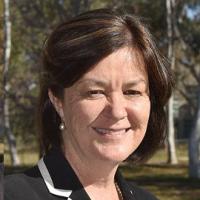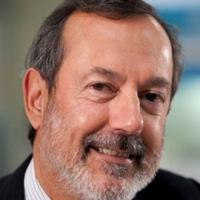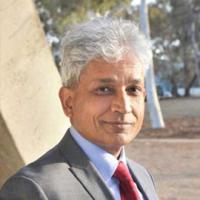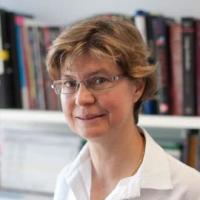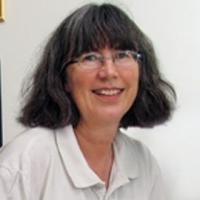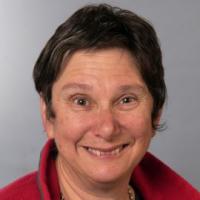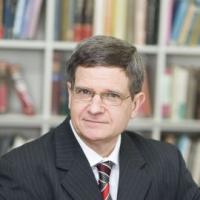

Professor Mai has made important contributions to the fundamental understanding of the fracture behaviour of a broad range of advanced engineering materials. He has developed a unified crack-wake bridging model for coarse-grained ceramics, fibre cements and stitched composites, which accounts for subtle size and geomtry effects. His ingenious work on composite interfaces has led to the development of engineered composites with high strength and high toughness. Other achievements include studies on the energetic approach to fracture, the 'essential fracture work' technique, and composites manufacturing processes.
Professor McCormick has made distinguished contributions to materials science, industrial innovation and to solar energy studies. He has formulated a model which is the basis of current dynamic strain ageing theory. He has developed a constitutive model of time dependent dynamic strain phenomena and has exten+ded this to describe time dependent magnetisation effects. He has utilised mechanical alloying and mechanochemical processing for destruction of toxic wastes (DDT and PCB's), the preparation of new magnetic materials and the production of nano particulate powders. McCormick has been instrumental in establishing Advanced Powder Technology Pty. Ltd., to exploit these discoveries.
Professor Randolph is internationally recognised for his outstanding fundamental contributions to foundation and offshore engineering that have found wide application in civil engineering and offshore projects. A feature of his work has been the development of simple and practical solutions to complex problems. Examples include: expressions for the elastic response of pile foundations under loading; plasticity solution for the flow of soil around pipelines; the analysis of drag anchors and novel designs for piled raft foundations and he has pioneered the development of geotechnical centrifuge modelling in Australia.
Professor Phan-Thien is the most distinguished Australian researching on theoretical aspects of rheology and parallel computing. Since 1977, his early work on mathematical modelling of polymeric fluids has proved to be extremely durable, and citations and applications continue to increase. His work on the stability of flow in common measuring flows (torsional flows, cone-and-plate flows) has far-reaching implications for experimental rheology. Computational work has increasingly dontinated his recent work: a pioneering method of die design, flagella propulsion and suspension mechanics, has Jed to novel uses of parallel computing techniques and to the Gordon Bell award by the IEEE in 1997.
Professor Clark has devoted all his efforts, for the past 30 years, to development of an effective cochlear implant system to bring hearing to profoundly deaf children. His early research into the electrical transduction properties of the cochlea established the need for a multi-channel multi-electrode system based upon formant analysis of speech signals. This system, developed in collaboration with electrical engineers and other specialist colleagues, has been remarkably successful, and gives speech recognition ability even to children who have been profoundly deaf since birth. The device, which continues to be improved, has been implanted into more than 15 000 people worldwide.
Professor Goodwin has made outstanding contributions to the area of systems science and dynamical systems over a period of 25 years. His work has had a major international impact and is known in virtually every country in the world. Of particular significance is his capacity to link fundamental theoretical research with engineering applications. He made pioneering contributions of lasting significance on the convergence of adaptive controllers and on numerical issues in digital filtering and control. More recent work on switching strategies in adaptive control may turn out to be a key concept in the emerging area of hybrid dynamical systems.
Professor Jameson is distinguished for his seminal contributions to the basic science of bubble production and bubble-particle interaction in stirred fluids. From this comprehensive base have flowed technological advances, the most important being the JAMESON flotation cell now in operation across Australia and worldwide in leading mineral processing plants. His basic and applied work has received national and international recognition in the form of election to the Australian Academy of Technological Sciences and Engineering, the CRA, CSIRO and Clunies Ross Research Awards, and the election in 1994 as a Foreign Member of the Royal Academy of Engineering (London).
Professor John Booker is distinguished for his outstanding contribution to analytical geomechanics. His research is primarily concerned with the timedependent and inelastic behaviour of soil and rocks, and is characterised by both a rigour of thought and a dear appreciation of the practical utilisation of his analyses. He has made major contributions to the theory of plasticity as applied to soils and rocks, consolidation behaviour of soils, mitigation of earthquake-induced liquefaction, and the analysis of contaminant transport in soils and rocks. This latter work has provided an invaluable tool for the assessment of the environmental impact of landfills.
Professor D. V. Boger is an internationally recognised expert in non-Newtonian fluid mechanics who has been an invited or plenary speaker on this subject at numerous international meetings. His work in viscoelastic fluid mechanics has led to the discovery of constant viscosity elastic liquids (Boger fluids) which have now been identified as a class of material behaviour, are a missing link in non-Newtonian fluid mechanics, and are now used worldwide in non-Newtonian fluid mechanics research. With these materials Professor Boger and his group have observed elastic effects in isolation in a large number of fundamental and commercially significant flow fields. Theoretical prediction and comparison of observed elastic effects in viscoelastic fluid mechanics has thus been possible for the first time.
Professor Jacques Miller's major discovery arose during investigations of the role of the thymus gland in the pathogensis of leukemia in mice. In 1961 he showed that neonatal thymectomy in mice had profound effects on the development of the immune response in later life, especially the component related to transplantation immunity. Subsequently he has developed this discovery with great skill. He showed that even in adult life the thymus is essential for the maintenance of an adequate pool of immunologically competent cells. Grafting of thymus tissue reversed the effects of thymectomy, at least in part by a humoral effect. He has also shown that the thymus exports lymphocytes into the peripheral recirculating pool, and that these collaborate with bone marrow-derived lymphocytes in antibody formation. These discoveries have opened up wide areas of research in several important fields of medical biology, tissue transplantation, immunological deficiency syndromes and control of incipient cancer by immunological surveillance.