
Professor

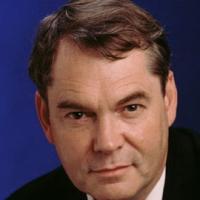
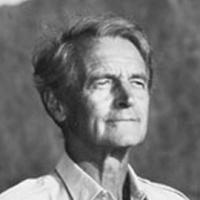
Garth Paltridge

FAA

Garth Paltridge
Image Description
Paltridge has made major contributions over an unusual breadth of the atmospheric sciences. They range from stratospheric electricity to the modelling and analysis of growth and form of plants as determined by atmospheric variables. They include pioneering studies of the radiation properties of clouds and of the interaction of radiation with cloud growth and decay. Detailed radiation statistics for Australia have been provided. His book with Platt provides an integration of radiation processes with meteorology and climatology. His thermodynamic approach to the general circulation has generated excitement and the possibility of a breakthrough in climate research.

Expertise type

  • Antarctic Oceans
  • Climate Science
  • Earth Sciences
  • Fluid Dynamics

Please contact fellowship@science.org.au to request any updates to the data.

Professor

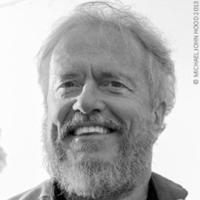
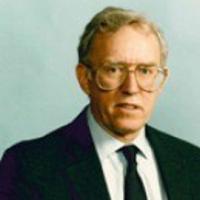
David Green

AM FAA FRS

David Green
Image Description
Professor David Green is distinguished for his research on the composition and structure of the earth's upper mantle and on the origin of basalt magmas. He was the first to combine the techniques of high pressure experimental petrology with electron microprobe analysis, making it possible to arrive at a quantatitive understanding of the generation and fractionation of complex (10 component) natural magmas, as a function of pressure and temperature. Green has used these techniques to obtain solutions to several of the most fundamental and long standing problems of petrology. He is also renowned for his experimental and petrological studies of metamorphic rocks of deep crustal and upper mantle origin and of high temperature peridotite intrusions.

Expertise type

  • Earth Sciences
  • Geochemistry
  • Geology
  • Petrology

Please contact fellowship@science.org.au to request any updates to the data.

Professor

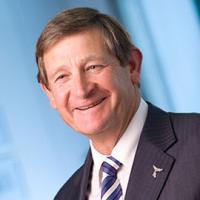
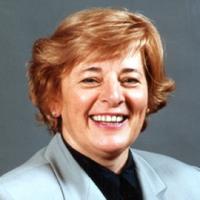
Mervyn Paterson

FAA

Mervyn Paterson
Image Description
Professor Mervyn Paterson is distinguished for his work on experimental geology and the deformation mechanisms of rocks and minerals. By training as an engineer, he has a flair for careful instrument design and built in Canberra some of the first and most successful and accurate high-temperature high-pressure apparatus for studying deformation of rocks and minerals. He has pioneered the experimental study of genesis of geological structures by using rocks themselves rather than model materials. His work on the development of kinking and folding in phyllite is now classical and his work on other problems such as annealing recrystallisation, deformation mechanisms, symmetry principles, and the mechanical properties of serpentinite are of fundamental importance for the geological sciences.

Expertise type

  • Earth Sciences
  • Geophysics
  • Rock Deformation
  • Rock Mechanics

Please contact fellowship@science.org.au to request any updates to the data.

Emerita Professor

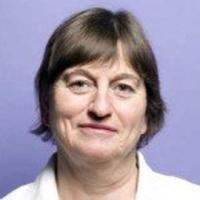
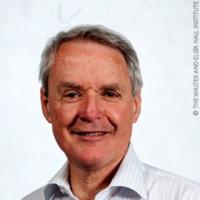
Jennifer Martin

AC FAA

Jennifer Martin
Image Description
Jennifer Martin is an internationally renowned protein crystallographer. She has made seminal discoveries in bacterial redox biochemistry, including revealing how the DsbA enzyme assembles bacterial ‘weapons’, and validating DsbA as a target for novel antibacterials that are now being developed. Through her role as a founding member of the Science and Gender Equity (SAGE) Steering Committee, Martin helped implement the Athena SWAN pilot to address gender equity in science. Martin is a strong public advocate for science with an inspirational and highly effective science communication record.

Fields of research

31 BIOLOGICAL SCIENCES
  • 3101 BIOCHEMISTRY AND CELL BIOLOGY
    • 310106 Enzymes
    • 310108 Protein Trafficking
    • 310110 Receptors and Membrane Biology
    • 310112 Structural Biology (incl. Macromolecular Modelling)
34 CHEMICAL SCIENCES
  • 3404 MEDICINAL AND BIOMOLECULAR CHEMISTRY
    • 340401 Biologically Active Molecules
    • 340403 Characterisation of Biological Macromolecules
    • 340407 Proteins and Peptides

For full list of research codes, please visit the ARC Website .

Expertise type

  • Molecular Biology
  • Biochemistry
  • Immunology
  • Enzymology
  • Proteins
  • Structural Biology
  • Protein Structure
  • Drug Discovery
  • Fragment-based Screening
  • Protein Crystallography
  • Protein Complexes
  • Protein Structure-Function Relationships
  • Structure-based Inhibitor Design
  • Chemistry

Please contact fellowship@science.org.au to request any updates to the data.

Professor

Cameron Jones

FAA

Cameron Jones
Image Description
Cameron Jones is a recognised international leader in the emerging field of Modern Main Group Chemistry. He has made numerous landmark contributions to the stabilisation of low-oxidation state and metal-to-metal bonded systems. Many novel compound types developed in his laboratory were thought incapable of ambient existence, and their isolation has prompted a re-evaluation of the limits of what is synthetically achievable, and the very nature of metal-to-metal bonding. Jones is also at the forefront of applying reactive, yet environmentally benign, main group compounds to synthetic transformations, normally requiring expensive/toxic transition metal compounds to proceed.

Fields of research

34 CHEMICAL SCIENCES
  • 3402 INORGANIC CHEMISTRY

For full list of research codes, please visit the ARC Website .

Expertise type

  • Organometallic Chemistry
  • Catalysis
  • Low Oxidation State Chemistry
  • Chemistry of Metal-metal Bonds
  • Main Group Chemistry
  • Transition Metal Chemistry
  • Chemistry

Please contact fellowship@science.org.au to request any updates to the data.

Professor

Julian Gale

FAA

Julian Gale
Image Description
Professor Julian Gale is a theoretical chemist with an outstanding international reputation for his investigation of the kinetics and mechanisms of crystallisation processes in materials science, mineralogy, and geochemistry. His powerful theoretical methods for exploring the structure, properties and thermodynamics of materials and minerals are the basis for one of the most widely used commercial packages in his field. Working between the fields of chemistry, geochemistry and even with overlaps into theoretical physics, Julian is a remarkably versatile scientist.

Fields of research

34 CHEMICAL SCIENCES
  • 3403 MACROMOLECULAR AND MATERIALS CHEMISTRY
    • 340305 Physical properties of materials
  • 3406 PHYSICAL CHEMISTRY (INCL. STRUCTURAL)
    • 340608 Solution Chemistry
  • 3407 THEORETICAL AND COMPUTATIONAL CHEMISTRY
    • 340799 Theoretical and Computational Chemistry not elsewhere classified
37 EARTH SCIENCES
  • 3705 GEOLOGY
    • 370505 Mineralogy and Crystallography

For full list of research codes, please visit the ARC Website .

Expertise type

  • Chemistry
  • Computational Chemistry
  • Nanomaterials

Please contact fellowship@science.org.au to request any updates to the data.

Professor

Peter Gill

FAA

Peter Gill
Image Description
Peter Gill has made both fundamental and applied contributions to the progress of quantum chemistry. His development of efficient two-electron integral algorithms, perturbation analysis, linear-scaling methodology, DFT functionals, theory of excited states, Coulomb-splitting techniques, and the Q-Chem software package, have significantly changed the research tools of the field. His models for three-electron bonding and dication dissociation have been widely adopted by experimentalists. His insights into electron correlation and the nature of the uniform electron gas are changing the underlying paradigms of density functional theory (DFT). For these and other advances, he has received four international medals.

Fields of research

34 CHEMICAL SCIENCES
  • 3407 THEORETICAL AND COMPUTATIONAL CHEMISTRY
    • 340701 Computational chemistry
51 PHYSICAL SCIENCES
  • 5102 ATOMIC, MOLECULAR AND OPTICAL PHYSICS
    • 510201 Atomic and Molecular Physics
  • 5104 CONDENSED MATTER PHYSICS
    • 510403 Condensed Matter Modelling and Density Functional Theory

For full list of research codes, please visit the ARC Website .

Expertise type

  • Chemistry
  • Computational Chemistry
  • Quantum Chemistry
  • Theoretical Chemistry

Please contact fellowship@science.org.au to request any updates to the data.

Professor

Michelle Coote

FAA

Michelle Coote
Image Description
Professor Coote leads the Computer-Aided Chemical Design research group within the Research School of Chemistry and the Australian National University. She is regarded as a pioneer in the development and application of accurate computational chemistry for modelling radical polymerization processes, and is internationally recognised for her contributions to elucidating the mechanisms and defining the kinetics of these complicated processes, explaining the links between structure and reactivity, and designing improved reagents for manipulating their outcome. Her international reputation extends beyond the radical polymer field by virtue her significant contribution to our understanding of other important chemical processes, including polymer autooxidation, nitroxide radical chemistry, and acid-base chemistry. Very recently she has made the landmark discovery of radical orbital switching.

Fields of research

34 CHEMICAL SCIENCES
  • 3403 MACROMOLECULAR AND MATERIALS CHEMISTRY
    • 340306 Polymerisation Mechanisms
  • 3405 ORGANIC CHEMISTRY
    • 340505 Physical Organic Chemistry
  • 3406 PHYSICAL CHEMISTRY (INCL. STRUCTURAL)
    • 340601 Catalysis and Mechanisms of Reactions
    • 340604 Electrochemistry
  • 3407 THEORETICAL AND COMPUTATIONAL CHEMISTRY
    • 340701 Computational chemistry

For full list of research codes, please visit the ARC Website .

Expertise type

  • Chemistry
  • Organic Chemistry
  • Polymers
  • Theoretical Chemistry

Please contact fellowship@science.org.au to request any updates to the data.

Professor

David Craik

AO FAA FRS

David Craik
Image Description
Professor Craik is a biological chemist who has made important discoveries in the field of structural biology, particularly in the structural elucidation of peptide toxins and proteins having novel topologies. He discovered the cyclotide family of circular knotted proteins and, more generally, has pioneered the field of circular proteins. Circular proteins are characterised by their exceptional stability and professor Craik’s studies have led to their application in drug design and agriculture. His development of an orally active peptide for the treatment of pain is a paradigm-shifting example that has the potential to broadly expand applications of peptides as drugs.

Expertise type

  • Chemistry
  • NMR Spectroscopy
  • Peptides
  • Structural Biology

Please contact fellowship@science.org.au to request any updates to the data.