

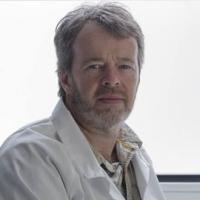

Emeritus Professor

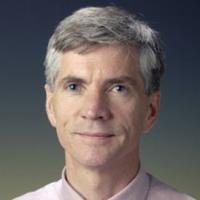
Ross Griffiths

FAA

Ross Griffiths
Image Description
Professor Griffiths has a high international reputation for his laboratory and theoretical research in fluid dynamics, with far-reaching applications in the diverse fields of ocean modelling, volcanology and convection in the Earth's interior. His work has illuminated the behaviour of ocean eddies, as they interact with each other and with boundaries, coastal and bottom currents, and convection and mixing in the ocean. His innovative models of solidifying lava flows and domes have established a new understanding of their behaviour, which has rapidly become influential among volcanologists. His modelling of the ascent of hot plumes in the Earth's mantle has led to a compelling dynamical theory that underpins the current widely accepted explanation of the origin of volcanic hot-spots.

Expertise type

  • Earth Sciences
  • Geophysics
  • Oceans
  • Volcanic Processes

Please contact fellowship@science.org.au to request any updates to the data.

Dr

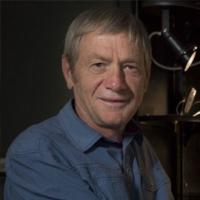
Roger Summons

FAA FRS

Roger Summons
Image Description
Dr Summons is one of the leading organic geochemists in the world. He applied innovative instrumental techniques to biological marker identification and explained the significance of the biomarker data in terms of their relevance to biological evolution, the behaviour of microbial ecosystems and the co-evolution of the biogeochemical cycles and the surface environment of the Earth. He was able to demonstrate that a reliable and interpretable record of Proterozoic molecular fossils could be deciphered. His work has revealed substantial new clues about the proterozoic oceanic environment and he has made numerous significant contributions to fundamental work on changes in the distribution of chemical fossils with time.

Expertise type

  • Geology
  • Astrobiology
  • Earth Sciences
  • Geobiology
  • Geochemistry

Please contact fellowship@science.org.au to request any updates to the data.

Professor

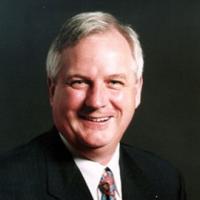
Bruce Chappell

FAA

Bruce Chappell
Image Description

Expertise type

  • Earth Sciences
  • Geochemistry
  • Geology

Please contact fellowship@science.org.au to request any updates to the data.

Professor

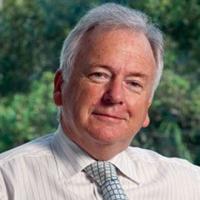
Trevor McDougall

AC FAA FRS

Trevor McDougall
Image Description
Trevor McDougall is recognized as the foremost world authority on many aspects of oceanic mixing and has significantly influenced modern understanding of the subject. He has discovered four new oceanic mixing processes and has pioneered the concept of neutral surfaces along which the strong lateral mixing processes occur. McDougall has discovered and parameterized the contribution of ocean eddies to mean advection. This extra advection leads to a dramatic improvement in the ability of ocean models to simulate today's climate, and significantly, it halves the "thermal flywheel" effect of the ocean in opposing changes to the climate system. Over the past ten years McDougall has also made important contributions to almost every other aspect of ocean mixing, including double-diffusive interleaving, boundary mixing and the interpretation of microstructure data.

Expertise type

  • Climate Change
  • Earth Sciences
  • Oceanic Mixing
  • Oceanography

Please contact fellowship@science.org.au to request any updates to the data.

Professor

John Veevers

FAA

John Veevers
Image Description
Veevers has made outstanding contributions to our understanding of the sedimentary basins of Australia, both on and offshore. Basic mapping of several onshore basins was followed by interpretation of offshore basins by sedimentological and geophysical methods, and finally interpretation of the whole continental plate in terms of the evolution of Gondwana. He is now involved in the recognition of tectonic-climatic global supercycles that define major phases in the development of the Earth during the last 1000 million years. His book synthesising the Phanerozoic history of the continent, has set a new standard for works of this kind published anywhere in the world.

Expertise type

  • Earth History of Australia
  • Earth Sciences
  • Geology

Please contact fellowship@science.org.au to request any updates to the data.

Professor

Brian Kennett

AO FAA FRS

Brian Kennett
Image Description
Kennett is a world class seismologist who has made major contributions to the nature of the seismic structure of the Earth. He has been at the forefront of theoretical work for the modelling of seismograms in a variety of complex media and has applied this theory to a number of innovative observational studies, including the structure of the upper mantle beneath northern Australia. Most recently he has developed the most comprehensive model for travel times for seismic waves through the Earth which forms the basis for all seismology studies into the loction of earthquakes, the determination of the mechanisms of earthquake faulting and the modelling of deep Earth structure.

Expertise type

  • Earthquake Geology
  • Seismology
  • Earth Sciences
  • Earth Structure
  • Geology
  • Geophysics

Please contact fellowship@science.org.au to request any updates to the data.

Professor

Roger Grimshaw

FAA

Roger Grimshaw
Image Description
Professor Roger Grimshaw is one of Australia's foremost contemporary applied mathematicians. He is also distinguished internationally by his ability to apply exceptional originality and a high level of physical insight to problems of real relevance to oceanography and meteorology. Particularly noteworthy is his recent work on the non-linear dynamics of internal waves, solitary waves, continental shelf waves, and the interaction of internal waves with shear flows, topography, rotation and interfaces. Such waves and their interactions are major contributors to the variability of currents on continental shelves; Grimshaw's skilful analytical treatments provide valuable theoretical insight on these problems, which are conventionally explored using numerical analysis. Grimshaw is also an influential and effective figure in the strongest academic group in Australia engaged in theoretical oceanography.

Expertise type

  • Fluid Dynamics
  • Mathematics
  • Oceanography
  • Waves

Please contact fellowship@science.org.au to request any updates to the data.

Dr

Graeme Pearman

AM FAA

Graeme Pearman
Image Description
Dr. Pearman's research into the sources, sinks and global behaviour of atmospheric carbon dioxide has been a highly successful marriage of biology, chemistry and physics. Trained as a biologist, he analysed the basic physics of the relevant measurement techniques of the time and thereby laid the groundwork for an international global monitoring network. As data became available he developed theories of biosphere/atmosphere and ocean/atmosphere interaction which are now the basis of prediction of long-term change of carbon dioxide. He has extended these studies to include various man-made and natural trace elements of the global atmosphere.

Expertise type

  • Energy
  • Climate Change
  • Climate
  • Earth Sciences
  • Global Atmosphere
  • Science Policy

Please contact fellowship@science.org.au to request any updates to the data.

Professor

Ian McDougall

FAA

Ian McDougall
Image Description
Distinguished for pioneering work on K-Ar dating of young basalts and its use for determining the geomagnetic reversal time-scale and the relative motion of the Pacific oceanic plate and underlying mantle. These have proved fundamental to theories of global tectonics and mantle conviction. Also distinguished for the full realization, in terrestrial rocks, of Ar-Ar step-heating analysis to identify Ar inheritance in minerals and to relate this to specific geological processes. Recently he solved an important controversy over hominid evolution by providing a comprehensive and precise time-frame for the East African lake deposits.

Expertise type

  • Earth Sciences
  • Geochemistry
  • Geochronology
  • Noble Gases

Please contact fellowship@science.org.au to request any updates to the data.

Professor

Kurt Lambeck

AC FAA FRS

Kurt Lambeck
Image Description
Lambeck's numerous contributions to Geophysics are highlighted by two particular milestones, analyses of satellite orbits to obtain the Earth's global gravity pattern and tidal deformations, and studies of the rotation of the Earth, summarised in his monograph on this subject. Lambeck's papers are characterised by rigorous, quantitative analyses that have made them reference sources and foundations for subsequent developments in mechanical problems of the Earth and planets.

Expertise type

  • Earth Sciences
  • Geophysics
  • Palaeoclimatology
  • Tectonics

Please contact fellowship@science.org.au to request any updates to the data.