

Professor

Alan Bond

FAA

Alan Bond
Image Description
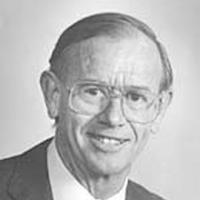
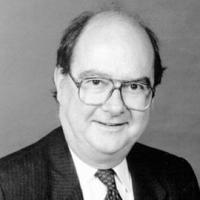
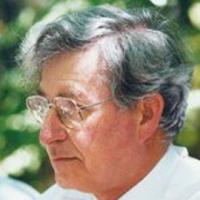
Professor Alan Bond has an international reputation for his pioneering contributions to the development, use and understanding of modern electrochemical techniques. His research has provided the basis for developments in the theory, instrumentation and applications of cyclic alternating-current voltammetry; he was among the first to use digital methods and microprocessors in electrochemical instrumentation; and he has developed new concepts in the use of microelectrodes, spectroelectro­chemistry, electrochemistry at very low temperatures, electrochemistry without electrolytes, and electrochemistry in non-aqueous solvents. These techniques have been applied by Bond to a wide range of important problems in inorganic and analytical chemistry. Industrial adaptations of his concepts and instrumentation abound. His text-book on "Modern Polarographic Methods in Analytical Chemistry" is internationally regarded as a definitive work.

Expertise type

  • Chemistry
  • Electrochemistry
  • Electron Transfer

Please contact fellowship@science.org.au to request any updates to the data.

Professor

Michael Bruce

FAA

Michael Bruce
Image Description
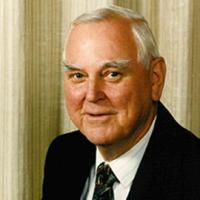
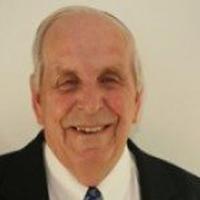
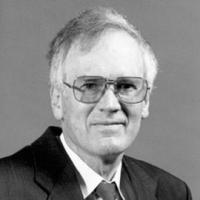
Professor Bruce is one of the foremost exponents in Australia of the chemistry of compounds containing transition metal to carbon bonds, in which field he has achieved an international reputation. He and his co-workers have developed rational syntheses of metal carbonyl clusters, especially of ruthenium, and have structurally analysed key compounds. These are of intense current interest because they provide a model for the behaviour of carbon monoxide on a metal surface. Professor Bruce has also made important contributions to the organometallic chemistry of unsaturated organic fragments such as alkynes and vinylidenes and has written many authoritative reviews.

Expertise type

  • Chemistry
  • Cluster Chemistry
  • Inorganic
  • Organometallic

Please contact fellowship@science.org.au to request any updates to the data.

Professor

Leo Radom

AC FAA

Leo Radom
Image Description
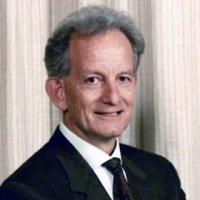
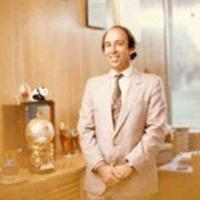
Radom is the leading practitioner in Australia, and one of the leaders internationally, in the application of molecular orbital theory to structure and mechanism in organic chemistry. His particular emphasis is on the structures and stabilities of species on which experiments are difficult (reactive intermediates, unstable molecules) or almost impossible (transition states). The wide acceptance of his term distonic for a class of radical cation intermediates follows his recent work showing that gas­phase radical cations with charge and radical sites on different atoms often display a stability which contrasts with that of their neutral parents. Radom's predictions preceded the now numerous observations of distonic radical cations.

Expertise type

  • Chemistry
  • Computational Chemistry
  • Quantum Chemistry
  • Theoretical Chemistry

Please contact fellowship@science.org.au to request any updates to the data.

Professor

Hans Freeman

AM FAA

Hans Freeman
Image Description
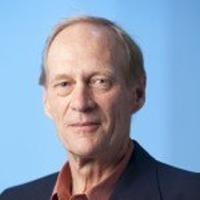
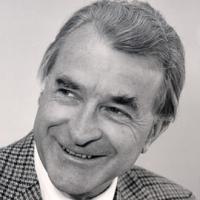
Hans Freeman is largely known for his numerous contributions to the structures and chemistry of transition metal complexes of amino acids and peptides. He is regarded as a world authority in this area and his work is widely quoted and used. This background has culminated more recently in the solution of the structure of the Copper protein plastocyanin, one of the proteins in the photosynthetic system. The structural analysis of the cupric form was a decisive experiment and it resolved some spectroscopic and redox anomalies of the entire class of "blue" copper proteins. The subsequent refinement at high resolution and the pH dependence of the structure of the reduced form have provided an important insight into the function of plastocyanin in photosynthesis.

Please contact fellowship@science.org.au to request any updates to the data.

Professor

Jacob Israelachvili

FAA FRS

Jacob Israelachvili
Image Description
J. N. Israelachvili has made key contributions to experimental surface science and to theoretical membrane biology. Work with his unique apparatus, which measures forces between surfaces immersed in liquids with distance resolution of 1 Ångstrom, has not simply confirmed modern theories, but has revealed a hierarchy of new forces due to liquid structure at interfaces at distances below 50 Å separation. These forces are essential to an understanding of a wide variety of phenomena in industry and nature. Israelachvili also pioneered the theory of self-assembly of surfactant, liquid and protein molecules into structures like micelles, vesicles and membranes, bringing order to a broad field there.

Expertise type

  • Chemistry
  • Colloids
  • Intermolecular Forces
  • Physical Chemistry

Please contact fellowship@science.org.au to request any updates to the data.

Professor

Martin Bennett

FAA FRS

Martin Bennett
Image Description
Bennett is distinguished for his sustained and original contributions in the field of organo-metallic chemistry. He is well known internationally for his work on the activation of organic and inorganic molecules by organo-transition metal complexes which has been definitive and leads directly to a better understanding of heterogeneous catalysis, especially in its application to the petrochemical industry. His imaginative studies range widely and include the formation of metal-carbon σ-bonds in oxidative additions, cyclo-metallation reactions with bidentate tertiary phosphines, the stabilization of short-lived organic molecules of transition metal centres, and the activation of aromatic hydrocarbons by arene complexes of ruthenium. He was awarded the H.G. Smith Medal of the Royal Australian Chemical Institute in 1977.

Expertise type

  • Catalysis
  • Chemistry
  • Inorganic
  • Organometallic

Please contact fellowship@science.org.au to request any updates to the data.

Professor

Noel Hush

AO FAA FRS

Noel Hush
Image Description
Hush has contributed to chemical physics and theoretical chemistry. His Theory of homogenous and heterogenous electron transfer as a thermal rate process has become generally accepted. Later he identified a radiative process in electron transfer, and investigated a number of key examples. His theoretical work has been in the use of self-consistent field molecular orbital theory in electron transfer problems, particularily in the electron transfer systems of certain tetrapyrrole macrocyclics and their metal complexes. The combination of ingenious experimentation and convincing theoretical interpretation is a feature of his work, which has been notably original, and is in areas of real importance.

Expertise type

  • Chemistry
  • Electron Transfer
  • Quantum Chemistry
  • Theoretical Chemistry

Please contact fellowship@science.org.au to request any updates to the data.

Professor

Alan Sargeson

FAA FRS

Alan Sargeson
Image Description
Sargeson is distinguished for his sustained and original contributions to elucidating the mechanisms of inorganic reactions. His studies during the past 10-15 years have been central in raising inorganic synthesis from the doldrums of random ad hoc procedures by the disciplined and systematic application of fundamental mechanistic principles. His work on the mechanism of the base hydrolysis reactions of cobalt (III) has been definitive and leads directly to a new and deeper understanding of the likely mechanisms for reactions such as amino acid ester and peptide hydrolysis in carboxypeptidase A. He was among the first to appreciate the significance of the chiral coordinated amine centre for integrating synthesis with stereochemistry and mechanism through configurational relationships between reactant and product. His ensuing applications of inorganic conformational analysis to chemical and biological specificity have been pioneering. He is an international authority in his field.

Expertise type

  • Chemistry
  • Synthesis
  • Stereochemistry
  • Inorganic Chemistry

Please contact fellowship@science.org.au to request any updates to the data.

Professor

David Craig

AO FAA FRS

David Craig
Image Description
Craig developed experimental and theoretical methods for the interpretation of the spectra of molecular crystals which are now the bases of widely used procedures. He worked out the theory of second-order crystalline interactions in molecular crystals and made the first quantitative calculations of exciton energies in a molecular crystal. In valence theory he demonstrated the importance of configuration interaction for π-electrons in aromatic molecules. His early papers on this subject and one written in collaboration with R.G. Parr and I.G. Ross have become standard references in the field. He has also contributed to knowledge of aromatic character, especially in cyclic inorganic systems such as phosphonitrilic halides.

Expertise type

  • Physical Chemistry
  • Chemistry
  • Theoretical Chemistry

Please contact fellowship@science.org.au to request any updates to the data.

Professor

Barry Ninham

AO FAA

Barry Ninham
Image Description
Dr. Ninham's early work was in Statistical Mechanics and in this field he made significant contributions to the theory of phase transitions, to the Ising model, and to the theory of distribution functions. Ninham has been remarkable for the range of his interests, his inventiveness, and his originality in entering new fields and making significant contributions to these fields. His recent work on the calculation of Van der Waals forces in biological materials is considered a major advance in the understanding of cell biological phenomena.

Expertise type

  • Biophysics
  • Chemistry
  • Colloids
  • Physical Chemistry

Please contact fellowship@science.org.au to request any updates to the data.