

Professor

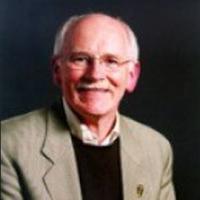
Andrew Holmes

AC FAA FTSE FRS

Andrew Holmes
Image Description
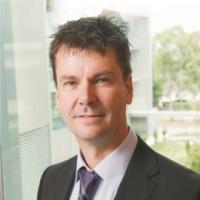
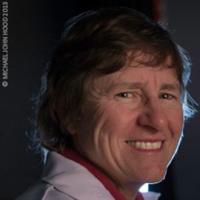
Andrew Holmes is distinguished for his contributions to the synthesis of biologically important natural products and for pioneering work on semiconducting conjugated polymers. His materials chemistry research interests have been in the areas of flat panel displays, photovoltaics, field effect transistors, and supercritical carbon dioxide as a benign solvent. In the area of bioactive molecules he has contributed to the use of pericyclic reactions in the synthesis of medium ring ethers, lactones and alkaloids and to the discovery of key proteins implicated in downstream intracellular signalling processes. He was the second most highly cited UK physical scientist of the decade.

Fields of research

34 CHEMICAL SCIENCES
  • 3405 ORGANIC CHEMISTRY

For full list of research codes, please visit the ARC Website .

Expertise type

  • Chemistry
  • Electroactive Polymers
  • Organic Chemistry
  • Polymer Chemistry

Please contact fellowship@science.org.au to request any updates to the data.

Professor

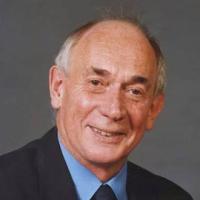
Franz Grieser

FAA

Franz Grieser
Image Description
Professor Grieser is an outstanding physical chemist with demonstrated leadership in free radical chemistry, spectroscopy, colloid & surface science and in sonochemistry. In some 200 highly cited publications, he has established creative links that cross conventional boundaries to solve key questions in surfactant science and sonochemistry. His leadership and standing in research in chemistry has been acknowledged by his colleagues through the HG Smith Medal of the RACI and through his Honorary DSc from Upsalla University and by his invited plenary & keynote lectureships at international conferences. His basic science has generated novel applications being taken up by companies.

Expertise type

  • Chemistry
  • Colloids
  • Free Radicals
  • Physical Chemistry

Please contact fellowship@science.org.au to request any updates to the data.

Professor

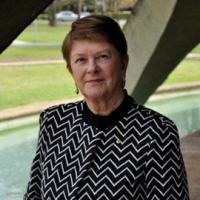
Allan Canty

FAA

Allan Canty
Image Description
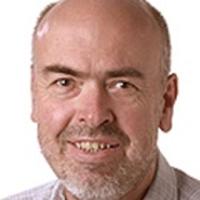
Professor Canty is an outstanding contributor to the expanding field of organometallic chemistry, especially of the heavier elements. His early work was concerned mainly with the interaction of organomercury compounds with biologically important molecules, such as amino-acids and DNA bases, and provides essential information relevant to the action of methylmercury in the environment. In the last twelve years, he has synthesised and characterised the first reasonably stable er-bonded alkyls of palladium(JV), compounds that are relevant to current lively discussions of the mechanisms of numerous organic reactions catalysed by palladium compounds.

Expertise type

  • Chemistry
  • Coordination Chemistry
  • Inorganic
  • Organometallic

Please contact fellowship@science.org.au to request any updates to the data.

Professor

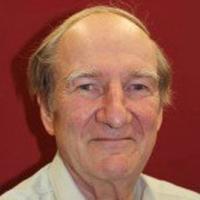
Richard Robson

FAA FRS Nobel Laureate

Richard Robson
Image Description
Professor Robson has played a pioneering role in two major areas of inorganic chemistry. Both involve the design of molecular organisation to achieve unusual functional or structural outcomes. The first was the synthesis of macrocyclic ligands able to bind more than one metal ion which could then act in a concerted and catalytic manner. These systems mimic enzymic catalysis and the work has triggered many similar studies all over the world. The second development was a strategy for using these di-, tetra-, and multi-nucleating systems to build infinite network materials which are potentially the microporous catalysts of the future. This crystal engineering and design showed a way forward into fruitful new areas of solid state synthesis which has now been emulated by many others.

Fields of research

34 CHEMICAL SCIENCES
  • 3402 INORGANIC CHEMISTRY
    • 340211 Transition Metal Chemistry

For full list of research codes, please visit the ARC Website .

Expertise type

  • Chemistry
  • Coordination Chemistry
  • Inorganic Chemistry
  • Inorganic Networks

Please contact fellowship@science.org.au to request any updates to the data.

Professor

Michael Paddon-Row

FAA

Michael Paddon-Row
Image Description
Professor Padden-Row is distinguished for his contribution to the interpretation of long-range electron, hole and energy transfer. He has synthesized rigid saturated hydrocarbon bridges with systematically variable length and geometry, which can link donor and acceptor species, thus permitting for the first time unambiguous definition of the transfer pathway, and has demonstrated that fast transfer can occur via a through-bond mechanism at distances up to 17 Angstroms. Design and interpretation of bridge functionality has been fruitfully guided by innovative quantum chemical calculations. His work is of fundamental importance for the interpretation of thermal and photochemical long-range electron transfer, particularly in biological systems.

Expertise type

  • Chemistry
  • Computational Chemistry
  • Physical Organic Chemistry
  • Synthesis

Please contact fellowship@science.org.au to request any updates to the data.

Professor

Ian Dance

FAA

Ian Dance
Image Description
Professor Dance is internationally recognised as one of the leading investigators of compounds in which a metal is combined with sulfur, selenium or tellurium (the 'chalcogen' elements). In this important and growing area of chemistry he has not only developed essential synthetic strategies, but has been responsible for the synthesis and characterisation of over half of the known categories of compound. An outstanding lateral chemical thinker, Professor Dance has used his metal-chalcogen research as the springboard for innovative contributions to the developing areas of supramolecular inorganic chemistry and gas-phase inorganic chemistry, as well as applications of computational inorganic chemistry. He received the Inorganic Chemistry Award of the Royal Australian Chemical Institute in 1996.

Expertise type

  • Chemistry
  • Computational Chemistry
  • Inorganic Chemistry
  • Supramolecular Chemistry

Please contact fellowship@science.org.au to request any updates to the data.

Professor

Denis Evans

AM FAA

Denis Evans
Image Description
Evans's work has changed the way people think about the statistical mechanics of non-equilibrium systems. He proposed, developed, or verified nearly all of the modern molecular dynamics computer simulation algorithms. He produced the first tractable version of thermostatted nonlinear response theory. He tested this theory and its application to the derived properties of nonequilibrium steady states. Many believe that his Transient Time Correlation Functions provide the key to present day theory and simulation of nonequilibrium systems far from equilibrium. He has resolved a number of long standing paradoxes including Gibbs' problem concerning the conservation of entropy and the van Kampen objection to linear response theory.

Fields of research

34 CHEMICAL SCIENCES
  • 3407 THEORETICAL AND COMPUTATIONAL CHEMISTRY
    • 340703 Statistical Mechanics in Chemistry

For full list of research codes, please visit the ARC Website .

Expertise type

  • Chemical Physics
  • Chemistry
  • Statistical Mechanics
  • Theoretical Chemistry
  • Rheology

Please contact fellowship@science.org.au to request any updates to the data.

Professor

Sever Sternhell

AO FAA

Sever Sternhell
Image Description
Organic chemistry underwent a major change with the introduction of nuclear magnetic resonance (NMR) spectroscopy. Sternhell's name is closely associated with this development, and he was the prime mover for the introduction of this technique into Australia. He was in charge of the first NMR spectrometer in Australia and he used it extensively; his monograph on this subject (with L. M. Jackman, a fellow Australian) had world-wide success as a textbook for the application of this method; he published numerous research papers exploring various aspects of NMR and developing new applications; and he was the initiator of the National NMR Centre in Canberra. His collaboration with other organic chemists confirmed the great value of NMR. In addition, he made substantial contributions to unrelated areas, such as coal and lignin, tautomerism, organometallic chemistry and non-bonded interactions.

Expertise type

  • Chemistry
  • NMR Spectroscopy
  • Organic Chemistry
  • Physical Organic Chemistry

Please contact fellowship@science.org.au to request any updates to the data.

Professor

John White

AO CMG FAA FRS

John White
Image Description
John White's work has shown how neutron scattering can provide precise details of molecular structure and dynamics on the picosecond time scale, for a wide range of molecular liquids in the bulk and at interfaces, as well as for molecular solids and polymers. By combining high resolution measurements and contrast variation methods for simplifying spectra, the work has allowed previously intractable systems to be studied and demonstrated the scope and appropriateness of allied computer simulation methods. He has made the only studies of phonon dispersion in crystalline polymers, has shown how physiosorption and intercalation modify molecular dynamics, and first observed molecular quantum mechanical rotational tunnelling at interfaces. His work demonstrated early on, that at silicate-water interfaces water diffusion is but weakly affected and has generalised this understanding to lamellar liquid crystals and swollen model membranes.

Expertise type

  • Chemistry
  • Interfaces
  • Nanotechnology
  • Physical Chemistry

Please contact fellowship@science.org.au to request any updates to the data.