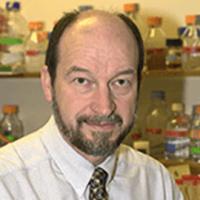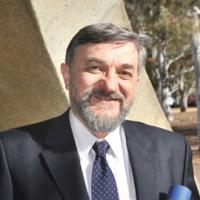


Professor

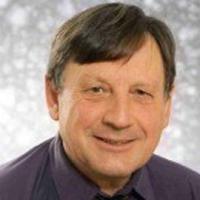
Martin Green

AM FAA FTSE FRS
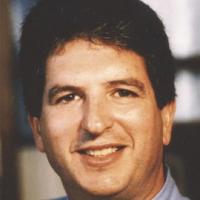
Martin Green
Image Description
Martin Green has made highly significant contributions to the physics and technology of photovoltaic cells and other photoelectric devices. His contributions to physics include the elaboration of metal-insulator-semiconductor tunnelling structures, and the role of Auger recombination in silicon photovoltaic cells. His contributions to technology include several techniques for substantially increasing the efficiency of silicon solar cell, the development of new fabrication techniques for silicon MOSFETs, and a leading role in the development of Schottky charge-coupled devices (CCDs) for infrared detector arrays. He has also developed comprehensive device models.

Expertise type

  • Electrical Engineering
  • Engineering
  • Photovoltaics
  • Semiconductors

Please contact fellowship@science.org.au to request any updates to the data.

Professor

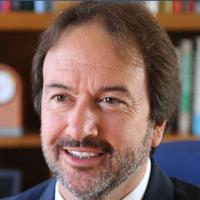
John Chalmers

AC FAA FAHMS

John Chalmers
Image Description
Professor Chalmers is distinguished for his contributions to the elucidation of the nervous mechanisms responsible for control of blood pressure in normal and hypertensive people. He was first to demonstrate the importance of nor-adrenergic nerves within the brain itself in the control of blood pressure and in the pathogenesis of all forms of experimental hypertension. These studies, and his definition of the roles of other central nervous system transmitters, have provided a rational basis for understanding control of blood pressure in man. He has introduced new approaches to treatment involving the use of drugs which act on these central nervous transmitter systems.

Expertise type

  • Clinical Trials
  • Epidemiology
  • Hypertension
  • Medical Sciences

Please contact fellowship@science.org.au to request any updates to the data.

Professor

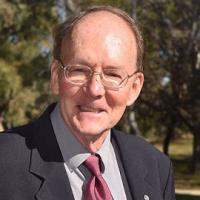
Roger Tanner

FAA FRS FTSE

Roger Tanner
Image Description
Distinguished for his contributions to applied science and engineering, especially in rheology. In this field Professor Tanner has contributed to the experimental side by developing new methods for measuring basic non-Newtonian fluid parameters, and to theory by developing new models of fluid behaviour starting from the micro-structure of the fluid; recently he has also pioneered the application of finite element computer methods to the analysis of extrusion and related industrial processes. This work has received international recognition through the scientific literature and at major scientific conferences.

Fields of research

40 ENGINEERING
  • 4004 CHEMICAL ENGINEERING
    • 90408 Rheology
  • 4012 FLUID MECHANICS AND THERMAL ENGINEERING
    • 401204 Computational methods in fluid flow, heat and mass transfer (incl. computational
  • 915 INTERDISCIPLINARY ENGINEERING
51 PHYSICAL SCIENCES
  • 5103 CLASSICAL PHYSICS
    • 20303 Fluid Physics

For full list of research codes, please visit the ARC Website .

Expertise type

  • Engineering
  • Mechanical Engineering
  • Polymer Processing
  • Rheology

Please contact fellowship@science.org.au to request any updates to the data.

Professor

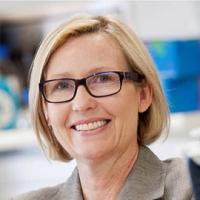
Melissa Little

AC FAA FAHMS FRS

Melissa Little
Image Description
Melissa Little is internationally recognised for her research on kidney development and her pioneering studies into renal regeneration. Her work, featured on the front covers of Nature and Nature Cell Biology, describing the generation of kidney organoids from human pluripotent stem cells. This breakthrough opens the door to kidney disease modelling, drug screening and the bioengineering of replacement kidney tissue. Together with a strong track record of commercial translation, Little has been a leader in Australian science policy through her membership of both the Wills and McKeon reviews of Health and Medical Science.

Expertise type

  • Kidney Function
  • Stem Cells
  • Molecular Genetics
  • Cell Biology
  • Developmental Biology
  • Regenerative Medicine
  • Induced Pluripotent Stem Cells
  • Gene Expression
  • Kidney
  • Morphogenesis
  • Nephrology
  • Medical Sciences

Please contact fellowship@science.org.au to request any updates to the data.

Professor

David Gardner

AM FAA

David Gardner
Image Description
David Gardner is a world-leading embryologist. His basic animal research laid the foundation for major clinical developments in human IVF. His research has not only significantly improved animal assisted reproduction and breeding programs, but has transformed how human in vitro fertilisation is performed, resulting in significant increases in human pregnancy rates and the birth of millions of children worldwide. His work facilitated the now widely-accepted single embryo transfer and thereby eliminated problems associated with twin/triplet pregnancies. His specialised and improved culture media made it possible to isolate human embryonic stem cells.

Expertise type

  • Embryo Development
  • Physiology
  • Epigenetics
  • Stem Cells
  • Diet
  • Embryology
  • Preimplantation Embryo
  • Amino Acids
  • Antioxidants
  • Blastocyst
  • Embryonic Stem Cells
  • Microfluidics
  • Glycolysis
  • Induced Pluripotent Stem Cells
  • Laboratory on a Chip
  • Oocyte
  • Sperm
  • Medical Sciences
  • Biology

Please contact fellowship@science.org.au to request any updates to the data.

Professor

Sarah Robertson

AO FAA FAHMS

Sarah Robertson
Image Description
Sarah Robertson is a world-renowned reproductive biologist whose innovative research in reproductive immunology has formed the basis for a new understanding of the origins of health at conception. She has identified specific cytokines and immune cells that regulate embryo implantation and fetal development, and has demonstrated that male seminal fluid acts to induce adaptations in the female immune response that promote receptivity to pregnancy. Her work shows that the immune system channels environmental signals from both female and male parents to contribute to reproductive success and shape offspring phenotype through non-genomic pathways. These discoveries are improving practise in reproductive medicine and providing insight into early life origins of child health.

Expertise type

  • IVF
  • Immunology
  • Medical Sciences
  • Reproductive Biology

Please contact fellowship@science.org.au to request any updates to the data.

Professor

Michael Waters

FAA

Michael Waters
Image Description
Professor Michael Waters is an outstanding Australian scientist with an international reputation in growth hormone action. He was the first to purify and characterise the growth hormone receptor, and, with partners, to clone it. He mapped its tissue distribution, and from that developed new physiologies of growth hormone action, including its role in activating neural stem cells in response to exercise. Michael has elucidated the signals required for key growth hormone actions, and uncovered the molecular basis for receptor activation of its kinase, which has been described as a new paradigm in cytokine receptor signalling.

Expertise type

  • Biology
  • Cytokines
  • Developmental Biology
  • Growth Hormone

Please contact fellowship@science.org.au to request any updates to the data.

Professor

Linda Richards

AO FAA FAHMS

Linda Richards
Image Description
Professor Linda Richards is a leading developmental neurobiologist whose discoveries have defined the fundamental mechanisms regulating the wiring of neuronal connections between the hemispheres of the brain. Her discovery that balanced inputs to the two hemispheres are critical for the final stages of brain wiring development advanced understanding of how nerves form circuits. Linda’s research into the way in which animals’ cerebral midlines develop, and the developing human brain, has led to a new understanding of the causes of some of the most common defects in human brain wiring, particularly malformations of the corpus callosum.

Fields of research

32 BIOMEDICAL AND CLINICAL SCIENCES
  • 3209 NEUROSCIENCES

For full list of research codes, please visit the ARC Website .

Expertise type

  • Brain Structure
  • Brain Development and Behaviour
  • Brain Function
  • Evolutionary Biology
  • Mammalian Genetics
  • MRI
  • Neurodevelopmental Disorder
  • Corpus Callosum
  • Biology
  • Neuroscience

Please contact fellowship@science.org.au to request any updates to the data.

Professor

John Miners

FAA FAHMS

John Miners
Image Description
Miners has made seminal contributions to the characterisation of the enzymatic basis of drug metabolism, which underlies the individualisation of drug therapy in humans. His research has interwoven molecular, biochemical and clinical approaches to identify sources of variability in drug metabolism, characterise the substrate and inhibitor selectivities and structure-function relationships of the key drug metabolizing enzymes cytochrome P450 and UDP-glucuronosyltransferase, and develop in vitro experimental paradigms that predict drug metabolism parameters in humans. The research has played a pivotal role in establishing drug metabolism as a predictive science that underpins both preclinical drug development and the clinical use of drugs.

Fields of research

32 BIOMEDICAL AND CLINICAL SCIENCES
  • 3214 PHARMACOLOGY AND PHARMACEUTICAL SCIENCES
    • 321401 Basic Pharmacology
    • 321402 Clinical Pharmacology and Therapeutics
    • 321406 Pharmacogenomics
    • 321499 Pharmacology and Pharmaceutical Sciences not elsewhere classified

For full list of research codes, please visit the ARC Website .

Expertise type

  • Cancer Therapy
  • Drug Discovery
  • Drug Mechanisms
  • Protein Structure-Function Relationships
  • Enzymology
  • Medical Sciences
  • Pharmacokinetics
  • Pharmacology

Please contact fellowship@science.org.au to request any updates to the data.

Professor

Boris Martinac

FAA

Boris Martinac
Image Description
Professor Martinac is one of the leading membrane biophysicist world-wide with an outstanding international and national reputation. He has been internationally known for his pioneering studies of ion channels in microbes, particularly the discovery, cloning and structural and functional characterization of mechanosensitive ion channels in bacteria. His discovery of bacterial mechanosensitive channels and elucidation of the basic physical principles of mechanosensitive channel gating by bilayer deformation forces has made major impact in the fields of mechanosensory transduction and ion channels. His recent work expanded into studies of the role mechanosensitive ion channels may play in neuronal and cardiac diseases.

Expertise type

  • Biophysics
  • Mechanosensitive Ion Channels
  • Medical Sciences
  • Membrane Proteins
  • Cell Membranes
  • Lipids
  • Ion Channels
  • Physics
  • Bacteria
  • Spectroscopy
  • Neuroscience
  • Electrophysiology
  • Membranes
  • Protein Structure-Function Relationships

Please contact fellowship@science.org.au to request any updates to the data.