





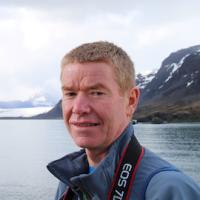
Steven Chown
FAA

Fields of research
31 BIOLOGICAL SCIENCES-
3103
ECOLOGY
- 310302 Community Ecology
-
3104
EVOLUTIONARY BIOLOGY
- 310402 Biogeography and Phylogeography
- 310410 Phylogeny and Comparative Analysis
- 3108 PLANT BIOLOGY
-
3109
ZOOLOGY
- 310907 Animal Physiological Ecology
- 606 PHYSIOLOGY
-
4102
ECOLOGICAL APPLICATIONS
- 410202 Biosecurity science and invasive species ecology
-
4104
ENVIRONMENTAL SCIENCE AND MANAGEMENT
- 410401 Conservation and biodiversity
-
4106
SOIL SCIENCES
- 410603 Soil Biology
For full list of research codes, please visit the ARC Website .
Expertise type
- Conservation Science
- Ecology
- Biodiversity
- Invasive Species
- Global Ecology
- Insects
- Science Policy
- Climate Change
- Antarctic Science
- Physiology
- Ecosystems
- Environmental Biology
- Landscape ecology, conservation and biodiversity
- Phylogeny
- Biology
Please contact fellowship@science.org.au to request any updates to the data.
Ian Reid
FAA FTSE

Fields of research
46 INFORMATION AND COMPUTING SCIENCES-
4602
ARTIFICIAL INTELLIGENCE AND IMAGE PROCESSING
- 460205 Intelligent robotics
For full list of research codes, please visit the ARC Website .
Expertise type
- Computer Vision
- Machine Learning
- Robotics
- ICT
Please contact fellowship@science.org.au to request any updates to the data.
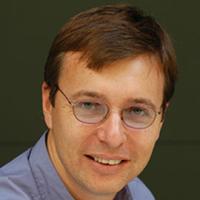
Bostjan Kobe
FAA
Fields of research
31 BIOLOGICAL SCIENCES-
3101
BIOCHEMISTRY AND CELL BIOLOGY
- 310111 Signal Transduction
- 310112 Structural Biology (incl. Macromolecular Modelling)
- 3102 BIOINFORMATICS AND COMPUTATIONAL BIOLOGY
For full list of research codes, please visit the ARC Website .
Expertise type
- X-ray Crystallography
- Bacterial Pathogenesis
- Cryo-electron Microscopy
- Fungal Pathogenesis
- Innate Immunity
- Nucleo-cytoplasmic Transport
- Plant Disease Resistance
- Plant-microbe Interactions
- Protein-protein Interactions
- Viral Pathogenesis
- Toll-like Receptors
- Protein Structure
- Biology
Please contact fellowship@science.org.au to request any updates to the data.
Joanne Etheridge
FAA

Fields of research
10 TECHNOLOGY 34 CHEMICAL SCIENCES-
3406
PHYSICAL CHEMISTRY (INCL. STRUCTURAL)
- 30606 Structural Chemistry and Spectroscopy
- 401807 Nanomaterials
- 401810 Nanoscale Characterisation
-
5104
CONDENSED MATTER PHYSICS
- 510401 Condensed Matter Characterisation Technique Development
- 510402 Condensed Matter Imaging
- 510407 Surfaces and Structural Properties of Condensed Matter
- 510499 Condensed Matter Physics not elsewhere classified
For full list of research codes, please visit the ARC Website .
Expertise type
- Nanomaterials
- Nanoparticles
- Condensed Matter Physics
- Diffraction
- Electron Diffraction
- Electron Scattering
- Electron Crystallography
- Electron Microscopy
- Physics
Please contact fellowship@science.org.au to request any updates to the data.
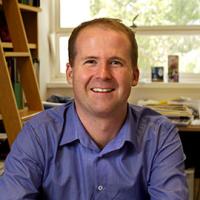
Mark Cassidy
FAA FTSE
Fields of research
40 ENGINEERING-
4005
CIVIL ENGINEERING
- 400502 Civil Geotechnical Engineering
-
4015
MARITIME ENGINEERING
- 401503 Ocean Engineering
For full list of research codes, please visit the ARC Website .
Expertise type
- Offshore Engineering
- Geotechnical Engineering
- Civil Engineering
- Geotechnics
- Offshore Renewable Energy
- Engineering
Please contact fellowship@science.org.au to request any updates to the data.
Ian Wright
FAA

Fields of research
31 BIOLOGICAL SCIENCES- 3103 ECOLOGY
For full list of research codes, please visit the ARC Website .
Expertise type
- Plant Biology
- Ecology
- Biology
- Ecosystems
- Biogeography
- Environmental Ecology
- Evolutionary Biology
- Plant Physiology
Please contact fellowship@science.org.au to request any updates to the data.
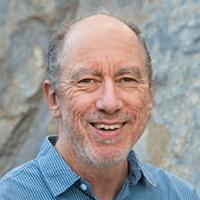
Peter Cawood
FAA
Expertise type
- Tectonics
- Earth Evolution
- Continental Crust
- Plate Tectonics
- Structural Geology
- Earth Sciences
Please contact fellowship@science.org.au to request any updates to the data.
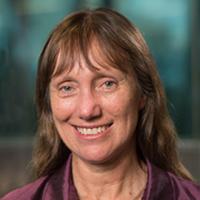
Kerrie Mengersen
FAA FASSA
Fields of research
49 MATHEMATICAL SCIENCES- 4905 STATISTICS
For full list of research codes, please visit the ARC Website .
Expertise type
- Statistics
- Biometrics
- Bayesian Statistics
- Computational Statistics
- Applied Statistics
- Biostatistics
- Environmetrics
- Mathematical Statistics
- Mathematics
Please contact fellowship@science.org.au to request any updates to the data.
Martina Stenzel
FAA

Fields of research
10 TECHNOLOGY 32 BIOMEDICAL AND CLINICAL SCIENCES-
3206
MEDICAL BIOTECHNOLOGY
- 320604 Nanomedicine
-
3403
MACROMOLECULAR AND MATERIALS CHEMISTRY
- 30301 Chemical Characterisation of Materials
- 340303 Nanochemistry
- 340305 Physical properties of materials
- 340306 Polymerisation Mechanisms
- 340307 Structure and dynamics of materials
- 401807 Nanomaterials
For full list of research codes, please visit the ARC Website .
Expertise type
- Nanoparticles
- Polymers
- Self Assemby
- Chemistry
- Characterization of Polymers
- Drug Delivery
- Synthesis of Polymers
- Nanomedicine
Please contact fellowship@science.org.au to request any updates to the data.
Kliti Grice
FAA

Fields of research
31 BIOLOGICAL SCIENCES-
3103
ECOLOGY
- 310306 Palaeoecology
-
3104
EVOLUTIONARY BIOLOGY
- 310412 Speciation and Extinction
-
3107
MICROBIOLOGY
- 310799 Microbiology not elsewhere classified
-
3401
ANALYTICAL CHEMISTRY
- 340101 Analytical Spectrometry
- 340109 Separation Science
- 3701 ATMOSPHERIC SCIENCES
-
3702
CLIMATE CHANGE SCIENCE
- 370201 Climate Change Processes
-
3703
GEOCHEMISTRY
- 370301 Exploration Geochemistry
- 370399 Geochemistry not elsewhere classified
-
3705
GEOLOGY
- 370506 Palaeontology (incl. Palynology)
-
4102
ECOLOGICAL APPLICATIONS
- 410299 Ecological Applications not elsewhere classified
-
4199
OTHER ENVIRONMENTAL SCIENCES
- 419999 Environmental Sciences not elsewhere classified
For full list of research codes, please visit the ARC Website .
Expertise type
- Climate Change
- Geochemistry
- Palaeontology
- Microbiology
- Palaeoclimatology
- Biodiversity
- Climate
- Biochemistry
- Algae
- Early Life
- Carotenoids
- Chemostratigraphy
- Compound Specific Isotopes
- Lipids
- Geomedical
- Land Plants
- Ecology
- Organic Geochemistry
- Pigments
- Evolution
- Stable Isotopes
- Petroleum Geochemistry
- Biomarkers
- Earth Sciences
Please contact fellowship@science.org.au to request any updates to the data.