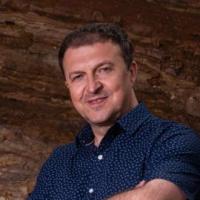


Professor

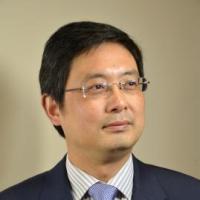
Ian Frazer

AC FAA FTSE FAHMS FRS

Ian Frazer
Image Description
Dr Frazer has spent 15 years developing prophylactic and therapeutic vaccines, with particular focus on prevention and treatment of papillomavirus associated cervical cancer. He developed a virus like particle based vaccine for prevention of papillomavirus infection which has shown 100% efficacy in late stage international clinical trials. He also developed a therapeutic vaccine for cervical pre-cancer, which is in clinical trail in Australia, and has proven efficacious in a number of animal models. His basic research in tumour immunology has provided insight into the problems of inducing immunity to antigens expressed in somatic cells without associated inflammation.

Fields of research

32 BIOMEDICAL AND CLINICAL SCIENCES
  • 3204 IMMUNOLOGY
    • 320409 Tumour Immunology
44 HUMAN SOCIETY
  • 4499 Other human society

For full list of research codes, please visit the ARC Website .

Expertise type

  • Immunology
  • Medical Sciences
  • Pathology
  • Virology

Please contact fellowship@science.org.au to request any updates to the data.

Professor

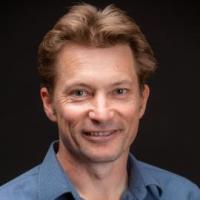
Mark von Itzstein

AO FAA FAHMS

Mark von Itzstein
Image Description
Professor von Itztein’s career as a carbohydrate scientist began in 1986, when he joined the Melbourne team working on influenza drug discovery. His success in 1989 in the design and synthesis of zanamivir, now marketed under the name Relezna, was achieved at a time when there were few examples of inhibitor-design based on the three-dimensional structure of an enzyme. He was jointly awarded the Australia Prize for pharmaceutical design in 1996, and in 2001 received the prestigious Alexander von Humboldt Forschungpreis for foreign scholars. He has published and patented extensively in glycoscience, and established strong collaborations locally and internationally.

Fields of research

31 BIOLOGICAL SCIENCES
  • 3101 BIOCHEMISTRY AND CELL BIOLOGY
    • 310112 Structural Biology (incl. Macromolecular Modelling)
  • 3107 MICROBIOLOGY
    • 310706 Virology
34 CHEMICAL SCIENCES
  • 3404 MEDICINAL AND BIOMOLECULAR CHEMISTRY

For full list of research codes, please visit the ARC Website .

Expertise type

  • Influenza Virus
  • Virus Infection
  • Biochemistry
  • Chemistry
  • Drug Design
  • Glycosides
  • Medicinal Chemistry
  • Chemical biology

Please contact fellowship@science.org.au to request any updates to the data.

Professor

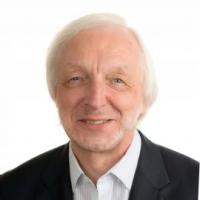
Max Coltheart

AM FAA FASSA

Max Coltheart
Image Description
Professor Coltheart's distinguished experimental research in cognitive neuropsychology and his theoretical contributions have established him as a leading world authority, particularly in the neuropsychology of reading disability (dyslexia) and disorders of semantic memory and language. His widely cited research has had a major impact in shaping the work of others in Australia and in major research centres abroad and is generally acknowledged as leading to a much clearer understanding of the nature of language and memory disorders and appropriate means for their treatment. He is the Founding Editor (1984) and Editor-in-Chief of Cognitive Neuropsychology, the most influential journal in its field, and has served (1972-1985) as Editor of the British Journal of Psychology and as President of the Experimental Psychology Society in the UK (1985-1987).

Fields of research

52 PSYCHOLOGY

For full list of research codes, please visit the ARC Website .

Expertise type

  • Neuropsychology
  • Neuropsychiatry
  • Cognitive Science
  • Medical Sciences
  • Neuroscience
  • Psychology

Please contact fellowship@science.org.au to request any updates to the data.

Professor

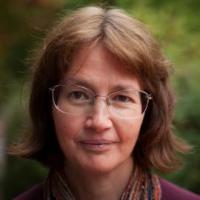
Bruce Armstrong

AM FAA

Bruce Armstrong
Image Description
Dr Armstrong is a public health scientist who has used quantitative methods in his scientific contributions to epidemiology, especially in the field of cancer epidemiology. He has advanced our knowledge of the epidemiology, aetiology and control of malignant melanoma of the skin, studied the role of diet in human carcinogenesis in relation to cancers of the breast and endometrium, and considered the epidemiology and control of asbestos-related cancer. He has also clarified the relationship of diet and alcohol to blood pressure, and analyzed technical aspects of exposure measurement in epidemiological research. Dr Armstrong is arguably the most outstanding public health scientist in the history of Australian epidemiology.

Fields of research

32 BIOMEDICAL AND CLINICAL SCIENCES
  • 3211 ONCOLOGY AND CARCINOGENESIS
    • 321199 Oncology and Carcinogenesis not elsewhere classified
42 HEALTH SCIENCES
  • 4202 EPIDEMIOLOGY
  • 4203 HEALTH SERVICES AND SYSTEMS
    • 420305 Health and Community Services
    • 420399 Public Health and Health Services not elsewhere classified
  • 4206 PUBLIC HEALTH
    • 420605 Preventative health care

For full list of research codes, please visit the ARC Website .

Expertise type

  • Medical Sciences
  • Cancer Risk
  • Public Health
  • Community Health
  • Disadvantaged/High-Risk Populations
  • Epidemiology
  • Genetic Epidemiology
  • Melanoma
  • Cancer

Please contact fellowship@science.org.au to request any updates to the data.

Professor

Barry Marshall

AC FAA FAHMS FRS Nobel Laureate

Barry Marshall
Image Description
Professor Marshall discovered that infection of the stomach with uncharacterised spiral bacteria caused gastritisdyspepsia and gastroduodenal ulceration, and predisposes to gastric cancer. This profound discovery was a remarkable fulfilment of Koch's postulates, based on astute clinical and laboratory observations combined with a dramatic self-infection experiment showing conclusively that cultured bacteria induced gastritis. Marshall characterised the ulcerogenic bacterium as a new species Helicobacter Pylori established growth dependence on urea and developed diagnostic tests for its presence and eradication. His observations are a major contribution to microbiology, have revolutionised treatment of gastroduodenal ulcers, by enabling cure with antibiotics, and will substantially reduce the prevalence of gastric cancer.

Expertise type

  • Gastroenterology
  • Helicobacter Pylori
  • Medical Sciences
  • Microbiology

Please contact fellowship@science.org.au to request any updates to the data.

Professor

Colin Masters

AO FAA FTSE FAHMS

Colin Masters
Image Description
Professor Masters is distinguished for his outstanding contributions to the study of amyloid deposition in the brains of patients with degenerative brain conditions, especially in Alzheimer's disease. He purified the amyloid plaques from Alzheimer brains and cooperated with Beyreuther in determining its amino-acid sequence and in cloning the gene coding for the amyloid precursor protein, APP. Mutations of the gene, on chromosome 21, have now been shown to cause forms of familial Alzheimer's disease. The detailed study of the processing pathways involving APP has identified rational therapeutic targets for treatment of Alzheimer's disease and prevention of its onset.

Expertise type

  • Alzheimer's disease
  • Creutzfeldt-Jacob Disease
  • Medical Sciences
  • Neurodegenerative Disease
  • Neuroscience

Please contact fellowship@science.org.au to request any updates to the data.

Professor

Colin Sullivan

FAA

Colin Sullivan
Image Description
Professor Sullivan is recognised as an international leader in the field of sleep disordered breathing. His major research achievements include characterising the basic physiology of breathing during sleep and the recognition that arousal responses from sleep are crucial to survival in respiratory failure. He has been the key person in Australia promoting the investigation of sleep disorders medicine and he established the first diagnostic sleep laboratories for adults and children. He is known internationally for developing nasal continuous positive airway pressure to treat obstructive sleep apnea. This is now the most widely used treatment for this disease throughout the world.

Expertise type

  • CPAP
  • Medical Devices
  • Medical Sciences
  • Respiratory Medicine
  • Sleep Apnea

Please contact fellowship@science.org.au to request any updates to the data.

Professor

David Burke

AC FAA FTSE

David Burke
Image Description
Professor David Burke works in the applied sciences and is recognised as one of the world's leading clinical neurophysiologists. His unique contributions have been 1) to define the role of feedback from muscle sensors in controlling movement by recording from single nerve fibres in awake cooperative human subjects and by studying their projection to the spinal cord and brain, and 2) to develop specialised techniques to study abnormal nerve excitability and to monitor brain and spinal cord function during surgery. His research work is of fundamental importance in understanding normal movement and the mechanisms of neurological disease, in improving diagnosis and in preventing disability.

Fields of research

32 BIOMEDICAL AND CLINICAL SCIENCES
  • 3208 MEDICAL PHYSIOLOGY
    • 320899 Medical Physiology not elsewhere classified
  • 3209 NEUROSCIENCES
    • 320905 Neurology and Neuromuscular Diseases
    • 320906 Peripheral Nervous System
4207 SPORTS SCIENCE AND EXCERCISE
  • 420703 Motor Control

For full list of research codes, please visit the ARC Website .

Expertise type

  • Medical Sciences
  • Neuroscience
  • Physiology
  • Reflex Function

Please contact fellowship@science.org.au to request any updates to the data.

Professor

Anthony Perry

FAA

Anthony Perry
Image Description
Dr. Perry is a world leader in research on turbulent flow. His major contributions are: (1) Development of existing and invention of new (e.g. the flying hot-wire anemometer) instrumentation. A book on this subject has been published. (2) Extensive novel experimental work especially on rough-surface boundary layers. The flying hot-wire is providing new insights into turbulent structure. (3) Development of new theoretical ideas for interpreting measurements. Outstanding contributions are the application of bifurcation ideas to turbulent flows and consideration of the role of discrete (coherent) vortices in turbulent flows

Expertise type

  • Fluid Mechanics

Please contact fellowship@science.org.au to request any updates to the data.

Professor

Jozef Gécz

FAA FAHMS

Jozef Gécz
Image Description
Jozef Gécz is a human molecular geneticist internationally recognised for his contributions to the genetics of childhood onset neurological disorders, including intellectual disabilities, epilepsies, autisms and cerebral palsies. Gécz identified the first gene for non-syndromic intellectual disability, the FMR2 gene in 1994 and more than 100 other genes for various forms of neurodevelopmental disabilities. His research has transformed the understanding of the genetic architecture of neurodevelopmental disorders and those arising from genes on the human X chromosome specifically, and has led to better management and treatment of these conditions. His research delved into fundamental aspects of disease mechanisms and led, among others, to clinical trial of the neurosteroid allopregnanolone for treatment of PCDH19 girls-only epilepsy and autism.

Fields of research

31 BIOLOGICAL SCIENCES
  • 3105 GENETICS
    • 310511 Neurogenetics
32 BIOMEDICAL AND CLINICAL SCIENCES
  • 3202 CLINICAL SCIENCES
    • 320213 Medical Genetics (excl. Cancer Genetics)

For full list of research codes, please visit the ARC Website .

Expertise type

  • Human Genetics
  • Mutations
  • Epilepsy
  • Genomics
  • Disease Gene Identification
  • Intellectual Disability
  • Cerebral Palsy
  • Autism
  • mRNA decay
  • mRNA Export
  • Functional Genomics
  • Medical Genetics
  • Neurodevelopmental Disorder
  • Non-sense Mediated
  • Protocadherin
  • X-chromosome
  • Gene Expression
  • Medical Sciences

Please contact fellowship@science.org.au to request any updates to the data.