
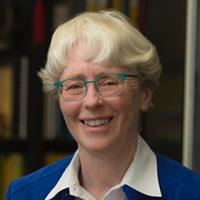

Professor

Christine Beveridge

FAA

Christine Beveridge
Image Description
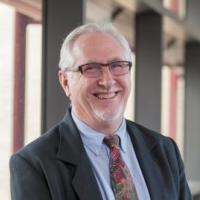
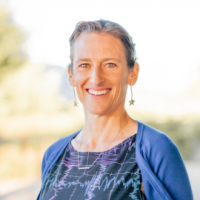
Professor Christine Beveridge is a world leader on the hormonal control of plant development and shoot architecture which underpins the yield, productivity or ornamental value of crops, trees and shrubs. Shoot architecture is controlled by the formation, release and then growth of lateral buds into branches. Christine’s work shows that bud release is prevented when sugars are limited, and occurs only when the plant has an excess of sugars. The subsequent growth depends on the right balance of plant hormones. One of these hormones, strigolactone, was discovered through her research on the genetics and physiology of branching mutants.

Fields of research

31 BIOLOGICAL SCIENCES
  • 3108 PLANT BIOLOGY

For full list of research codes, please visit the ARC Website .

Expertise type

  • Biology
  • Plant Biology
  • Plant Hormone Regulation

Please contact fellowship@science.org.au to request any updates to the data.

Dr

Peter Dodds

FAA

Peter Dodds
Image Description
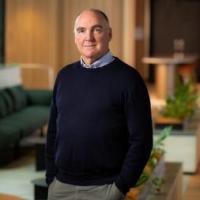
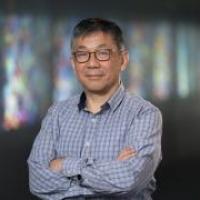
Dr Peter Dodds has made internationally acclaimed contributions to understanding the molecular basis of fungal rust resistance in plants. Using the genetically defined flax-flax rust system, he isolated the first rust avirulence protein and showed it is secreted into the host plant cell during infection. Dodds showed that this pathogen protein triggers immunity by direct protein-protein interaction with a host resistance protein. He resolved the crystal structure of the avirulence protein and identified polymorphic surface residues as the keys for specific recognition. This work provided the first evidence for a postulate, based on the long standing gene-for-gene hypothesis that direct and specific protein interactions occurred between flax resistance and flax rust avirulence proteins. Dodds' innovative discoveries provide a foundation for the rational design of synthetic rust resistance genes to protect the world's most important food crops from rust diseases.

Expertise type

  • Biology
  • Genomics
  • Plant Biology
  • Rust

Please contact fellowship@science.org.au to request any updates to the data.

Professor

Graham Farquhar

AO FAA FRS

Graham Farquhar
Image Description
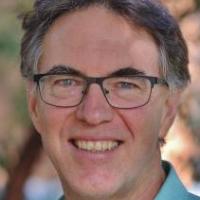
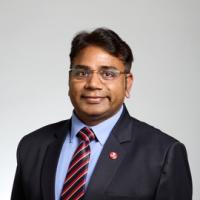
Professor Farquhar has made outstanding theoretical and experimental advances in research in carbon and water relations of plants. Using optimisation theory, he has contributed to a new description of the regulation of CO2 uptake in relation to water loss. He has developed models of photosynthetic metabolism that predict rate of CO2 uptake as a function of physical environment. He has shown how carbon-isotope composition of plant tissue depends on biochemical and diffusional limitations to CO2 uptake, and variation in composition amongst plants in a given environment reflects variation in water-use efficiency. This has led to a promising technique for selecting crop-plant varieties for water-limited environments.

Expertise type

  • Biology
  • Climate Change
  • Plant Biology
  • Plant Physiology

Please contact fellowship@science.org.au to request any updates to the data.

Professor

Trevor Hambley

FAA

Trevor Hambley
Image Description
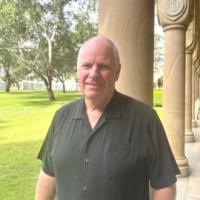
Trevor has established an outstanding career in bioinorganic chemistry, crystallography and molecular mechanics research. His crystallographic research has been coupled with molecular mechanics and other calculations to bring about new insights into the understanding of how metal-ligand bond lengths and ligand conformations modulate chemical and physical properties of coordination complexes. Multidisciplinary research on metal anti-cancer drugs has traversed chemical, biochemical and cell biological studies in order to both design new drugs with greater efficacy and understand the activities of existing drugs. His pioneering bioinorganic chemistry research has led to his election as President of the Society for Biological Inorganic Chemistry.

Fields of research

32 BIOMEDICAL AND CLINICAL SCIENCES
  • 3211 ONCOLOGY AND CARCINOGENESIS
    • 321105 Chemotherapy
34 CHEMICAL SCIENCES
  • 3402 INORGANIC CHEMISTRY
    • 340201 Bioinorganic Chemistry
  • 3404 MEDICINAL AND BIOMOLECULAR CHEMISTRY
    • 340499 Medicinal and Biomolecular Chemistry not elsewhere classified

For full list of research codes, please visit the ARC Website .

Expertise type

  • Chemistry
  • Drug Design
  • Inorganic Chemistry
  • Medicinal Chemistry

Please contact fellowship@science.org.au to request any updates to the data.

Professor

Curt Wentrup

FAA

Curt Wentrup
Image Description
Professor Wentrup is one of the leading experts worldwide in the field of flash vacuum thermolysis (FVT). He has contributed very substantially to the knowledge of carbene and nitrene chemistry and is without doubt Australia's leading expert in this field. He has developed the coupling of FVT with matrix isolation spectroscopy of reactive intermediates and used this technique to characterize a wide variety of new intermediates (first direct observation of thermally produced nitrenes, of dehydrodiazepines, of dinitrogen sulfide, and of the HCN dimer N-cyanomethanimine; first IR-spectroscopic observation of ketene-pyridine ylides; discovered the oxoketene-oxoketene and analogous rearrangements; first syntheses of iminopropadienones RN=C=C=C=O).

Fields of research

34 CHEMICAL SCIENCES
  • 3405 ORGANIC CHEMISTRY
    • 340501 Free Radical Chemistry
    • 340505 Physical Organic Chemistry
  • 3406 PHYSICAL CHEMISTRY (INCL. STRUCTURAL)
    • 340602 Chemical Thermodynamics and Energetics

For full list of research codes, please visit the ARC Website .

Expertise type

  • Chemistry
  • Flash Vacuum Pyrolysis
  • Organic Chemistry
  • Reactive Intermediates
  • History of Science

Please contact fellowship@science.org.au to request any updates to the data.

Professor

James Paton

FAA

James Paton
Image Description
James Paton has made a major scientific contribution to the field of pathogenesis and prevention of bacterial infectious diseases, with particular reference to the human pathogens Streptococcus pneumoniae and Shiga toxigenic Escherichia Coli. His work has established the important role of certain pneumococcal virulence proteins in pathogenesis, and demonstrated their potential as vaccine antigens for prevention of pneumococcal disease, regardless of capsular serotype. Other achievements include characterisation of genes encoding pneumococcal capsule biosynthesis, development of toxin-binding probiotics for prevention of enteric infections, and characterisation of a novel family of bacterial AB5 cytotoxins.

Fields of research

31 BIOLOGICAL SCIENCES
  • 3105 GENETICS

For full list of research codes, please visit the ARC Website .

Expertise type

  • Bacterial Pathogens
  • Medical Sciences
  • Microbiology
  • Vaccines

Please contact fellowship@science.org.au to request any updates to the data.

Professor

Peter Bartlett

FAA

Peter Bartlett
Image Description
Professor Peter Bartlett is a pioneer in statistical learning theory, which is at the interface of computer science and statistics, and is focused on the science behind large, complex statistical decision problems. He has created the theoretical foundations for many key advances in statistical machine learning. Peter’s contributions include analysing large margin classifiers (a successful family of computationally efficient methods for classifying patterns), developing and analysing statistical learning methods based on convex optimisation, and developing new techniques for analysing the performance of prediction methods.

Expertise type

  • Computational Mathematics
  • Mathematics
  • Statistics

Please contact fellowship@science.org.au to request any updates to the data.

Professor

John Carver

AM FAA FTSE

John Carver
Image Description
John Carver has contributed significantly to the field of experimental nuclear physics through his work on photodisintegration, and is particularly eminent for his work in ultraviolet spectroscopy as applied to constituents of the upper atmosphere. With his group in Adelaide he was responsible for important work using rockets and satellites and is continuing with related work in Canberra. He has made valuable contributions to national and international science through active membership of numerous scientific committees and is now deputy chairman of the Australian Science and Technology Council. Professor Carver is Director of the Research School of Physical Sciences at the Australian National University.

Expertise type

  • Nuclear Physics
  • Physics
  • Photodisintegration
  • Atmospheric Physics
  • Ultraviolet spectroscopy
  • Space Science

Please contact fellowship@science.org.au to request any updates to the data.

Dr

Herbert Coombs

FAA FAHA FASSA

Herbert Coombs
Image Description
Throughout his professional career Dr Coombs has had a direct influence in the development of science by encouraging activities to foster education and research in scientific disciplines and by aiding the rapid application of results of scientific research into primary and secondary industry and in commerce. He was intimately associated, when Director-General of the Department of Post-war Reconstruction, with the long term programme of biological and agricultural research for the development of the north of the continent, and when Governor of the Commonwealth Bank with the Rural Credits Development Fund which has stimulated and assisted research projects within the universities. He has maintained a continuing interest in developing innovations in secondary industry through the application of modern science and he has been an active member of the Science and Industry Forum.

Please contact fellowship@science.org.au to request any updates to the data.

Professor

David Black

AO FAA

David Black
Image Description
Professor David Black is recognised as one of the world's leading heterocyclic chemists and has made major contributions in heterocyclic chemistry, coordination chemistry and natural products. His international reputation is based on the originality and versatility of his research, which has generated the synthesis of new types of organic molecules and the discovery of new synthetic methodologies. He has published more than 250 papers and a book, "Organometallics in Organic Synthesis" and has been awarded the Rennie, Smith, Birch, and Leighton medals of the RACI. Since 2004 he has held the elected position of Secretary General of IUPAC.

Fields of research

34 CHEMICAL SCIENCES
  • 3405 ORGANIC CHEMISTRY

For full list of research codes, please visit the ARC Website .

Expertise type

  • Chemistry
  • Heterocyclic Chemistry
  • Organic Chemistry
  • Synthesis

Please contact fellowship@science.org.au to request any updates to the data.