
Professor

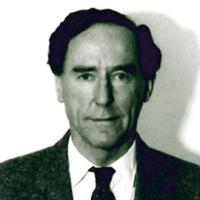
Joanne Etheridge

FAA

Joanne Etheridge
Image Description
Joanne Etheridge has developed new electron diffraction and microscopy techniques to measure the structure of materials at the atomic scale. Through the application of these, as well as established techniques, she has solved a number of otherwise intractable problems across a diverse range of functional materials, including superconductors, semiconductors, ion-conductors, and photoactive and plasmonic materials. She has also led the establishment of ultra-high resolution (‘aberration-corrected’) electron microscopy in Australia, building the necessary theoretical and experimental expertise, as well as providing education and mentorship to many young researchers in this field.

Fields of research

10 TECHNOLOGY 34 CHEMICAL SCIENCES
  • 3406 PHYSICAL CHEMISTRY (INCL. STRUCTURAL)
    • 30606 Structural Chemistry and Spectroscopy
4018 NANOTECHNOLOGY
  • 401807 Nanomaterials
  • 401810 Nanoscale Characterisation
51 PHYSICAL SCIENCES
  • 5104 CONDENSED MATTER PHYSICS
    • 510401 Condensed Matter Characterisation Technique Development
    • 510402 Condensed Matter Imaging
    • 510407 Surfaces and Structural Properties of Condensed Matter
    • 510499 Condensed Matter Physics not elsewhere classified

For full list of research codes, please visit the ARC Website .

Expertise type

  • Nanomaterials
  • Nanoparticles
  • Condensed Matter Physics
  • Diffraction
  • Electron Diffraction
  • Electron Scattering
  • Electron Crystallography
  • Electron Microscopy
  • Physics

Please contact fellowship@science.org.au to request any updates to the data.

Professor

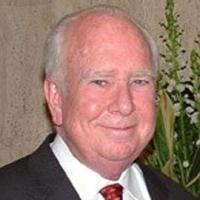
Mark Cassidy

FAA FTSE

Mark Cassidy
Image Description
Mark Cassidy is a distinguished civil engineer whose research has underpinned safe and economic construction of offshore oil and gas platforms. An ARC Laureate Fellow and 2015 West Australian Scientist of the Year, his research contributes to unlocking vast offshore reserves of stranded gas, where the geotechnical response of the seabed sediments is poorly understood. His research outcomes place Mark, and the research teams that he leads, at the international forefront in providing engineering solutions for these problematic soils.

Fields of research

40 ENGINEERING
  • 4005 CIVIL ENGINEERING
    • 400502 Civil Geotechnical Engineering
  • 4015 MARITIME ENGINEERING
    • 401503 Ocean Engineering

For full list of research codes, please visit the ARC Website .

Expertise type

  • Offshore Engineering
  • Geotechnical Engineering
  • Civil Engineering
  • Geotechnics
  • Offshore Renewable Energy
  • Engineering

Please contact fellowship@science.org.au to request any updates to the data.

Professor

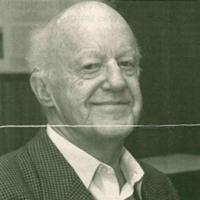
Ian Wright

FAA

Ian Wright
Image Description
Ian Wright is an internationally renowned plant ecologist. He is known for his global scale analysis of plant traits; for quantifying how climate and soils influence plant function; and for using concepts from human economics to understand plant evolution and ecology. His work on a worldwide ‘leaf economic spectrum’ is standard in scientific textbooks, and has been applied to improve the models used to predict shifts in vegetation distribution and function under future climate change.

Fields of research

31 BIOLOGICAL SCIENCES
  • 3103 ECOLOGY

For full list of research codes, please visit the ARC Website .

Expertise type

  • Plant Biology
  • Ecology
  • Biology
  • Ecosystems
  • Biogeography
  • Environmental Ecology
  • Evolutionary Biology
  • Plant Physiology

Please contact fellowship@science.org.au to request any updates to the data.

Professor

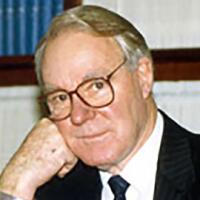
Peter Cawood

FAA

Peter Cawood
Image Description
Peter Cawood is a geologist who has made major contributions to understanding the evolution of the continental crust over our planet’s 4.5 billion-year history. His work integrates direct field observations with leading laboratory techniques. Cawood’s major contributions include, establishing that continental fragments periodically amalgamate into supercontinents and that this amalgamation has occurred through much of Earth’s history. Further, he has shown that continental amalgamation and dispersal drive feedbacks with the atmosphere, oceans and mantle, resulting in preferential biasing of the rock record, and that application of microanalytical methods to sedimentary rocks provides a key to understanding crustal composition, and to seeing through the preservation bias.

Expertise type

  • Tectonics
  • Earth Evolution
  • Continental Crust
  • Plate Tectonics
  • Structural Geology
  • Earth Sciences

Please contact fellowship@science.org.au to request any updates to the data.

Professor

Kerrie Mengersen

FAA FASSA

Kerrie Mengersen
Image Description
Kerrie Mengersen has made internationally recognised contributions to the field of Bayesian statistics. She has consistently maintained a dual focus on statistical methodology and its application, with methodological contributions at the frontier of Bayesian theory, methodology and computation, and applied contributions to substantive problems in health, environment and industry. Mengersen is also well known for her leadership ability and passion for developing young researchers in statistics and the applied sciences.

Fields of research

49 MATHEMATICAL SCIENCES
  • 4905 STATISTICS

For full list of research codes, please visit the ARC Website .

Expertise type

  • Statistics
  • Biometrics
  • Bayesian Statistics
  • Computational Statistics
  • Applied Statistics
  • Biostatistics
  • Environmetrics
  • Mathematical Statistics
  • Mathematics

Please contact fellowship@science.org.au to request any updates to the data.

Professor

Martina Stenzel

FAA

Martina Stenzel
Image Description
Martina Stenzel is a world-leading researcher in polymer chemistry and its applications. She has invented and developed chemical techniques for the synthesis of new and complex polymer architectures and nanomaterials. Stenzel’s research features both the fundamental chemistry and the applications of these new materials. With an emphasis on biomaterials possessing therapeutic abilities, Stenzel has demonstrated the efficacies of her innovative and smart drug-delivery materials, particularly against cancer.

Fields of research

10 TECHNOLOGY 32 BIOMEDICAL AND CLINICAL SCIENCES
  • 3206 MEDICAL BIOTECHNOLOGY
    • 320604 Nanomedicine
34 CHEMICAL SCIENCES
  • 3403 MACROMOLECULAR AND MATERIALS CHEMISTRY
    • 30301 Chemical Characterisation of Materials
    • 340303 Nanochemistry
    • 340305 Physical properties of materials
    • 340306 Polymerisation Mechanisms
    • 340307 Structure and dynamics of materials
4018 NANOTECHNOLOGY
  • 401807 Nanomaterials

For full list of research codes, please visit the ARC Website .

Expertise type

  • Nanoparticles
  • Polymers
  • Self Assemby
  • Chemistry
  • Characterization of Polymers
  • Drug Delivery
  • Synthesis of Polymers
  • Nanomedicine

Please contact fellowship@science.org.au to request any updates to the data.

Professor

Kliti Grice

FAA

Kliti Grice
Image Description
Kliti Grice is an internationally renowned organic geochemist and world-leading authority on molecular fossil and stable isotope geochemistry. Deep insight and excellence in applying advanced analytical approaches has enabled Grice to answer fundamentally important Earth Science questions. Her research into modern and ancient environments has greatly enhanced the understanding of Earth’s early life, microbial ecosystems of the past, aspects of plant and algal physiology and food webs. Grice pinpointed sulfide toxicity as an underlying cause of rapid biological turnover, by identifying the frequent presence of green sulfur bacteria in mass extinction sedimentary records. She also established the role of microbial activity in exceptional preservation of fossils.

Fields of research

31 BIOLOGICAL SCIENCES
  • 3103 ECOLOGY
    • 310306 Palaeoecology
  • 3104 EVOLUTIONARY BIOLOGY
    • 310412 Speciation and Extinction
  • 3107 MICROBIOLOGY
    • 310799 Microbiology not elsewhere classified
34 CHEMICAL SCIENCES
  • 3401 ANALYTICAL CHEMISTRY
    • 340101 Analytical Spectrometry
    • 340109 Separation Science
37 EARTH SCIENCES
  • 3701 ATMOSPHERIC SCIENCES
  • 3702 CLIMATE CHANGE SCIENCE
    • 370201 Climate Change Processes
  • 3703 GEOCHEMISTRY
    • 370301 Exploration Geochemistry
    • 370399 Geochemistry not elsewhere classified
  • 3705 GEOLOGY
    • 370506 Palaeontology (incl. Palynology)
41 ENVIRONMENTAL SCIENCES
  • 4102 ECOLOGICAL APPLICATIONS
    • 410299 Ecological Applications not elsewhere classified
  • 4199 OTHER ENVIRONMENTAL SCIENCES
    • 419999 Environmental Sciences not elsewhere classified

For full list of research codes, please visit the ARC Website .

Expertise type

  • Climate Change
  • Geochemistry
  • Palaeontology
  • Microbiology
  • Palaeoclimatology
  • Biodiversity
  • Climate
  • Biochemistry
  • Algae
  • Early Life
  • Carotenoids
  • Chemostratigraphy
  • Compound Specific Isotopes
  • Lipids
  • Geomedical
  • Land Plants
  • Ecology
  • Organic Geochemistry
  • Pigments
  • Evolution
  • Stable Isotopes
  • Petroleum Geochemistry
  • Biomarkers
  • Earth Sciences

Please contact fellowship@science.org.au to request any updates to the data.

Professor

Adele Green

AC FAA FAHMS

Adele Green
Image Description
Adèle Green is an international leader in the epidemiology of melanoma and skin cancer. Her ground-breaking randomised controlled trial of long-term sunscreen application in an Australian community provides the scientific basis for clinical and public health advice about sunscreen use for skin cancer prevention. Other significant contributions include insight into risk factors for ovarian cancer and into the burden of cancer in Indigenous Australians. Green has received international awards and is a recognised advocate for cancer control, including through longstanding membership on national and international scientific and advisory councils. She has trained and mentored a generation of epidemiologists and clinician-scientists.

Fields of research

32 BIOMEDICAL AND CLINICAL SCIENCES 4202 EPIDEMIOLOGY 4203 HEALTH SERVICES AND SYSTEMS

For full list of research codes, please visit the ARC Website .

Expertise type

  • Cancer Risk
  • Skin cancer
  • Cancer Survivors
  • Environmental Risk Assessment
  • Melanoma
  • Medical Sciences

Please contact fellowship@science.org.au to request any updates to the data.

Professor

Rachel Webster

AO FAA

Rachel Webster
Image Description
Rachel Webster is an astrophysicist and international leader in the field of gravitational lensing. She has developed a range of innovative applications, and discovered the first quasar microlensing event. Webster has used lensing to resolve the inner regions of quasars near black holes, providing international leadership in the development of new techniques. In addition, Webster led the first all-sky survey for galaxies rich in neutral Hydrogen, establishing the benchmark for these studies internationally. More recently, Webster initiated and guided Australian participation in experiments to detect the first stars in the Universe, building a new low frequency radio telescope as a precursor to the Square Kilometre Array (SKA).

Fields of research

51 PHYSICAL SCIENCES
  • 5101 ASTRONOMICAL SCIENCES
    • 510103 Cosmology and Extragalactic Astronomy

For full list of research codes, please visit the ARC Website .

Expertise type

  • Cosmology
  • Astrophysics
  • Epoch of Reionisation
  • Physics
  • Gravitational Lensing
  • Near-field Cosmology
  • Quasar Astrophysics

Please contact fellowship@science.org.au to request any updates to the data.

Professor

Robyn Owens

AM FAA FTSE

Robyn Owens
Image Description
Robyn Owens has an exceptional research track record in computational vision science, having developed ground-breaking fundamental theory in feature detection and object recognition, and applying these theories across many disciplines, from biomedical science through to face recognition. Her pioneering work has been acknowledged by award of the prestigious UK Rank Prize in 2010 in Nutrition and Optoelectronics. Owens has an outstanding and sustained track record in research training and research policy development in the Australian Higher Education sector, including several national collaborative research infrastructure capabilities, and in promoting women in science and STEM education.

Fields of research

46 INFORMATION AND COMPUTING SCIENCES
  • 4699 OTHER INFORMATION AND COMPUTING SCIENCES
49 MATHEMATICAL SCIENCES
  • 4904 PURE MATHEMATICS

For full list of research codes, please visit the ARC Website .

Expertise type

  • Computer Vision
  • Science Policy
  • Research Quality Evaluations
  • ICT

Please contact fellowship@science.org.au to request any updates to the data.