
Professor

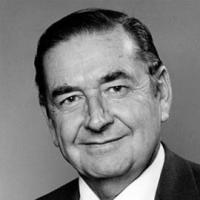
Glenn King

FAA

Glenn King
Image Description
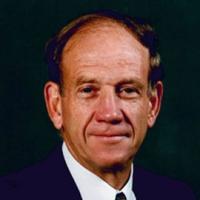
Glenn King is the leading figure worldwide in the study of arthropod venoms and the development of venom peptides from these animals as pharmacological tools, human therapeutics, and bioinsecticides. He has made seminal contributions with respect to our fundamental understanding of the evolution, ecology, production, and functional and structural diversity of arthropod venoms. King’s ground-breaking research on safer ways to control disease-spreading pests and to protect crops, has led to the first commercial application of venom peptides as eco-friendly, bee-safe insecticides. He received the 2023 Prime Minister’s Prize for Innovation.

Fields of research

30 AGRICULTURAL AND VETERINARY SCIENCES
  • 3001 AGRICULTURAL BIOTECHNOLOGY
  • 3004 CROP AND PASTURE PRODUCTION
31 BIOLOGICAL SCIENCES
  • 3101 BIOCHEMISTRY AND CELL BIOLOGY
    • 310112 Structural Biology (incl. Macromolecular Modelling)
34 CHEMICAL SCIENCES
  • 3404 MEDICINAL AND BIOMOLECULAR CHEMISTRY
    • 340401 Biologically Active Molecules
    • 340407 Proteins and Peptides

For full list of research codes, please visit the ARC Website .

Expertise type

  • Molecular Biology
  • Structural Biology
  • NMR Spectroscopy
  • Peptide Chemisty
  • Ion Channels
  • Protein Structure-Function Relationships
  • Biotechnology
  • Proteins
  • Electrophysiology
  • Peptides
  • Biology
  • Biochemistry
  • Biological Chemistry
  • Biophysics
  • Protein Structure

Please contact fellowship@science.org.au to request any updates to the data.

Professor

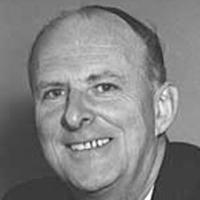
Arthur Georges

FAA

Arthur Georges
Image Description
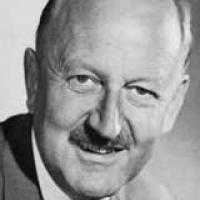
Arthur Georges is an ecologist and herpetologist with research interests in the evolution ecology and systematics of Australian reptiles. He is an internationally recognised expert on the evolution and ecology of reptile sex determination. His proposal that genetic and environmental sex determination represent ends of a continuum has revolutionized understanding of how the complex thermal environment of nests dictates sex in reptiles. His work redirected thinking on how reptiles survived past climate changes, and how human activities constrain their ability to respond to future challenges.

Fields of research

31 BIOLOGICAL SCIENCES
  • 3104 EVOLUTIONARY BIOLOGY
  • 3105 GENETICS
    • 60411 Population, Ecological and Evolutionary Genetics
  • 3109 ZOOLOGY
    • 310903 Animal Developmental and Reproductive Biology
    • 310914 Vertebrate Biology

For full list of research codes, please visit the ARC Website .

Expertise type

  • Population Genetics
  • Biogeography
  • Biology
  • Genomics
  • Applied Ecology
  • Conservation Biology
  • Taxonomy

Please contact fellowship@science.org.au to request any updates to the data.

Professor

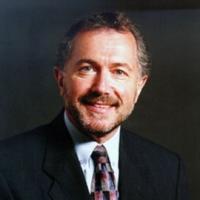
Georgina Long

AO FAA FAHMS

Georgina Long
Image Description
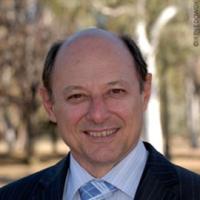
Georgina Long is a medical oncologist and scientist specialising in melanoma. She has led an extensive program of clinical trials, revolutionising the way melanoma is treated worldwide and leading to Australian government funding of ten new melanoma drugs which significantly increase survival. Long published the first research to show a survival improvement in patients with melanoma brain metastasis and led efforts to introduce the first new checkpoint inhibitor drug into clinical oncology in over a decade. Her recent groundbreaking work on the neoadjuvant platform is now revolutionising how operable cancers (melanoma and beyond) are treated. In recognition of the contribution of her outstanding research and work, Professor Long was awarded 2024 Australian of the Year (jointly with colleague Professor Richard Scolyer).

Fields of research

31 BIOLOGICAL SCIENCES

For full list of research codes, please visit the ARC Website .

Expertise type

  • Immune Response
  • Cancer Immunotherapy
  • Immune Checkpoint Molecules
  • Clinical
  • Melanoma
  • Cancer Biology
  • Cancer Immunology
  • Medical Sciences
  • Molecular Oncology
  • Clinical Translation
  • Immune-oncology
  • Cancer
  • Clinical Trials
  • Molecular Biology
  • Oncology

Please contact fellowship@science.org.au to request any updates to the data.

Professor

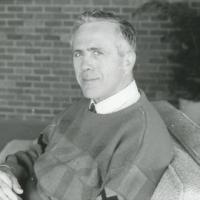
Madeleine van Oppen

FAA

Madeleine van Oppen
Image Description
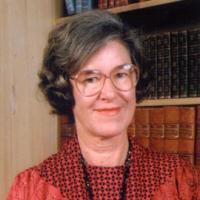
Madeleine van Oppen is an ecological geneticist and expert on microbial symbiosis and climate change adaptation of reef corals. Her fundamental research has revealed several mechanisms by which corals adapt or acclimatise to environmental change, including those mediated by their microbial symbionts. Building on these discoveries, van Oppen developed a platform of innovative assisted evolution technologies that harness the natural adaptive mechanisms to enhance coral climate resilience. These technologies have become a critical element of coral reef restoration research in Australia and overseas.

Fields of research

31 BIOLOGICAL SCIENCES
  • 3105 GENETICS
    • 310509 Genomics
  • 3107 MICROBIOLOGY
    • 310703 Microbial Ecology
  • 3199 OTHER BIOLOGICAL SCIENCES
    • 319902 Global Change Biology
41 ENVIRONMENTAL SCIENCES
  • 4103 ENVIRONMENTAL BIOTECHNOLOGY
    • 410305 Environmental Marine Biotechnology

For full list of research codes, please visit the ARC Website .

Expertise type

  • Biology
  • Microbial Ecology
  • Algae
  • Conservation Biology
  • Genomics
  • Coral Reefs
  • Climate Adaptation
  • Marine Biology
  • Symbiosis

Please contact fellowship@science.org.au to request any updates to the data.

Professor

Nerilie Abram

FAA

Nerilie Abram
Image Description
Nerilie Abram is one of Australia’s top paleoclimate scientists with an exceptional record of scientific discoveries. She has made outstanding contributions to our understanding of how Earth’s climate system behaved over the last millennium, at both regional and global scales. Her multidisciplinary approaches have also brought critical perspectives to modern day human-induced climate change, including bushfire, drought, and the onset of anthropogenic warming. Abram also has an impressive record of scientific leadership, and has an international standing for her service, outreach, and communication, including Coordinating Lead Authorship of the 2019 IPCC Special Report on the Ocean and Cryosphere in a Changing Climate.

Fields of research

37 EARTH SCIENCES
  • 3701 ATMOSPHERIC SCIENCES
  • 3709 PHYSICAL GEOGRAPHY AND ENVIRONMENTAL GEOSCIENCE
    • 370904 Palaeoclimatology
  • 3799 OTHER EARTH SCIENCES
370201 Climate Change Processes

For full list of research codes, please visit the ARC Website .

Expertise type

  • Climate Change
  • Antarctic Science
  • Paleoclimate
  • Earth Sciences
  • Climate Science
  • Climate Variability

Please contact fellowship@science.org.au to request any updates to the data.

Professor

Dmitri Golberg

FAA

Dmitri Golberg
Image Description
Dimitri Golberg is an eminent pioneer in fabrication and analysis of diverse inorganic nanostructures with an emphasis on boron nitride nanotubes, nanoparticles and graphene-like nanosheets, as well as design/development of sophisticated methods of in situ/operando transmission electron microscopy for their physical properties’ exploration. These methods allow for real-time investigation of electromechanical, thermal, and optoelectronic properties of a nanomaterial under full control of its crystallography, atomic structure, defects, and spatially-resolved chemistry. These methods also provide the deepest insight into a “Holy Grail” Material Science problem – establishing a relationship between the nanomaterial structure and its functional properties for implementation into modern and future technologies.

Fields of research

34 CHEMICAL SCIENCES
  • 3403 MACROMOLECULAR AND MATERIALS CHEMISTRY
    • 340305 Physical properties of materials
    • 340307 Structure and dynamics of materials
51 PHYSICAL SCIENCES
  • 5103 CLASSICAL PHYSICS
  • 5104 CONDENSED MATTER PHYSICS
    • 510401 Condensed Matter Characterisation Technique Development

For full list of research codes, please visit the ARC Website .

Expertise type

  • Diffraction
  • Inorganic Chemistry
  • Applied Physics
  • Physics
  • Condensed Matter Physics
  • Electron Microscopy
  • Chemical Synthesis
  • Nanomaterials
  • Nanofabrication
  • Nanoscience
  • Nanotechnology

Please contact fellowship@science.org.au to request any updates to the data.

Professor

Lianzhou Wang

FAA FTSE

Lianzhou Wang
Image Description
Lianzhou Wang is a world leading scientist in materials science and chemical engineering. He has made unique and enduring contributions to the development of functional nanomaterials for solar fuel production, new generation solar cells and batteries. His seminal achievements include breakthroughs in interfacial engineering and defect passivation of perovskite quantum dots to realise stable solar cells with champion efficiency, and redox intercalation mechanism discoveries to achieve scalable production of layered battery electrode materials. Wang has also discovered a suite of new photocatalyst activation approaches that address the charge transfer kinetics challenge for solar fuel production.

Fields of research

34 CHEMICAL SCIENCES
  • 3403 MACROMOLECULAR AND MATERIALS CHEMISTRY
    • 340303 Nanochemistry
  • 3406 PHYSICAL CHEMISTRY (INCL. STRUCTURAL)
40 ENGINEERING
  • 4016 MATERIALS ENGINEERING
    • 401605 Functional Materials
  • 4018 NANOTECHNOLOGY
400910 Photovoltaic devices (solar cells) 85 ENERGY
  • 8505 Renewable Energy

For full list of research codes, please visit the ARC Website .

Expertise type

  • Nanofabrication
  • Photovoltaics
  • Nanomaterials
  • Chemical Engineering
  • Electrochemistry
  • Semiconductors
  • Materials Science
  • Catalysis
  • Engineering
  • Electromaterials

Please contact fellowship@science.org.au to request any updates to the data.

Professor

Andrew Blakers

AO FAA FTSE

Andrew Blakers
Image Description
Andrew Blakers has made major contributions to the advancement of solar energy as the key to decarbonizing the global economy. He was joint developer of the PERC solar cell, which has 80% of the global market, cumulative module sales of US$150 billion and is mitigating 2% of global greenhouse gas emissions through displacement of coal. Blakers is globally prominent in analysis of 100% renewable energy systems and developed the Global Atlas of Pumped Hydro Energy Storage. He is co-winner of numerous awards including the 2023 Queen Elizabeth Prize for Engineering and the 2018 Eureka Prize for Environmental Research.

Fields of research

85 ENERGY
  • 8503 Preparation and Production of Energy Sources
  • 8504 Energy Transformation
  • 8505 Renewable Energy
  • 8506 Energy Storage, Distribution and Supply
  • 8507 Energy Conservation and Efficiency
  • 8598 Environmentally Sustainable Energy Activities
  • 8599 Other Energy

For full list of research codes, please visit the ARC Website .

Expertise type

  • Photovoltaics
  • Offshore Renewable Energy
  • Engineering
  • Solar energy
  • Renewable energy
  • Energy Storage

Please contact fellowship@science.org.au to request any updates to the data.

Professor

Rachelle Buchbinder

AO FAA FAHMS

Rachelle Buchbinder
Image Description
Rachelle Buchbinder is a rheumatologist and clinical epidemiologist who is internationally recognised for her sustained research achievements in the musculoskeletal health field, and for being a vocal proponent of evidence-informed high-value health care. Her seminal and highly cited works include evaluation of a world-first mass media campaign that successfully shifted misconceptions about back pain and the widely acclaimed 2018 Lancet Low Back Pain Series that she led. She has published over twenty musculoskeletal trials that have challenged the value of accepted treatments, been influential in changing paradigms about the value of placebo-surgical trials and tested implementation strategies to improve care.

Fields of research

4202 EPIDEMIOLOGY

For full list of research codes, please visit the ARC Website .

Expertise type

  • Medical Sciences
  • Clinical Translation
  • Public Health
  • Clinical Epidemiology
  • Rheumatology

Please contact fellowship@science.org.au to request any updates to the data.

Professor

Catherine Stampfl

FAA

Catherine Stampfl
Image Description
Catherine Stampfl is a theoretical condensed matter physicist with an outstanding international reputation for her investigations into the atomic and electronic structure of solids, their surfaces, interfaces, and nanostructures. She uses accurate first-principles calculations, in conjunction with high-performance computing, to gain fundamental understanding of the behaviour of matter and to predict new and improved materials for technological applications. She has made paradigm-shifting investigations in the area of theoretical surface science and sustained contributions in materials for nanoelectronic devices. Her research field bridges the fields of physics, chemistry, engineering and materials science.

Fields of research

51 PHYSICAL SCIENCES
  • 5104 CONDENSED MATTER PHYSICS

For full list of research codes, please visit the ARC Website .

Expertise type

  • Catalysis
  • Materials Science
  • Nanomaterials
  • Condensed Matter Physics
  • Surfaces
  • Nanoscience
  • Physics

Please contact fellowship@science.org.au to request any updates to the data.