

Dr

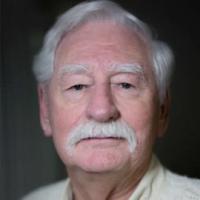
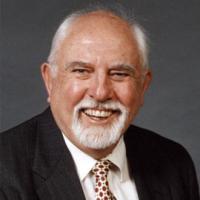
Bill Blevin

AM FAA FTSE
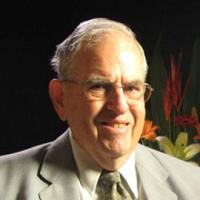
William Blevin
Image Description
Dr Blevin has made outstanding contributions to precision metrology in the fields of optical radiometry and photometry. His research has greatly increased the accuracy attainable in measurements of radiant power. In realizing Australia's photometric units he has demonstrated major advantages in using detector-based radiometric techniques instead of the traditional primary standard of light. As a result the unit of luminous intensity, the candela, which is one of the seven SI base units, has been radically redefined and related numerically to the watt. Sixteen national standards laboratories, including all the major ones, are now realizing the candela according to its new definition.

Expertise type

  • Applied Physics
  • Metrology
  • Photometry
  • Physics

Please contact fellowship@science.org.au to request any updates to the data.

Professor

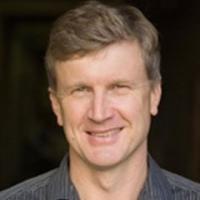
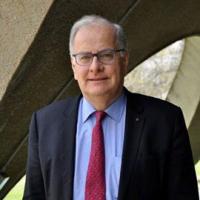
Bob Blanden

FAA

Bob Blanden
Image Description
Dr. Blanden is internationally recognised for his contributions to our knowledge of the immune processes which occur in resistance to infectious agents and in recovery from infectious diseases. Although he has shown the importance of cell-mediated immune responses in a number of systems, it is his work, during the last 8 years, on ectromelia infection of mice which represents his major contribution. This constitutes the most complete documentation of the role of cell­mediated immunity during infection by a natural pathogen. He was a pioneer in the development of a cytotoxic assay for the analysis of the kinetics and specificity of the T lymphocyte response during the course of the infection. With others, he was responsible for demonstrating that genes in the H-2K and H-2D regions of the major histocompatibility complex of the mouse determine whether or not interaction between effector cells and target cells can occur both in vitro and in vivo. These observations have opened up a new area of investigation in immunology. His use of H-2 mutant mice, in defining the specificity of the interaction, has been particularly elegant. In addition to his experimental findings he has also contributed significantly to theoretical considerations in cell-cell interactions in this system.

Expertise type

  • Antibodies
  • Genetics
  • Immunology
  • Medical Sciences

Please contact fellowship@science.org.au to request any updates to the data.

Professor

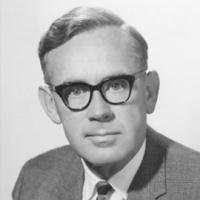
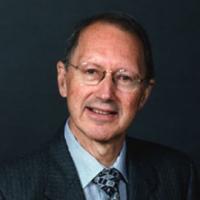
Joss Bland-Hawthorn

FAA

Joss Bland-Hawthorn
Image Description
Joss Bland-Hawthorn has the rare distinction of having made major contributions both to experimental physics (photonics and astronomical instrumentation) and to astrophysics. In particular, he pioneered the field of astrophotonics, developing key devices such as the photonic lantern, OH-suppression fibres, hexabundles, and the photonic integrated multimode microspectrograph – these devices are revolutionising astronomical instrumentation, and the microspectrograph has important applications across the applied sciences. His broad contributions to astrophysics include the creation, with Ken Freeman, of the fields of galactic archaeology and near-field cosmology, recovering the formation history of the Galaxy from stellar motions and chemical abundances.

Expertise type

  • Astronomy
  • Optics
  • Photonics
  • Physics

Please contact fellowship@science.org.au to request any updates to the data.

Professor

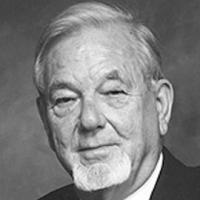
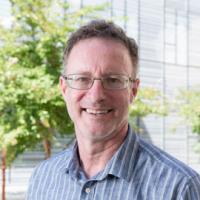
Charles Birch

AM FAA

Charles Birch
Image Description
Dr. L. C. Birch is internationally known for his research in Population Ecology and Physiological Ecology of Animals, especially insects, and more recently he has worked on ecological aspects of Population Genetics. In these fields he has published, or has approaching publication, about forty papers, and one or two others of a philosophical character. With H.G. Andrewartha, he is the author of a book, ''The Distribution and Abundance of Animals"", University of Chicago Press, pp.782, 1954; Dr. Birch wrote about half the book. Besides his Readership in Zoology at the University of Sydney, Dr. Birch has held the following temporary positions: Research Fellowships and Scholarships at the Universities of Oxford, Chicago and Columbia, and has been a visiting Professor at the Universities of Sao Paulo (Brazil) and Minnesota.

Please contact fellowship@science.org.au to request any updates to the data.

Professor

Arthur Birch

AC FAA FRS

Arthur Birch
Image Description
Known for his work on the structure of metal-ammonia solutions and their reducing activities. He has introduced a method, now known as the "Birch reduction", which permits the easy preparation of dihydrobenzene derivatives and which has been applied in particular to the first total synthesis of a compound with androgenic activity. He is also known for his work on the structures and biogeneses of natural products, including terpenoids and phenols.

Expertise type

  • Organic Chemistry
  • Chemistry

Please contact fellowship@science.org.au to request any updates to the data.

Professor

Bob Bilger

FAA FTSE

Bob Bilger
Image Description
Professor Bilger has made important contributions to the study of turbulent reacting flows. Turbulent reacting flows are a generic class of scientific problems that are of classical intractability and are important in engines, furnaces, fires, explosions and in the environment. His contributions may be grouped into four research themes: mixing in variable density flows; turbulence-chemistry interactions; the development of conserved scalar theory; and conditional moment closure modelling. Professor Bilger's theoretical contributions have been internationally recognised and are based on innovative experimentation. They have given rise to novel approaches to mathematical modelling of combustion systems and their pollutant emissions.

Fields of research

40 ENGINEERING
  • 4017 MECHANICAL ENGINEERING

For full list of research codes, please visit the ARC Website .

Expertise type

  • Mechanical Engineering
  • Turbulant Flow
  • Engineering

Please contact fellowship@science.org.au to request any updates to the data.

Professor

Sam Berkovic

AC PresAA FAHMS FRS

Sam Berkovic
Image Description
Samuel Berkovic has made discoveries about familial forms of epilepsy that have led to a complete overhaul of their clinical management and provided new insights into their underlying biology. His research has established that mutations in single genes encoding neuronal membrane channels cause epileptic seizures. Professor Berkovic and his collaborators have discovered eight of the twelve genes presently known for which mutations are associated with idiopathic epilepsies. These discoveries have revolutionised basic scientific research into epilepsy. Professor Berkovic’s research has been recognised over the past ten years by numerous awards and prizes within Australia and internationally.

Fields of research

32 BIOMEDICAL AND CLINICAL SCIENCES
  • 3209 NEUROSCIENCES
    • 320905 Neurology and Neuromuscular Diseases

For full list of research codes, please visit the ARC Website .

Expertise type

  • Clinical
  • Epilepsy
  • Genetics
  • Medical Sciences

Please contact fellowship@science.org.au to request any updates to the data.

Professor

Max Bennett

AO FAA

Max Bennett
Image Description
Distinguished for his contributions to neurobiology. After graduating in Electrical Engineering he became involved in a study of synaptic transmission at autonomic nerve-smooth muscle junctions which culminated in an authoritative monograph written in 1969 at the invitation of the British Physiological Society. Subsequently, at the University of Sydney, he has been involved in analysing the factors which regulate the release of noradrenaline and acetylcholine from nerve terminals, and the mechanisms which determine the sites at which nerve terminals form synapses, both during development and after nerve lesions. His vigorous approach, technical expertise, and clarity in expressing and interpreting his observations have attracted a number of high quality graduate students, and in all aspects of his research he continues to contribute fundamental and very significant observations which undoubtedly assist the clarification of our understanding of synaptic mechanisms.

Expertise type

  • Medical Sciences
  • Neuroscience
  • Physiology
  • Synapses

Please contact fellowship@science.org.au to request any updates to the data.

Professor

Kathy Belov

AO FAA

Kathy Belov
Image Description
Kathy Belov is acknowledged for her ground-breaking work using genetics and genomics to trace the evolution of mammalian immunity to overturn the paradigm that marsupials and monotremes have primitive immune systems. She has shown that lineage specific evolutionary innovations provide marsupials and monotremes with additional defence mechanisms and that these offer exciting drug leads for humans and other animals. After determining the role that the Major Histocompatibility Complex plays in the spread of Tasmanian devil facial tumour disease, Belov led the genetic management of the recovery program to successfully increase immune fitness of wild populations through genetic rescue. She continues to work with government agencies to boost the immunogenetic resilience of native species threatened by disease.

Fields of research

31 BIOLOGICAL SCIENCES
  • 3105 GENETICS
    • 310507 Genetic Immunology
    • 310509 Genomics
    • 60411 Population, Ecological and Evolutionary Genetics
  • 3109 ZOOLOGY
    • 310905 Animal Immunology
32 BIOMEDICAL AND CLINICAL SCIENCES
  • 3204 IMMUNOLOGY
    • 320406 Immunogenetics (incl. Genetic Immunology)
41 ENVIRONMENTAL SCIENCES
  • 4104 ENVIRONMENTAL SCIENCE AND MANAGEMENT
    • 410401 Conservation and biodiversity

For full list of research codes, please visit the ARC Website .

Expertise type

  • Marsupials
  • Antibacterial Discovery
  • Disease Resistance
  • Immunology
  • Biology
  • Biodiversity
  • Conservation Biology
  • Animal Biology
  • Disease Gene Identification
  • DNA Sequencing
  • Infectious Diseases
  • Genomics
  • Antibodies
  • Cancer Immunology
  • Mammals

Please contact fellowship@science.org.au to request any updates to the data.

Professor

Tim Bedding

FAA

Tim Bedding
Image Description
Tim Bedding has played a leading role in establishing the field of asteroseismology, the study of stellar oscillations. This involves using the natural oscillation frequencies of stars to probe their interiors. He pioneered the detection of stellar oscillations with ground-based telescopes, including using the Anglo-Australian Telescope to make the first clear detections of oscillations in Sun-like stars. Bedding led the application of asteroseismology to red giant stars using NASA's Kepler Mission. In particular, he showed how to use a specific class of oscillations (so-called gravity modes) to reveal which red giants have started to burn helium deep within their cores.

Fields of research

51 PHYSICAL SCIENCES
  • 5101 ASTRONOMICAL SCIENCES
    • 510109 Stellar Astronomy and Planetary Systems

For full list of research codes, please visit the ARC Website .

Expertise type

  • Astronomy
  • Astrophysics
  • Stellar Evolution
  • Physics

Please contact fellowship@science.org.au to request any updates to the data.