
Professor

Anne Dell

CBE FAA FRS

Anne Dell
Image Description
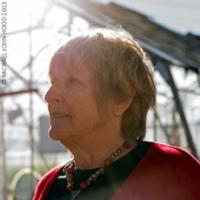
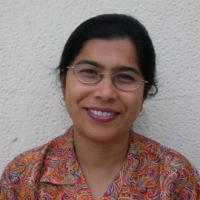
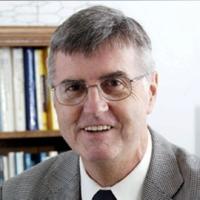
Anne Dell is a biochemist and pioneer in the field of glycobiology and seeks to understand the role played by sugars in human health and disease. Dell was amongst the first investigators worldwide to successfully apply advanced mass spectrometric techniques to carbohydrate containing biopolymers. Her laboratory continues at the leading edge of biological mass spectrometry for solving structural problems in glycobiology and facilitating the development of new drugs and vaccines. Her research has been recognised by election to the Fellowship of the Royal Society in 2002 and the Academy of Medical Sciences in2008. She was appointed a Commander of the Order of the British Empire (CBE) in 2009 for services to science.

Fields of research

31 BIOLOGICAL SCIENCES
  • 3101 BIOCHEMISTRY AND CELL BIOLOGY
    • 310101 Analytical Biochemistry
    • 310105 Cellular Interactions (incl. Adhesion, Matrix, Cell Wall)
    • 310109 Proteomics and Intermolecular Interactions (excl. Medical Proteomics)
    • 310199 Biochemistry and Cell Biology not elsewhere classified

For full list of research codes, please visit the ARC Website .

Expertise type

  • Biotechnology
  • Biological Chemistry
  • Biology
  • Bacterial Pathogens
  • T Lymphocytes
  • Cancer Immunotherapy
  • Carbohydrates
  • Female Reproductive Tract
  • Glycosides
  • Immune-oncology
  • Protein Structure-Function Relationships

Please contact fellowship@science.org.au to request any updates to the data.

Professor

Lei Jiang

FAA

Lei Jiang
Image Description
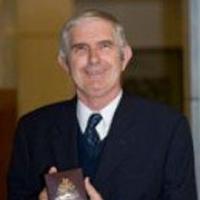
Learning from nature, Lei Jiang established the basic principles of superwettability for interfacial materials systems. He determined that: static wetting is determined by the cooperative effect of nanostructure and surface energy; the transition point of the superlyophilicity and superlyophobicity on the nanostructure is the lyophilicity-lyophobicity limitation; and that the direction of liquid transport is regulated by chemical composition gradient, rough gradient, and curvature gradient, among many other factors. More than ten superwetting interfacial material systems have been applied to various fields including energy, health, resources, the environment, material and chemical industry. In 2021, superwettability technology was selected by the International Union of Pure and Applied Chemistry (IUPAC) as one of the top ten emerging technologies in chemistry, recognising its potential to foster the well-being of society and the sustainability of the Planet.

Expertise type

  • Materials Science
  • Chemistry
  • Nanomaterials

Please contact fellowship@science.org.au to request any updates to the data.

Emeritus Professor

Eleanor Dodson

FAA FRS

Eleanor Dodson
Image Description
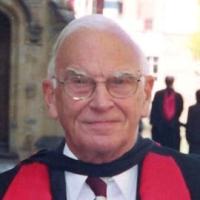
Eleanor Dodson is a computational biologist who specialises in the investigation of protein structures using X-ray crystallography. Known as a great teacher and influencer in the field of protein crystallography, Dodson has made major contributions to both theory and practice. Her work to develop computational standard analyses for crystallography methods has brought the understanding of large molecule structures into the public realm, revolutionising science and medicine. She is one of the lead scientists of the CCP4 program suite. Freely available throughout the world, this software has had enormous global impact, simplifying and standardising the experimental determination of protein structures for academic and commercial users.

Fields of research

31 BIOLOGICAL SCIENCES
  • 3101 BIOCHEMISTRY AND CELL BIOLOGY

For full list of research codes, please visit the ARC Website .

Expertise type

  • Structural Biology
  • X-ray Crystallography
  • Chemistry

Please contact fellowship@science.org.au to request any updates to the data.

Professor

Jane Langdale

CBE FAA FRS

Jane Langdale
Image Description
Jane Langdale is highly regarded internationally as an outstanding plant developmental geneticist and leader in this field. Her contributions to plant sciences have transformed our understanding of how plants initiate leaves, how leaves adapted to major evolutionary transitions and how those changes affect photosynthesis in land plants. She has elucidated mechanisms operating from organ inception and specification at the shoot apex, through patterning of distinct cell-types, to chloroplast biogenesis. Importantly, her research has been carried out in a comparative framework and has thus advanced our understanding of leaf development, not just in model flowering plant species but in species from all the major land plant lineages. Langdale has collaborations with Australian research groups in CISRO and the ANU and is a champion for diversity and mentoring the next generation of scientists.

Fields of research

31 BIOLOGICAL SCIENCES
  • 3108 PLANT BIOLOGY
    • 310803 Plant Cell and Molecular Biology
    • 310804 Plant Developmental and Reproductive Biology

For full list of research codes, please visit the ARC Website .

Expertise type

  • Morphogenesis
  • Molecular Biology
  • Developmental Biology
  • Gene Expression
  • Land Plants
  • Plant Synthetic Biology
  • Biology
  • Gene Regulation
  • Genetics
  • Genomics
  • Plant Biology
  • Plant Development

Please contact fellowship@science.org.au to request any updates to the data.

Emeritus Professor

Erwin Neher

FAA Nobel Laureate

Erwin Neher
Image Description
Erwin Neher is a world-renowned biophysicist specializing in the field of cell physiology. He is internationally known for his ground-breaking development of the patch clamp technique and discoveries concerning the function of single ion channels in living cells. Using this technique he was able to take ion channels from a physiological concept to the reality of biological macromolecules. His contributions to studies of ion channels have revolutionised the ion channel research field. For his outstanding contributions, he was awarded the Nobel Prize in Physiology or Medicine in 1991, along with Bert Sakmann, Erwin Neher has collaborated with Australian scientists over many years and generously supported and promoted their research in biophysics and physiology of ion channels.

Fields of research

32 BIOMEDICAL AND CLINICAL SCIENCES
  • 3209 NEUROSCIENCES

For full list of research codes, please visit the ARC Website .

Expertise type

  • Biophysics
  • Medical Sciences
  • Electrophysiology

Please contact fellowship@science.org.au to request any updates to the data.

Professor

Krzysztof Matyjaszewski

FAA

Krzysztof Matyjaszewski
Image Description
Krzysztof Matyjaszewski has made fundamental contributions that have changed the face of free radical chemistry and polymer science. He invented a robust and versatile copper-catalysed atom transfer radical polymerisation (ATRP), which is widely applied in academia and industry. He has co-authored 20 books, over 1000 peer-reviewed papers and is among the 10 most-cited chemists during the past decade. His ATRP technology has been licensed 16 times and various specialty polymers, copolymers, bioconjugates, organic/inorganic hybrids and other advanced materials have been commercially produced since 2004 in the USA, Japan and Europe.

Expertise type

  • Chemistry
  • Polymer Chemistry
  • Biomaterials
  • Macromolecular Engineering
  • Catalysis
  • Free Radical Polymerization
  • Polymers for Energy
  • Living Radical Polymerisation
  • Green Chemistry
  • Polymers

Please contact fellowship@science.org.au to request any updates to the data.

Professor

Akshay Venkatesh

FAA FRS

Akshay Venkatesh
Image Description
Akshay Venkatesh is a world-leading mathematician who has made fundamental contributions to various fields of mathematics, working at the intersection of analytic number theory, homogeneous dynamics, arithmetic geometry and representation theory. Akshay’s outstanding contributions have been recognised internationally, in particular by the award of a 2018 Fields Medal. He has solved many longstanding problems by combining methods from seemingly unrelated areas, presented novel viewpoints on classical problems, and produced strikingly far-reaching conjectures. He shows a fearless willingness to understand fundamental issues, no matter how long a journey is involved.

Expertise type

  • Mathematics
  • Pure Mathematics
  • Number Theory

Please contact fellowship@science.org.au to request any updates to the data.

Professor

Ruth Williams

FAA

Ruth Williams
Image Description
Ruth Williams is a distinguished mathematician specialising in probability theory. Her seminal research contributions have had a deep and lasting impact on heavy traffic analysis within the field of stochastic networks, which describe real-world systems running at near maximum capacity. These arise in a variety of applications in science and engineering, including in systems biology, high-tech manufacturing, computer systems, telecommunications, transportation, and business service systems. In her PhD thesis and in later work on reflecting Brownian motions in polyhedral domains, Williams developed theory and principles enabling the identification and verification of important approximations for multiclass queueing networks. This research also provided the foundations for subsequent significant research by Williams and others.

Expertise type

  • Mathematics
  • Probability
  • Heavy Traffic
  • Operations Research
  • Probability Theory
  • Queueing Theory
  • Reflected Diffusions
  • Stochastic Networks
  • Stochastic Processes

Please contact fellowship@science.org.au to request any updates to the data.

Professor

David Adams

FAA FAHMS

David Adams
Image Description
Professor David Adams is internationally recognised as a leader in membrane physiology and neuroscience research, with a focus on the function and modulation of membrane receptors and ion channels, primarily through molecular biology and electrophysiological recording techniques. Over the past 25 years, Professor Adams has characterised numerous peptides, particularly conotoxins derived from the venom of cone snails, as tools for studying ion channel structure and function, as well as potential therapeutics for treating chronic neuropathic and visceral pain. Professor Adams’s discovery of analgesic conotoxins that target G protein-coupled receptors, which in turn modulate the function of voltage-gated calcium and potassium channels, offers a promising approach for the development of non-opioid drugs for pain treatment.

Fields of research

31 BIOLOGICAL SCIENCES
  • 3101 BIOCHEMISTRY AND CELL BIOLOGY
    • 310110 Receptors and Membrane Biology
    • 310111 Signal Transduction
  • 3109 ZOOLOGY
    • 310909 Animal Physiology - Cell
34 CHEMICAL SCIENCES
  • 3404 MEDICINAL AND BIOMOLECULAR CHEMISTRY
    • 340401 Biologically Active Molecules
    • 340407 Proteins and Peptides

For full list of research codes, please visit the ARC Website .

Expertise type

  • Neuropharmacology
  • Neuroscience
  • Electrophysiology
  • Neurophysiology
  • Biophysics
  • Protein Structure-Function Relationships
  • Physiology
  • Ion Channels
  • Pain Neurobiology
  • Pain Neurobiology
  • Biology
  • Pharmacology
  • Brain and Mind

Please contact fellowship@science.org.au to request any updates to the data.

Associate Professor

Andrew Nash

FAA FTSE

Andrew Nash
Image Description
Following an eight-year academic career at the University of Melbourne, Dr Nash transitioned to industry R&D, commencing at AMRAD in 1996. He has spent 28 years in various research and executive leadership positions and was most recently Chief Scientific Officer and Head of Research at CSL. In this role he provided overarching scientific leadership and was directly responsible for CSL’s global research activity. Throughout his career Dr Nash has championed the translation of Australian biomedical research outcomes into new therapies for unmet medical needs, led multiple projects that have transitioned into clinical programs, and contributed significantly to the development of an Australian workforce and the supporting infrastructure that is prerequisite for a successful Australian-based biopharmaceutical sector. He currently serves as a Director of the Burnet Institute, Brandon Biocatalyst and Denteric.

Fields of research

31 BIOLOGICAL SCIENCES
  • 3105 GENETICS
    • 310507 Genetic Immunology
32 BIOMEDICAL AND CLINICAL SCIENCES
  • 3206 MEDICAL BIOTECHNOLOGY
34 CHEMICAL SCIENCES
  • 3404 MEDICINAL AND BIOMOLECULAR CHEMISTRY
    • 340406 Molecular Medicine

For full list of research codes, please visit the ARC Website .

Expertise type

  • Antibodies
  • Immunology
  • Biotechnology
  • Drug Discovery
  • Cytokines
  • Research Commercialisation
  • Genetic Basis of Disease
  • Autoimmunity
  • Biology
  • Post-research phase biological drug development

Please contact fellowship@science.org.au to request any updates to the data.