


Professor

Bill Heath

FAA

Bill Heath
Image Description
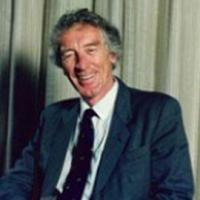
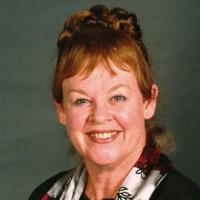
Professor Heath has uncovered basic rules on how an immune response to pathogens is initiated. He studied interactions between dendritic cells, which collect, process and present antigens, and T cells which respond and destroy infected cells. He found that particular types of dendritic cells are specialised for activating killer T cells, but these dendritic cells must first be “licensed” or activated by helper T cells. He has also shown how the balance is changed in a non-infected individual, so the same system avoids responding to the bodies’ own tissues.

Fields of research

32 BIOMEDICAL AND CLINICAL SCIENCES
  • 3204 IMMUNOLOGY

For full list of research codes, please visit the ARC Website .

Expertise type

  • Immunology
  • Medical Sciences
  • Microbiology
  • T Cells

Please contact fellowship@science.org.au to request any updates to the data.

Professor

Tom Healy

AO FAA FTSE

Tom Healy
Image Description
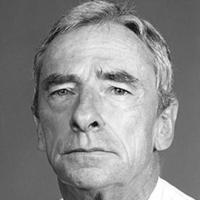
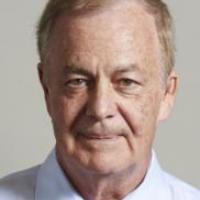
Professor T. W. Healy is distinguished for his contribution in the fields of surface and colloid chemistry. He has published extensive definitive experimental information concerning the adsorption of metal ions at the oxide solution interface and for the charge, potential characteristics and ion distribution at surfaces in aqueous solutions for a variety of circumstances. This work in conjunction with his theoretical studies has considerably extended our knowledge of the electrical double layer at interfaces. Professor Healy's companion studies on the nature of adsorbed water and his more recent electro­chemical studies on zinc and other sulphides are an important contribution to our understanding of wettability and flotation. Although Professor Healy's studies have been carried out using a variety of adsorbents and adsorbates they have an impressive scientific unity; they also constitute a major contribution to the understanding of important industrial processes involving solid suspensions.

Expertise type

  • Chemistry
  • Colloids
  • Nanotechnology
  • Physical Chemistry

Please contact fellowship@science.org.au to request any updates to the data.

Dr

Hal Hatch

AM FAA FRS

Hal Hatch
Image Description
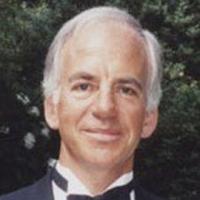
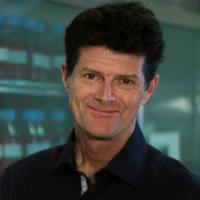
Dr. Hatch is distinguished for his contributions to the pathway of carbon dioxide fixation in plants. His studies have established that in several species of tropical plants the metabolic steps leading to photosynthetic carbon dioxide assimilation differ in a major way from those previously thought to be universal in nature. The unique reactions of this modified process serve to fix carbon dioxide into c4-dicarboxylic acids, which then act to transport carbon dioxide to the site of operation of the Calvin cycle. These investigations have been the stimulus for many studies which are leading to an understanding of the unique physiological and ecological features of plants with the c4-pathway of photosynthesis.

Expertise type

  • Biochemistry
  • Biology
  • Photosynthesis
  • Plant Biology

Please contact fellowship@science.org.au to request any updates to the data.

Professor

Mark Harrison

FAA

Mark Harrison
Image Description
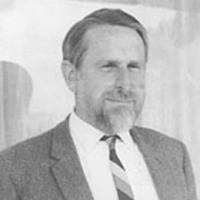
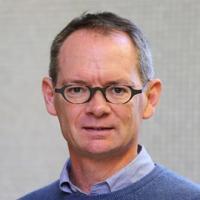
Professor Harrison is a pioneer in the field of thermochronometry and its application to important questions of Earth history. His seminal contributions include: development of analytical methods and interpretive models that reveal continuous thermal and tectonic histories from geologic materials, leading a paradigm shift in our view of the evolution of the Himalayan mountain range, and making breakthrough observations of the earliest phase of Earth history that challenge longstanding conventional wisdom. In the course of his career he has mentored many promising young scientists, influenced national geoscience policy, and made his unique analytical facilities available to hundreds of external users.

Expertise type

  • Earth History
  • Earth Sciences
  • Geology
  • Thermochronometry

Please contact fellowship@science.org.au to request any updates to the data.

Professor

Tony Guttmann

FAA FTSE

Tony Guttmann
Image Description
Professor Guttmann is widely recognised internationally for his outstanding contributions to Computational Applied Mathematics. He is a major authority on the generation and analysis of power series expansions with applications in many areas of Science including statistical mechanics, enumerative combinatorics, fluid mechanics and polymer chemistry. He has developed new and irmovative algorithms and methods for the generation and analysis of series expansions that are now recognised as the 'industry standard'. He has recently made a major contribution to the study of the two-dimensional Ising model susceptibility in which the scaling structure has for the first time been convincingly revealed.

Expertise type

  • Combinatorics
  • Mathematics
  • Statistical Mechanics
  • Statistics

Please contact fellowship@science.org.au to request any updates to the data.

Professor

Bert Green

FAA

Bert Green
Image Description
Distinguished for his original contributions to the kinetic and quantum theory of liquids, electrodynamics, nuclear field theory and the theory of cosmic ray showers.

Expertise type

  • Mathematical Physics
  • Physics
  • Theoretical Physics

Please contact fellowship@science.org.au to request any updates to the data.

Professor

Jenny Graves

AC FAA

Jenny Graves
Image Description
Professor Graves has made seminal contributions to the understanding of mammalian genome organisation and evolution, exploiting the genetic diversity of Australia's unique mammals as a source of genetic variation to study highly conserved genetic structures and processes. She has used this strategy particularly to shed light on the organisation, function and evolution of mammalian genomes, and is particularly well known for her theories of the origin and evolution of human sex chromosomes and sex determining genes. In addition, she is well known for her classic contributions to our understanding of the molecular mechanism of X chromosome inactivation and the control of DNA synthesis in mammalian cells.

Fields of research

31 BIOLOGICAL SCIENCES
  • 3105 GENETICS
    • 310503 Developmental Genetics (incl. Sex Determination)
    • 310509 Genomics

For full list of research codes, please visit the ARC Website .

Expertise type

  • Animal Biology
  • Biology
  • Genomics
  • Mammalian Genetics

Please contact fellowship@science.org.au to request any updates to the data.

Professor

Bob Graham

AO FAA FAHMS

Bob Graham
Image Description
Professor Graham has been a pioneer in molecular cardiology through development of novel biochemical approaches and molecular strategies which have provided insights about adrenergic system function. His work on the action of prazosin in hypertension led to elucidation of the structure of a-adrenoceptors, the discovery of several subtypes, their coupled signal transduction pathways and some of their cardiovascular functions. This has influenced concepts of receptor activation theory and provided new approaches for drug design. Other insights have come from his work on regulation by the ANF gene. Overall, he has an outstanding capacity to integrate molecular biology and clinical paradigms.

Fields of research

32 BIOMEDICAL AND CLINICAL SCIENCES
  • 3201 CARDIOVASCULAR MEDICINE AND HAEMATOLOGY
    • 320101 Cardiology (incl. Cardiovascular Diseases)

For full list of research codes, please visit the ARC Website .

Expertise type

  • Cardiovascular Disease
  • Heart Disease
  • Hypertension
  • Medical Sciences

Please contact fellowship@science.org.au to request any updates to the data.

Professor

Chris Goodnow

FAA FRS

Chris Goodnow
Image Description
Professor Goodnow has pioneered the use of mouse molecular genetics for studying the mechanisms of immunological tolerance to self antigens. He devised a novel double-transgenic mouse strategy that revolutionised the field, confirmed the existence of B and T cell clonal energy, and revealed multiple processes for B cell and T cell clonal deletion in vivo. His work changed the conceptual framework of tolerance by showing that it is acquired through a series of regulatory checkpoints at many steps in lymphocyte maturation. The elucidation of these 'peripheral tolerance' checkpoints acting on mature and already-activated lymphocytes has fostered practical efforts to induce or restore tolerance in adults during transplantation and autoimmunity.

Expertise type

  • Genomics
  • Immunology
  • Medical Sciences
  • Phenomics

Please contact fellowship@science.org.au to request any updates to the data.

Professor

Justin Gooding

FAA FTSE FAHMS

Justin Gooding
Image Description
Justin Gooding uses electrochemistry, synthetic chemistry, interfacial physical chemistry, electron transfer theory, protein biochemistry, and cytochemistry, in order to modify surfaces at the molecular level to enable them to specifically recognise biochemical molecules and to transduce that biochemical information to the end user directly within biological fluids. He combines this experience in fundamental bioelectronics with chemometrics to fabricate practical biosensors. His outstanding achievements include the molecular wiring of the enzyme glucose oxidase (a diabetes monitor), molecular wiring of the redox protein cyctochrome-c to silicon, a peptide electrode array to detect bioactive metals, ‘DNA electrodes’, and porous photonic silicon with immobilised peptides able to detect protease activity – aiming for an infection-sensing chip.

Fields of research

34 CHEMICAL SCIENCES
  • 3406 PHYSICAL CHEMISTRY (INCL. STRUCTURAL)

For full list of research codes, please visit the ARC Website .

Expertise type

  • Biochemistry
  • Chemistry
  • Electrochemistry
  • Nanotechnology

Please contact fellowship@science.org.au to request any updates to the data.