


Professor

Eric Warrant

FAA

Eric Warrant
Image Description
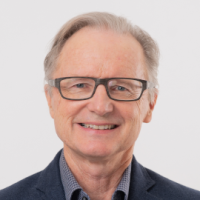
Eric Warrant is a world leader in the fields of neuroethology, comparative vision, and visual ecology, and actively leads and serves these fields on the international stage. He is the world authority on vision and navigation in extremely dim light and has elucidated the optical and neural principles that dramatically improve visual performance in nocturnal and deep-sea animals. These have been applied in novel camera technologies. Warrant has also discovered the sensory mechanisms that enable nocturnal animals to navigate while homing or migrating, including the magnetic and stellar compasses of the iconic and endangered Bogong moth.

Fields of research

31 BIOLOGICAL SCIENCES
  • 3109 ZOOLOGY
    • 310906 Animal Neurobiology
52 PSYCHOLOGY
  • 5204 Cognitive and computational psychology

For full list of research codes, please visit the ARC Website .

Expertise type

  • Animal Biology
  • Brain Function
  • Flying Insects
  • Neurophysiology
  • Biophysics
  • Insects
  • Retinal Photoceptors
  • Animal Behaviour
  • Vision Science
  • Modelling
  • Vision
  • Neurobiology
  • Optics
  • Electrophysiology
  • Behavioural Ecology
  • Ecology
  • Visual Processing
  • Sensation
  • Vertebrate Vision
  • Visual Receptors
  • Biology

Please contact fellowship@science.org.au to request any updates to the data.

Professor

Brian Lawn

FAA

Brian Lawn
Image Description
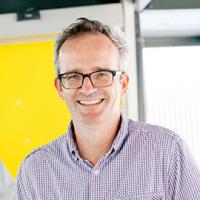
Brian Lawn is arguably the world's leading researcher on brittle fracture. Author of a classic text on the subject (published in 1975, still in print), he has been a pioneer in ceramic science, with a broad reach into biological materials. He is one of the most cited materials scientists. He obtained his degrees in physics at UWA and lectured at UNSW before joining NIST in 1981. In 2001 he was elected to the U.S. National Academy of Engineering. He collaborates extensively with researchers at UWA and Curtin. In 2008 he was awarded an Honorary Doctorate in Engineering by UWA.

Expertise type

  • Engineering

Please contact fellowship@science.org.au to request any updates to the data.

Professor

Matthias Hentze

FAA

Matthias Hentze
Image Description
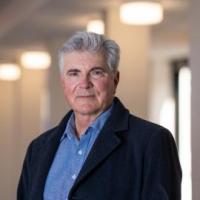
Matthias Hentze is a world leading biomedical researcher and early pioneer of RNA research. His contributions to translational control, including IRE regulation of ferritin mRNAs, are now enshrined in all leading textbooks of biochemistry and molecular cell biology. His recent work, in collaboration with Australian scientists, has led to the discovery of hundreds of new RNA-binding proteins involved in gene regulation. These discoveries foreshadow a new phase in our understanding of genome functions and metabolism, with numerous biological processes affected by genomically transcribed RNAs that control the functions of existing proteins. In 2013, Hentze was appointed Director of the European Molecular Biology Laboratory, one of the premier biology research centres in the world and an official strategic partner of Australian science. Australia was the first EMBL Associate Member state and the laboratories provide important training opportunities for Australian scientists. Hentze has received numerous prestigious research awards, including Germany’s highest research honour, the Gottfried Wilhelm Leibniz Prize (2000), and the Feodor Lynen Medal and Lecture (2015).

Expertise type

  • Medical Sciences

Please contact fellowship@science.org.au to request any updates to the data.

Professor

Richard Ellis

CBE FAA FRS

Richard Ellis
Image Description
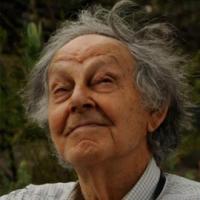
Richard Ellis is a distinguished astronomer who works primarily in observational cosmology, considering the origin and evolution of galaxies, the evolution of largescale structures in the Universe, and the nature and distribution of dark matter. His landmark discoveries have opened-up the distant Universe to direct observation, often with instruments he designed or proposed. Australian astronomy has benefitted greatly from his intellectual leadership and generous support. Ellis conceived the award-winning ‘Two degree Field’ facility at the Anglo-Australian Telescope, which has produced some of the highest cited papers in cosmology, and continues to advance Australian astronomy 25 years on. Ellis continues to advocate for new facilities in Australia.

Fields of research

51 PHYSICAL SCIENCES
  • 5101 ASTRONOMICAL SCIENCES
    • 510102 Astronomical instrumentation
    • 510103 Cosmology and Extragalactic Astronomy

For full list of research codes, please visit the ARC Website .

Expertise type

  • Galaxy Evolution
  • Galaxy Formation
  • Cosmology
  • Extragalactic Astronomy
  • Large Scale Structure
  • Astronomical Instrumentation
  • Galaxies
  • Physics
  • Astrophysics

Please contact fellowship@science.org.au to request any updates to the data.

Professor

Jillian Banfield

FAA FRS

Jillian Banfield
Image Description
Jillian Banfield is distinguished for her research on natural nanomaterials, including clays, microbiology and biogeochemical cycling in subsurface environments, bioremediation and the human microbiome. A key component of her microbiological research is the development and application of DNA sequencing-based methods to study organisms in the context of their natural communities. Since 2001, Banfield has been based at the University of California in Berkeley, where she heads their geo-microbiology program. Banfield’s current research spans field sites in Northern California to Australia and from subjects including astrobiology and genomics/geosciences. Banfield was elected to membership of the National Academy of Science, USA (2006) and has received many awards and honours including, the Benjamin Franklin Medal in Earth and Environmental Science (2011).

Expertise type

  • Earth Sciences

Please contact fellowship@science.org.au to request any updates to the data.

Professor

Birger Møller

FAA

Birger Møller
Image Description
Birger Lindberg Moller is Professor of Plant Biochemistry at the University of Copenhagen, Denmark, where he is also director of two world renowned Research Centres of Excellence and of the section for "Plant Pathway Discovery" in the Novo Nordisk Foundation Centre for BioSustainability. He has made seminal contributions to the areas of photosynthesis, bio-active natural products and synthetic biology, for which he has received numerous hounours including Fellowship of all four of the Danish Learned Academies, the pre-eminent Villum Kann Rasmussen Research Prize, and a Knighthood. He is also a ministerial appointee on the European Academies Science Advisory Council. Professor Moller has an extensive engagement with Australian science and has made significant contributions to our research and research administration, including service as Chariman of the Federation Fellowships Selection Committee for the Australian Research Council, hosting numerous Australian researchers, and ongoing research collaborations with four separate Australian institutions under ARC Linkage Projects.

Expertise type

  • Plant Biology
  • Biology

Please contact fellowship@science.org.au to request any updates to the data.

Professor

John Dewey

FAA FRS

John Dewey
Image Description
Following the advent of plate tectonics, of which he was a pioneer, Dewey has been a leader in transforming tectonic geology to its modern form. His research is characterised by imaginative and clever model building constrained by meticulous field observation. His work on mountain belts has showed how their evolution is related to continent­continent and arc-continent collisions. He has made major contributions to understanding both the detailed nature and the timing of those events. As a frequent visitor to Australia during the last twenty years, Dewey has presented many stimulating lectures at conferences and elsewhere, and has been a lively participant in many field excursions.

Expertise type

  • Earth Sciences

Please contact fellowship@science.org.au to request any updates to the data.

Professor

Elizabeth Blackburn

AC FAA FRS DistFRSN Nobel Laureate

Elizabeth Blackburn
Image Description
Through her discoveries of the roles of telomere sequences at the ends of chromosomes, and of telomerase, Elizabeth Blackburn has opened up an extremely important area of molecular biology research. Her laboratory has transformed our understanding of how cells age and die, and she has received the highest accolades for her work and leadership, including the Albert Lasker Award in 2006.

Expertise type

  • Medical Sciences

Please contact fellowship@science.org.au to request any updates to the data.

Professor

Rodney Brooks

FAA FTSE

Rodney Brooks
Image Description
Professor Rodney Brooks is an Australian who heads the prestigious MIT AI Laboratory. Professor Brooks is a pioneer of Robotics and Artificial Intelligence. He is recognised as being one of the top robotics researchers in the world. Professor Brooks has made significant contributions to robotics, in particular he opened up an entirely new area of research, called behaviour based systems. Professor Brooks has spent the last 20 years working in the USA. He has maintained strong links with Australia, by supporting Flinders University alumni; recently he has also conducted cooperative research with Professor Alex Zelinsky of the Australian National University, and has assisted to provide PhD and post-doc opportunities to Australians at MIT.

Expertise type

  • ICT
  • Artificial Intelligence
  • Robotics

Please contact fellowship@science.org.au to request any updates to the data.

Professor Sir

Marc Feldmann

AC FAA FMedSc FRS

Marc Feldmann
Image Description
Professor Marc Feldmann has made a seminal contribution to our understanding of the pathogenesis and treatment of chronic autoimmune and inflammatory disorders. Over the past 20 years his pioneering studies on the role of cytokines like TNF in autoimmunity have led to development of TNF blockade as a novel and effective therapy for patients with resistant rheumatoid and Crohn's disease. His work therefore is a prime example of "translation" of basic science into clinical practice.

Expertise type

  • Medical Sciences

Please contact fellowship@science.org.au to request any updates to the data.