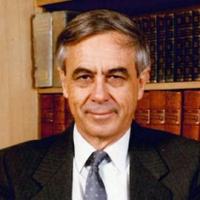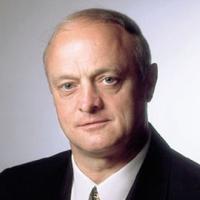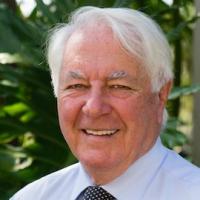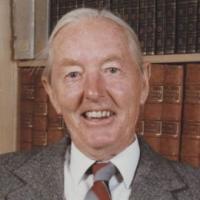

Professor

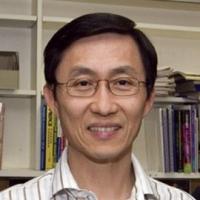
Robert Mahony

FAA FTSE

Robert Mahony
Image Description
Professor Robert Mahony pioneered the application of the principles of symmetry to address practical challenges in systems theory and robotics. Identifying and solving key scientific roadblocks by leveraging the intrinsic geometry and symmetry of the problem domain, Professor Mahony spearheaded the development of advanced algorithms for state estimation and optimisation. These contributions have yielded profound societal impacts. The 'Mahony filter' was crucial to the initial wave of commercial drones and is a design cornerstone of the contemporary multi-billion dollar drone industry, delivering one of the most substantial advances in the design of inertial navigation systems witnessed in half-a-century.

Fields of research

40 ENGINEERING
  • 4001 AEROSPACE ENGINEERING
    • 400103 Aircraft Performance and Flight Control Systems
46 INFORMATION AND COMPUTING SCIENCES
  • 4602 ARTIFICIAL INTELLIGENCE AND IMAGE PROCESSING
    • 460205 Intelligent robotics

For full list of research codes, please visit the ARC Website .

Expertise type

  • Control Systems
  • ICT
  • Computer Vision
  • Autonomous Systems
  • Robotics
  • Control Theory

Please contact fellowship@science.org.au to request any updates to the data.

Professor

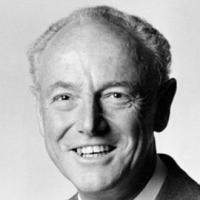
Deli Chen

AO FAA

Deli Chen
Image Description
Professor Deli Chen is an eminent soil scientist and internationally recognised authority on the efficiency of nitrogen fertiliser use and its impact on global food security, the environment and climate change. His novel techniques to measure soil nitrogen transformations have led to increased crop productivity while minimising environmental damage. Professor Chen has developed high efficiency nitrogen fertilisers and formulated strategies to mitigate greenhouse gas emissions from crop and livestock systems. These achievements have transformed agro-environmental sciences and his innovations on nitrogen and agricultural land management have been taken up by industry and governments worldwide.

Fields of research

10 TECHNOLOGY 30 AGRICULTURAL AND VETERINARY SCIENCES
  • 3002 AGRICULTURE, LAND AND FARM MANAGEMENT
  • 3004 CROP AND PASTURE PRODUCTION
    • 300411 Fertilisers (incl. application)
3106 INDUSTRIAL BIOTECHNOLOGY 41 ENVIRONMENTAL SCIENCES
  • 4106 SOIL SCIENCES

For full list of research codes, please visit the ARC Website .

Expertise type

  • Agricultural Science
  • Soil Biology
  • Plant Nutrition
  • Soil Science
  • Biology
  • Water Quality

Please contact fellowship@science.org.au to request any updates to the data.

Professor

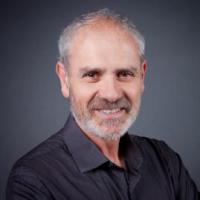
Trevor Ireland

FAA

Trevor Ireland
Image Description
Professor Trevor Ireland is a world leader in geo- and cosmochemistry who developed fundamental infrastructure for isotopic microanalysis that he then used to make breakthrough contributions to understanding the origin and evolution of Earth, Solar System, and other stellar systems. No other contemporary scientist has contributed so broadly and so importantly across such a wide range of fields. Professor Ireland has been the primary driver in developing the second- and third-generation SHRIMP ion microprobes, which are among the most productive instruments in geochronology over many decades, and will likely remain so for the foreseeable future.

Fields of research

37 EARTH SCIENCES
  • 3703 GEOCHEMISTRY
    • 370303 Isotope Geochemistry
  • 3705 GEOLOGY
    • 370502 Geochronology
51 PHYSICAL SCIENCES
  • 5101 ASTRONOMICAL SCIENCES
    • 510107 Planetary Science (excl. Extraterrestrial Geology)

For full list of research codes, please visit the ARC Website .

Expertise type

  • Geology
  • Instrumentation
  • Geochemistry
  • Stable Isotopes
  • Solar System Evolution
  • Planetary Science
  • Geochronology
  • Earth Sciences
  • Mass spectrometry
  • Cosmochemistry

Please contact fellowship@science.org.au to request any updates to the data.

Professor

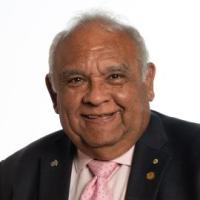
Tamara Davis

AM FAA

Tamara Davis
Image Description
Professor Tamara Davis is Australia's pre-eminent theoretical cosmologist, specialising in bridging the gap between cosmology theory and observations with a focus on dark energy. Throughout her career she has fortified the foundations on which modern cosmology is built. She has led efforts to make robust measurements of the homogeneity-scale of the Universe, invent a new way of measuring galactic distances, put upper-limits on the mass of the neutrino, and measure time-dilation in distant supernovae. Professor Davis has also led the cosmological analyses of several major astronomical surveys, resulting in deeper understanding of the properties of dark energy and constraining potential advanced theories of gravity.

Fields of research

51 PHYSICAL SCIENCES
  • 5101 ASTRONOMICAL SCIENCES

For full list of research codes, please visit the ARC Website .

Expertise type

  • Cosmology
  • Physics
  • Astrophysics
  • Astronomy

Please contact fellowship@science.org.au to request any updates to the data.

Professor

David Huang

FAA FAHMS

David Huang
Image Description
Professor David Huang is a biomedical researcher who made fundamental research discoveries on programmed cell suicide (apoptosis) that laid the foundations for the discovery and development of a novel class of anti-cancer drugs. Professor Huang made critical contributions towards revealing how BCL2, often overactive in blood cancers, and related proteins block cell death thereby uncovering how BCL2 could be targeted in cancer cells. In collaboration with industry partners, this work led to the development of venetoclax to target BCL2. Venetoclax has proven highly effective and is now approved in Australia and other jurisdictions for patients with certain types of leukaemias and lymphomas.

Fields of research

31 BIOLOGICAL SCIENCES
  • 3101 BIOCHEMISTRY AND CELL BIOLOGY
    • 310102 Cell Development, Proliferation and Death

For full list of research codes, please visit the ARC Website .

Expertise type

  • Drug Discovery
  • Molecular Biology
  • Biology
  • Haematology
  • Cell Death
  • Apoptosis
  • Biochemistry
  • Cancer Biology

Please contact fellowship@science.org.au to request any updates to the data.

Professor

Clare Scott

AM FAA FAHMS

Clare Scott
Image Description
Professor Clare Scott, an internationally recognised expert in gynaecological cancer research, is Laboratory Head, Walter and Eliza Hall Institute of Medical Research and Chair of Gynaecological Cancer, University of Melbourne. A clinician-scientist, her research into susceptibility and resistance to precision therapies for rare cancers, particularly rare ovarian cancers, has resulted in pivotal contributions to the development of the landscape-changing, PARP inhibitor treatment. With conspicuous clinical trial leadership and the development of an internationally renowned resource of pre-clinical models, Professor Scott has also developed innovative national infrastructure, enabling access for Australians with rare cancers to expert clinical advice and research.

Fields of research

31 BIOLOGICAL SCIENCES
  • 3105 GENETICS
34 CHEMICAL SCIENCES
  • 3404 MEDICINAL AND BIOMOLECULAR CHEMISTRY
    • 340406 Molecular Medicine

For full list of research codes, please visit the ARC Website .

Expertise type

  • Cancer
  • Medical Sciences
  • Cancer Immunotherapy
  • Biomarkers
  • Chemotherapy Resistance
  • Molecular Biology
  • Cancer Medicine
  • Cancer Therapy
  • Cell Biology
  • Human Cancer Genomics
  • Human Genetics
  • Ovarian Cancer
  • Cancer Biology

Please contact fellowship@science.org.au to request any updates to the data.

Professor

Rajeev Varshney

FAA FRS

Rajeev Varshney
Image Description
Professor Rajeev Varshney has been instrumental in developing and applying large-scale genomic resources in crop improvement. He has decoded the genomes of over a dozen crops, developed diversity, haplotype catalogues and pangenomes, identified genes for numerous agronomic traits, developed over 20 climate-resilient and high-yielding crop varieties, and trained over 450 scientists. Recently, Professor Varshney developed genome assemblies for 15 Australian chickpea varieties and ten Australian varieties of five horticultural crops and generated whole-genome resequencing data for >300 wheat lines for developing the pangenome of Australian wheat, positively impacting broadacre and horticultural crop industries in Australia.

Fields of research

30 AGRICULTURAL AND VETERINARY SCIENCES
  • 3001 AGRICULTURAL BIOTECHNOLOGY
31 BIOLOGICAL SCIENCES
  • 3105 GENETICS
  • 3108 PLANT BIOLOGY

For full list of research codes, please visit the ARC Website .

Expertise type

  • Biotechnology
  • Crop Yields
  • Genomics
  • Agricultural Science
  • Crop Improvement
  • Crop Science
  • Wheat Breeding
  • Drought Resistant Crops
  • Plant Biology
  • Legumes
  • Wheat Genetics
  • Plant Breeding
  • Horticultural crops
  • Capacity Building

Please contact fellowship@science.org.au to request any updates to the data.

Professor

Jessica Purcell

FAA

Jessica Purcell
Image Description
In the 20 years since earning her PhD in pure mathematics, Professor Jessica Purcell has developed an international reputation for her ground-breaking contribution to low-dimensional topology and geometry. She specialises in three-dimensional manifolds, which have important practical applications to fluid dynamics, crystallography and materials science, computer vision, and other fields. Her contributions have been recognised with numerous prestigious awards and invitations to present at high-profile national and international events. Professor Purcell has been involved in significant leadership and mentoring activities and the promotion of science, particularly mathematical sciences, throughout her career. She has strong communication skills and enjoys outreach activities such as speaking about mathematics to high school students.

Expertise type

  • Pure Mathematics
  • Combinatorial Mathematics
  • Mathematics

Please contact fellowship@science.org.au to request any updates to the data.

Professor

Michael Stumpf

FAA

Michael Stumpf
Image Description
Professor Michael Stumpf is internationally recognised for his ground-breaking contributions to the theory of living systems. He has created the mathematical, statistical, and computational foundations that have enabled detailed insights into the intricate molecular processes underlying cellular behaviour. In his research he has identified the fundamental mechanisms by which molecular noise is generated and propagated, and his research has provided key insights into the forces that shape cellular behaviour and dynamics. Professor Stumpf is an inspiring teacher and mentor, and he has created a world-leading research, training, and innovation culture at the interface between the mathematical, physical, and biological sciences.

Fields of research

31 BIOLOGICAL SCIENCES
  • 3101 BIOCHEMISTRY AND CELL BIOLOGY
    • 310113 Synthetic Biology
    • 310114 Systems Biology
5103 CLASSICAL PHYSICS
  • 510304 Thermodynamics and Statistical Physics

For full list of research codes, please visit the ARC Website .

Expertise type

  • Biophysics
  • Cell Biology
  • Biotechnology
  • Stochastic Processes
  • Developmental Biology
  • Systems Biology
  • Synthetic Biology
  • Computational biology

Please contact fellowship@science.org.au to request any updates to the data.

Dr

Marlene Kanga

AO FAA FTSE

Marlene Kanga
Image Description
Dr Marlene Kanga is listed among Australia’s top 10 women engineers. She is an Officer of the Order of Australia “for distinguished service to engineering, as a global leader and role model to women.” As a migrant engineer, she balanced family and career, achieving leadership as National President of Engineers Australia, and as President of the World Federation of Engineering Organizations (2017-19). She now leads innovative companies with global patents, and process safety engineering internationally as Chair, IChemE Safety Centre. Successfully proposing UNESCO’s declaration of 4th March as World Engineering Day, Dr Kanga led the review of the benchmark for international multilateral recognition of engineering education.

Fields of research

34 CHEMICAL SCIENCES
  • 3499 OTHER CHEMICAL SCIENCES
    • 349999 Chemical Sciences not elsewhere classified
85 ENERGY
  • 8505 Renewable Energy

For full list of research codes, please visit the ARC Website .

Expertise type

  • Engineering
  • Chemical Engineering

Please contact fellowship@science.org.au to request any updates to the data.