

Professor

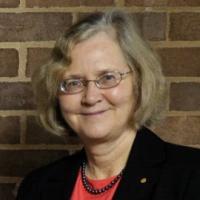
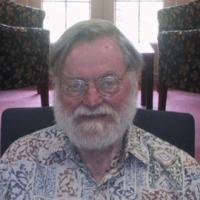
Mathai Varghese

FAA

Mathai Varghese
Image Description
Mathai Varghese is a major contributor to the field of geometric analysis. He is justly famous for several seminal articles, including what is known in the literature as the Mathai-Quillen formalism in topological field theories; L2-invariants for covering spaces; the hyperbolic space and noncommutative geometry model of the fractional quantum Hall effect; projective Atiyah-Singer index theory; twisted K-theory and T-duality in String theory which is popularly known as the ‘Theory of Everything’. In lay-person’s terms, he has proved a number of important results that involve the geometry and topology of manifolds, familiar examples in low dimensions are curves and surfaces.

Fields of research

49 MATHEMATICAL SCIENCES
  • 4902 MATHEMATICAL PHYSICS
    • 490205 Mathematical aspects of quantum and conformal field theory, quantum gravity and
    • 490206 Statistical Mechanics, Physical Combinatorics and Condensed Matter Maths
  • 4904 PURE MATHEMATICS
    • 490402 Algebraic and Differential Geometry
    • 490403 Category Theory, K Theory, Homological Algebra
    • 490408 Operator Algebras and Functional Analysis
    • 490410 Partial Differential Equations

For full list of research codes, please visit the ARC Website .

Expertise type

  • String Theory
  • Differential Geometry
  • Partial Differential Equations
  • Condensed Matter Physics
  • Mathematical Physics
  • Mathematics

Please contact fellowship@science.org.au to request any updates to the data.

Dr

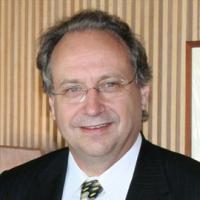
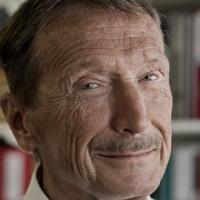
John Passioura

FAA

John Passioura
Image Description
Passioura has made a number of substantial and highly innovative contributions to understanding of the water relations of plants. Developing techniques for collecting the xylem sap of intact transpiring plants, he has shown for the first time that roots sense water and osmotic relationships in the soil and relay such information through their xylem to sites of control of water loss in leaves. Passioura has evaluated the significance of such a signalling system to the overall responses of plants to the water status of soil and plant and the functioning of their cellular processes of growth under various forms of stress.

Expertise type

  • Biology
  • Drought Resistant Crops
  • Plant Biology
  • Plant Physiology
  • Agricultural Science
  • Water
  • Philosophy of Science

Please contact fellowship@science.org.au to request any updates to the data.

Professor

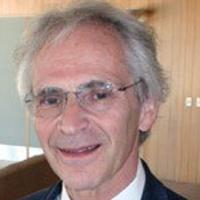
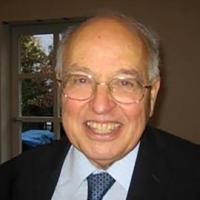
Martin Banwell

AO FAA

Martin Banwell
Image Description
Professor Banwell is distinguished for his diverse and innovative studies in the area of chemical synthesis, as applied to the assembly of numerous structurally challenging and biologically active natural products. Using biosynthetic principles, he achieved the first fully regio- and enantio-controlled total syntheses of the troponoid alkaloids colchicine and imerubrine, and the first synthesis of the marine alkaloid lamellarin K, a lead component in the development of novel anti-cancer agents. The candidate’s creative use of cyclopropane chemistry and his inventions of new methodologies and strategies have been taken up by many groups worldwide. They include the first truly mild procedures for effecting the classical Bischler-Napieralski reaction.

Expertise type

  • Chemistry
  • Natural Products
  • Organic Chemistry
  • Synthesis
  • Chemical Synthesis

Please contact fellowship@science.org.au to request any updates to the data.

Professor

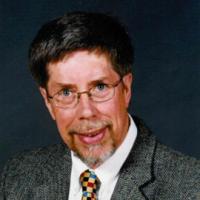
Mark Blows

FAA

Mark Blows
Image Description
Mark Blows has made key contributions to the development of a general framework for understanding the evolution of complex traits. He has overturned conventional wisdom concerning the nature of the two fundamental components of evolutionary change; genetic variation and selection. He has changed entrenched views on the availability of genetic variation, showing how the multivariate distribution of genetic variation generates genetic constraints among multiple traits. The strength of selection on multiple traits was shown by Blows to have been consistently underestimated, and he has gone on to show how selection changes levels of genetic variation, and how genetic constraints bias evolutionary trajectories.

Expertise type

  • Genetics
  • Biology
  • Evolution
  • Mutations
  • Evolutionary Genetics

Please contact fellowship@science.org.au to request any updates to the data.

Professor

Susanne von Caemmerer

FAA FRS

Susanne von Caemmerer
Image Description
Professor von Caemmerer is distinguished for her work on the modelling, including careful experimental verification, of photosynthesis, the carbon acquisition of plants, the biochemistry of carbon dioxide fixation and regulation of CO2 diffusion in leaves. Her work spans most of terrestrial plant photosynthetic metabolism, in three main areas of research: modelling of C3 photosynthesis and stomatal control of intercellular CO2 concentration; physiological and biochemical evaluation of genetically modified C3 plants; physiology and biochemistry of C4 metabolism in leaves and C3 x 001F – C4 intermediate metabolism.

Expertise type

  • Plant Biology
  • Plant Physiology
  • Biology
  • Photosynthesis
  • Biochemistry
  • Carbon Dioxide

Please contact fellowship@science.org.au to request any updates to the data.

Professor

Brian Schmidt

AC FAA FTSE FRS Nobel Laureate

Brian Schmidt
Image Description
Brian Schmidt is an internationally renowned researcher in cosmology and also in the physics of supernovae and gamma ray bursts. In particular, Schmidt’s formation and leadership of High-z Supernova Search Team led to the discovery that the expansion of our universe is accelerating. This discovery completely changed our understanding of the universe. It showed that 70% of the mass of our Universe is in a previously unknown form which is now usually referred to as ‘Dark Energy’.

Fields of research

51 PHYSICAL SCIENCES
  • 5101 ASTRONOMICAL SCIENCES
    • 510103 Cosmology and Extragalactic Astronomy
    • 510109 Stellar Astronomy and Planetary Systems

For full list of research codes, please visit the ARC Website .

Expertise type

  • Physics
  • Dark Energy
  • Astronomy
  • Cosmology
  • Earth Sciences
  • Planetary Science

Please contact fellowship@science.org.au to request any updates to the data.

Professor

David Karoly

FAA

David Karoly
Image Description
David Karoly is internationally recognised as a world leader in climate dynamics and climate change science. In his early research, he carried out pioneering studies that provided the theoretical basis for understanding observed linkages between climate anomalies at large distances across the globe. He identified, for the first time, the links between El Niño–Southern Oscillation events and variations of the Southern Hemisphere circulation. His research has led the development of methods for the detection and attribution of climate change, most recently for extreme climate events. David is also an international leader in the public communication of climate science.

Fields of research

37 EARTH SCIENCES
  • 3701 ATMOSPHERIC SCIENCES
    • 370105 Atmospheric Dynamics
370201 Climate Change Processes 370202 Climatology (excl. Climate Change Processes)

For full list of research codes, please visit the ARC Website .

Expertise type

  • Health Benefits of Nature
  • Palaeoclimatology
  • Sea Level Change
  • Carbon Dioxide
  • Climate
  • Climate Adaptation
  • Climate Change
  • Climate Science
  • Climate Variability
  • Global Atmosphere
  • Spatio-temporal Statistics
  • Earth Sciences

Please contact fellowship@science.org.au to request any updates to the data.

Professor

Steven Chown

FAA

Steven Chown
Image Description
Steven Chown is widely recognised as a pre-eminent authority on the biodiversity and conservation of Antarctic systems. His work has led to major advances in understanding the nature, complexity and diversity of Antarctic life, and the threats posed to it from environmental change. He has revolutionised the way in which information on the environmental responses of animals is understood at global scales, unveiling not only the nature of adaptation, but also the way in which its limits constitute problems for life in changing circumstances. Chown is regarded as a leader in science policy and conservation policy for the Antarctic.

Fields of research

31 BIOLOGICAL SCIENCES
  • 3103 ECOLOGY
    • 310302 Community Ecology
  • 3104 EVOLUTIONARY BIOLOGY
    • 310402 Biogeography and Phylogeography
    • 310410 Phylogeny and Comparative Analysis
  • 3108 PLANT BIOLOGY
  • 3109 ZOOLOGY
    • 310907 Animal Physiological Ecology
  • 606 PHYSIOLOGY
41 ENVIRONMENTAL SCIENCES
  • 4102 ECOLOGICAL APPLICATIONS
    • 410202 Biosecurity science and invasive species ecology
  • 4104 ENVIRONMENTAL SCIENCE AND MANAGEMENT
    • 410401 Conservation and biodiversity
  • 4106 SOIL SCIENCES
    • 410603 Soil Biology
410102 Ecological Impacts of Climate Change

For full list of research codes, please visit the ARC Website .

Expertise type

  • Conservation Science
  • Ecology
  • Biodiversity
  • Invasive Species
  • Global Ecology
  • Insects
  • Science Policy
  • Climate Change
  • Antarctic Science
  • Physiology
  • Ecosystems
  • Environmental Biology
  • Landscape ecology, conservation and biodiversity
  • Phylogeny
  • Biology

Please contact fellowship@science.org.au to request any updates to the data.

Professor

Ian Reid

FAA FTSE

Ian Reid
Image Description
Ian Reid’s work over two decades has broken new ground in computer vision, a field of information engineering that intersects with graphics, machine learning, AI and robotics. His work spans a broad spectrum of the field, with landmark contributions in visual geometry, tracking, novel-view synthesis, visual surveillance, and simultaneous localisation and mapping. His emphasis on real-time processing and systems work means that he is one of few researchers worldwide to be active in both the Computer Vision and Robotics communities, and his work has been instrumental in bringing computer vision into the mainstream of the robotics literature.

Fields of research

46 INFORMATION AND COMPUTING SCIENCES
  • 4602 ARTIFICIAL INTELLIGENCE AND IMAGE PROCESSING
    • 460205 Intelligent robotics
460304 Computer Vision

For full list of research codes, please visit the ARC Website .

Expertise type

  • Computer Vision
  • Machine Learning
  • Robotics
  • ICT

Please contact fellowship@science.org.au to request any updates to the data.

Professor

Bostjan Kobe

FAA

Bostjan Kobe
Image Description
Bostjan Kobe is a structural biologist with a multi-disciplinary approach combining crystallography and electron microscopy with a range of biophysical techniques and functional assays in animal and plant cells. Kobe has made sustained contributions with ground-breaking significance in understanding innate immunity pathways in both plants and mammals and in identifying common models of signalling based on the SCAF (signalling by cooperative assembly formation) mechanism. This work builds on a body of advances relevant to signal transduction, protein regulation, protein: protein interactions, and protein structure method development in structural biology.

Fields of research

31 BIOLOGICAL SCIENCES
  • 3101 BIOCHEMISTRY AND CELL BIOLOGY
    • 310111 Signal Transduction
    • 310112 Structural Biology (incl. Macromolecular Modelling)
  • 3102 BIOINFORMATICS AND COMPUTATIONAL BIOLOGY

For full list of research codes, please visit the ARC Website .

Expertise type

  • X-ray Crystallography
  • Bacterial Pathogenesis
  • Cryo-electron Microscopy
  • Fungal Pathogenesis
  • Innate Immunity
  • Nucleo-cytoplasmic Transport
  • Plant Disease Resistance
  • Plant-microbe Interactions
  • Protein-protein Interactions
  • Viral Pathogenesis
  • Toll-like Receptors
  • Protein Structure
  • Biology

Please contact fellowship@science.org.au to request any updates to the data.