

Dr

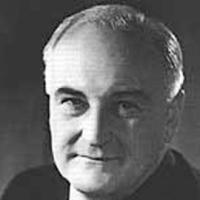
Andreas Strasser

FAA FAHMS

Andreas Strasser
Image Description
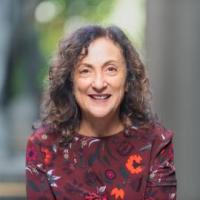
Andreas Strasser is noted for his seminal studies on the control of apoptosis, the cell death program essential for development and homeostasis. By exploiting mouse genetics, he demonstrated that abnormalities in the control of apoptosis can cause autoimmune disease and cancer and render tumor cells refractory to anti-cancer therapy. He established that there are two distinct signalling pathways leading to cell death, one triggered by ligation of cell surface "death receptors" and the other by cytokine deprivation or intra-cellular stress signals. These discoveries have major implications for biological research and suggest novel therapeutic strategies for cancer, autoimmunity and degenerative diseases.

Expertise type

  • Apoptosis
  • Cancer
  • Immunology
  • Medical Sciences

Please contact fellowship@science.org.au to request any updates to the data.

Professor

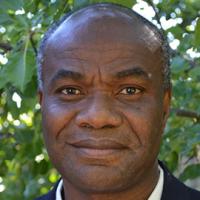
Alan Cowman

AC FAA FAHMS FRS

Alan Cowman
Image Description
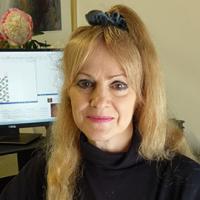
Dr Cowman has made important contributions towards our understanding of Plasrnodium falciparum the causative agent of the most lethal form of human malaria. In particular, he and his colleagues have elucidated the mechanisms of resistance that this parasite uses to evade the most important antimalarial agents used for both control and treatment of this disease. This has implications for the epidemiological analysis of drug resistance genes and the development of novel antimalarials. Additionally, he has made important contributions to our understanding of the structure of the P.falciparum genome and the function of important virulence determinants of this infectious organism.

Expertise type

  • Biochemistry
  • Microbiology
  • Molecular Biology
  • Infectious Diseases
  • Malaria
  • Medical Sciences
  • Resistance to Antimalarials

Please contact fellowship@science.org.au to request any updates to the data.

Professor

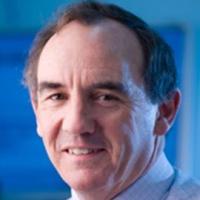
Patrick Holt

FAA

Patrick Holt
Image Description
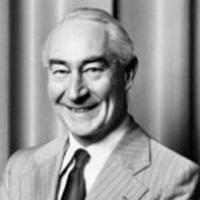
Dr Holt is recognised internationally for his pioneering studies on the identification and characterisation of the cellular interactions responsible for regulating immunity in the airways. He was the first: (a) to discover the respiratory mucosa! dendritic cell network and its 'gatekeeper' function in antigen surveillance and induction of primary immunity in the lung; (b) to delineate an opposing inhibitory role for endogenous tissue macrophages in controlling T cell memory at that site. His work has profound implications for the understanding of susceptibility to asthma, immunisation with and tolerance induction to antigens delivered via the respiratory route and early intervention in allergic diseases.

Expertise type

  • Allergies
  • Immunology
  • Medical Sciences
  • Vaccines

Please contact fellowship@science.org.au to request any updates to the data.

Professor

Kenneth Shortman

FAA

Kenneth Shortman
Image Description
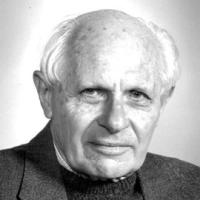
Dr Shortman is distinguished for his work on the differentiation pathways of lymphoid cells, in particular those leading to T lymphocytes and dendritic cells. He was a pioneer in the development of biophysical procedures for the purification of distinct lymphoid cell subsets and was the first investigator to succeed in isolating the earliest thyrnic lymphoid progenitor. A quantitative approach has been the hallmark of his style and he has given us a clear picture of the kinetics of the birth, proliferation, emigration, and death of cells in the thymus.

Expertise type

  • Dendritic Cells
  • Immunology
  • Lymphocytes
  • Medical Sciences

Please contact fellowship@science.org.au to request any updates to the data.

Professor

Philip Kuchel

AM FAA

Philip Kuchel
Image Description
Professor Kuchel is an outstanding theoretical/physical biochemist and NMR spectroscopist. The unifying theme of his work, which is noticeably transdisciplinary, has been the measurement of the time dependence of molecular events in the red blood cell, and relating the experimental observations to molecular mechanisms of enzymes and transport proteins as they operate in situ. Throughout his work, which has continuously broken new ground, he has applied a very high level of mathematical and computational expertise, and has developed several innovative NMR-based experimental procedures for the measurement of physical parameters inside cells.

Fields of research

31 BIOLOGICAL SCIENCES
  • 3101 BIOCHEMISTRY AND CELL BIOLOGY
    • 310199 Biochemistry and Cell Biology not elsewhere classified

For full list of research codes, please visit the ARC Website .

Expertise type

  • Biology
  • Biological Chemistry
  • Biochemistry
  • Cell Membranes
  • Membrane Transport
  • Cellular Metabolism
  • NMR Spectroscopy
  • Mathematical models of metabolism and membrane transport

Please contact fellowship@science.org.au to request any updates to the data.

Professor

Ann Woolcock

AO FAA

Ann Woolcock
Image Description
Ann Woolcock's studies of airway function in asthma have resulted in a widely used method for demonstrating disease in the small airways and for identifying subjects at risk of severe and potentially fatal asthmatic attacks. She has introduced new epidemiological methods for international studies of asthma, has identified the house dust mite as an important allergen and was the first to describe changes in peptidergic nerves in asthma. She has introduced new therapeutic plans for the management of the disease internationally. She has also made important contributions to the understanding of racial differences in lung function and of the effects of smoking.

Expertise type

  • Respiratory Medicine
  • Asthma
  • Medical Sciences

Please contact fellowship@science.org.au to request any updates to the data.

Dr

Ian Mackay

AM FAA

Ian Mackay
Image Description
Ian Reay Mackay is distinguished for contributions to clinical immunology, particularly autoimmune disease. Mackay wrote the first text (1963), with F. M. Burnet, on the nature of autoimmune disease. He identified autoimmunity as one cause of chronic hepatitis (1956) and established diagnostic serological assays, and showed that corticosteroid and immunosuppressive drugs reversed autoimmune inflammation in the liver (1957-1968). Mackay also described primary biliary cirrhosis as an autoimmune disease (1958) and his laboratory identified the autoantigenic mitochondrial polypeptides (1985) and the nuclear gene coding for the major polypeptide (1987), now recognized as part of the pyruvate dehydrogenase complex. His discoveries provided important insights into liver disease and autoimmunity in general.

Expertise type

  • Autoimmune Disease
  • Autoimmunity
  • Immunology
  • Medical Sciences

Please contact fellowship@science.org.au to request any updates to the data.

Professor

Martin Green

AM FAA FTSE FRS

Martin Green
Image Description
Martin Green has made highly significant contributions to the physics and technology of photovoltaic cells and other photoelectric devices. His contributions to physics include the elaboration of metal-insulator-semiconductor tunnelling structures, and the role of Auger recombination in silicon photovoltaic cells. His contributions to technology include several techniques for substantially increasing the efficiency of silicon solar cell, the development of new fabrication techniques for silicon MOSFETs, and a leading role in the development of Schottky charge-coupled devices (CCDs) for infrared detector arrays. He has also developed comprehensive device models.

Expertise type

  • Electrical Engineering
  • Engineering
  • Photovoltaics
  • Semiconductors

Please contact fellowship@science.org.au to request any updates to the data.

Professor

John Chalmers

AC FAA FAHMS

John Chalmers
Image Description
Professor Chalmers is distinguished for his contributions to the elucidation of the nervous mechanisms responsible for control of blood pressure in normal and hypertensive people. He was first to demonstrate the importance of nor-adrenergic nerves within the brain itself in the control of blood pressure and in the pathogenesis of all forms of experimental hypertension. These studies, and his definition of the roles of other central nervous system transmitters, have provided a rational basis for understanding control of blood pressure in man. He has introduced new approaches to treatment involving the use of drugs which act on these central nervous transmitter systems.

Expertise type

  • Clinical Trials
  • Epidemiology
  • Hypertension
  • Medical Sciences

Please contact fellowship@science.org.au to request any updates to the data.

Professor

Roger Tanner

FAA FRS FTSE

Roger Tanner
Image Description
Distinguished for his contributions to applied science and engineering, especially in rheology. In this field Professor Tanner has contributed to the experimental side by developing new methods for measuring basic non-Newtonian fluid parameters, and to theory by developing new models of fluid behaviour starting from the micro-structure of the fluid; recently he has also pioneered the application of finite element computer methods to the analysis of extrusion and related industrial processes. This work has received international recognition through the scientific literature and at major scientific conferences.

Fields of research

40 ENGINEERING
  • 4004 CHEMICAL ENGINEERING
    • 90408 Rheology
  • 4012 FLUID MECHANICS AND THERMAL ENGINEERING
    • 401204 Computational methods in fluid flow, heat and mass transfer (incl. computational
  • 915 INTERDISCIPLINARY ENGINEERING
51 PHYSICAL SCIENCES
  • 5103 CLASSICAL PHYSICS
    • 20303 Fluid Physics

For full list of research codes, please visit the ARC Website .

Expertise type

  • Engineering
  • Mechanical Engineering
  • Polymer Processing
  • Rheology

Please contact fellowship@science.org.au to request any updates to the data.