


Professor

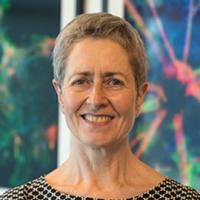
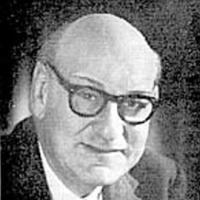
George Rogers

AO FAA

George Rogers
Image Description
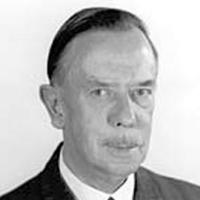
Dr Rogers has long been recognised as an authority on the structure of keratin and was a pioneer in the application of electron microscopy to hair and wool ultrastructure and to that of the hair follicle. He was also the discoverer of the existence of citrulline in keratin proteins. His more recent work has been concerned with the biogenesis of keratins which has lead to the group under his direction making major advances in the field of the molecular biology of keratin production. In this the keratins of feathers have been characterised as an homologous group of proteins, messenger RNA for keratin isolated in pure form and in vitro keratin synthesis has been achieved. By using complementary DNA to the messenger an elegant study of the arrangement and control of keratin genes in the chromosome is possible and is well under way.

Expertise type

  • Animal Biology
  • Biology
  • Cell Biology
  • Wool and Hair Production

Please contact fellowship@science.org.au to request any updates to the data.

Professor

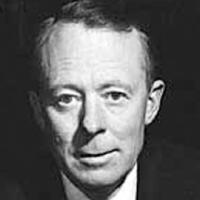
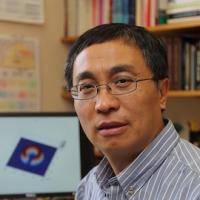
John Patrick

FAA

John Patrick
Image Description
John Patrick is internationally renowned for his theoretical and experimental advances in the regulation of nutrient transport and partitioning in plants. He has developed a novel theoretical framework that identifies control points for the regulation of nutrient transport through, and unloading from, the plant vascular network to fuel organ development. Patrick’s innovative experimental approaches have shown how metabolic demand for nutrients is coordinated with vascular transport by phytohormones, cell turgor and nutrient pool sizes. These discoveries have laid a conceptual framework to further elucidate nutrient transport and partitioning mechanisms and to identify novel targets for improving crop yield.

Fields of research

31 BIOLOGICAL SCIENCES
  • 3108 PLANT BIOLOGY
    • 310803 Plant Cell and Molecular Biology
    • 310804 Plant Developmental and Reproductive Biology
    • 310806 Plant Physiology

For full list of research codes, please visit the ARC Website .

Expertise type

  • Membrane Transport
  • Plant Cell Walls
  • Seed Biology
  • Crop Yields
  • Cell Wall Labyrinth Assembly
  • Fruit Filling
  • Signalling Pathways
  • Fruit Set
  • Phloem Biology
  • Seed Filling
  • Phloem Unloading
  • Seed Set
  • Transfer Cell Biology
  • Biology

Please contact fellowship@science.org.au to request any updates to the data.

Professor

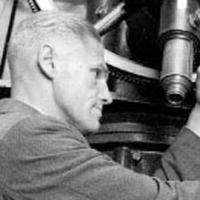
Ian Small

FAA

Ian Small
Image Description
Professor Ian Small has discovered a new mechanism that controls the production of proteins in plant organelles, the primary generators of energy used by all living organisms. He defined an abundant class of nuclear-encoded proteins that bind individual RNA sequences in chloroplasts and mitochondria, regulating whether or not that RNA is translated. This protein-RNA sequence recognition depends on a novel molecular code that Ian and his colleagues discovered. They showed that this code underlies male sterility and the restoration of fertility in plant breeding. The new code shows great practical promise in allowing us to modify specific RNA sequences, and hence specific gene products, in all living species.

Expertise type

  • Biology
  • Plant Biology
  • RNA Genetics

Please contact fellowship@science.org.au to request any updates to the data.

Professor

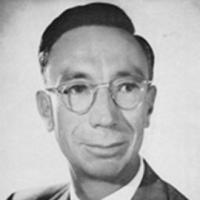
John Bowman

FAA

John Bowman
Image Description
Professor Bowman has made highly original discoveries that have revealed the genetic basis of three fundamental processes in plant development. His contribution began when, as a graduate student, he helped define the action of ABC genes in controlling flower organ identity. He then discovered the roles of three transcription factor families that control the dorso-ventral polarity and outgrowth of leaves, and their evolutionary origin. In two of these families, he reported the founding member. He has recently revealed the action of homeodomain transcription factors in regulating the plant life cycle by switching on development of the. diploid, sporophytic phase.

Expertise type

  • Biology
  • Genetics
  • Plant Biology

Please contact fellowship@science.org.au to request any updates to the data.

Professor

John Evans

FAA

John Evans
Image Description
Professor John Evans is internationally renowned for elucidating the nitrogen economy of photosynthesis. He has shown how photosynthetic adaptations of species to environmental conditions become quantitatively manifest in the allocation of nitrogen to biochemical processes. He has applied these relationships to photosynthetic processes across scales as diverse as chloroplasts, individual leaves and plant canopies. His seminal work on CO2 diffusion within leaves forms a basis for process-based models of plant productivity in relation to global change, and the intellectual framework for molecular research aimed at raising crop yields by engineering photosynthesis.

Expertise type

  • Biology
  • Crop Yields
  • Plant Biology
  • Plant Development

Please contact fellowship@science.org.au to request any updates to the data.

Professor

David Day

FAA

David Day
Image Description
David Day is an acknowledged international leader of research into plant mitochondrial respiration and symbiotic nitrogen fixation. His mitochondrial research, which includes seminal work on the regulation of the alternative oxidase, has provided a model for the integration of carbon metabolism, mitochondrial electron transport and respiratory gene expression in plants. His research on symbiotic membranes in legumes has defined metabolite exchange between nitrogen-fixing bacteria and their plant host. His research is characterised by the integration of physiology, biochemistry and molecular biology that has placed these discoveries in an organism and environment context.

Fields of research

31 BIOLOGICAL SCIENCES
  • 3105 GENETICS

For full list of research codes, please visit the ARC Website .

Expertise type

  • Biochemistry
  • Biology
  • Genomics
  • Plant Biology

Please contact fellowship@science.org.au to request any updates to the data.

Professor

Staffan Kjelleberg

FAA

Staffan Kjelleberg
Image Description
Professor Kjelleberg has made major contributions to microbial ecology. His studies on bacterial adaptive responses and biofilm biology have received strong international recognition and have illuminated the predominant modes of bacterial life in the environment. Moreover, his findings have laid the foundation for interdisciplinary research programs on interkingdom signalling and chemically mediated interactions between bacteria and higher organisms in marine systems, His discoveries of naturally derived antagonists of bacterial cell-cell signalling systems, the means by which bacterial biofilms and protozoans interact, and the mechanisms of biofilm differentiation and dispersal have also greatly contributed to ecological theory and environmental biotechnology.

Fields of research

3107 MICROBIOLOGY
  • 310703 Microbial Ecology

For full list of research codes, please visit the ARC Website .

Expertise type

  • Biofilms
  • Environmental Microbiology
  • Microbiology
  • Biology
  • Host-microbe interactions
  • Microbial biotechnology

Please contact fellowship@science.org.au to request any updates to the data.

Professor

Marilyn Anderson

AO FAA FTSE

Marilyn Anderson
Image Description
Professor Anderson’s main contribution is to understanding the structure and biology of small disulphide bonded peptides of plants such as proteinase inhibitors, defensins and cyclotides. She discovered that proteinase inhibitors, specific for different insect gut enzymes are produced in the female sexual tissues of plants and act to protect the tissues against insect attack. She discovered that these tissues also express defensins which protect them against fungal infections. She carried these discoveries to a practical outcome. She used the genes encoding these peptides to create transgenic plants and demonstrated their enhanced resistance to insect attack and fungal disease in the field.

Expertise type

  • Biology
  • Pathogens
  • Plant Biology
  • Plant Defence Molecules

Please contact fellowship@science.org.au to request any updates to the data.

Professor

Trevor Lithgow

FAA

Trevor Lithgow
Image Description
Professor Lithgow has made major contributions to microbial cell biology and genetics. He is one of Australia’s leading yeast geneticists with a strong record of using yeast as a model to understand complex aspects of cell biology. His work on mitochondrial biogenesis and particularly the protein import pathway into mitochondria places him amongst the top molecular microbiologists internationally. His development and use of bioinformatics has enabled the mechanics of protein transport, particularly the “molecular machines” that drive it, to be characterized in bacteria, Giardia, trypanosomes and other microbes. This research has provided a significant understanding of how molecular machines evolved.

Fields of research

31 BIOLOGICAL SCIENCES
  • 3101 BIOCHEMISTRY AND CELL BIOLOGY
    • 310199 Biochemistry and Cell Biology not elsewhere classified
  • 3107 MICROBIOLOGY
    • 310701 Bacteriology
    • 310799 Microbiology not elsewhere classified

For full list of research codes, please visit the ARC Website .

Expertise type

  • Evolution
  • Genetics
  • Biology
  • Cell Biology
  • Genomics
  • Microbiology
  • Antimicrobial Resistance

Please contact fellowship@science.org.au to request any updates to the data.

Professor

Peter Waterhouse

FAA

Peter Waterhouse
Image Description
Waterhouse is a world-class scientist with an exceptional international scientific profile. He has made ground-breaking discoveries and insights into the mechanisms, roles and applications of small RNAs in plants. He pioneered the development of DNA delivered RNA interference – a technology revolutionising molecular research in eukaryotes, from plants to mammals. He has made seminal contributions to understanding the molecular biology of plant viruses and his research has delivered both fundamental discoveries and applied outcomes. Recently, he has received prestigious awards including: The CSIRO Chairman’s medal, The Prime Minister’s Prize for Science, The Bulletin’s Smartest Scientist in Australia Award, and an ARC Federation Fellowship.

Expertise type

  • Biology
  • Epigenetics
  • Plant Biology
  • Virology

Please contact fellowship@science.org.au to request any updates to the data.