




Funding awarded by Academy for research projects and conferences
The Academy has awarded more than $200,000 to a number of high-quality research projects and conferences, generously supported by donations to the Academy. In 2018 these will, among other things, fund cutting-edge Australian marine, soil and plant biology research and help the survival of some of Australia’s endangered species. There is also support for specialist conferences on subjects such as the rapid collapse of ecosystems in a changing world.

The Academy has awarded more than $200,000 to a number of high-quality research projects and conferences, generously supported by donations to the Academy. In 2018 these will, among other things, fund cutting-edge Australian marine, soil and plant biology research and help the survival of some of Australia’s endangered species. There is also support for specialist conferences on subjects such as the rapid collapse of ecosystems in a changing world.
The Thomas Davies Research Grant for Marine, Soil and Plant Biology fund offers annual science grants of up to $25,000 to early-and mid-career researchers in the field of marine, soil and plant biology. The 2018 awardees are:
- Ashlea Doolette, University of Adelaide: How do Australian native plants survive on low phosphorus soils? New insights using 31P NMR spectroscopy
- Mark Farrell, CSIRO: An innovative method for probing active soil microbial function
- Manoj Kumar, University of Technology Sydney: Identification of the molecular response of seagrasses to heavy metal pollution and ocean acidification
- Zoe Richards, Curtin University: Enhancing coral threatened species management with integrated phylogenomics
- Isaac Santos, Southern Cross University: Coral reef calcification in the Great Barrier Reef following widespread bleaching
- Allison van de Meene, University of Melbourne: Dissecting mechanisms of cell wall deposition and variability for improved understanding of our crop plants and products
The Margaret Middleton Fund for endangered Australian native vertebrate animals offers annual science grants of up to $15,000 each to support field-based, high-quality ecological research of postgraduate students and early career researchers. The objective of the grant is to provide financial support for conservation-based research of Australian ecosystems that ultimately will lead to tangible outcomes for management. The 2018 awardees are:
- Dr Christopher Gordon, University of Wollongong: Interacting impacts of persistent fire regimes and predation on threatened mammals
- Ms Katharine Senior, University of Melbourne: Spatial solutions for managing fire and native mammal conservation
- Ms. Emma Spencer, University of Sydney: Does predation threaten the endangered night parrot (Pezoporus occidentalis)?
Boden Research Conference Award—up to $10,000 of funding is offered for specialist conferences in the biological sciences to enable active research workers in rapidly advancing fields to discuss current advances and problems. The 2018–19 conference is Ecological surprises and rapid collapse of ecosystems in a changing world.
Elizabeth and Frederick White research Conference Award—up to 10,000 of funding is offered for research conferences in the physical and mathematical sciences related to the solid Earth, the terrestrial oceans, Earth's atmosphere, solar-terrestrial science, space sciences and astronomy. The 2018–19 conference is Gas–solid reactions in earth sciences and astronomy.
Fenner conferences on the environment—up to $10,000 of funding is offered for conferences that bring together those with relevant scientific, administrative and policy expertise to consider current environmental and conservation problems in Australia, thereby contributing to the formation of policies that can alleviate some of these problems. The 2018–19 conference is The use of gene drive technology in conservation.
Science meets Business
Australian science and technology is well placed to seize opportunities to commercialise at home and abroad, according to experts who gathered in Sydney in November.
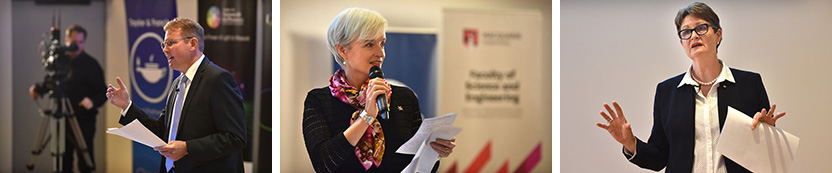
Attending the event were assistant Minister for Industry, Innovation and Science, the Hon Craig Laundy MP; President of Science & Technology Australia and Dean of Science at UNSW, Professor Emma Johnston; and Academy Fellow Catherine Livingstone, Chancellor of UTS and Chair of the Commonwealth Bank. Photos: Mark Graham
Australian science and technology is well placed to seize opportunities to commercialise at home and abroad, according to experts who gathered in Sydney in November.
Leaders in research and investment met at Science meets Business to discuss the future of Australia’s knowledge economy, including UTS Chancellor and Commonwealth Bank Chair, Catherine Livingstone; Assistant Minister for Industry, Innovation and Science, the Hon Craig Laundy MP; Shadow Minister for Industry, Innovation, Science and Research, Senator Kim Carr; and senior representatives from GE, Google, Austrade, and other influential business and research organisations operating in Australia.
Ms Livingstone shared her vision for Australia on the global stage and encouraged the business and research sectors to remain positive.
The event, of which the Academy was a sponsor, was the third time that Science & Technology Australia had brought together cross-sectoral leaders.
The Academy works with many businesses to advocate for science and innovation, and to increase support for school students, young researchers and the work of Australia’s leading scientists.
Australia represented at Falling Walls Lab finale in Berlin
The winners this year of Australia’s second Falling Walls Lab, Dr Vini Gautam from the Australian National University and Dr Mortaza Rezae from Curtin University, represented Australia at the international event in November. The Berlin event was attended by 100 finalists and winners from the 49 international Falling Walls Labs held during the year.
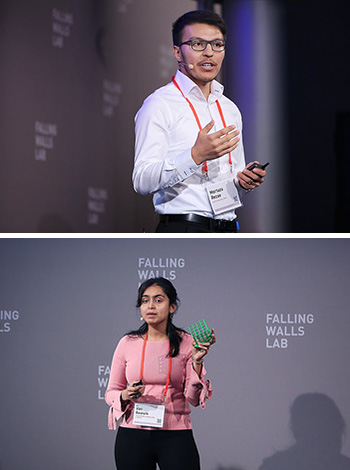
Dr Mortaza Rezae (top) and Dr Vini Gautam represented Australia at the international Falling Walls Lab in November.
The winners this year of Australia’s second Falling Walls Lab, Dr Vini Gautam from the Australian National University and Dr Mortaza Rezae from Curtin University, represented Australia at the international event in November. The Berlin event was attended by 100 finalists and winners from the 49 international Falling Walls Labs held during the year.
The Falling Walls Foundation is a non-profit organisation in Berlin, established in 2009, 20 years after the fall of the Berlin Wall. It asks ‘Which are the next walls to fall?’ as a result of scientific, technological, economic and sociological breakthroughs.
Each year, the foundation supports scientific organisations around the world to host a Falling Walls Lab to promote interdisciplinary connections between aspiring academics, innovators, entrepreneurs, investors and professionals. Participants have just three minutes to present their research work, business model or initiative to a broad audience from science and industry, and a jury selects the most innovative and promising idea.
The Australians received support and encouragement while in Berlin from Academy President Professor Andrew Holmes and Emeritus Professor Hans Bachor. Her Excellency Ms Lynette Wood, Australian Ambassador to Germany, also attended the event.
The winner of this year’s international event was Agnes Reiner from the University of Vienna, for her research on novel blood-based biomarkers for early detection of ovarian cancer.
The Falling Walls conference, held the day following the lab, involved world experts presenting on topics including food insecurity, refugee assistance, global security and ocean pollution. Dr Jennifer Lavers from the Institute of Marine and Antarctic Science, University of Tasmania, spoke on the accumulation of plastic waste in the oceans.
Primary Connections makes STEM connection
The Academy recently hosted a Primary Connections showcase professional learning workshop at Queensland University of Technology (QUT). This was the first workshop of its type, with key stakeholders in STEM education observing part of the workshop and engaging with the 30 primary school educators in attendance.
The Academy recently hosted a Primary Connections showcase professional learning workshop at Queensland University of Technology (QUT). This was the first workshop of its type, with key stakeholders in STEM education observing part of the workshop and engaging with the 30 primary school educators in attendance.
Primary Connections is an innovative approach to teaching and learning which enhances primary school teachers’ confidence and competence for teaching science. It develops students’ knowledge, understanding and skills in both science and literacy.
The 12 stakeholders at the workshop included representatives of the University of Queensland, QUT, Griffith University, the Queensland Government and Independent Schools Queensland. Professor Srini Srinivasan, a member of the Academy’s Council, and Academy Chief Executive Anna-Maria Arabia also attended.
Throughout the workshop educators considered STEM education in their contexts and delved deeper into the synergies between science and design and technologies.
The event provided a valuable opportunity to discuss the future of primary school STEM teaching and learning.
The learning space, generously provided by QUT, is innovative and inspiring. The Cube is one of the world's largest digital interactive learning spaces dedicated to providing an explorative experience of QUT's science and engineering research.
The Academy gained a great deal in hosting this diverse group interested in primary education.
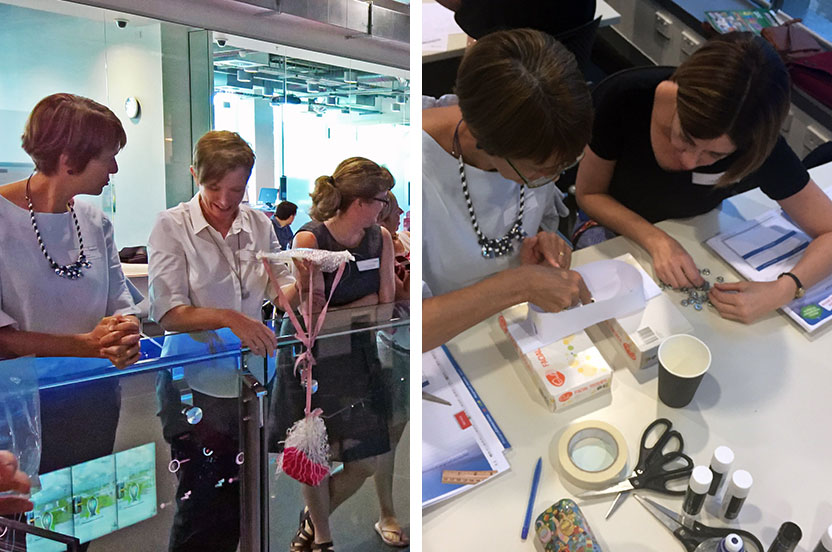
Queensland educators and STEM education stakeholders found the event a valuable opportunity to discuss the future of primary school STEM teaching and learning.
Correctly setting the dial on research
The Productivity Commission has added its influential voice to the ongoing debate on the role of universities—in particular, their research and teaching roles.

There is a need to improve the processes for, and the outcomes from, the teaching of students at Australian universities. Photo by Štefan Štefančík on Unsplash
The Productivity Commission has added its influential voice to the ongoing debate on the role of universities—in particular, their research and teaching roles.
The long-awaited Shifting the Dial report puts forward a number of proposals to improve the processes for, and the outcomes from, the teaching of students at Australian universities.
However, it emphasises that any changes must not come at the expense of the universities’ research capability.
It is a not a matter of either/or, but both: more and better teaching outcomes; more and better research capabilities.
The report notes that research undertaken at Australian universities has substantial economic and social dividends, in terms of promoting economic and employment growth, and creating new goods and services of value to consumers.
It is also vital for the business models which sustain our universities.
It points out that universities’ research capabilities and output drive their international rankings, which in turn attract international students.
In short, universities can, and do, regard research output (most notably their publications) and the standing of their star academics and faculty as ‘advertising beacons’ for student recruitment and retention showing that research supply drives student demand.
Research undertaken at Australian universities has substantial economic and social dividends.
An economic analysis commissioned by Universities Australia provides some useful estimates of the economic and social impacts of university research.
For example, investment in university research over the past 30 years has added around $10 billion a year to Australia’s national output. Associated improvements in our productivity performance are equivalent to nearly one-third of the growth in average living standards over the same period.
Looked at another way, the stock of knowledge generated by university research is about the same as the entire value-added of the much-higher profile mining, and of the building and construction sectors.
Similarly, research commissioned by the then Department of Education, Science and Training found publicly funded research in Australia generated an economy-wide social rate of return of between 25 and 40 per cent per annum—an enormous dividend by any measure.
Universities have to undertake both cutting edge, world-class research, and deliver teaching outcomes that are valued by their students and other key stakeholders; a mutually beneficial partnership.
Review aiming to achieve excellence in schools
The Australian Government has initiated a review looking at ways to achieve excellence in Australian schools. The review will examine and report on how Australian schools could use additional funding to improve student performance.
The Australian Government has initiated a review looking at ways to achieve excellence in Australian schools. The review will examine and report on how Australian schools could use additional funding to improve student performance.
Australia has remained one of the leading countries in terms of public investment in education—at the same time as students’ average performance in science and mathematics has declined in relative terms.
The Academy made a substantive submission to the inquiry, which was chaired by David Gonski, who also delivered the 2011 Gonski Review.
The core message of the submission was that a solid grounding in science and maths in both primary and secondary school is vital for younger Australians.
Beyond this key principle, the Academy noted that:
- fundamental science knowledge should continue to include a coherent understanding of scientific concepts, and generate experience and trust in the process of scientific inquiry
- education should build an appreciation of science as a human endeavour, as well as how science shapes society and how society shapes science.
The submission acknowledged the evidence that the average performance of Australian students in maths and science is falling behind that of their counterparts in other developed (and many developing) nations.
Policy responses will need to include more effective evaluation of programs intended to improve student performance (to see what works, and what doesn’t), and supporting new and existing teachers through best practice training and professional learning.
A solid grounding in science and maths … is vital for younger Australians.
Realising this broader and deeper culture of evaluation can be fostered and supported by a National Education Evaluation Agreement, as recommended by the Productivity Commission in its report into the National Education Evidence Base.
The Academy has developed evidence-based science and mathematics teaching and learning resources for primary and secondary schools teachers and students for a number of years.
Our flagship Primary Connections and Science by Doing programs are used by more than three-quarters of Australian schools and school science teachers, while our new reSolve: Mathematics by Inquiry program is quickly establishing a strong network of teacher Champions across the country.
These programs have a track record of being highly effective in improving student engagement and broadening teacher skills.
Academy events open up world of science
The Academy’s national speaker series aims to deliver science around Australia in an engaging, accessible and positive way. Since August, the Academy has delivered Making Better Humans with Polymers in Wollongong, Brisbane and Adelaide, with audiences taken on a polymer journey by Dr Katherine Locock, Dr Georgina Such, Professor Martina Stenzel, Professor Gordon Wallace, Professor Christopher Barner-Kowollik and Professor Peter Murphy.
National audiences taken on polymer journey
The Academy’s national speaker series aims to deliver science around Australia in an engaging, accessible and positive way. Since August, the Academy has delivered Making Better Humans with Polymers in Wollongong, Brisbane and Adelaide, with audiences taken on a polymer journey by Dr Katherine Locock, Dr Georgina Such, Professor Martina Stenzel, Professor Gordon Wallace, Professor Christopher Barner-Kowollik and Professor Peter Murphy.
In addition to getting a taste for incredible science, audiences were also given the opportunity to network and engage with Academy President, Professor Andrew Holmes and many other key stakeholders.
The Academy thanks all the speakers as well as the series Chair, Dr Bobby Cerini of Inspiring Australia, and Convenors Professor San Thang and Professor Maria Forsyth.
In 2018 the Academy will continue to take science around the nation, diving into the world of ‘The Science Behind Sport’.
Canberra public speaker series out of this world

Tackling space junk is just one of the many challenges scientists are facing in the new space age.
This year’s Canberra speaker series in the iconic Shine Dome was, as always, a wonderful success. Convened by Professor Matthew Colless and Professor Tamara Davis, Dawn of the New Space Age brought together a collection of the top minds in space research in Australia.
Researchers Professor Dean Rickles, Professor McClure-Griffiths, Dr Ben Greene, Professor Iver Cairns, Dr Helen Maynard-Casely and Dr Carol Oliver wowed audiences with their work towards discovering life on Mars, tackling the huge issue of space junk, exploring the Milky Way, and much more.
With a record number of season passes sold, and sell-out crowds for almost all talks, it is clear there is an overwhelming interest and passion that exists for space and the incredible discoveries in this area of science.
The recordings of each of the six instalments of the series can be found on YouTube.
The Academy thanks each of the speakers, convenors and chairs, and also acknowledges the generous ongoing support of Edge Catering and Jirra Wines at Jeir Station to make these events possible.
The Academy will welcome audiences back in 2018 for ‘From Womb to Tomb: the science of our lives’.
Academy videos rocketing through Facebook
Multiple Academy videos have gone viral internationally on Facebook since the launch of the Academy’s new daily commitment to answer everyday questions and introduce people to science.
Multiple Academy videos have gone viral internationally on Facebook since the launch of the Academy’s new daily commitment to answer everyday questions and introduce people to science.
Volcanoes, animals in the wild, space and human health are some of the winning video topics so far. Academy Fellows, members of National Committees and other leading Australian and international scientists are contributing to the project through interviews, providing ideas and footage, and reviewing videos and articles for scientific accuracy before publication.
Several videos have been picked up by major national media outlets and included in relevant news stories, spreading the Academy’s influence even wider.
The Academy is also publishing an article a day on a wide range of topics, including seasonal ones such as bushfires, swimming pools and sunscreen. The articles are also being widely shared, with the majority being read to the end—an unusual occurrence on Facebook.
The number of people ‘liking’ the Academy’s Facebook page has skyrocketed and is now well over 100,000, a 12-fold increase since the project launched in mid October. The videos, images and articles are also promoted on Twitter and Instagram.
The Academy is responding to the widespread need for a trusted, credible source that can be relied on for scientific information but also stimulates interest and encourages exploration of science.
Chinese-speakers are also able to access much of the content, translated by the Academy for social media platforms Weibo and Toutiao.
Academy President launches Christmas 2017 Awards Fundraising Appeal
Central to the purpose of the Academy is the recognition and support of outstanding contributions to the advancement of science. The honorific awards were established to recognise distinguished research in three categories: awards of medals and prizes are made to early-career scientists up to 10 years post PhD, mid-career scientists 8 to 15 years post PhD, and the prestigious career awards which are made to scientists for life-long achievement.
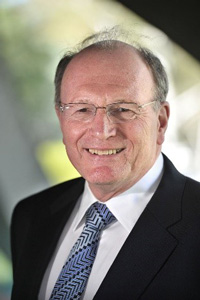
Professor Andrew Holmes: ‘It is hard to imagine where the Australian Academy of Science would be without the generosity and philanthropic support of many individuals and organisations.’
Central to the purpose of the Academy is the recognition and support of outstanding contributions to the advancement of science. The honorific awards were established to recognise distinguished research in three categories: awards of medals and prizes are made to early-career scientists up to 10 years post PhD, mid-career scientists 8 to 15 years post PhD, and the prestigious career awards which are made to scientists for life-long achievement.
It’s virtually impossible to imagine a world without science and without scientists striving every single day to understand the world around them. I often reflect on the collective impact on the world made by the Fellows of the Australian Academy of Science and remain quite awestruck at the difference their work has made to our wellbeing, our economy and our environment. The world simply would not be as we know it today in the absence of their contribution.
Equally, it is hard to imagine where the Australian Academy of Science would be without the generosity and philanthropic support of many individuals and organisations.
All of us share a desire for science and scientists to prosper and for future generations to benefit from discovery and to be empowered by knowledge. Yet each person has a unique reason for supporting the Australian Academy of Science.
It’s virtually impossible to imagine a world without science and without scientists striving every single day to understand the world around them.
I invite you to support the Australian Academy of Science through our Christmas 2017 Awards Fundraising Appeal so that together we can continue to build a strong and vibrant future for science in Australia.
The Christmas 2017 Awards Fundraising Appeal offers you the chance to support the Academy of Science through donations that are fully tax deductible.
Should you wish to discuss ways in which you can support the Australian Academy of Science and how you would like your support directed, please contact Ms Isobel Griffith, Manager Development and Stewardship on (02) 6201 9400.
Your support is deeply appreciated.
Yours sincerely
Professor Andrew Holmes AC PresAA FRS FTSE
Future Earth Australia urges collaboration to address sustainability issues
The urban built environment, the marine environment and energy transformation are key areas where Australian researchers and industry partners could collaborate more effectively to address issues of sustainability, according to Future Earth Australia.
The urban built environment, the marine environment and energy transformation are key areas where Australian researchers and industry partners could collaborate more effectively to address issues of sustainability, according to Future Earth Australia.
“Future Earth Australia has a crucial role to play in the generation of enduring solutions to address the most urgent sustainability challenges facing humanity,” said Australian Academy of Science President, Professor Andrew Holmes.
“The challenges are complex but communities across the globe, including in Australia and our region, are capable of connected research approaches that find and deliver solutions.”
Hosted by the Australian Academy of Science, Future Earth Australia is a partnership of Australia’s learned academies, Australian universities, research institutes, industry and government agencies focused on advancing sustainability.
Professor Ian Chubb, former Australian Chief Scientist and current Chair of Future Earth Australia’s Advisory Council, said Australia can be an important element in global research initiatives aimed at ensuring the future of our planet.
“Australia needs to become a part of the international innovation community and it needs to mobilise its comparative advantages in research towards addressing the Sustainable Development Goals,” Professor Chubb said.
Dr Imran Ahmad, Director of Future Earth Australia, said integrated catchment management is a good example where Australian research institutions have come together to provide effective natural resource management solutions customised to local needs.
“Elsewhere however, integrated and collaborative approaches are less prominent. Nationally and internationally, connecting for sustainability still has some way to go, which is where Future Earth Australia comes in,” Dr Ahmad said.
[This news item was updated 28 June 2018. Contact Future Earth Australia if you would like more information about the program.]