

Dr

John O'Sullivan

FAA FTSE

John O'Sullivan
Image Description
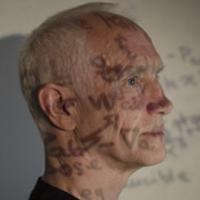
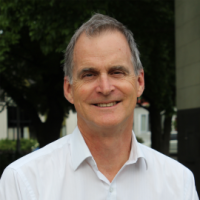
John O’Sullivan has made significant contributions to the field of digital signal processing relating to the application of Fourier Transforms in the Telecommunications, Electro-acoustic and Radioastronomy fields. He is more generally known as the primary inventor of two technologies that led to significant areas of application and start-up companies — a FFT chip that led to Lake Technologies and the 802.11a/g wireless LAN, where he solved problems considered intractable by the major companies in the space globally. This led to the formation of Radiata which was acquired by CISCO. John has a global reputation for his significant contributions in radioastronomy.

Expertise type

  • Astronomy
  • Digital Signal Processing
  • Physics
  • Radioastronomy

Please contact fellowship@science.org.au to request any updates to the data.

Dr

John Zillman

AO FAA FTSE

John Zillman
Image Description
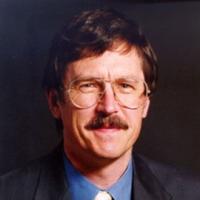
John Zillman is a world leader in the science and management of meteorology. He is recognised for his distinguished service on a wide range of national and international panels and advisory bodies dealing with science policy. He served two terms as President of the World Meteorological Organisation, and has been Australia’s principal delegate on the Intergovernmental Panel on Climate Change since 1994.

Expertise type

  • Climate
  • Earth Sciences
  • Meteorology
  • Science Policy

Please contact fellowship@science.org.au to request any updates to the data.

Mr

John Ralph

AC FAA FTSE

John Ralph
Image Description
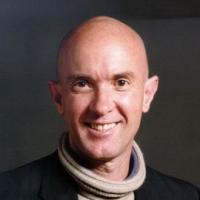
As Chairman of the Australian Foundation for Science, John Ralph was actively involved in fundraising for Foundation projects, most notably securing two significant sponsorships, worth a total of $390,000, for the Academy's Nova: Science in the news website. He established a group of influential Australians who have agreed to act as supporters of the Academy. He is a Companion in the Order of Australia, a Fellow of the Australian Academy of Technological Sciences and Engineering and a Fellow of the Australasian Institute of Mining and Metallurgy. In 2002 he was awarded the Grand Cordon of the Order of the Sacred Treasure by the Emperor of Japan.

Expertise type

  • Corporate
  • Corporate Leadership
  • Corporate Management

Please contact fellowship@science.org.au to request any updates to the data.

Professor

Vicki Sara

AO FAA FTSE

Vicki Sara
Image Description
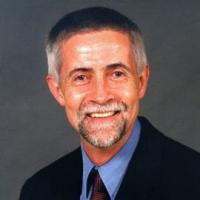
As ARC Chair Vicki Sara was the driving force behind the far reaching reforms of the ARC announced in the White Paper Knowledge and Innovation in December 2000 and in the doubling of its funding in the Innovation Action Plan Backing Australia's Ability in January 2001. Professor Sara was a member of the Prime Minister's Science, Engineering and Innovation Council, the CSIRO Board and the Cooperative Research Centres Committee. Professor Sara was appointed Vice-Chair of the OECD's Global Science Forum in 1999.

Expertise type

  • Biochemistry
  • Biology
  • Endocrinology

Please contact fellowship@science.org.au to request any updates to the data.

Sir

Rupert Myers

AO KBE FAA FTSE

Rupert Myers
Image Description

Expertise type

  • Engineering
  • Materials Science
  • Metallurgy

Please contact fellowship@science.org.au to request any updates to the data.

Dr

John Kirkegaard

FAA

John Kirkegaard
Image Description
John Kirkegaard is an outstanding agricultural scientist who has made major contributions towards improving agricultural productivity both nationally and internationally. He is highly regarded for his ability to invent novel crop management packages, based on penetrating science, and to integrate them into existing farming systems so that they are rapidly adopted. He played a key role in the successful adoption of conservation farming systems (i.e. farming without ploughing the soil). He identified and then overcame the biological mechanisms causing poor yield of crops in these practices, and greatly increased the effectiveness with which crops use water and nutrients.

Fields of research

30 AGRICULTURAL AND VETERINARY SCIENCES
  • 3002 AGRICULTURE, LAND AND FARM MANAGEMENT
    • 70107 Farming Systems Research

For full list of research codes, please visit the ARC Website .

Expertise type

  • Soil Biology
  • Water
  • Plant Roots
  • Plant Reproduction
  • Crop Science
  • Crop Rotation
  • Legumes
  • Tillage
  • Wheat
  • Canola
  • Organic Matter
  • Agricultural Science
  • Biology
  • Food Security
  • Nutrients

Please contact fellowship@science.org.au to request any updates to the data.

Professor

Murray Esler

AM FAA

Murray Esler
Image Description
Professor Esler developed a unique radiotracer method for the neurochemical study of the sympathetic nervous system in humans. Esler's noradrenaline "spillover" method allows quantification of sympathetic function over time and in comparisons between individuals, and has been widely adopted internationally, as illustrated by its use in the April 1998 studies of neural circulatory control on board Space Shuttle Columbia. The method has allowed Esler to show that enhanced sympathetic activity is probably the major mechanism initiating high blood pressure; regulation involves the CNS noradrenergic neurons, which determine the 'defence' pattern of sympathetic activity in response to longterm stress. The other major discovery has been in connection with heart failure, where results obtained were pivotal to the understanding of the neural pathophysiology of heart failure, providing the theoretical basis for the recent successful use of ß-adrenergic blockers in this condition.

Expertise type

  • Cardiology
  • Cardiovascular Disease
  • Medical Sciences
  • Hypertension

Please contact fellowship@science.org.au to request any updates to the data.

Professor

John Kerr

AO FAA

John Kerr
Image Description
Professor Kerr is nominated for his contributions to understanding physiologic cell death. His landmark paper in 1972 with Kerr and Wyllie named this process apoptosis, to emphasise its complementary but opposite role to mitosis. Kerr was the first to delineate the ultrastructural features of apoptosis, showing it to be quite distinct from necrosis, provoked by tissue injury. He drew attention for the first time to the role of cell death in normal adult mammals and in disease. He clearly enunciated the concept that cell death is a selectively regulated process which should be possible to control in disease states.

Expertise type

  • Apoptosis
  • Cell Death
  • Medical Sciences
  • Pathology

Please contact fellowship@science.org.au to request any updates to the data.

Dr

Robin Bedding

AM FAA

Robin Bedding
Image Description
Dr Bedding has pioneered and led the world in obtaining new basic information on the taxonomy, biology, physiology and ecology of nematodes which has enabled him to develop the use of these to control a range of insect pests, both in Australia and overseas. His research on De/adenus siricidico/a alone is estimated to help protect Australia's pine forests from damage by sirex at between $1000 million and $4000 million in each rotation. His research and patents on entomopathogenic nematodes have enabled the establishment of a new export industry for Australia and resulted in major developments in insect control in China. Over the last eight years, Dr Bedding has gained four major awards and his research has attracted grants and royalty payments of over $3.5 million.

Expertise type

  • Biological Control
  • Biology
  • Insects
  • Nematodes

Please contact fellowship@science.org.au to request any updates to the data.

Dr

Oliver Mayo

FAA FTSE

Oliver Mayo
Image Description
Dr Mayo has combined statistics and genetics to make a major contribution to the understanding of the role of major genes in continuous variation. He has developed and tested methods for the detection and quantification of major genes underlying quantitative variability. He has been concerned both with the evolutionary effects of such genetic systems (especially in small populations) and with the potential importance of major genes medically in human populations and economically in plant and animal breeding. Methodologically, he has been particularly concerned with the use of simulation as a tool for evaluating statistical techniques.

Fields of research

49 MATHEMATICAL SCIENCES
  • 4905 STATISTICS
    • 490502 Biostatistics

For full list of research codes, please visit the ARC Website .

Expertise type

  • Genomics
  • Biology
  • Biometrics
  • Evolutionary Genetics
  • Biotechnology
  • History of Science
  • Start-ups

Please contact fellowship@science.org.au to request any updates to the data.