Professor

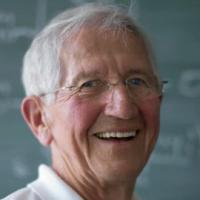
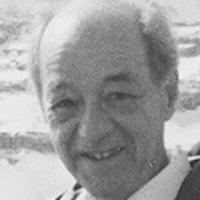
Grant Sutherland

AC FAA FRS

Grant Sutherland
Image Description
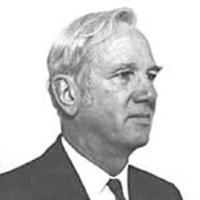
Professor Sutherland's major contributions to science have been the cytogenetic and molecular genetic characterisation of fragile sites on human chromosomes. He is an active participant in the international Human Genome Project. His group has contributed significantly to the mapping of human chromosome 16 and positional cloning of genes on this chromosome. In clinical cytogenetics he has many publications including a book on genetic counselling for chromosome abnormalities that has become the standard work in this area. He is a pastPresident of the Human Genetics Society of Australasia and is now President-elect of the Human Genome Organisation.

Fields of research

31 BIOLOGICAL SCIENCES
  • 3105 GENETICS
    • 310509 Genomics
32 BIOMEDICAL AND CLINICAL SCIENCES
  • 3202 CLINICAL SCIENCES
    • 320213 Medical Genetics (excl. Cancer Genetics)

For full list of research codes, please visit the ARC Website .

Expertise type

  • Epilepsy
  • Genomics
  • Human Genetics
  • Human Genome Project
  • Medical Sciences

Please contact fellowship@science.org.au to request any updates to the data.

Professor

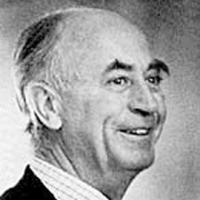
Ashley Dunn

FAA

Ashley Dunn
Image Description
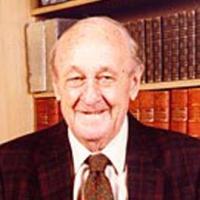
Ashley Dunn's international reputation initiated with the seminal discovery of discontinuous genes and RNA splicing. The molecular biology laboratory he subsequently founded in Melbourne achieved rapid success by cloning the genes encoding granulocyte-macrophage colony stimulating factor and demonstrating the leukaemogenic potential of autocrine production of this myeloid growth factor. His studies of haemopoietic tyrosine kinases provided the first evidence for translational regulation within the src kinase family. He is currently clarifying the role of different cytokines by disruption of the corresponding genes and has demonstrated that a natural mouse mutant has a dysfunctional cytokine receptor.

Expertise type

  • Animal Biology
  • Biology
  • Disease
  • Growth Regulation

Please contact fellowship@science.org.au to request any updates to the data.

Professor

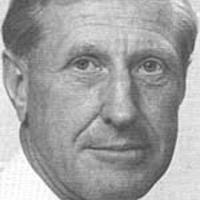
John Shine

AC FAA FAHMS(Hon) FRS

John Shine
Image Description
John Shine is a leading figure in the molecular biology of gene structure and expression and its application to medicine. He has made major contributions to the development of recombinant DNA technology, both in Australia and internationally. He was the first to clone a human hormone gene and was a central figure in cloning the first mammalian genes, insulin and growth hormone. He was the first to demonstrate that human genes cloned in bacteria could be expressed in a biologically active form and, more recently, has made major contributions to evolving concepts of the structure and function of receptor families.

Expertise type

  • Genomics
  • Medical Sciences
  • Neurobiology
  • Stem Cells

Please contact fellowship@science.org.au to request any updates to the data.

Emeritus Professor

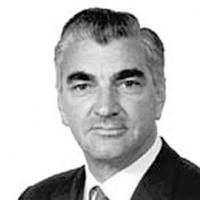
Harry Poulos

AM FAA FTSE

Harry Poulos
Image Description
Professor Poulos is distinguished for his work in geomechanics, notably in developing a unified theory for the behaviour of structural foundations. His major contribution relates to the analysis and design of pile foundations. He has replaced empirical methods by scientific assessment involving both the elastic and elastic-plastic regions of soil behaviour. The results have been presented in a form readily usable by practising engineers. His work has attracted favourable international attention and the solutions he has derived have been widely applied. He has served as a consultant on many significant civil engineering projects in Australia and overseas.

Fields of research

40 ENGINEERING
  • 4005 CIVIL ENGINEERING

For full list of research codes, please visit the ARC Website .

Expertise type

  • Building Foundations
  • Civil Engineering
  • Engineering
  • Geotechnical Engineering

Please contact fellowship@science.org.au to request any updates to the data.

Professor

Edward Davis

FAA

Edward Davis
Image Description
Professor Davis has made outstanding contributions in soil mechanics. He is recognised as the leading worker in theoretical soil mechanics in Australia. He has gained an international reputation both by independent contributions and by his ability to collaborate with and guide the work of colleagues here, in the USA and elsewhere. The two main aspects of his work, the development of a unified theory of the behaviour of foundations and the extension of the theory of plasticity to soil and rock stability problems, are notable for their essentially scientific basis and their applicability to practical engineering problems, for example unusual foundations problems in power stations, large buildings, and harbour works. The work on pile foundations is widely applied in practice.

Expertise type

  • Civil Engineering
  • Engineering
  • Soil Mechanics

Please contact fellowship@science.org.au to request any updates to the data.

Professor

Allen Kerr

AO FAA FRS

Allen Kerr
Image Description
Dr Kerr is a distinguished plant pathologist who has recently discovered a method of biological control of the disease crown gall in stone-fruit crops. This disease is estimated to cause annual losses amounting to about $Al38 million in the world, including about $Al.4 in Australia, The method of control, widely practised by growers in Australia, has been introduced into New Zealand, Canada and the USA and is being tested in England and Greece. In addition to this important applied research, Kerr is recognised for his genetic model for pathogenicity in Agrobacterium, showing that the plant tumours result from the transfer of bacterial DNA to the plant cell.

Expertise type

  • Bacteriology
  • Biology
  • Pathology
  • Plant Biology

Please contact fellowship@science.org.au to request any updates to the data.

Professor

Douglas Lampard

FAA

Douglas Lampard
Image Description
Professor Lampard has made distinguished contributions to the theory and applications of engineering science. He has devised a new theorem in electrostatics, making possible a new precision capacitor standard and consequent redetermination of the ohm. He has applied stochastic processes theory to the problems of electrical circuits and communications. Among physiological applications, he has solved difficult problems of automatic multivariate control by digital computers, anaesthesia, artificial ventilation and muscle tone being regulated by several appropriate physiological measurements. He has received the Heaviside Premium (U.K.) and the Sperry Award (U.S.A.) from leading Institutes of Electrical Engineers for the capacitor work.

Expertise type

  • Electrical Engineering
  • Engineering

Please contact fellowship@science.org.au to request any updates to the data.

Mr

Harry Minnett

FTSE OBE FAA

Harry Minnett
Image Description
Minnett, Harry Clive, Assistant Chief of the Division of Radiophysics, CSIRO, distinguished for his contributions to the development of radio and optical telescopes. Minnett has played a leading part in four major projects: the design of the 210-ft. Parkes radio telescope, the refurbishing of the Parkes radio telescope for operation at short centimetre wavelengths, the design of the 150-inch Anglo-Australian optical telescope, and the development of Interscan, a new-generation aircraft landing system. In each of these ventures Minnett has made outstanding innovative contributions, considerably influencing subsequent trends in engineering design. The work for which he is best known internationally is his contributions to the electro-magnetic theory of aerials and waveguides and the invention of the 'hybrid mode' aerial feed which enables large radio telescopes and space-communication aerials to be operated with markedly greater efficiency and polarization purity. In the astronomical field Minnett was the first to detect radiation in the microwave region (1-20 cm wavelength) from beyond the solar system. He was the co-discoverer of the dust layer on the Moon's surface twenty years before its confirmation by the Apollo XI astronauts.

Expertise type

  • Engineering
  • Radiophysics
  • Radioastronomy

Please contact fellowship@science.org.au to request any updates to the data.

Professor

Graham Mitchell

AO FAA FTSE

Graham Mitchell
Image Description
Distinguished for his major contributions to the immunology of parasitic diseases of medical and veterinary importance. He has used a combination of techniques in molecular and cellular immunology, in immunogenetics and in epidemiology to characterise anti­parasitic immune responses and the mechanisms of parasite evasion, and to identify genetically based variations in host resistance. He was the first to demonstrate the power of monoclonal antibodies in the development of new immunodiagnostic tests. His work has made immunoparasitology a major field in biomedical research with good prospects for the early development of protective vaccines.

Expertise type

  • Biotechnology
  • Immunology
  • Infectious Diseases
  • Medical Sciences

Please contact fellowship@science.org.au to request any updates to the data.

Professor

Richard Harvey

AM FAA FAHMS FRS

Richard Harvey
Image Description
Richard Harvey is a pioneer of the molecular era of cardiac development. His discovery of homeodomain transcription factor Nkx2-5 overturned two established paradigms - that the hearts of vertebrates and invertebrates are the products of convergent evolution, and that heart chambers are formed from anatomical segments. He documented the role of transcription factors Foxh1 and Tbx20 in chamber formation, and discovered a novel Nkx2-5-independent pathway of cardiac myogenesis. He was the first to explore the complex genetic basis of common congenital heart disease and is applying the developmental paradigm to analysis of cardiac stem cells that have enormous therapeutic potential.

Fields of research

10 TECHNOLOGY 3001 AGRICULTURAL BIOTECHNOLOGY
  • 300110 Transgenesis
31 BIOLOGICAL SCIENCES
  • 3101 BIOCHEMISTRY AND CELL BIOLOGY
    • 310102 Cell Development, Proliferation and Death
32 BIOMEDICAL AND CLINICAL SCIENCES
  • 3201 CARDIOVASCULAR MEDICINE AND HAEMATOLOGY
    • 320101 Cardiology (incl. Cardiovascular Diseases)
  • 3206 MEDICAL BIOTECHNOLOGY
    • 320606 Regenerative Medicine (incl. Stem Cells and Tissue Engineering)

For full list of research codes, please visit the ARC Website .

Expertise type

  • Cardiovascular Disease
  • Heart Disease
  • Medical Sciences
  • Stem Cells

Please contact fellowship@science.org.au to request any updates to the data.