Professor

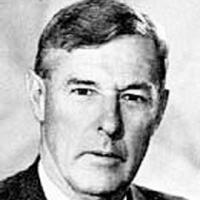
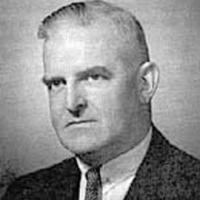
Frederick Courtice

FAA

Frederick Courtice
Image Description
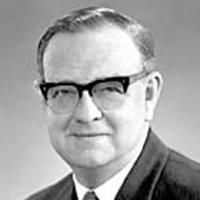
His research has always been concerned with the field of general physiology. With Professor C.G. Douglas at Oxford he studied the effects on respiration and on general metabolism of prolonged muscular exercise; especially was he concerned with the fuel for muscular work: and the part played by such hormones as insulin and adrenaline. Later, in association with Professor H.W.B. Cairns, he studied the effects on cerebral circulation of increased intracranial pressure and of oxygen deficiency. During the war, at the Chemical Defence Experimental Station, he was engaged, with Professors G.R. Cameron, C. Lovatt Evans, J. H. Gaddum and Sir Joseph Barcroft, on many problems concerning the functional disturbances caused by injury and the many toxic agents of Chemical Warfare, and the prevention and treatment of these disorders. This work covered a very wide field of experimental physiology, but one of the main fundamental problems involved was the changes in circulation and fluid balance caused by capillary poisons. Since the war, both at Oxford and in Sydney, he has pursued with his colleagues some of the fundamental problems of fluid balance that arose from investigations with these toxic agents. These investigations have been largely concerned with the physiology of the capillary membrane, with disorders of fluid balance and especially with the functional significance of the lymphatic system and of the plasma proteins and lipids in relation to these disturbances.

Expertise type

  • Medical Sciences
  • Pathology

Please contact fellowship@science.org.au to request any updates to the data.

Dr

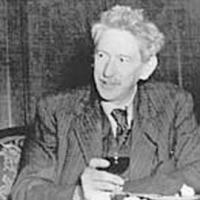
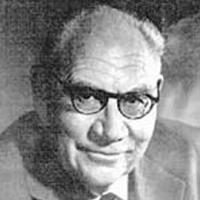
Fraser Bergersen

AM FAA FRS

Fraser Bergersen
Image Description
Dr Bergersen is distinguished for his research in symbiotic nitrogen fixation. He is a world authority on the physiology and biochemistry of nitrogen fixation in the rhizobium/legume symbiotic system. He was the first to develop methods for preparing active bacteroids from nodules. This led to the purification of nitrogenase components and the identification of the active site on the Mo-Fe-protein. Bergersen was a major contributor in the elucidation of the physiological role of leghemoglobin in nodules supporting efficient respiration at low free oxygen concentrations. His work defined the complex terminal oxidase system in bacteroids. He also contributed information on the structure of legume root nodules, an important recent result being in the localization of leghemoglobin. In current research he is contributing in the bioenergetics of nodule activity and in developing improved techniques for measuring nitrogen fixation in the field.

Expertise type

  • Biology
  • Crop Science
  • Plant Biology

Please contact fellowship@science.org.au to request any updates to the data.

Dr

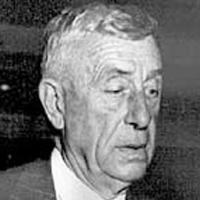
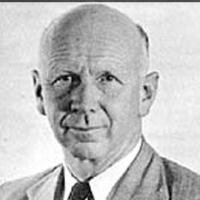
Anita Hill

FAA FTSE

Anita Hill
Image Description
Anita Hill’s research is in materials and process engineering and, more specifically, in the transport of atoms, ions and small molecules in condensed matter. She has developed positron methods for measurement of open volume in condensed matter on the Ångström-scale, which is crucial for the transport of small molecules. Her focus on measurement has provided an understanding of the controlling factors involved in selective small molecule transport. Hill’s data has been pivotal to the development of theory and design rules for membrane performance.

Fields of research

34 CHEMICAL SCIENCES
  • 3401 ANALYTICAL CHEMISTRY
    • 340109 Separation Science
  • 3406 PHYSICAL CHEMISTRY (INCL. STRUCTURAL)
    • 340609 Transport Properties and Non-Equilibrium Processes
40 ENGINEERING
  • 4004 CHEMICAL ENGINEERING
    • 400409 Separation technologies
  • 4016 MATERIALS ENGINEERING
51 PHYSICAL SCIENCES
  • 5104 CONDENSED MATTER PHYSICS
    • 510401 Condensed Matter Characterisation Technique Development

For full list of research codes, please visit the ARC Website .

Expertise type

  • Condensed Matter Physics
  • Polymer Chemistry
  • Membranes
  • Materials Characterisation
  • Non-equilibrium Processes
  • Porous Materials
  • Separation Science
  • Small Molecule Transport
  • Chemistry
  • Physics
  • Engineering

Please contact fellowship@science.org.au to request any updates to the data.

Professor

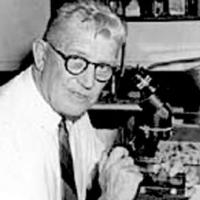
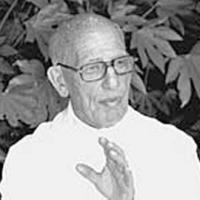
Ian Ritchie

AO FAA FTSE

Ian Ritchie
Image Description
Ian Ritchie's distinguished career in science, in U.S. industry and in Australian Universities, has culminated in his outstanding role as Director since 1992 of the A.J. Parker CRC for Hydrometallurgy. His science has been recognized by his peers in awards, honours and Fellowships in interconnected areas of electrochemistry, physical chemistry, chemical engineering, solid state physics, mineral processing and especially electrometallurgy. His recent basic research on the fundamentals of gold dissolution in cyanide solutions is arguably the most important advance in gold hydrometallurgy in decades. In 1997 he was honoured as W.A. Citizen of the Year (Professions).

Expertise type

  • Hydrometallurgy
  • Chemistry
  • Electrochemical Metal Extraction
  • Metal Extraction
  • Metallurgy

Please contact fellowship@science.org.au to request any updates to the data.

Professor

John Moore

FAA FTSE

John Moore
Image Description
Professor Moore has made extensive original contributions to the engineering fields of control systems, communication systems, and signal processing, with application to aircraft and robot control, information transmission technologies, and biological cell channel current processing. He has also made many companion contributions at a mathematical level to linear and nonlinear systems theory, estimation and control theory, stability theory, optimization theory, stochastic systems, system identification, network theory, adaptive systems, learning systems, decentralized control systems, and numerical methods. The research is characterized by its display of lateral thinking and the simplicity and elegance of solutions to both new and long standing problems. Diverse fields are unified at the appropriate level of abstraction, and techniques from diverse fields have been carried over to resolve challenging problems in fields where these techniques have been unknown.

Expertise type

  • Electrical Engineering
  • Engineering

Please contact fellowship@science.org.au to request any updates to the data.

Professor

Jörg Imberger

AM FAA FTSE

Jörg Imberger
Image Description
Professor Imberger has made major contributions to a wide variety of problems in environmental fluid dynamics. His papers on selective withdrawal, natural convection, surface layer dynamics and mixing in stratified fluids are particularly important and frequently cited. His effectiveness arises from an unusual ability to combine advanced mathematics and statistics, laboratory modelling and pioneering sophisticated techniques of field instrumentation. Professor Imberger has been directly responsible for the creation of associated organizations which together constitute one of the strongest groups in environmental fluid dynamics anywhere in the world. He and his colleagues are widely consulted on diverse environmental engineering problems both in Australia and overseas.

Expertise type

  • Biology
  • Lakes and Rivers
  • River Ecology
  • Water

Please contact fellowship@science.org.au to request any updates to the data.

Dr

Shirley Jeffrey

AM FAA

Shirley Jeffrey
Image Description
Dr S.W. Jeffrey has achieved international eminence in marine science for her detailed and innovative studies of the photosynthetic pigments of plants, especially the planktonic micro-algae. Of particular significance are her discoveries of the chlorophyll c family of pigments, which have major implications, not only for photobiology, but for classifying and defining evolutionary relationships among plants. Her classic work on plant chlorophylls resulted in standard equations widely used for estimating ocean productivity. Her development of novel chromatographic techniques and algal culturing allows new insights into marine productivity. Her pioneering research in mariculture and toxic phytoplankton blooms are of great practical significance for Australia.

Expertise type

  • Biology
  • Algae

Please contact fellowship@science.org.au to request any updates to the data.

Dr

Lawrence Johnson

AM FAA

Lawrence Johnson
Image Description
Dr. L.A.S. Johnson has made outstanding contributions to botanical systematics in Australia at all taxonomic levels and to the theory of biological systematics. Dr. Johnson directs an active research staff at the Royal Botanic Gardens, Sydney. Major studies include revised classifications with evolutionary interpretation of the order Myrtales, the families Myrtaceae, Proteaceae, Casuarinaceae and Zamiaceae, as well as re-classific­ation of the Eucalypts at generic through to sub-specific levels. All are broadly-based, but intensive, syntheses in which various bases for relationships are assessed in the light of evolutionary processes, phytogeography, floristic history and functional adaptation. This work has international as well as local significance.

Expertise type

  • Biology
  • Botany
  • Taxonomy

Please contact fellowship@science.org.au to request any updates to the data.

Professor

Ian Cowan

FAA

Ian Cowan
Image Description
Professor Cowan has made outstanding theoretical and experimental contributions to knowledge of gas exchange in higher plants as influenced by external physical, and internal physiological, processes. His application of control theory has led to a profound understanding of the system in which uptake of carbon dioxide and loss of water vapour are interrelated and regulated through the action of stomata in plant leaves. His hypothesis of optimal control, which represents the way in which the regulation of carbon gain and water loss is modified to withstand drought, is a major step in linking physiological responses to ecological distribution and productivity and has important implications to the adaptation of plants to dry conditions.

Expertise type

  • Biology
  • Ecology
  • Plant Biology
  • Plant Physiology

Please contact fellowship@science.org.au to request any updates to the data.

Professor

Stuart Letham

FAA

David Letham
Image Description
Dr Letham is distinguished for his discovery, naming, and characterisation of the cytokinins, a class of hormones that control cell division and other aspects of development in plants. Of the 20 identified cytokinins now known from higher plants, 15 were isolated, characterised chemically, and unambiguously synthesised by Dr Letham and his colleagues. Cytokinins are now known to be a major class of plant hormones, and their study has become a large branch of plant science, prosecuted world-wide, and stemming from Dr Letham's seminal work. He has used sophisticated techniques of mass spectrometry to elucidate their structure and pathways of metabolism. He and co-workers have also provided the first unequivocal identification of cyclic adenosine monophosphate in higher plants - another significant landmark. He is co-editor of a book on Ribonucleic Acids and a two-volume treatise on Phytohormones, both widely acclaimed.

Expertise type

  • Biochemistry
  • Biology
  • Plant Biology
  • Plant Hormones

Please contact fellowship@science.org.au to request any updates to the data.