


Professor

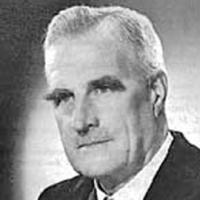
Wilfred Simmonds

FAA

Wilfred Simmonds
Image Description
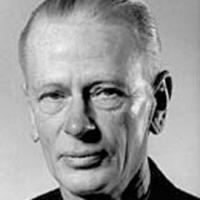
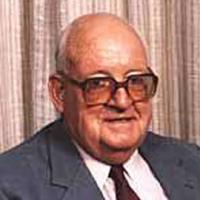
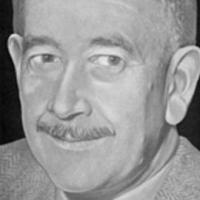
W.J. Simmonds has done original and distinguished research in mammalian physiology particularly in regard to the qualitative and quantitative aspects of absorption of protein, fluid and red cells from the lungs serous cavities and the sub-arachnoid space and into the physiology of the absorption of long-chain fatty acids and cholesterol from the gut. His discoveries have had important implications for the understanding and treatment of pulmonary oedema, sub-arachnoid haemorrhage and ascites, for a variety of malabsorption syndromes, and for, coronary heart disease. Simmonds' research into the effects of fat absorption on intestinal lymph production, his investigations on the role of bile salts, phospholipids and other natural detergents in the formation of lipid micelles and his quantitative analysis of the interrelationships of gastro-intestinal motility, lymph flow and bile and pancreatic secretions during fat absorption represent, in their sum, a distinguished and sustained, definitive contribution to medical science.

Please contact fellowship@science.org.au to request any updates to the data.

Professor

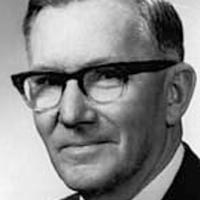
Alan Wardrop

FAA

Alan Wardrop
Image Description
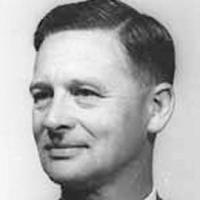
Professor Wardrop is well known internationally for his distinguished work on the structure and formation of the cell wall in plants, on the nature of lignification, and on the structure and development of reaction wood in angiosperms and gymnosperms. His skill with the electron microscope and with microspectrophotometry has contributed much to our understanding of how plant cell walls form, elongate, thicken and differentiate, and of how these processes influence the technical properties of wood. His recent work has been more concerned with cytological phenomena, such as the structure and arrangement of pores in the nuclear membrane.

Expertise type

  • Biology
  • Plant Biology

Please contact fellowship@science.org.au to request any updates to the data.

Professor

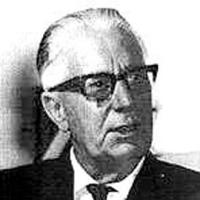
Walter Macfarlane

FAA

Walter Macfarlane
Image Description
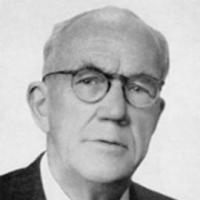
Macfarlane has worked in several fields of biology (1) Parasitology, both in the life histories and taxonomy of trematodes, and on the immunological basis of pathological reactions of the host. (2) Cellular electrophysiology of the activation and recovery processes in skeletal and cardiac muscles. (3) Physiological ecology of mammals in hot and arid regions. During the past 12 years he has analysed the distribution and turnover of water and electrolytes in sheep, camels and men exposed to heat. The functions of adrenal and posterior pituitary hormones in adaptive responses have been studied, and evidence has been provided that vasopressin in ruminants brings about excretion of potassium rather than primarily a retention of water. It is for this work that Macfarlane is especially distinguished.

Expertise type

  • Physiology
  • Biology

Please contact fellowship@science.org.au to request any updates to the data.

Professor

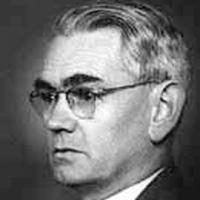
Frank Gibson

AM FAA FRS

Frank Gibson
Image Description
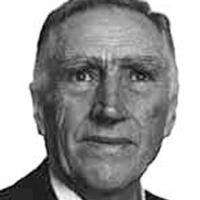
Professor Gibson has worked continuously since 1953 and with great success on the pathways by which micro-organisms synthesise aromatic compounds, particularly the aromatic amino acids and compounds such as Vitamin K, uqiquinone and p-aminobenzoic acid. Following the earlier work of B.D. Davis on biochemical genetics on this subject there were many large areas of ignorance in this complex field. In a series of elegant pieces of work which combined bacterial genetics with sophisticated biochemistry and organic chemistry Gibson has made huge contributions t6 this field. A large section of biochemical pathways is associated with his name and he is the world authority on the area. Perhaps his most vital discovery was that of chorismic acid which he isolated, determined its structure and showed that it is the key branch point in the biosynthesis of the various aromatic end products. In this work he has isolated five new intermediates, studied 11 new enzymes, obtained the first indication of how Vitamin K is synthesised and discovered a new bacterial vitamin, 2, 3, dihydroxybenzoic acid and elucidated its biosynthetic pathway. Gibson's work is at full flood and is continuing to develop in an elegant way into the fields of control of aromatic biosynthesis and vitamin K biosynthesis. He is a leader in every sense of the word in this important field of research and must be regarded as one of Australia's distinguished scientists. His quality has been recognised by being elected the 1st Australian Biochemical Society Annual Lecturer in 1968, the Pfizer Lecturer in the Department of Chemistry, Sydney, 1964, and by being awarded the David Syme Research Prize in the University of Melbourne in 1963.

Expertise type

  • Amino Acids
  • Biochemistry
  • Chorismate

Please contact fellowship@science.org.au to request any updates to the data.

Professor

Mollie Holman

AO FAA

Mollie Holman
Image Description
Dr. Holman is distinguished for her extensive work on the physiology of smooth muscle and its neural control. She was largely responsible for refining microelectrode technique to obtain satisfactory records of membrane potentials in single smooth muscle cells. With Burnstock, the first observations of smooth muscle junctional potentials were made in 1960, opening up a whole new approach to the analysis of neuro­muscular transmission in this tissue which she and her colleagues have vigorously followed up. Her work is characterized by its skill, precision and directness of approach to analysis of function at the cellular level.

Expertise type

  • Smooth Muscle
  • Biology
  • Physiology
  • Autonomic Nervous System

Please contact fellowship@science.org.au to request any updates to the data.

Professor

Peter Bishop

AO FAA FRS

Peter Bishop
Image Description
Bishop's work is concerned both with the properties of axons, neurone cell bodies and synapses in the brain, particularly those in the visual pathways and centres, and with the nature of the central organization of vision. He is also studying, in the visual centres, the successive transformations of the impulse patterns that represent coded information transmitted from eye to brain. For this purpose he has developed a multi-beam ophthalmoscope for use in conjunction with a stereotaxic technique. His work is remarkable for the systematic precision with which he is developing the experimental attack on the whole problem of the visual pathways.

Expertise type

  • Biology
  • Vertebrate Vision
  • Neurophysiology

Please contact fellowship@science.org.au to request any updates to the data.

Professor

Robert Whelan

FAA

Robert Whelan
Image Description

Please contact fellowship@science.org.au to request any updates to the data.

Professor

Stephen Boyden

AM FAA

Stephen Boyden
Image Description
Professor Stephen Boyden is distinguished for his contributions to immunology, both at the experimental and the conceptual level. In 1951, Boyden introduced the "tanned red cell" method of titrating antibodies, which is the most sensitive and possibly the most widely used method of titrating antibodies to proteins. Beween 1952 and 1958, he was concerned particularly with the immunology of tuberculosis, on which he is a recognised world authority. Since then his interests have broadened to encompass three fields, immune responsiveness, the cellular recognition of foreign material, and delayed-type hypersensitivity. His discovery of cytophilic antibody may represent a most important advance in the understanding of the phenomenon of delayed-type hypersensitivity.

Expertise type

  • Biology
  • Ecology
  • Human Ecology

Please contact fellowship@science.org.au to request any updates to the data.

Professor

David Curtis

AC FAA FRACP FRS

David Curtis
Image Description
Professor David Curtis's research is concerned with the effect of chemical compounds upon nerve cells located in various parts of the central nervous system. He has pioneered the techniques for precise micropharmacological investigations upon single nerve cells. The agents are applied electrophoretically from multi-barrel glass micropipettes in close proximity to single neurones whose responses are being recorded. A study of greatest importance has been concerned with the excitant and depressant actions of some hundreds of amino acids, which has allowed a correlation of action with chemical structure, and hence gives insight into the nature of the receptor patches on nerve cells. Acetylcholine has been established as a transmitter at certain synapses and the pharmacological analyses of synaptic structure of other transmitters to be determined.

Expertise type

  • Medical Sciences
  • Neuropharmacology
  • Neurophysiology
  • Neuroscience

Please contact fellowship@science.org.au to request any updates to the data.

Professor

Clifford Emmens

FAA

Clifford Emmens
Image Description
Clifford Walter Emmens PhD DSc, Professor of Veterinary Physiology in the University of Sydney, has made distinguished contributions to reproductive physiology in animals and to statistical procedures and experimental techniques in hormone assays. This work has been embodied in over seventy publications in leading scientific journals, in a well-known text "Principles of Biological Assay" and in a number of review articles. In recent years he has made important contributions to the whole problem of artificial insemination by the development of means of low temperature storage of mammalian spermatozoa. In addition, he has taken a very active part in the work of the Physiological Society, the Society for Endocrinology and the Biometric Society and played a leading role in the development of the Sheep Biology Laboratory of CSIRO at Parramatta.

Expertise type

  • Biology
  • Veterinary physiology
  • Endocrinology
  • Reproductive Biology

Please contact fellowship@science.org.au to request any updates to the data.