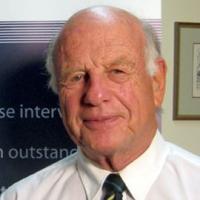


Dr

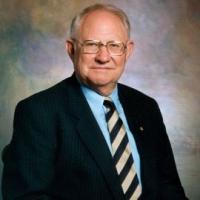
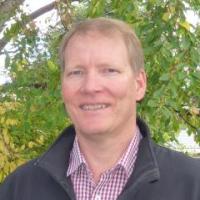
John Finnigan

FAA

John Finnigan
Image Description
Dr Finnigan is an authority on atmospheric turbulence over complex and vegetated surfaces. He is a primary author of the standard model of large and fine scale turbulent structure over plant canopies. Using theoretical and physical models, he has led the extension of these theories to complex topography with profound implications for measurements and modeling of land-air exchange. He is the author of the standard set of equations universally applied to analyze flows in plant canopies and over topography. He has pioneered the understanding of gravity wave-turbulence interaction in the boundary layer with major implications for atmospheric diffusion at night.

Expertise type

  • Atmospheric Physics
  • Climate
  • Earth Sciences
  • Turbulance

Please contact fellowship@science.org.au to request any updates to the data.

Dr

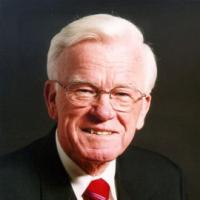
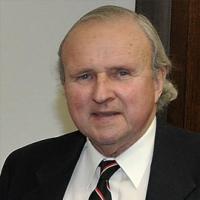
Jorgen Frederiksen

FAA

Jorgen Frederiksen
Image Description
Dr Frederiksen is an authority on dynamical theories and parameterizations of atmospheric processes. He has pioneered the first successful theories of localised cyclogenesis and the structures of storm tracks, of blocking and its life-cycles, of the origin, three-dimensional structures and seasonality of the major teleconnection patterns, of the genesis of the Madden-Julian oscillation and the classes of convectively coupled equatorial waves. He has established a statistical mechanics theory of coherent states, developed the first tractable closure theory for inhomogeneous turbulence, developed eddy viscosity, stochastic backscatter and eddy-topographic force parameterizations, and significantly improved climate simulations and weather predictions.

Expertise type

  • Atmospheric Physics
  • Climate
  • Earth Sciences
  • Turbulance

Please contact fellowship@science.org.au to request any updates to the data.

Professor

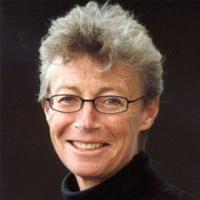
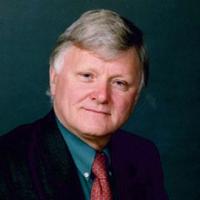
David Groves

FAA

David Groves
Image Description
Professor Groves is a world authority on the origin of mineral deposits. In Western Australia, his work on the evolution of Archaean granite-greenstone belts has led to fundamental advances in understanding their tectonic evolution and their metallogeny, providing a global framework in which to place ancient mineral deposits. In addition, he has developed original models for the genesis of tin deposits, nickel sulphide deposits, and orogenic gold deposits, and new methodologies for their exploration. His work has been recognised internationally by the award of medals by learned societies in Australia, Canada, South Africa, United Kingdom and the USA.

Expertise type

  • Earth Sciences
  • Geology
  • Mineral Exploration
  • Ore Deposits

Please contact fellowship@science.org.au to request any updates to the data.

Professor

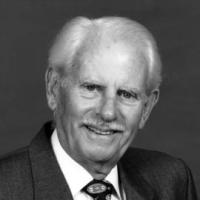
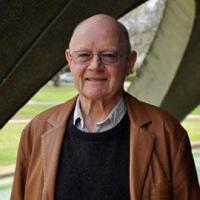
John Chappell

FAA

John Chappell
Image Description
Chappell has made a major contribution toward understanding late Quaternary sea level changes, based on raised coral reefs in Papua New Guinea and elsewhere. Through use of stable isotopes and radiometric dating, links between sea level, global ice volume, and past climates have been established, contributing substantially to the astronomical theory of ice ages. Coupling this work with research on processes and late Quaternary history of coasts, reefs, and estuarine lowlands, Chappell is now mainly concerned with high resolution analysis of lowland environmental histories, and with developing predictive models of effects of future sea-level changes on these important environments.

Expertise type

  • Climate
  • Coasts
  • Coral Reefs
  • Earth Sciences

Please contact fellowship@science.org.au to request any updates to the data.

Dr

Bruce Hobbs

AO FAA FTSE

Bruce Hobbs
Image Description
Dr Hobbs is distinguished for his contributions to structural geology and rock mechanics. He has pioneered the application of small-scale structure analysis to structural geological problems in Australia and established himself as the most prominent figure nationally in structural geology and a very well-known one internationally. His experimental work on the role of water in the deformation and recrystallization of quartz is classic and he has had a very important influence in the deformation field in emphasizing the role of defect chemistry. Finally he has complemented his experimental and field studies, with perceptive numerical modelling of geological problems, especially those involving the development of crystallographic preferred orientations in deformed rocks and the genesis of shear zones and their behaviour.

Expertise type

  • Earth Sciences
  • Geology
  • Mechanics
  • Tectonics

Please contact fellowship@science.org.au to request any updates to the data.

Dr

Angus McEwan

FAA FTSE

Angus McEwan
Image Description
Originally an engineer and aerodynamicist, McEwan was invited by Sir Geoffrey Taylor to collaborate in pioneering studies in electrohydrodynamics and in viscous free surface phenomena. Fundamental work on rotating fluids turned his interest towards geophysical problems. He has devised and conducted laboratory experiments on processes of the atmosphere and ocean as diverse as fronts, waves, convection, stratified and rotating flows, and the quasi-biennial oscillation. His special ability has been to produce simple abstractions of complex real-world situations, capable of innovative experimental and mathematical investigation. Both of these have been pursued at high scientific level, revealing new phenomena and providing new understanding of the complex geophysical dynamics. His work is characterised by an interactive blend of mathematical and physical insights which give his investigations a totality and scientific unity very rarely achieved by one individual.

Expertise type

  • Climate Change
  • Earth Sciences
  • Fluid Dynamics
  • Oceanography

Please contact fellowship@science.org.au to request any updates to the data.

Professor

John Lovering

AO FAA FTSE

John Lovering
Image Description
Distinguished for his work in geochemistry and cosmochemistry on terrestrial, meteoritic and lunar materials and for the development of new analytical methods in the earth sciences. He played a major role in developing fission-track analysis for the microdistribution of uranium and the thermal history of minerals. He pioneered the geological use in Australia of the electron microprobe and of neutron activation analysis. His work with the first analytical ion microprobe has encouraged a major development of this instrument around the world. By combining these diverse techniques with his own expertise in mineralogy and petrology, Lovering has made major scientific advances in a number of widely separated fields and especially in the geochemistry of uranium.

Expertise type

  • Earth Sciences
  • Geochemistry
  • Geology

Please contact fellowship@science.org.au to request any updates to the data.

Dr

Keith Norrish

AO FAA

Keith Norrish
Image Description
Dr. Norrish is distinguished for his contributions to soil and clay mineralogy. His studies on: (i) crystalline swelling of montmorillonite, (ii) weathering of micas, (iii) phosphate and manganese minerals in soils and their ability to accommodate heavy metal atoms, have given new understanding and insights concerning problems in agriculture, geochemistry and colloid chemistry. Dr. Norrish has made many important studies on soil minerals and has made a notable contribution in adapting and developing physical techniques for this research; outstanding in this area has been his development of X-ray fluorescence spectrograp~y,and he has been instrumental in fostering its use throughout Australia. In total Dr. Norrish's research contributions are most impressive. They have had an extremely significant influence on our understanding of the chemical and physical behaviour of soils.

Expertise type

  • Chemistry
  • Soil Mineralogy
  • X-ray Spectrophotometry

Please contact fellowship@science.org.au to request any updates to the data.

Professor

Anton Hales

FAA

Anton Hales
Image Description
Distinguished for his work in many branches of solid-earth geophysics, particularly seismology, but also gravity, geomagnetism, tectonophysics and marine geophysics. As Director of the Bernard Price Institute and subsequently as first Head of the Geosciences Division of the University of Texas at Dallas, he built up and actively participated in a wide range of investigations into these and related fields. His personal researches have centred around the application of body-wave travel-time studies to determine the structure of the earth's crust and mantle. These studies, carried out both on land and sea, represent a major contribution to knowledge of the earth's interior. He was one of the first to study the detailed structure of the low-velocity zone in the upper mantle, to interpret the unusual seismic properties of this region in terms of partial melting, and to appreciate the key significance of the low-velocity zone in tectonic processes. He was a pioneer in the study of convection processes in the earth's mantle, now believed to be the ultimate cause of continental drift. Professor Hales is one of the world's leading solid-earth geophysicists. Originally trained as a mathematician, he combines this background with great physical insight and considerable skill in instrumentation and electronics. He has been responsible for the organization and successful execution of many complex, large-scale geophysical experiments which have provided important new data on the upper mantle.

Expertise type

  • Geophysics
  • Seismology
  • Earth Sciences
  • Geomagnetism
  • Tectonophysics
  • Marine geophysics

Please contact fellowship@science.org.au to request any updates to the data.

Professor

Richard Stanton

AO FAA

Richard Stanton
Image Description
Professor Richard Stanton is one of Australia's most eminent economic geologists. His book on "Ore Petrology" has been widely acclaimed as one of the most scholarly and stimulating books in its field. He has made many original contributions to the understanding of the genesis of ore deposits, and in particular, of stratiform ores, which he has characterised in considerable detail. His creativity and keen original mind have for years been a stimulus to both academic and industrial geologists.

Expertise type

  • Earth Sciences
  • Geochemistry
  • Geology
  • Ore Deposits

Please contact fellowship@science.org.au to request any updates to the data.