

Professor

John Newton

FAA

John Newton
Image Description
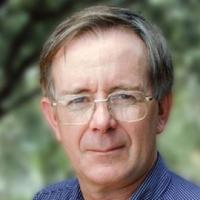
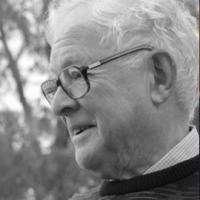
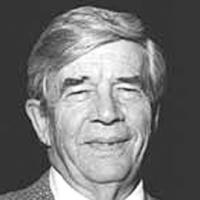
In 1950-1052, Professor John Newton measured the first (d, p8) angular correlation, the polarisation of a 6 MeV gamma ray (even now few measurements have been done at such high energies) and proposed one of the most powerful general methods for studying nuclear states by the angular correlation method. In 1954 he gave explanations for the favoured and unfavoured transitions observed in the alpha decay of odd nuclei and also for the inhibition of decay ratio by spontaneous fission for odd and doubly-odd nuceli. He made the first Coulomb excitation measurements on radioactive actinide nuclei (1956) and first demonstrated the phenomena of multiple and projectile Coulomb excitation (1958). Since 1966 he has bee a pioneer in the study of high spin states using heavy-ion reactions.

Please contact fellowship@science.org.au to request any updates to the data.

Dr

Brian Robinson

FAA

Brian Robinson
Image Description
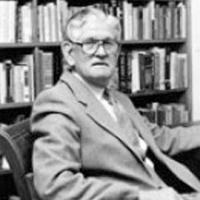
Dr. Robinson is distinguished for his contributions to radio astronomy and has gained an international reputation as a pioneer and leader in two separate fields: the technical development of very sensitive receivers (both masers and parametric amplifiers) required for the detection of extremely weak radio signals; and the exploration of the Galaxy by means of the emission and absorption of spectral lines in the microwave spectrum. He is especially noted for his studies of the maser­like emission and absorption of radiation by hydroxyl molecules near the galactic centre and in interstellar space. Dr. Robinson has also proved himself to be an outstanding research director.

Expertise type

  • Physics
  • Astrophysics
  • Spectrum management
  • Satellites

Please contact fellowship@science.org.au to request any updates to the data.

Dr

Alan Head

AO FAA FRS

Alan Head
Image Description
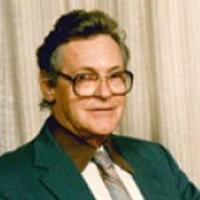
Head is distinguished for his theoretical work in several fields of physics, particularly solid state physics. All his contributions are characterized by insight into the physics of the problem, depth of treatment and originality of thought. Head has shown that, contrary to former belief, the failure of metals by fatigue is not dominated by the initiation of the crack but by the rate of its propagation. The arrangement of defects (on an atomic scale) which govern the crack formation is an n-body problem for whose solution Head has developed several new methods. Predictions of characteristic features, based on anisotropic elasticity, were confirmed experimentally in detail. Recently Head pioneered direct comparison between theoretical and experimental images in the electron microscope, a method now in widespread use. Head has also made contributions to the design of aspheric optical systems, particularly for use at short radio wavelengths.

Expertise type

  • Physics
  • Solid State Physics

Please contact fellowship@science.org.au to request any updates to the data.

Dr

Guy White

AM FAA

Guy White
Image Description
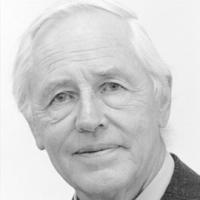
Dr Guy White is distinguished for experimental contributions to knowledge of the transport properties, thermal capacities and thermal expansions of solids. His studies of electrical and thermal conduction of metals, alloys, semi-conductors and solidified inert gases have revealed the contributors of lattice and electrons and the roles of defects and mutal interaction of lattice waves. More recently he has applied the electrical capacitance technique in pioneering measurements down to 1 - 2oK of the very small thermal expansions of a wide range of metals, alkali halides, diamond-structure elements, glasses, anisotropic crystals, superconductors and other materials. This has provided the first observations of the free-electron contribution to thermal expansion, and yielded basic data on anharmonic forces in the crystal lattice. Dr White is also responsible for the first determination of magnetostriction in palladium and other paramagnetic elements, giving information about magnetic exchange forces. He is an outstanding experimenter, and his book on "Experimental Techniques in Low Temperature Physics" is the standard text in this subject.

Expertise type

  • Cryogenics
  • Low Temperature Physics
  • Physics

Please contact fellowship@science.org.au to request any updates to the data.

Professor

Hans Buchdahl

FAA

Hans Buchdahl
Image Description
Buchdahl is distinguished for his work on optical Aberration Coefficients and on the equations of General Relativity. His book on Aberration Coefficients is a monument of algebraic skill and perseverance; its publication by the Clarendon Press was subsidized by the Warren Fund of the Royal Society. His papers on relativity have led to some new results, especially on the behaviour of spherical masses under conditions of extremely high pressure. He is also author of a book on thermodynamics, and distinguished by the quality of his teaching of theoretical physics.

Expertise type

  • Physics
  • General relativity
  • Geometric optics
  • Theoretical Physics
  • Thermodynamics

Please contact fellowship@science.org.au to request any updates to the data.

Sir

Frederick White

KBE FAA FRS

Frederick White
Image Description
Distinguished for his contributions to the physics of radio and radar and for his outstanding work for science in Australia as Chief Executive Officer, Deputy-Chairman, and now as Chairman of C.S.I.R.O. Dr. White was Professor of Physics in Canterbury University College, New Zealand 1937-42, and then served as Chief of the Radiophysics Division of C.S.I.R.O. during the remainder of the war. He is a Fellow of the Institute of Physics, past Chairman of its Australian Branch, and is a Fellow of the Australian Institution of Radio Engineers.

Please contact fellowship@science.org.au to request any updates to the data.

Dr

Charles Priestley

AO FAA FRS

Charles Priestley
Image Description

Please contact fellowship@science.org.au to request any updates to the data.

Dr

John Volkman

FAA

John Volkman
Image Description
John Volkman is internationally acknowledged as an authority on the discovery and application of lipid biomarkers in organic geochemistry, environmental studies, petroleum geochemistry and palaeoclimatology. His studies of the lipids in microalgae, bacteria and archaea, in particular, are foundations on which much modern biomarker research is based. Volkman’s first identification of novel long-chain alkenones in haptophytes underpinned the development of these compounds as palaeotemperature proxies. His work on novel microalgal lipids in sediments has greatly enhanced our understanding of the evolution of lipid biosynthetic pathways, and underpinned numerous biomarker applications in petroleum fingerprinting, environmental effects of aquaculture and palaeoenvironmental reconstruction.

Expertise type

  • Biochemistry
  • Organic Chemistry
  • Analytical Chemistry
  • Chemistry
  • Earth Sciences
  • Petroleum Geochemistry
  • Environmental Chemistry
  • Biochemical Evolution
  • Lipid Biochemistry
  • Organic Geochemistry
  • Paleoenvironment
  • Biomarkers
  • Biology

Please contact fellowship@science.org.au to request any updates to the data.

Professor

Bryan Williams

FAA

Bryan Williams
Image Description
Bryan Williams is internationally recognized for his work on innate immunity and mechanisms of interferon action. His discoveries include 2’-5’ oligoadenylate activated endoribonuclease, cloning and characterization of protein kinase R, first description of induced gene expression profiles in mammalian cells, and most recently the critical role played by promyleocytic zinc finger protein in innate immunity. He has also determined the mechanisms by which cells detect siRNAs and activate an innate immune response. This world-leading work is not only important for understanding defensive responses to viral infections but also has important implications for the use of siRNA in research and therapy.

Expertise type

  • Cancer
  • Immunology
  • Interferon
  • Medical Sciences

Please contact fellowship@science.org.au to request any updates to the data.