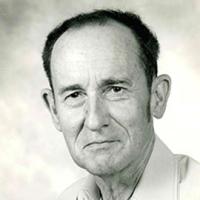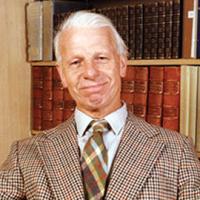


Professor

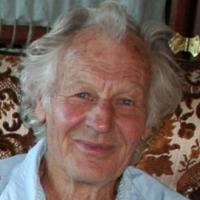
David Komander

FAA FRS

David Komander
Image Description
David Komander is a biochemist and cell biologist, and a recognised leader in the field of ubiquitylation. He generated new tools to unveil the complexity and specificity of the ubiquitin code, and uncovered fundamental principles in ubiquitin chain assembly, recognition and disassembly by deubiquitylating enzymes (DUBs). Komander discovered OTULIN, a specialised DUB in inflammation, and described the human monogenic disease OTULIN-related autoinflammatory syndrome (ORAS). He determined the molecular basis for PINK1/Parkin-mediated mitophagy, a key ubiquitylation pathway derailed in inherited Parkinson’s disease. His ultimate aim is the development of the first disease-modifying therapies for Parkinson’s and other ubiquitin-based disorders.

Fields of research

31 BIOLOGICAL SCIENCES
  • 3101 BIOCHEMISTRY AND CELL BIOLOGY
    • 310111 Signal Transduction
    • 310112 Structural Biology (incl. Macromolecular Modelling)

For full list of research codes, please visit the ARC Website .

Expertise type

  • Inflammation
  • Biochemistry
  • Biology
  • Drug Discovery
  • Protein Crystallography
  • Protein-protein Interactions
  • Proteins
  • Structural Biology
  • Mitochondrial Function
  • Neurodegenerative Disease

Please contact fellowship@science.org.au to request any updates to the data.

Professor

Michael Fuhrer

FAA

Michael Fuhrer
Image Description
Michael Fuhrer is an experimental condensed matter physicist renowned for his work on the electronic properties of low-dimensional materials. He made pioneering measurements to understand how disorder and electron-phonon scattering limit the electronic conduction in carbon nanotubes, graphene, and the surface state of topological insulators. Fuhrer also demonstrated the first nanotube single-electron memory, and developed fast and sensitive graphene terahertz detectors. He has been a leader in organising the research community in novel electronic materials in Australia, including directing the ARC Centre of Excellence in Future Low-Energy Electronics Technologies.

Fields of research

34 CHEMICAL SCIENCES
  • 3403 MACROMOLECULAR AND MATERIALS CHEMISTRY
    • 340305 Physical properties of materials
40 ENGINEERING
  • 4016 MATERIALS ENGINEERING
  • 4018 NANOTECHNOLOGY
    • 401807 Nanomaterials
51 PHYSICAL SCIENCES
  • 5104 CONDENSED MATTER PHYSICS

For full list of research codes, please visit the ARC Website .

Expertise type

  • Materials Characterisation
  • Nanofabrication
  • Applied Physics
  • Condensed Matter Physics
  • Nanomaterials
  • Nanotechnology
  • Physics
  • Materials Science
  • Nanoscience

Please contact fellowship@science.org.au to request any updates to the data.

Professor

Xinghuo Yu

FAA

Xinghuo Yu
Image Description
Xinghuo Yu has made outstanding contributions to the theory and application of discontinuous control of systems. He is a pioneer in terminal sliding-mode control theory and technology and an explorer in complex network systems and engineering applications. These developments benefit both industry and society more broadly, and have been directly applied to address industrial problems in areas such as smart grids, robotics, and cybersecurity. He has played a leading global role in advancing the electrical and electronic engineering profession and beyond, by organizing major conferences, leading change management, and shaping publishing futures.

Fields of research

40 ENGINEERING

For full list of research codes, please visit the ARC Website .

Expertise type

  • Power Systems
  • Control Systems
  • Artificial Intelligence
  • Electrical Engineering
  • Dynamical Systems

Please contact fellowship@science.org.au to request any updates to the data.

Professor

Zaiping Guo

FAA FTSE

Zaiping Guo
Image Description
Zaiping Guo is a world leader in advanced materials for energy storage. She pioneered potassium ion batteries and the understanding of electrochemical reaction mechanisms via synchrotron/neutron-based techniques. Her group developed high-voltage cathodes with high performance via elemental doping at target crystallographic sites. She demonstrated the concept of built-in electrical fields at hetero-structured interphases to boost fast charging, and the original concept of tuning chemical composition of electrolytes to stabilize electrode/electrolyte interface. These achievements have contributed valuable knowledge for the improved design of rechargeable batteries.

Fields of research

34 CHEMICAL SCIENCES
  • 3402 INORGANIC CHEMISTRY
    • 340210 Solid State Chemistry
  • 3406 PHYSICAL CHEMISTRY (INCL. STRUCTURAL)
40 ENGINEERING
  • 4018 NANOTECHNOLOGY
85 ENERGY
  • 8506 Energy Storage, Distribution and Supply

For full list of research codes, please visit the ARC Website .

Expertise type

  • Solid State Chemistry
  • Electrochemistry
  • Electrolytes
  • Interfaces
  • Nanotechnology
  • Physical Chemistry
  • Chemistry

Please contact fellowship@science.org.au to request any updates to the data.

Professor

Jian Li

FAA

Jian Li
Image Description
Jian Li is an international authority in antimicrobial discovery and development. He has led multiple impactful research programs to combat life-threatening bacterial ‘superbugs’. His internationally recognised systematic pharmacology research has resulted in the development of a novel antibiotic drug from concept to clinical trials. His research has also led to the first dosing guidelines for the last-defence polymyxin antibiotics and significantly improved clinical anti-microbial practice globally. Li has shown outstanding strategic leadership in building strong university-industry-hospital linkages and held multiple leadership positions in international societies. He is a passionate advocate for commercialisation and clinical translation of biomedical discoveries.

Fields of research

31 BIOLOGICAL SCIENCES
  • 3101 BIOCHEMISTRY AND CELL BIOLOGY
    • 310114 Systems Biology
32 BIOMEDICAL AND CLINICAL SCIENCES
  • 3207 MEDICAL MICROBIOLOGY
    • 320799 Medical Microbiology not elsewhere classified
  • 3214 PHARMACOLOGY AND PHARMACEUTICAL SCIENCES
    • 321402 Clinical Pharmacology and Therapeutics
    • 321407 Toxicology (incl. Clinical Toxicology)
    • 321499 Pharmacology and Pharmaceutical Sciences not elsewhere classified

For full list of research codes, please visit the ARC Website .

Expertise type

  • Antibiotic Resistance
  • Drug Design
  • Clinical Translation
  • Pseudomonas
  • Antibacterial Discovery
  • Pharmacology
  • Drug Discovery
  • Bacterial Pathogens
  • Drug Mechanisms
  • Infectious Diseases
  • Microbiology
  • Biofilms
  • Drug Delivery
  • Pharmaceutical Sciences
  • Pharmacokinetics
  • Biology

Please contact fellowship@science.org.au to request any updates to the data.

Professor

Sharon Lewin

AO FAA FAHMS

Sharon Lewin
Image Description
Sharon Lewin is recognised globally for her leadership in infectious disease, basic virology and the search for a cure for HIV. Her seminal research established laboratory models to study HIV latency, developed novel assays to quantify the viral reservoir, and identified interventions to reverse HIV latency in patients. Her work has had a major impact on our fundamental understanding of HIV and its clinical management. As Director of the Doherty Institute, she has been a leader in Australia’s response to the Covid 19 pandemic and its public communication.

Fields of research

32 BIOMEDICAL AND CLINICAL SCIENCES
  • 3202 CLINICAL SCIENCES
    • 320211 Infectious Diseases

For full list of research codes, please visit the ARC Website .

Expertise type

  • Immunology
  • Medical Sciences
  • HIV AIDS
  • Virology
  • Clinical Trials
  • Viral Pathogenesis

Please contact fellowship@science.org.au to request any updates to the data.

Professor

Shizhang Qiao

FAA FTSE

Shizhang Qiao
Image Description
Shizhang Qiao is recognised internationally for his landmark work in developing catalysis principles and next-generation catalysts for clean energy. He pioneered the concept of computation-guided material and catalyst design to transform synthesis from a trial-and-error approach to elegant predictive design. This has re-shaped materials-development pathways for catalysis, energy conversion and energy storage. He has also spearheaded two key principles in electrocatalysis: e-refineries and local-reaction environment theory. His impact is evident in frontier catalysis science and its application in fuel cells, hydrogen production, CO2-conversion, and advanced batteries.

Fields of research

85 ENERGY
  • 8505 Renewable Energy

For full list of research codes, please visit the ARC Website .

Expertise type

  • Catalysis
  • Chemical Engineering
  • Electrochemistry
  • Materials
  • Nanomaterials
  • Chemistry

Please contact fellowship@science.org.au to request any updates to the data.

Professor

Liming Dai

FAA FTSE

Liming Dai
Image Description
Liming Dai is a chemist and materials scientist, recognised a pioneer and leading authority in carbon nanomaterials and carbon electrocatalysis. His ground-breaking work on the birth of metal-free carbon electrocatalysts has been well documented and acclaimed. He is widely recognised as a global leader in the research and development of metal-free carbon electrocatalysts for renewable energy applications. Dai’s pioneering work has ranged from polymer and carbon nanomaterials design and synthesis, through understanding physical concepts, to device applications. His research has effectively bridged the gap between nanoscale science and applied research on polymers/carbon nanomaterials and their related devices in micro-/macro-world.

Fields of research

34 CHEMICAL SCIENCES
  • 3406 PHYSICAL CHEMISTRY (INCL. STRUCTURAL)
    • 340604 Electrochemistry
40 ENGINEERING
  • 4008 ELECTRICAL ENGINEERING
    • 400803 Electrical energy generation (incl. renewables, excl. photovoltaics)
  • 4016 MATERIALS ENGINEERING
    • 401609 Polymers and Plastics
  • 4018 NANOTECHNOLOGY
    • 401807 Nanomaterials
41 ENVIRONMENTAL SCIENCES 410101 Carbon Sequestration Science

For full list of research codes, please visit the ARC Website .

Expertise type

  • Nanoscience
  • Photovoltaics
  • Polymers for Energy
  • Engineering
  • Biomaterials
  • Electroactive Polymers
  • Nanoparticles
  • Polymers
  • Catalysis

Please contact fellowship@science.org.au to request any updates to the data.

Professor

Pankaj Sah

FAA FAHMS

Pankaj Sah
Image Description
Pankaj Sah is a neuroscientist who has made seminal contributions to understanding the function and neural connections of the amygdala, a region of the brain that has a central role in processing emotions. He defined the types and properties of neurons and identified interneurons within the amygdala, and found novel synaptic plasticity types, which have changed understanding of how interneurons regulate the amygdala, and emotional memory processing and storage. Sah’s work has resulted in fundamental new insights into anxiety-related disorder pathophysiology and therapeutic targets. The international reputation of the Queensland Brain Institute in neuroscience has grown under his leadership.

Fields of research

31 BIOLOGICAL SCIENCES
  • 3109 ZOOLOGY
    • 310906 Animal Neurobiology
32 BIOMEDICAL AND CLINICAL SCIENCES
  • 3208 MEDICAL PHYSIOLOGY
    • 320801 Cell Physiology
  • 3209 NEUROSCIENCES
    • 320903 Central Nervous System

For full list of research codes, please visit the ARC Website .

Expertise type

  • Nervous System
  • Electrophysiology
  • Ion Channels
  • Brain Function
  • Brain Structure
  • Signalling Pathways
  • Nanoscience
  • Medical Sciences
  • Neuroscience
  • History of Science
  • Brain and Mind

Please contact fellowship@science.org.au to request any updates to the data.

Professor

Andrew Wilks

FAA FTSE FAHMS

Andrew Wilks
Image Description
Andrew Wilks is an molecular biologist and cancer cell biologist. Working at the Ludwig Institute for Cancer Research (Melbourne) from 1988 to 1998, he led the Growth Regulation Laboratory. He and his laboratory made transformative discoveries in the signal transduction field as well as in neurogenesis and angiogenesis. Wilks has completed a rare “trifecta” – discovering and patenting a number of important drug discovery targets (viz. JAK1 and JAK2) and defining their role(s) in cytokine signalling; founding one of Australia’s most successful biotech companies, Cytopia; and co‐inventing and leading the team that delivered the therapeutic JAK inhibitor, momelotinib.

Fields of research

31 BIOLOGICAL SCIENCES
  • 3101 BIOCHEMISTRY AND CELL BIOLOGY
    • 310111 Signal Transduction
32 BIOMEDICAL AND CLINICAL SCIENCES
  • 3211 ONCOLOGY AND CARCINOGENESIS
    • 321101 Cancer Cell Biology
    • 321104 Cancer Therapy (excl. Chemotherapy and Radiation Therapy)
    • 321108 Molecular Targets
  • 3214 PHARMACOLOGY AND PHARMACEUTICAL SCIENCES
    • 321402 Clinical Pharmacology and Therapeutics
34 CHEMICAL SCIENCES
  • 3404 MEDICINAL AND BIOMOLECULAR CHEMISTRY
    • 340406 Molecular Medicine

For full list of research codes, please visit the ARC Website .

Expertise type

  • Structure-based Inhibitor Design
  • Corporate Leadership
  • Biology
  • Drug Design
  • Immune-oncology
  • Drug Discovery
  • Research Commercialisation
  • Signalling Pathways

Please contact fellowship@science.org.au to request any updates to the data.