

Professor

Margaret Sheil

AO FAA FTSE

Margaret Sheil
Image Description
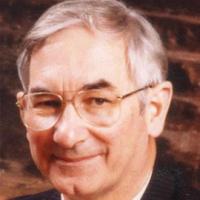
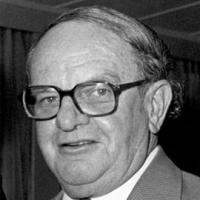
Margaret Sheil is a distinguished chemist and has made significant contributions as a leader in the scientific and university sector. She is a trailblazer for women in science, including her appointments as Vice-Chancellor and President of Queensland University of Technology and Chair of the Queensland Museum Network. Throughout her career, Sheil has been a strong advocate for science and scientists, with a particular emphasis on supporting early career scientists, women researchers and outstanding scientific mentors. She has played a pivotal role in national science policy and has consistently sought to ensure that Australian scientists have access to world class scientific infrastructure and funding schemes.

Fields of research

34 CHEMICAL SCIENCES
  • 3401 ANALYTICAL CHEMISTRY
44 HUMAN SOCIETY
  • 4407 Policy and Administration

For full list of research codes, please visit the ARC Website .

Expertise type

  • Analytical Chemistry
  • Biological Chemistry
  • Research Commercialisation
  • Chemistry
  • Science Policy

Please contact fellowship@science.org.au to request any updates to the data.

Professor

Gordon Smyth

FAA

Gordon Smyth
Image Description
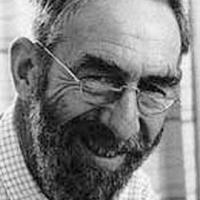
Gordon Smyth is a statistician and bioinformatician who is known for his work on statistical computing and statistical modelling. He has long-standing interests in nonlinear estimation, dispersion estimation and algorithm development. He has made influential contributions to the analysis of genomic data, especially to linear modelling and empirical Bayes methods for the analysis of gene expression experiments. Together with collaborators, he has used genomic data to make important discoveries of relevance to breast cancer, malaria and other diseases.

Fields of research

31 BIOLOGICAL SCIENCES
  • 3101 BIOCHEMISTRY AND CELL BIOLOGY
  • 3102 BIOINFORMATICS AND COMPUTATIONAL BIOLOGY
32 BIOMEDICAL AND CLINICAL SCIENCES
  • 3211 ONCOLOGY AND CARCINOGENESIS
    • 321101 Cancer Cell Biology
46 INFORMATION AND COMPUTING SCIENCES
  • 4612 SOFTWARE ENGINEERING
49 MATHEMATICAL SCIENCES
  • 4905 STATISTICS

For full list of research codes, please visit the ARC Website .

Expertise type

  • Transcriptomics
  • Computational Statistics
  • Gene Regulation
  • Mathematical Statistics
  • Bioinformatics
  • Biostatistics
  • Genomics
  • Mathematics
  • Breast Cancer
  • Cancer Biology
  • RNA Sequencing
  • Gene Expression
  • Immunology
  • Statistical Modelling

Please contact fellowship@science.org.au to request any updates to the data.

Professor

Mark Dawson

FAA FAHMS

Mark Dawson
Image Description
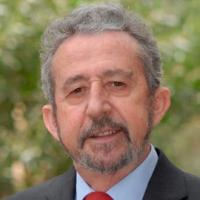
Mark Dawson is a clinician-scientist whose research focuses on studying the biological mechanisms by which epigenetic regulators facilitate the induction, maintenance and progression of cancer. His innovative research program has provided several paradigm shifting discoveries into epigenetic mechanisms of cancer stem cell maintenance, resistance to anti-cancer therapies and regulation of anti-cancer immune surveillance. His research has directly contributed to the development of several first-in-class epigenetic therapies, including those that have been studied in more than 30 clinical trials across at least 20 countries. His leading international reputation is evidenced by his publications, grant funding, invitations to speak and the receipt of prestigious prizes and awards for his research.

Fields of research

31 BIOLOGICAL SCIENCES
  • 3105 GENETICS
    • 310504 Epigenetics (incl. Genome Methylation and Epigenomics)
  • 3109 ZOOLOGY
    • 310902 Animal Cell and Molecular Biology
32 BIOMEDICAL AND CLINICAL SCIENCES
  • 3211 ONCOLOGY AND CARCINOGENESIS
    • 321101 Cancer Cell Biology
    • 321106 Haematological Tumours

For full list of research codes, please visit the ARC Website .

Expertise type

  • Transcriptional regulation
  • Cancer Biology
  • Medical Sciences
  • Cancer Medicine
  • Epigenetics
  • Cell Biology
  • Haematology
  • Molecular Biology

Please contact fellowship@science.org.au to request any updates to the data.

Professor

Alison Rodger

FAA

Alison Rodger
Image Description
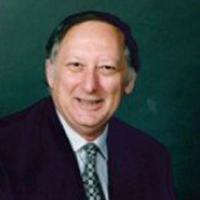
Alison Rodger is recognised for her invention of four techniques that use polarised light to reveal the structures of complex biological molecules. She has also refined several existing techniques and developed new methods to extract extra information about biomolecules. These approaches are used in several fields of chemistry, but are particularly valuable in the development of biopharmaceuticals. She has successfully commercialised her inventions, which are now widely used by major companies and have significantly changed the biopharmaceutical research and development process. She is also recognised for international leadership in research, teaching, mentorship, and outreach, including, in particular, the advancement of women in science.

Fields of research

31 BIOLOGICAL SCIENCES
  • 3101 BIOCHEMISTRY AND CELL BIOLOGY
    • 310101 Analytical Biochemistry
34 CHEMICAL SCIENCES
  • 3401 ANALYTICAL CHEMISTRY
  • 3406 PHYSICAL CHEMISTRY (INCL. STRUCTURAL)
  • 3407 THEORETICAL AND COMPUTATIONAL CHEMISTRY

For full list of research codes, please visit the ARC Website .

Expertise type

  • Biophysical Chemistry
  • Chemistry
  • Biophysics
  • DNA
  • Membrane Proteins
  • Protein
  • Protein Complexes
  • Protein-protein Interactions
  • Spectroscopy
  • Quantum Chemistry
  • Self Assemby
  • Theoretical Chemistry

Please contact fellowship@science.org.au to request any updates to the data.

Professor

John Sader

FAA

John Sader
Image Description
John Sader’s development of pioneering measurement techniques has revolutionised the characterisation of materials using the Atomic Force Microscope (AFM). His scientific contributions are widely used and have enabled breakthrough discoveries in materials science at the molecular and atomic scale. The Sader Method is an international standard for AFM force calibration as is the Sader-Jarvis Method for atomically resolved AFM force measurements. These methods appear in textbooks and are used in commercial instruments. He has also made important contributions across an array of fields, including nanomechanics, plasmonics, rarefied gas dynamics and fluid-structure interactions ranging from nano- to macro-scales.

Fields of research

10 TECHNOLOGY 4018 NANOTECHNOLOGY 49 MATHEMATICAL SCIENCES
  • 4901 APPLIED MATHEMATICS
51 PHYSICAL SCIENCES
  • 5103 CLASSICAL PHYSICS
    • 20303 Fluid Physics

For full list of research codes, please visit the ARC Website .

Expertise type

  • Applied Mathematics
  • Nanotechnology
  • Fluid Mechanics
  • Microfluidics
  • Nanoscience
  • Plasmonics
  • Mathematics

Please contact fellowship@science.org.au to request any updates to the data.

Professor

Brendan Crabb

AC FAA FAHMS

Brendan Crabb
Image Description
Brendan Crabb has made several discoveries of significance about human malaria. His team discovered the malaria translocon, a protein machine that allows the translocation of malaria proteins into its host cell, a highly vulnerable point in the parasite’s life cycle. He was the first to provide an order for the myriad of receptor-ligand interactions that mediate red blood cell invasion by malaria parasites. He is also a pioneer of genetic technologies in human malaria, describing the first gene knockout in this organism, and has made fundamental discoveries in malaria pathogenesis using these and other approaches.

Fields of research

31 BIOLOGICAL SCIENCES
  • 3101 BIOCHEMISTRY AND CELL BIOLOGY
    • 310108 Protein Trafficking
  • 3107 MICROBIOLOGY
    • 310702 Infectious Agents
    • 310706 Virology
    • 310799 Microbiology not elsewhere classified
32 BIOMEDICAL AND CLINICAL SCIENCES
  • 3207 MEDICAL MICROBIOLOGY
    • 320704 Medical Parasitology
  • 3299 OTHER MEDICAL AND CLINICAL SCIENCES

For full list of research codes, please visit the ARC Website .

Expertise type

  • Biology
  • Cell Biology
  • Infection
  • Malaria
  • Molecular Parasitology
  • Public Health
  • Virology

Please contact fellowship@science.org.au to request any updates to the data.

Professor

Robin Gasser

FAA

Robin Gasser
Image Description
Robin Gasser is an eminent veterinary scientist. His fundamental research has generated deep knowledge and understanding about the biology of parasites, their interactions with their hosts and the diseases they cause by applying and integrating a range of advanced technologies to explore their genomes and function. His achievements include the identification of a range of novel targets for antiparasitic drug development. He has used this extensive fundamental research to underpin the development of innovative methods for the diagnosis, treatment and control of socioeconomically important parasitic diseases of animals and humans for subsequent translation and commercialisation.

Fields of research

30 AGRICULTURAL AND VETERINARY SCIENCES
  • 3009 VETERINARY SCIENCES
31 BIOLOGICAL SCIENCES
  • 3199 OTHER BIOLOGICAL SCIENCES

For full list of research codes, please visit the ARC Website .

Expertise type

  • Bioinformatics
  • Population Genetics
  • Drug Discovery
  • Biotechnology
  • Epidemiology
  • Genomics
  • Molecular Parasitology
  • Transcriptomics
  • Biology

Please contact fellowship@science.org.au to request any updates to the data.

Professor

Glenda Halliday

AC FAA FAHMS

Glenda Halliday
Image Description
Glenda Halliday is acclaimed internationally for her research on neurodegeneration, making major impacts on understanding disease progression, and her promotion of neuroscience, mentorship and contributions to research evaluation. From origins in comparative neuroanatomy, she established the Sydney Brain Bank and applied her expertise to clinicopathological correlations, revealing the anatomical, biochemical, molecular and genetic characteristics of several neurodegenerative diseases, particularly Parkinson’s disease and frontotemporal dementia. Her work has changed international diagnostic criteria, provided differentiating characteristics for neurological diseases and developed disease staging schemes. She has defined unique roles of certain genes and proteins, now being used to develop diagnostic protocols and potential therapies.

Fields of research

32 BIOMEDICAL AND CLINICAL SCIENCES
  • 3209 NEUROSCIENCES
    • 320905 Neurology and Neuromuscular Diseases

For full list of research codes, please visit the ARC Website .

Expertise type

  • Clinical Neurology
  • Dementia
  • Neurodegenerative Disease
  • Movement Disorders
  • Biology

Please contact fellowship@science.org.au to request any updates to the data.

Emeritus Professor

Barbara Nowak

FAA

Barbara Nowak
Image Description
Barbara Nowak is an outstanding international leader in the field of aquatic animal health. Her research on the effects of pollutants and environmental factors on fish diseases has substantially advanced understanding of fish health and contributed to sustainable aquaculture. Parasite management strategies proposed by her research have reduced tuna losses. Together with her Norwegian collaborators, she discovered a new type of lymphoid tissue in salmon gills, redefining directions in fish immunology. She has developed methods used worldwide to assess fish health and investigate fish diseases. Nowak has been recognised for her research through international invitations and awards.

Fields of research

30 AGRICULTURAL AND VETERINARY SCIENCES
  • 3005 FISHERIES SCIENCES

For full list of research codes, please visit the ARC Website .

Expertise type

  • Disease
  • Food Security
  • Microbiology
  • Agricultural Science
  • Biology
  • Biomarkers
  • Animal Biology
  • Ecotoxicology
  • Host Response
  • Veterinary Pathology

Please contact fellowship@science.org.au to request any updates to the data.

Professor

Dorrit Jacob

FAA

Dorrit Jacob
Image Description
Dorrit Jacob’s innovative and world-leading research spans two distinct disciplines, aimed at understanding fundamental processes of Earth’s carbon cycle from the surface to the deep Earth. This unique fusion of exploring shallow and deep carbon behaviour is unravelling the underlying mechanisms of carbon mobility, sinks, sources and speciation at nano to global scales. She has made benchmark findings in deep high- and ultra-high-pressure rocks and diamond (C) studies, as well as in biomineralization. She has pioneered research in Australia in the emerging field of biomineralization, and leads significant new directions globally by integrating advanced imaging and micro-analytical methodologies with innovative life-science approaches.

Expertise type

  • Biomaterials
  • Minerals
  • Materials Characterisation
  • Earth Sciences
  • Diamonds
  • Geochemistry
  • Geochronology

Please contact fellowship@science.org.au to request any updates to the data.