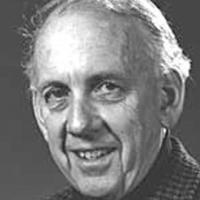


Professor

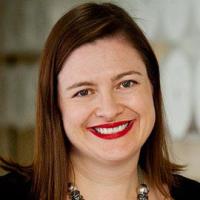
Veena Sahajwalla

AO FAA FTSE

Veena Sahajwalla
Image Description
Veena Sahajwalla is an internationally recognised materials scientist, engineer and innovator who is revolutionising recycling science. She is renowned for pioneering the high temperature transformation of waste in the production of a new generation of ‘green materials’. As Director of the Sustainable Materials Research and Technology Centre at UNSW, she has built a world-class research hub. Sahajwalla leads a highly innovative research program that fosters innovation and promotes collaboration with industry to ensure that scientific advances in sustainable materials and processes are readily translated into commercially-viable environmental solutions.

Fields of research

40 ENGINEERING
  • 4011 ENVIRONMENTAL ENGINEERING

For full list of research codes, please visit the ARC Website .

Expertise type

  • Environmental Engineering
  • Sustainable Materials
  • Green Materials
  • High-temperature Carbothermic Reactions
  • Engineering

Please contact fellowship@science.org.au to request any updates to the data.

Professor

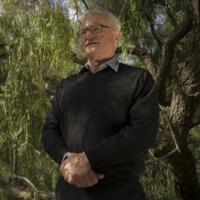
Geordie Williamson

FAA FRS

Geordie Williamson
Image Description
Geordie Williamson is a world leading mathematician in the field of geometric representation theory, (the study of linear symmetry). Among his many breakthrough contributions are his proof (together with Ben Elias) of Soergel's conjecture (resulting in a proof of the Kazhdan-Lusztig positivity conjecture from 1979), his discovery of counter-examples to the James conjecture and to the expected bounds in the Lusztig conjecture, and his new proof of the Jantzen conjectures. In recognition of his contributions, in 2016 he received the Chevalley Prize of the American Mathematical Society, the European Mathematics Society Prize and a Clay Research Award. In 2017, Williamson received the New Horizons in Mathematics Prize. He was elected as a Fellow of the Royal Society in 2018.

Expertise type

  • Representation Theory
  • Algebraic Geometry
  • Group Theory
  • Category Theory
  • Decomposition Theorem
  • Hodge Theory
  • Kazhdan-Lusztig Theory
  • Lie Theory
  • Soergel Bimodules
  • Mathematics

Please contact fellowship@science.org.au to request any updates to the data.

Professor

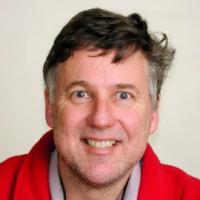
Noel Cressie

FAA

Noel Cressie
Image Description
Noel Cressie is a world leader in statistical methodology for analysing spatial and spatio-temporal data, and its applications to environmental science. His fundamental contributions changed the basic paradigm for analysing observations in space and space-time. Cressie has also contributed to research on pollution monitoring, climate prediction, ocean health, soil chemistry, and glacier movement, and is a NASA Science Team Member for the Orbiting Carbon Observatory-2 mission. Responding to the huge volumes of complex data in environmental research, Cressie has made ground-breaking innovations for `big data analytics' for remote sensing and climate change.

Fields of research

49 MATHEMATICAL SCIENCES
  • 4905 STATISTICS
    • 490501 Applied Statistics

For full list of research codes, please visit the ARC Website .

Expertise type

  • Statistics
  • Statistical Modelling
  • Informatics
  • Empirical-Bayes Methods
  • Hierarchical Statistical Modelling
  • Environmental Informatics
  • Geostatistics
  • Spatial Statistics
  • Statistical Remote Sensing
  • Spatio-temporal Statistics
  • Bayesian Statistics
  • Mathematics

Please contact fellowship@science.org.au to request any updates to the data.

Professor

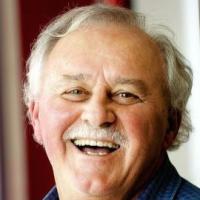
David Bowtell

FAA FAHMS

David Bowtell
Image Description
David Bowtell is an internationally recognised expert in ovarian cancer research and a pioneer in genomics and personalised medicine. He has made seminal discoveries relating to ovarian cancer classification, primary and acquired chemotherapy resistance, and factors influencing patient survival. His research has identified molecular subtypes of high-grade serous ovarian cancer, enabling subtype-specific clinical trials, and highlighted novel mechanisms of acquired resistance. His work on BRCA1/2 germline mutation-prevalence resulted in the comprehensive revision of genetic testing guidelines for ovarian cancer in Australia and internationally. In his early career, he also made major contributions to characterisation of RAS signal transduction.

Expertise type

  • Cancer
  • Mutations
  • Cancer Medicine
  • BRCA1/2
  • Carcinoma of Unknown Primary
  • Chemotherapy Resistance
  • DNA Sequencing
  • Genetic Cohort Studies
  • Human Cancer Genomics
  • Ovarian Cancer
  • Personalised Medicine
  • Medical Sciences

Please contact fellowship@science.org.au to request any updates to the data.

Professor

Richard Bryant

AC FAA FAHMS FASSA

Richard Bryant
Image Description
Richard Bryant is the world-leading authority in early psychological responses to trauma. He has identified the core biological and psychological factors that occur immediately after trauma and that influence the long-term trajectories of mental health. His diagnostic and treatment protocols have been translated into over 15 languages, and are the gold standard protocols used in most countries following traumatic events. Bryant is the most published and cited clinical psychologist in Australia and he consults widely with international agencies on mental health. He and wrote the major texts on early psychological response to trauma that have set the international research agenda in this field.

Fields of research

32 BIOMEDICAL AND CLINICAL SCIENCES
  • 3202 CLINICAL SCIENCES
    • 320221 Psychiatry (incl. Psychotherapy)
52 PSYCHOLOGY
  • 5201 Applied and developmental psychology

For full list of research codes, please visit the ARC Website .

Expertise type

  • Psychology
  • Neural Processes
  • Emotion
  • Memory
  • Anxiety
  • Clinical Psychology
  • Posttraumatic Stress Disorder
  • Medical Sciences

Please contact fellowship@science.org.au to request any updates to the data.

Professor

Colin Raston

AO FAA

Colin Raston
Image Description
Colin Raston has made seminal contributions to inorganic, organometallic, supramolecular and green chemistry, nanoscience, nanotechnology and flow chemistry. These discoveries and innovations culminated in his development of the Vortex Fluidic Device (VFD). The VFD is a thin film microfluidic platform with diverse applications including, protein separation and folding, controlling chemical reactivity and selectivity, probing the structure of self-organised systems and synthesising nano-materials. The result is a new paradigm in continuous flow chemistry. Raston’s invention gained wide publicity through the shared award in 2015 of an Ig Nobel Prize in Chemistry for ‘unboiling an egg’.

Fields of research

10 TECHNOLOGY 34 CHEMICAL SCIENCES
  • 3402 INORGANIC CHEMISTRY
    • 340204 Inorganic Green Chemistry
  • 3405 ORGANIC CHEMISTRY
    • 340504 Organic Green Chemistry
4018 NANOTECHNOLOGY
  • 401807 Nanomaterials

For full list of research codes, please visit the ARC Website .

Expertise type

  • Supramolecular Chemistry
  • Nanotechnology
  • Chemical Synthesis
  • Flow Chemistry
  • Nanoscience
  • Green Chemistry
  • Materials Processing
  • Thin Film Microfluidics
  • Chemistry

Please contact fellowship@science.org.au to request any updates to the data.

Emeritus Professor

David Blair

FAA

David Blair
Image Description
David Blair is an experimental physicist, who has pioneered three separate areas of precision measurement science. He pioneered ‘microwave cavity electro-mechanics’ (which make ultra-sensitive displacement measurements that harness electromagnetic springs and self-cooling), the use of ‘whispering gallery modes in sapphire’ (for the creation of exceptionally low noise clocks and oscillators), and the study of ‘three mode interactions’ (that underpinned the detection of gravitational waves in 2015). Blair also led the creation of the Australian International Gravitational Research Centre in Western Australia, which contributed to the LIGO Scientific Collaboration and helped enable the detection of gravitational waves.

Expertise type

  • Astrophysics
  • Gravitational Waves
  • Instrumentation
  • Opto-mechanics
  • Physics Education
  • Physics

Please contact fellowship@science.org.au to request any updates to the data.

Professor

Dacheng Tao

FAA

Dacheng Tao
Image Description
Dacheng Tao has made ground-breaking contributions in artificial intelligence, computer vision image processing and machine learning. More specifically, he has made fundamental research contributions to learning succinct, robust, and effective representations for data sampled from high dimensional or high order spaces, and collected from multiple tasks or sources. He has contributed insightful new ways to explain why, when and how a learning model performs well, and has developed useable algorithms for practical applications, such as face recognition, autonomous driving, web image search, and activity analysis. Tao has received many prizes for his research contributions and won international competitions for his applied algorithms.

Fields of research

46 INFORMATION AND COMPUTING SCIENCES
  • 4602 ARTIFICIAL INTELLIGENCE AND IMAGE PROCESSING
  • 4603 COMPUTER VISION AND MULTIMEDIA COMPUTATION
    • 460304 Computer Vision
    • 460306 Image Processing
  • 4605 DATA MANAGEMENT AND DATA SCIENCE
    • 460502 Data mining and knowledge discovery

For full list of research codes, please visit the ARC Website .

Expertise type

  • Artificial Intelligence
  • Computer Vision
  • Machine Learning
  • ICT
  • Data Science
  • Deep Learning
  • Image Processing
  • Video Surveillance
  • Acoustics

Please contact fellowship@science.org.au to request any updates to the data.

Professor

Alan Andersen

FAA

Alan Andersen
Image Description
Alan Andersen is international recognised as the leading ant community ecologist in the world. He has pioneered the use of groups of functionally similar species to gain a predictive understanding of responses of ant communities to environmental stress and disturbance. Andersen has applied this to using ants as bio-indicators in land management, and is an international leader in the use of invertebrates in environmental assessment and monitoring. He has also made internationally important contributions to fire ecology, underpinning fire management for biodiversity conservation.

Fields of research

31 BIOLOGICAL SCIENCES
  • 3103 ECOLOGY
    • 310302 Community Ecology
    • 310308 Terrestrial Ecology
41 ENVIRONMENTAL SCIENCES
  • 4102 ECOLOGICAL APPLICATIONS
  • 4104 ENVIRONMENTAL SCIENCE AND MANAGEMENT
    • 410401 Conservation and biodiversity
    • 410402 Environmental assessment and monitoring
    • 410407 Wildlife and Habitat Management
410102 Ecological Impacts of Climate Change

For full list of research codes, please visit the ARC Website .

Expertise type

  • Biodiversity
  • Ant-Plant Interactions
  • Ants
  • Biogeography
  • Bioindicators
  • Community Ecology
  • Disturbance Ecology
  • Fire Ecology
  • Myrmecochory
  • Functional Groups
  • Global Ecology
  • Seed Predation
  • Tropical Savannas
  • Biology

Please contact fellowship@science.org.au to request any updates to the data.

Professor

Joseph Trapani

AO FAA FAHMS

Joseph Trapani
Image Description
Joe Trapani is an immunologist whose research focuses on how cells of the immune system kill harmful cells - those infected with a virus or undergoing cancerous transformation. Trapani discovered several diverse toxins that mediate cell death, and determined how they function, individually and in synergy. His studies also address structure/function relationships for the pore-forming protein perforin and the signalling pathways activated by the ‘granzyme’ proteases to induce target cell apoptosis. Trapani also elucidated how defects in cell death pathways impinge on human health/disease, and how immune ‘killer cells’ can be harnessed as therapies for cancer, viral and auto-immune diseases.

Expertise type

  • Immunology
  • Apoptosis
  • Cytotoxic T Lymphocyte
  • Cancer Immunotherapy
  • Medical Sciences
  • CAR T cell
  • Granzyme
  • Immune-oncology
  • Perforin
  • Secretory Lysosome
  • Cancer Immunology
  • Natural Killer Cell
  • Cancer

Please contact fellowship@science.org.au to request any updates to the data.